Follow Me On Social Media!
Molten Chocolate Cake: The Science of “Incomplete Coagulation”

Why the Center Stays Liquid
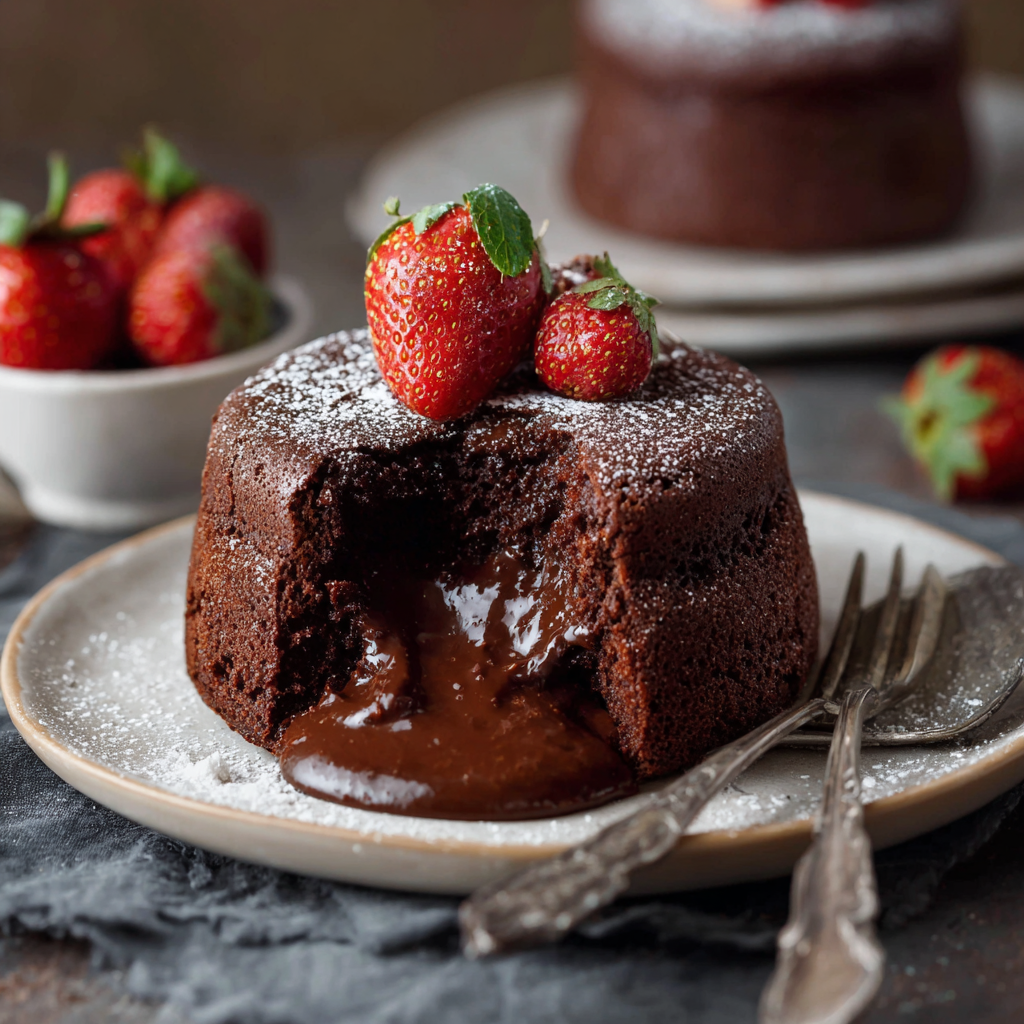
The Molten Chocolate Cake (or Lava Cake) is a masterpiece of thermodynamic timing. Unlike a traditional sponge cake, which aims for full protein denaturation and starch gelatinization, the lava cake relies on a “timed underbake.”
The goal is to create a structural crust of set egg proteins and flour on the outside while maintaining a core temperature of approximately 60°C to 65°C (140°F–150°F). At this temperature, the center is hot enough to be safe to eat (thanks to the pasteurization of eggs) but remains a viscous fluid because the proteins have not yet formed a solid 3D network.
Ingredients List: The High-Lipid Matrix
- 6 oz Bittersweet Chocolate ($60\%$ or higher cocoa): The high cocoa butter content is essential for a “glossy” flow.
- 1/2 cup Unsalted Butter: Provides the fat needed to inhibit gluten development.
- 2 Large Eggs + 2 Egg Yolks: The Science: The extra yolks add lecithin, which emulsifies the chocolate and butter into a velvety sauce.
- 1/4 cup Granulated Sugar.
- 1/2 tsp Vanilla Extract & a pinch of Salt.
- 2 tbsp All-Purpose Flour: Just enough to provide minimal structural support.
Timing: The Precision Window
| Phase | Duration | Data Insight |
| The Emulsion | 5 Minutes | Melting chocolate and butter together creates a stable fat-continuous phase. |
| The Ribbon Stage | 3 Minutes | Beating eggs and sugar traps air for a slight “lift.” |
| The Bake ($215$°C) | 12-14 Minutes | High heat is required to set the exterior before the heat reaches the core. |
| Total Time | Approx. 25 Minutes | High-stakes dessert engineering. |
Step-by-Step Instructions
Step 1: The Lipid Melt
Preheat your oven to 425°F (215°C). Generously grease 6-oz ramekins with butter and dust with cocoa powder. Melt the chocolate and butter together in a double boiler or microwave. Actionable Tip: Use cocoa powder instead of flour for dusting to prevent white streaks on the finished cake.
Step 2: The Ribbon Aeration
In a separate bowl, beat the eggs, egg yolks, sugar, salt, and vanilla until thick and pale. The Physics: This is the “ribbon stage.” The trapped air bubbles will expand in the oven, giving the outer “shell” of the cake its light, sponge-like texture.
Step 3: The Folding Process
Gently fold the chocolate mixture into the egg mixture, then sift in the flour and fold until just combined. The Logic: Over-mixing at this stage will develop gluten, turning your molten cake into a tough, bready muffin.
Step 4: The Thermal Gradient
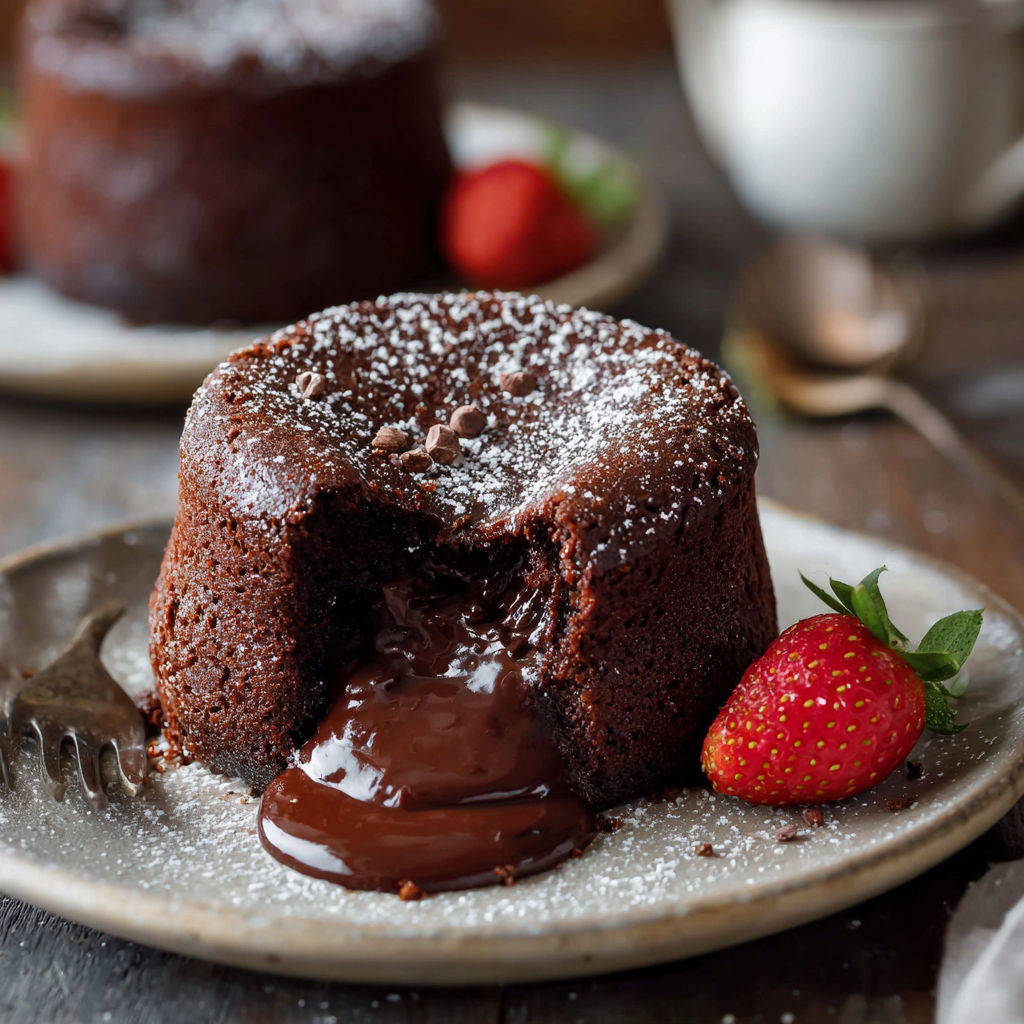
Divide the batter between the prepared ramekins. Bake for 12–14 minutes. Visual Cue: The sides should be firm and set, but the center should still have a noticeable “jiggle” when the ramekin is moved.
Step 5: The Inversion
Let the cakes sit for 1 minute (no longer!). Place a plate over the ramekin and quickly flip it over. The Result: The 1-minute rest allows the steam to release slightly from the edges, making the inversion cleaner.
Success Tips & Common Mistakes
- The “Solid Center” Fail: This is caused by over-baking. If your oven runs hot, start checking at 10 minutes. Every 60 seconds matters in a lava cake.
- The “Cake Collapse” Fail: This happens if you try to unmold the cake too quickly. The exterior “wall” hasn’t had quite enough time to firm up to support the weight of the liquid core.
- The Flavor Boost: Add a pinch of Espresso Powder to the batter. Caffeine enhances the perception of chocolate’s bitter and fruity notes without making the cake taste like coffee.
Nutritional Information (Per Cake)
- Calories: 410 kcal.
- Total Fat: 29g.
- Carbohydrates: 34g.
- Protein: 6g.
Conclusion
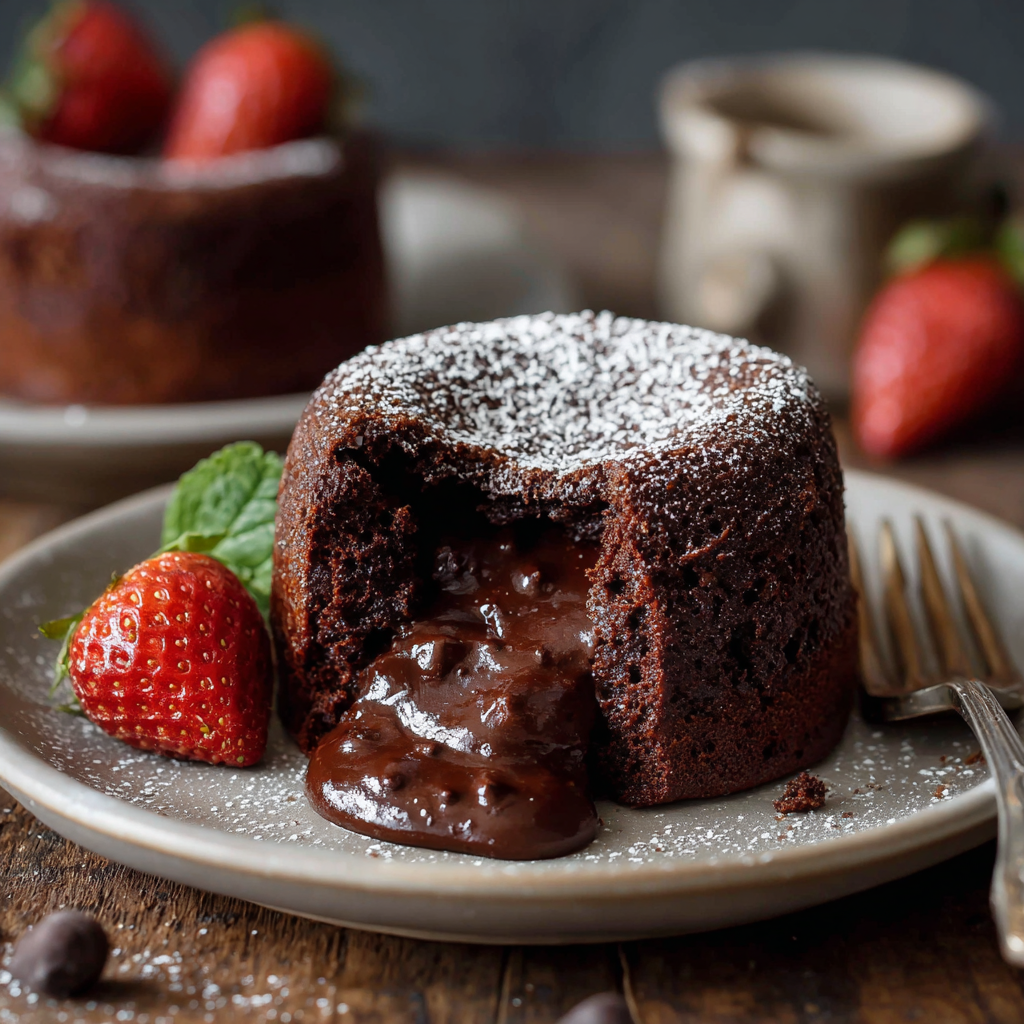
The Molten Chocolate Cake is a study in heat transfer. By mastering the timing of the “underbake,” you exploit the physics of protein coagulation to create a dessert that is both a solid and a liquid.