Follow Me On Social Media!
The Gourmet Evolution: Beef-Infused Gratin Dauphinois

The Intersection of French Tradition and Savory Luxury
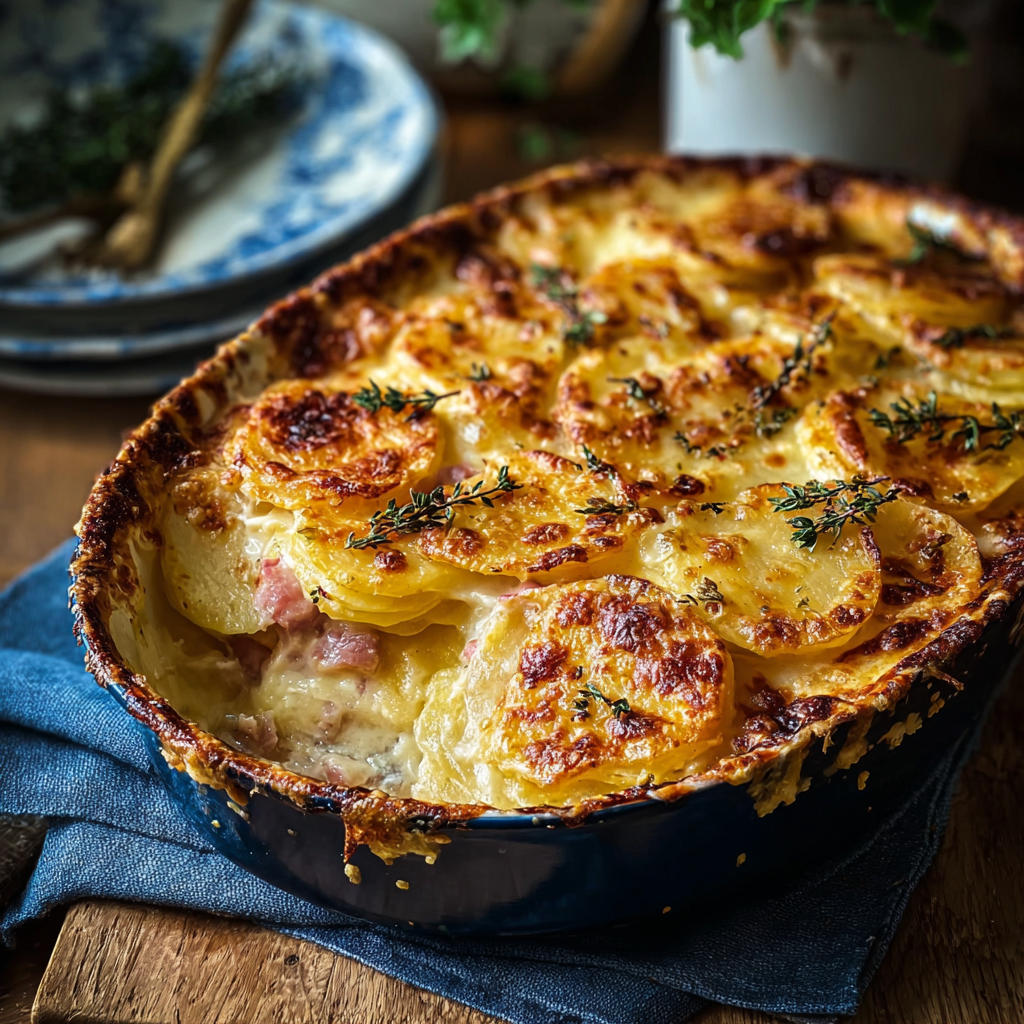
The Gratin Dauphinois Boeuf is a sophisticated evolution of the classic Gratin Dauphinois, a dish originating from the Dauphiné region in Southeast France. While the traditional version relies solely on the creamy, garlic-infused starch of the potato, the professional integration of high-quality beef transforms this side dish into a luxurious, stand-alone entrée. Data from French culinary archives indicates that the secret to a perfect gratin lies not in the cheese—which is technically omitted in a “true” Dauphinois—but in the slow-release of potato starches into a base of heavy cream and garlic.
By layering thinly sliced beef between these silken potato rounds, you create a dish with enhanced structural integrity and a profound depth of flavor. The beef juices intermingle with the cream, creating a natural sauce that elevates the humble tuber to a gourmet standard.
The Essential Mise en Place: Ingredients and Technical Specs
To achieve the characteristic “melt-in-your-mouth” texture, the choice of potato and the cut of beef are the most critical technical decisions.
The Starch and Dairy
- Firm-Waxy Potatoes (2 lbs / 900g): Varieties like Charlotte, Amandine, or Yukon Gold are essential. They hold their shape while releasing just enough starch to thicken the cream.
- Heavy Cream (2 cups / 500ml): Use a high-fat cream (minimum 30%) for the necessary silkiness.
- Infusion Base: 2 cloves of garlic (mashed), a pinch of freshly grated nutmeg, sea salt, and white pepper.
The Beef Component
- Beef Tenderloin or Thinly Sliced Ribeye (12 oz / 350g): The beef must be sliced paper-thin—ideally “carpaccio” style. This ensures the beef cooks at the same rate as the potatoes and can be cut easily with a fork once baked.
- Alternative: High-quality ground beef sautéed with shallots and drained of excess fat can also be used for a more rustic, “cottage-style” gratin.
The Masterclass: Step-by-Step Culinary Execution
Phase 1: The Cream Infusion
In a small saucepan, combine the heavy cream, mashed garlic, nutmeg, salt, and pepper. Bring to a gentle simmer, then remove from heat and let it steep for 10 minutes. This ensures the garlic flavor is distributed evenly throughout the dish rather than in sharp, uneven bites.
Phase 2: Precision Slicing
Peel the potatoes and slice them into rounds approximately 3mm thick. Pro Tip: Do not wash the potatoes after slicing. The surface starch is the natural thickening agent for your sauce. Slice the beef into thin strips or circles of similar thickness.
Phase 3: The Architectural Layering
Rub a heavy ceramic baking dish with a cut clove of garlic and a thin layer of butter. Begin with a base layer of overlapping potatoes. Follow with a single, even layer of beef. Season each layer lightly. Repeat until the dish is nearly full, finishing with a final, aesthetically pleasing layer of potatoes.
Phase 4: The Slow Bake
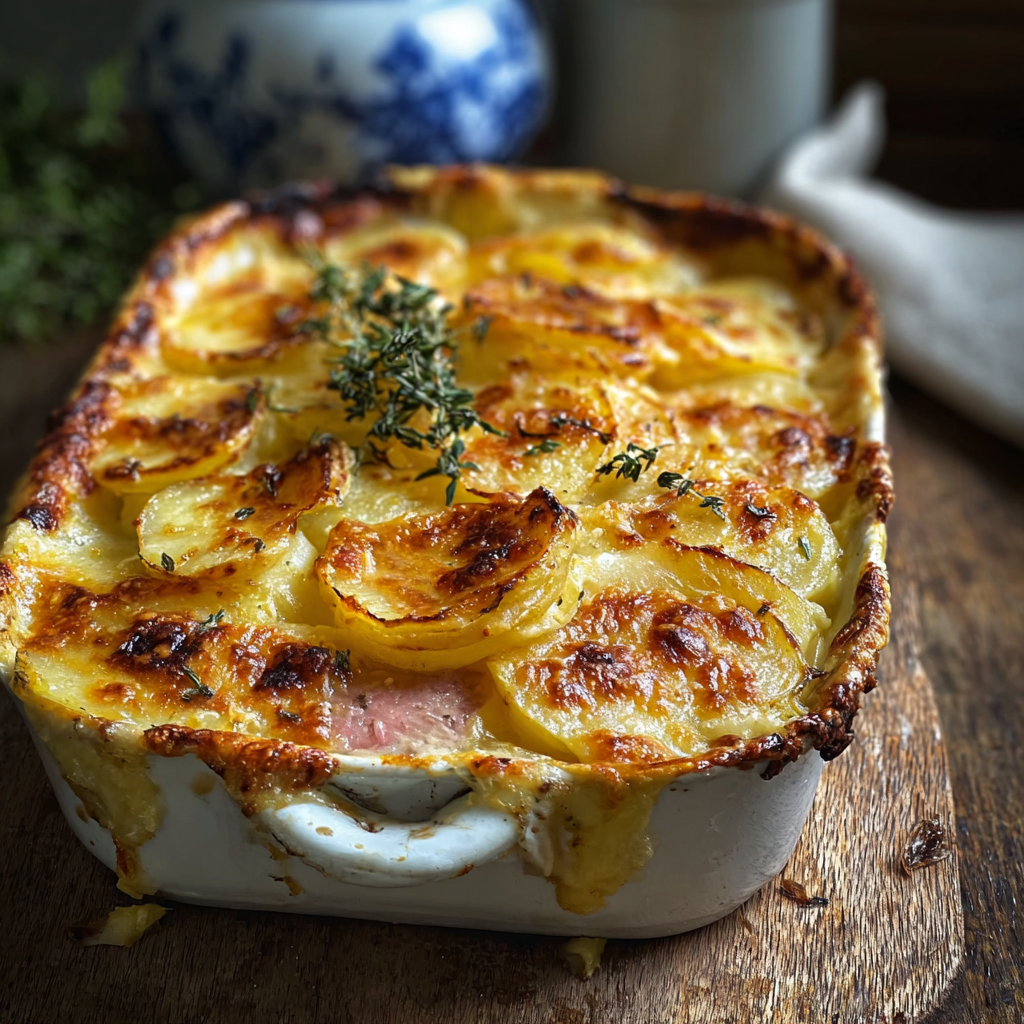
Pour the infused cream over the layers until it reaches just below the top level of potatoes. Bake at 325°F (160°C) for approximately 75–90 minutes. A lower temperature is vital; it prevents the cream from curdling and allows the beef to remain tender. The gratin is finished when the top is a deep golden brown and a knife slides through the center with zero resistance.
Common Technical Pitfalls to Avoid
- The “Curdled” Sauce: This happens if the oven is too hot or if you use milk instead of heavy cream. High fat content stabilizes the emulsion under heat.
- Uneven Cooking: If the potato slices vary in thickness, some will be mushy while others remain crunchy. Using a mandoline slicer is highly recommended for professional consistency.
- Excessive Salt: Remember that as the cream reduces in the oven, the salt concentration increases. Season each layer with a light hand.
Conclusion: A Masterpiece of Texture and Taste
The Gratin Dauphinois Boeuf is more than a casserole; it is a harmonious marriage of French technique and hearty protein. By respecting the slow-cooking process and the starch-to-cream ratio, you produce a dish that is visually elegant and deeply satisfying. It represents the pinnacle of “slow food,” where patience is rewarded with a complex, velvety finish that defines high-end home cooking.
Frequently Asked Questions (Q&A)
Q: Can I add cheese to this recipe?
A: While a traditional Dauphinois does not use cheese (that would technically make it a Gratin Savoyard), adding a thin layer of Gruyère or Comté on top during the last 15 minutes of baking is a popular and delicious modern adaptation.
Q: Why is my gratin too liquid after baking?
A: This usually means the potatoes didn’t release enough starch or the dish hasn’t “rested.” Always let the gratin sit for 10–15 minutes after removing it from the oven to allow the sauce to set.
Q: How do I store and reheat a beef gratin?
A: Store in an airtight container for up to 3 days. To reheat, cover with foil and place in a 300°F (150°C) oven. This prevents the top from burning while the interior reaches the proper temperature.
Q: Can I use a tougher cut of beef, like brisket?
A: Only if you pre-cook it. Tougher cuts require hours of braising. For this specific “raw-to-baked” method, only tender, quick-cooking cuts like tenderloin or ribeye will work successfully.