Follow Me On Social Media!
The Gastronomic Architecture: Silken Creamy Beef Pasta

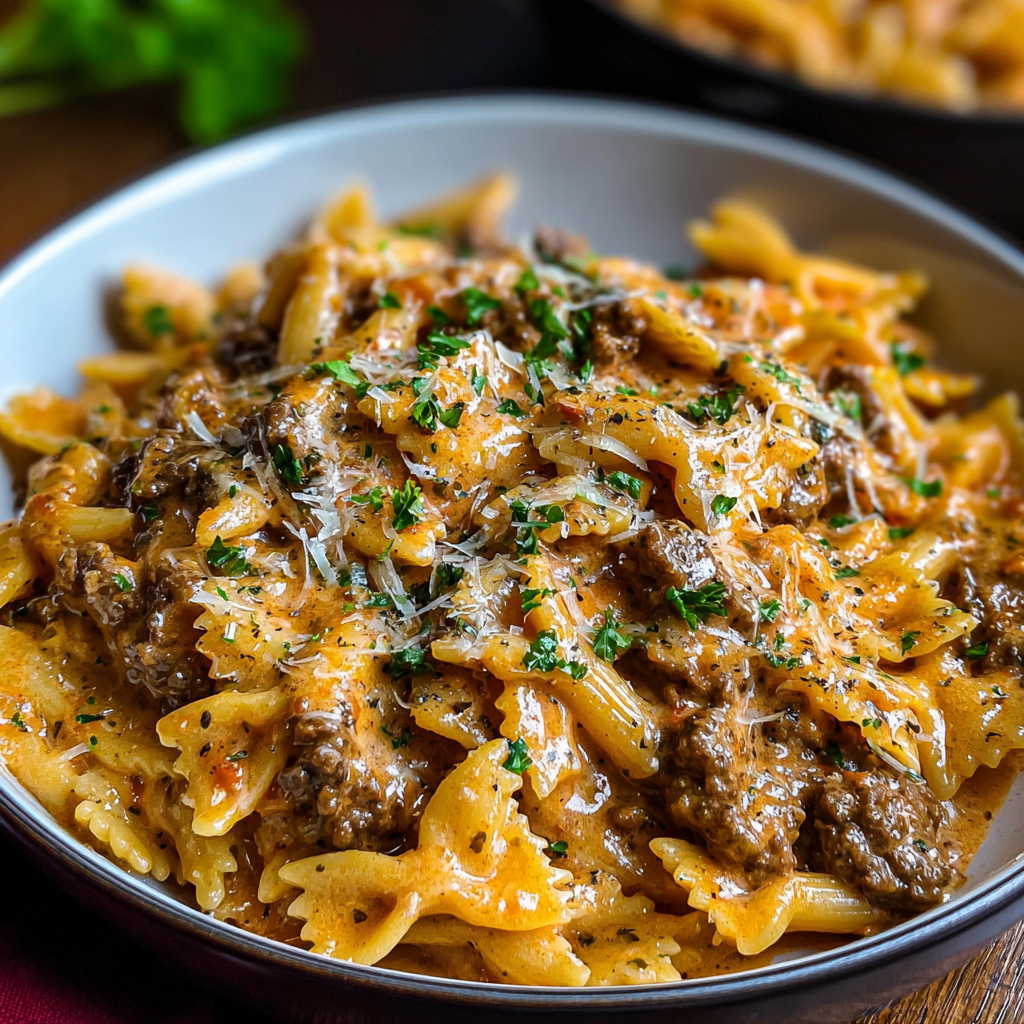
The Structural Engineering of the “Velvet” Sauce
In the hierarchy of comfort gastronomy, Creamy Beef Pasta represents a sophisticated study in lipid emulsification and Maillard-driven depth. The technical challenge lies in the “sauce-to-protein” adhesion. Unlike a thin marinara, a cream-based beef sauce must possess enough viscosity to “clutch” the pasta without breaking into an oily residue.
Data from sensory food science suggests that the “irresistibility” factor is a result of the Umami-Fat Loop: the savory glutamates from seared beef are trapped within the fat globules of the heavy cream, prolonging the flavor perception on the palate.
The Essential Mise en Place: Technical Specs
To achieve a restaurant-grade “clinging” sauce, the fat content of the beef and the starch level of the pasta water are the most critical factors.
The Foundation (The Protein & Pasta)
- Ground Beef (450g / 1 lb): Use a 80/20 lean-to-fat ratio. The rendered fat is essential for creating the “roux” base of the sauce.
- Short, Ribbed Pasta (350g): Penne Rigate, Rigatoni, or Fusilli. The “rigate” (ridges) are mechanical tools designed to trap the creamy emulsion.
- The “Starch Gold”: 1 cup of pasta cooking water, reserved before draining.
The Emulsion (The Sauce)
- Heavy Cream (240ml / 1 cup): Minimum 30% fat to ensure stability against the acidity of the garlic and spices.
- Freshly Grated Parmesan (60g / ½ cup): Acts as a secondary thickener and salt source.
- Aromatics: 4 cloves of smashed garlic, 1 finely diced shallot, and 2 tsp of smoked paprika for a “wood-fired” backbone.
The Masterclass: Step-by-Step Culinary Execution
Phase 1: The Maillard Searing
In a heavy-gauge skillet over medium-high heat, brown the beef. Technical Requirement: Do not move the beef for the first 3 minutes. You want deep, dark-brown crusting (the Maillard reaction). Drain only the excess liquid, leaving about 1 tablespoon of fat for the aromatics.
Phase 2: The Aromatic Bloom
Add the shallots and garlic to the beef fat. Sauté for 60 seconds until fragrant. Add the smoked paprika and a pinch of red pepper flakes. This “blooms” the fat-soluble spices, intensifying the color and flavor of the final sauce.
Phase 3: The Deglaze and Emulsion
Pour in the heavy cream and bring to a gentle simmer. Expert Tip: Slowly whisk in ½ cup of the reserved pasta water. The starches in the water act as a bridge, helping the fats in the cream and beef bind to the carbohydrates in the pasta.
Phase 4: The “Manteccatura” (The Fusion)
Add the al dente pasta and the Parmesan cheese to the skillet. Toss vigorously over low heat for 2 minutes. The pasta will finish cooking inside the sauce, absorbing the beef-infused cream directly into its core.
Common Technical Pitfalls to Avoid
- The “Oily” Sauce: Occurs if the cream boils too violently or if the beef fat wasn’t properly integrated. If you see oil pooling, whisk in a tablespoon of hot pasta water to re-emulsify.
- Bland Profile: If the dish lacks “pop,” it likely needs more acidity. A teaspoon of Worcestershire sauce or a splash of balsamic vinegar added during the browning phase provides a professional-grade “cut.”
- Dry Pasta: If the sauce disappears after 5 minutes, you didn’t use enough pasta water. Always keep the sauce “looser” than you think you need; it thickens rapidly as it cools.
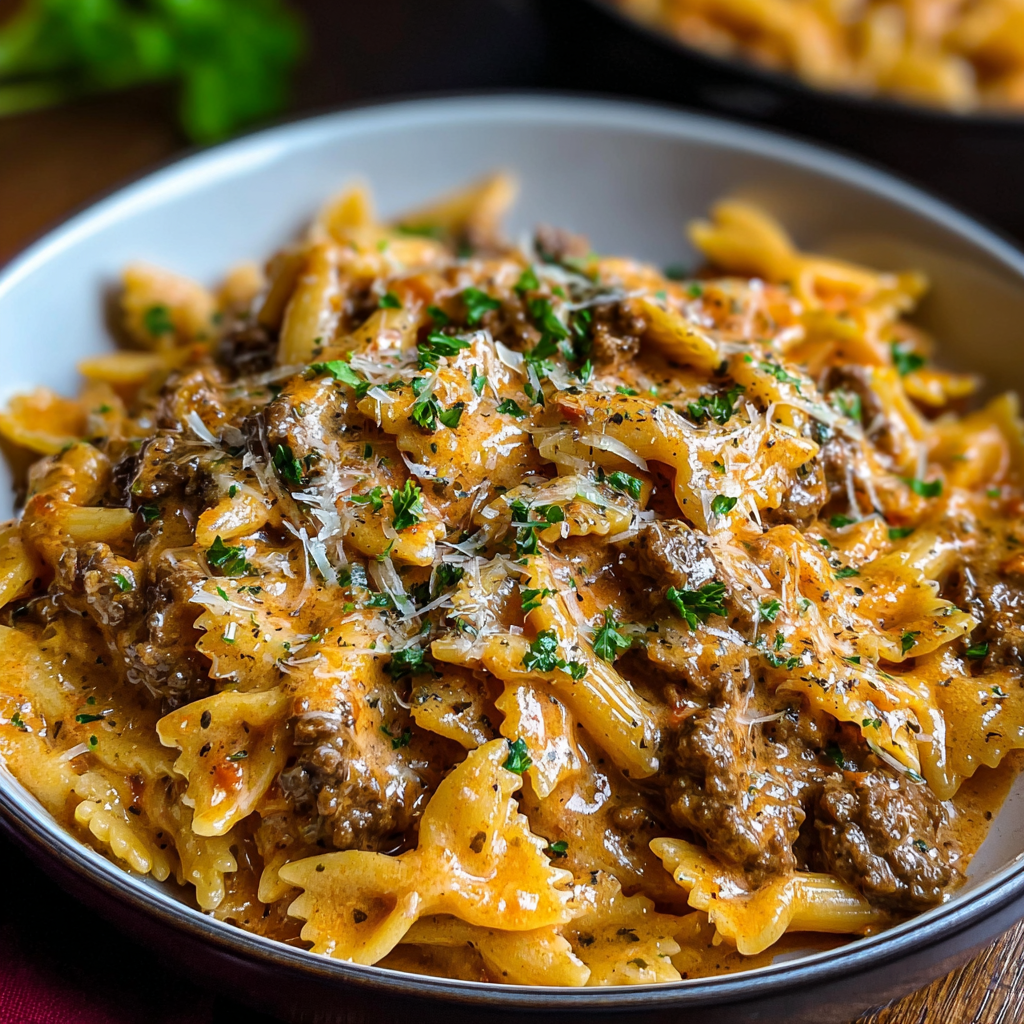
Frequently Asked Questions (Q&A)
| Question | Expert Answer |
| Can I add vegetables? | Baby spinach or sautéed mushrooms are the best professional additions; they provide an earthy contrast to the rich cream. |
| Why use smoked paprika? | It provides a “gourmet” depth and a beautiful sunset-orange hue that makes the dish visually irresistible. |
| How do I reheat this? | Low and slow. Add a splash of milk or water to the pan to loosen the fats, as the sauce will have solidified in the fridge. |
Export to Sheets