Follow Me On Social Media!
The Flavor Architect: Mediterranean Chicken Gyros

The Gastronomic Architecture: The “Yogurt-Acid” Marinade
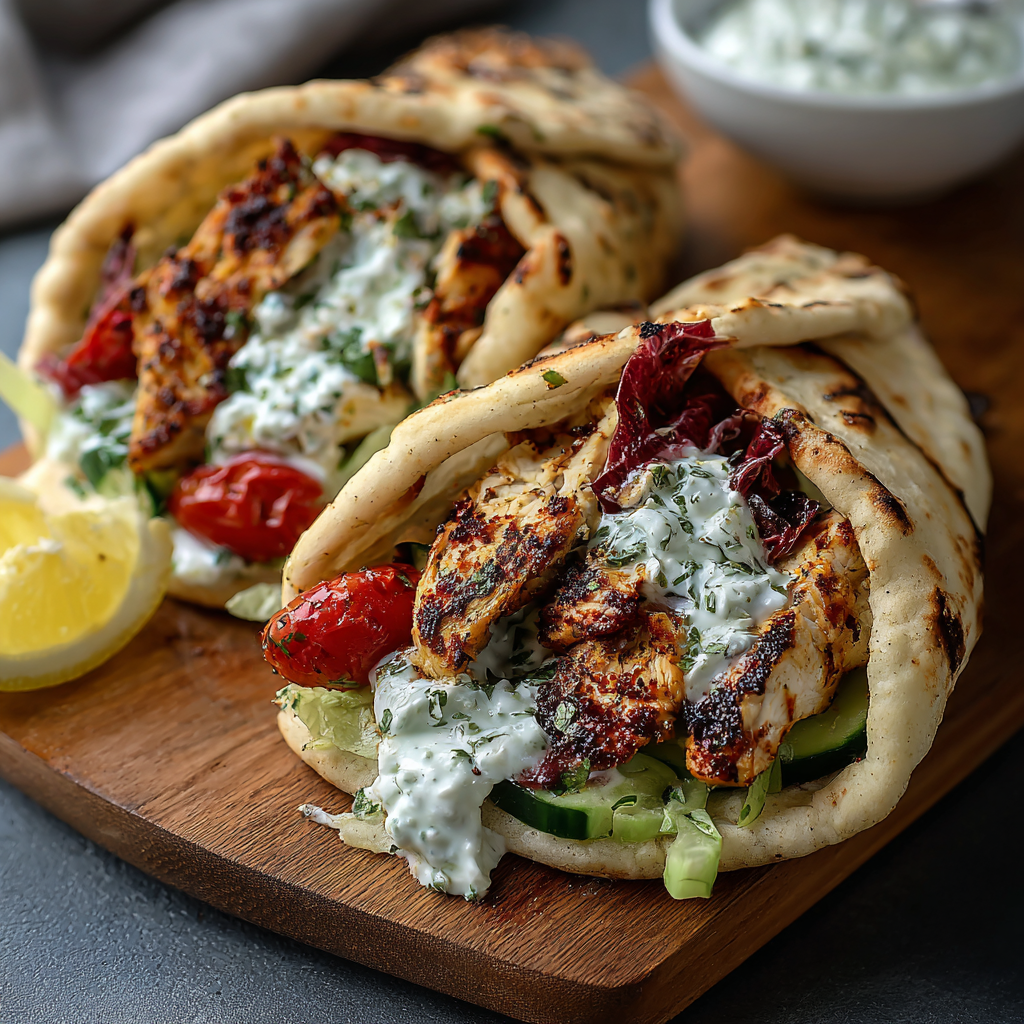
In the hierarchy of street-food classics, the Chicken Gyro represents a sophisticated study in enzymatic tenderization and high-heat caramelization. The technical challenge lies in replicating the vertical rotisserie (spit) effect in a standard kitchen. By utilizing a high-fat Greek yogurt marinade, you introduce lactic acid, which breaks down the chicken’s connective tissue more gently than citrus alone, while the yogurt sugars undergo a rapid Maillard reaction, creating those characteristic charred “gyro” edges.
Data from flavor science suggests that the “irresistibility” factor is the Thermal-Fat Bond: as the marinated chicken hits the high heat, the yogurt solids fry into a savory crust that locks in the moisture of the muscle fibers.
Essential Mise en Place: Technical Specs
To achieve the signature “rotisserie-style” texture and aromatic profile, the cut of meat and the resting period are the most critical factors.
The Foundation (The Protein)
- Boneless Skinless Chicken Thighs (1 kg): Technical Requirement: Use thighs rather than breasts. The higher fat and collagen content in the dark meat prevents drying during the high-heat searing process.
- Greek Yogurt (120g / 1/2 cup): Acts as the primary tenderizer and moisture barrier.
- Lemon Juice & Red Wine Vinegar: To provide a dual-acid profile that penetrates deep into the fibers.
The Aromatic Matrix
- Garlic (4 cloves): Minced into a paste to maximize surface area contact.
- Dried Oregano, Cumin, & Coriander: The “Classic Trio” for Mediterranean earthiness.
- Smoked Paprika: To simulate the “smoke” flavor usually provided by charcoal.
The Masterclass: Step-by-Step Culinary Execution
Phase 1: The Enzymatic Infusion
Combine the yogurt, lemon juice, vinegar, oil, and spices. Coat the chicken thoroughly. Technical Requirement: Marinate for at least 2 to 4 hours, but no more than 24. Over-marinating in lactic acid can lead to a “mushy” protein structure as the fibers break down too far.
Phase 2: The “Mock-Spit” Sear
Heat a heavy cast-iron skillet or griddle over medium-high heat. Do not overcrowd the pan. Sear the thighs for 5–6 minutes per side. The goal is a deep, dark brown crust. If using a grill, use direct high heat to achieve “char-marks” that mimic the vertical flame of a gyro spit.
Phase 3: The Geometric Slicing
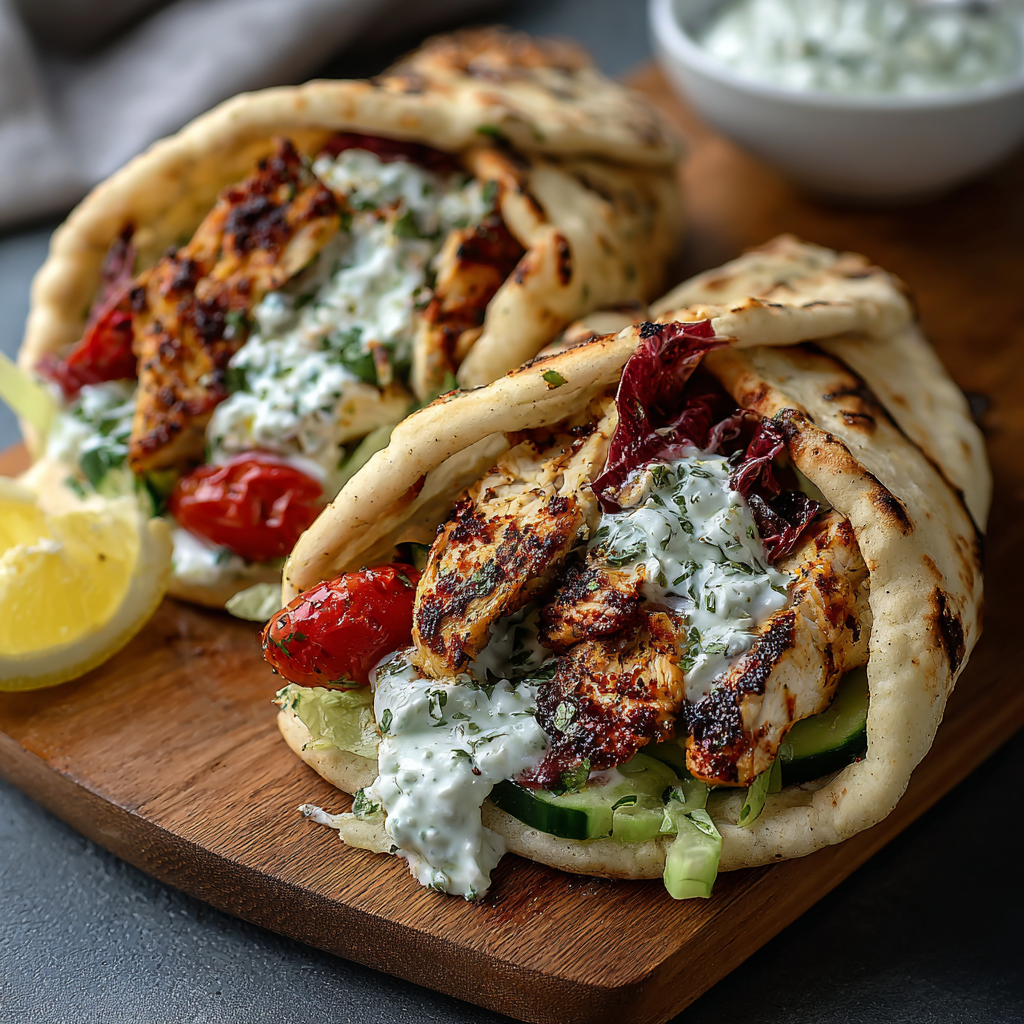
Transfer the chicken to a board and let it rest for 5 minutes. Technical Requirement: Slice the chicken into very thin, vertical strips against the grain. This mechanical fragmentation ensures every bite is tender and maximizes the ratio of charred exterior to juicy interior.
Phase 4: The Assembly (The Wrap)
Warm your pita bread until pliable. Spread a generous layer of Tzatziki (cucumber-yogurt sauce). Add the sliced chicken, then layer with thinly sliced red onions, tomatoes, and cucumbers. Expert Tip: For a truly authentic experience, add a few Extra Crispy Potato Wedges directly inside the wrap.
Common Technical Pitfalls to Avoid
- The “Steamed” Chicken: If the pan isn’t hot enough or is too crowded, the chicken will release its juices and “stew” rather than sear. Work in batches to maintain high surface temperatures.
- Dry Meat: If using chicken breast, reduce the cooking time by 2 minutes and ensure you don’t skip the 5-minute rest period.
- The “Soggy” Pita: Always toast or warm the pita just before serving to ensure it has the structural integrity to hold the yogurt and juices.
Frequently Asked Questions (Q&A)
| Question | Expert Answer |
| Can I make this in an oven? | Yes. Use the broil setting and place the chicken on a wire rack over a baking sheet to allow hot air to circulate 360°. |
| Is it healthy? | Highly. It is a high-protein, moderate-fat meal. To reduce carbs, serve it as a “Gyro Bowl” over cauliflower rice or greens. |
| Why yogurt? | Yogurt contains calcium and lactic acid, which activate enzymes in the meat to break down proteins naturally, resulting in a unique, soft texture. |