Follow Me On Social Media!
The Mediterranean Architect: Tuscan Artichaut & Tomato Salad

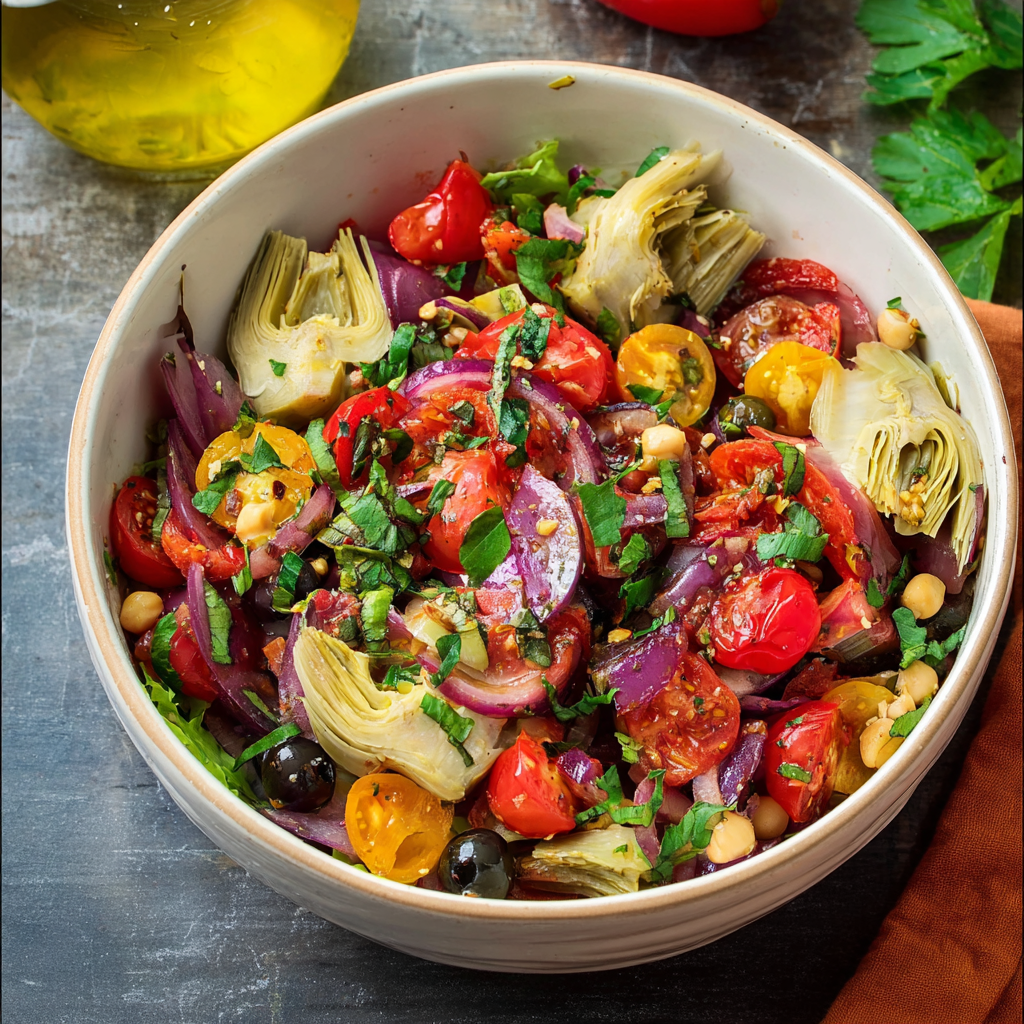
The Gastronomic Architecture: The “Brine-to-Sugar” Equilibrium
In the hierarchy of Italian contorni (side dishes), a Tuscan Artichaut and Tomato Salad represents a sophisticated study in Textural Contrast and Acidity Management. The technical challenge lies in the “Inter-Component Diffusion”: the marinated artichokes bring a sharp, vinegary brine, while the tomatoes offer a delicate, fructose-heavy sweetness. Without a proper “Lipid Bridge” (high-quality olive oil), these two elements can clash rather than harmonize.
The objective is to achieve a Static Emulsion on the surface of the vegetables, where the oil traps the oregano and garlic particles, ensuring every bite delivers a uniform distribution of Mediterranean aromatics.
Essential Mise en Place: Technical Specs
To achieve a restaurant-grade “vibrant” profile, the hydration of the tomatoes and the “heart-to-leaf” ratio of the artichokes are the most critical factors.
The Foundation (The Vegetables)
- Marinated Artichoke Hearts (280g / 1 jar): Technical Requirement: Use artichokes packed in oil or light brine. Quarter them vertically to expose the “choke” fibers, which are excellent for trapping the vinaigrette.
- Cherry or Grape Tomatoes (250g): Halved. This exposes the locular gel (the “juice” inside), which mixes with the dressing to create a natural, fruit-based sauce.
- English Cucumber: Diced into 1cm cubes to provide a high-frequency crunch.
The Aromatic & Lipid Matrix
- Extra Virgin Olive Oil (60ml / 4 tbsp): Use a “peppery” Tuscan oil (like Frantoio or Moraiolo) to stand up to the acidity of the artichokes.
- Red Onion: Finely sliced into “half-moons.” Expert Tip: Soak these in cold water for 10 minutes to remove the pungent sulfur compounds (propanethial-S-oxide).
- Fresh Basil & Dried Oregano: The “Floral-Earthy” duo.
The Masterclass: Step-by-Step Culinary Execution
Phase 1: The “Tomato Osmosis”
In a large bowl, combine the halved tomatoes with a pinch of sea salt. Let them sit for 5 minutes. This “Osmotic Draw” pulls out the tomato water, which will eventually emulsify with your olive oil to create a far superior dressing than oil alone.
Phase 2: The Structural Integration
Add the quartered artichokes, cucumbers, and red onions to the tomatoes. Technical Requirement: Do not drain the artichokes completely; the residual marinating liquid contains concentrated herbal essences that act as a “flavor starter” for the salad.
Phase 3: The Lipid Coating
Drizzle the olive oil and a splash of red wine vinegar over the vegetables. Toss gently with a large spoon. You are looking for a Glossy Sheen on every surface. This fat layer acts as a barrier, preventing the vegetables from becoming soggy too quickly.
Phase 4: The “Herbal Bloom”
Tear the fresh basil leaves by hand (rather than chopping with a knife) to prevent bruising and oxidation. Fold them in at the very last second. Hand-tearing releases the essential oils more effectively, providing a more intense aromatic experience.
Common Technical Pitfalls to Avoid
- The “Watery” Bottom: Caused by not using enough oil or adding too much vinegar. The ratio should be roughly 3 parts oil to 1 part acid.
- Bruised Basil: Basil is highly sensitive to thermal and mechanical stress. Always add it after the heavy tossing is finished.
- The “Canned” Aftertaste: If using canned (not jarred) artichokes, rinse them thoroughly in cold water to remove the “tinny” metallic notes before marinating them in your own oil and lemon.
Frequently Asked Questions (Q&A)
| Question | Expert Answer |
| Can I add protein? | Absolutely. Canned Cannellini beans (rinsed) or high-quality tuna in oil are traditional Tuscan additions that maintain the flavor profile. |
| How long does it keep? | Unlike leafy salads, this “Structured Salad” stays fresh for 24 hours. The flavors actually deepen as the onions macerate in the dressing. |
| Why use red onion? | It provides a sharper visual contrast and a “bite” that balances the creamy texture of the artichoke hearts. |