Follow Me On Social Media!
The Molecular Architect: Lavender Vanilla Cream Soda Mocktail

The Gastronomic Architecture: The “Botanical-Lipid” Suspension
In the hierarchy of artisanal beverages, the Lavender Vanilla Cream Soda represents a sophisticated study in Floral Infusion and Acid-Fat Stabilization. The technical challenge lies in the “Curdle Threshold”—mixing acidic sparkling water or lemon with heavy cream. By utilizing a “Lavender-Vanilla Simple Syrup” as a chemical buffer, you create a stable medium that emulsifies the dairy into the carbonated water, resulting in a persistent, velvety foam cap rather than a separated mess.
Data from flavor chemistry suggests the “irresistibility” factor is the Linalool-Vanillin Synergy: the herbaceous, medicinal notes of lavender are rounded out by the creamy, woody sweetness of vanilla, while the CO2 bubbles act as “aromatic elevators,” carrying these volatile compounds directly to the olfactory receptors.
Essential Mise en Place: Technical Specs
To achieve a restaurant-grade “cloud” finish, the temperature of the glassware and the fat content of the dairy are the most critical factors.
The Foundation (The “Syrup” Base)
- Dried Culinary Lavender (1 tbsp): Technical Requirement: Ensure it is “Culinary Grade” (Angustifolia). Non-culinary varieties can be overly camphoraceous and soapy.
- Vanilla Bean Paste or Extract (1 tsp): Paste is preferred for the visual “specks” of vanilla seed.
- Granulated Sugar & Water (1:1 Ratio): To create the carrier solvent for the botanicals.
The Effervescent Matrix
- Heavy Cream or Half-and-Half (30ml / 2 tbsp): High-fat dairy is essential for the “Cream Soda” mouthfeel. Plant-based alternatives like Full-Fat Oat Milk also work due to their high protein stability.
- Club Soda or Seltzer: Chilled to 2°C. The colder the water, the more CO2 it can hold, resulting in a “sharper” bubble.
- Fresh Lemon Juice (A “Bar-Spoon”): To brighten the heavy floral notes.
The Masterclass: Step-by-Step Culinary Execution
Phase 1: The “Botanical Extraction” (The Syrup)
In a small saucepan, combine sugar, water, and lavender. Bring to a gentle simmer (do not boil aggressively). Remove from heat and stir in the vanilla. Technical Requirement: Let it steep for 15 minutes only. Over-steeping lavender extracts bitter tannins that dominate the delicate vanilla. Strain through a fine-mesh sieve and chill completely.
Phase 2: The “Aqueous” Build
In a tall, chilled Collins glass, combine 45ml (3 tbsp) of your Lavender-Vanilla syrup and the lemon juice. Stir to integrate. This creates the “Flavor Anchor” at the bottom of the glass.
Phase 3: The “Controlled Carbonation”
Fill the glass 3/4 full with ice cubes. Slowly pour the club soda over the ice. Use a long bar spoon to gently “lift” the syrup from the bottom. Do not over-stir, or you will deplete the carbonation.
Phase 4: The “Cream Float” (The Head)
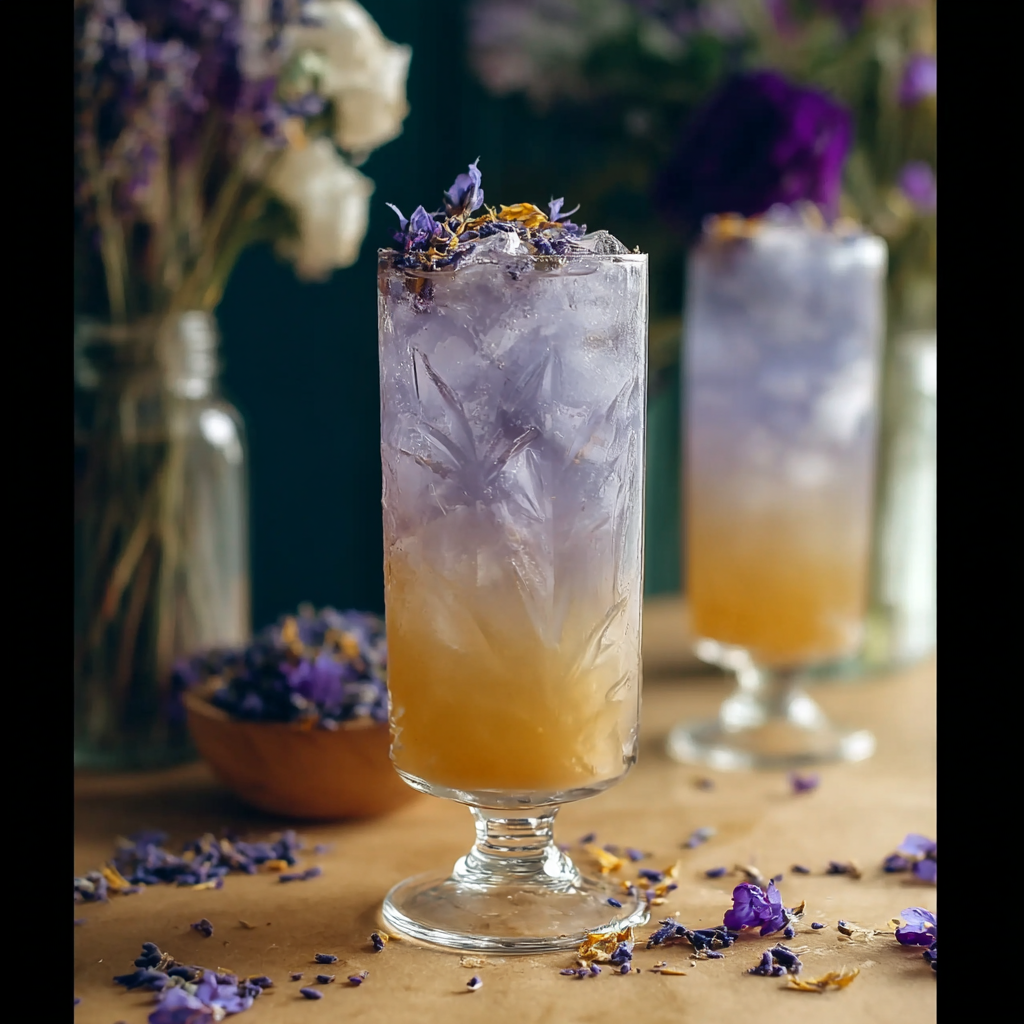
Slowly pour the heavy cream over the back of a spoon onto the surface of the drink. The cream will slowly cascade downward, creating a “lava lamp” visual effect before being stirred into a uniform, pale purple-pink hue.
Common Technical Pitfalls to Avoid
- The “Soap” Effect: Caused by using too much lavender. Lavender is a powerful aromatic; always measure precisely. If it tastes like perfume, dilute with more vanilla and soda.
- The “Flat” Mocktail: Using room-temperature soda. Warm soda loses CO2 rapidly. Always chill your soda and your glass.
- Rapid Curdling: If using a high-acid fruit juice (like lime), add the cream last and stir immediately to distribute the acid before it can denature the milk proteins.