Follow Me On Social Media!
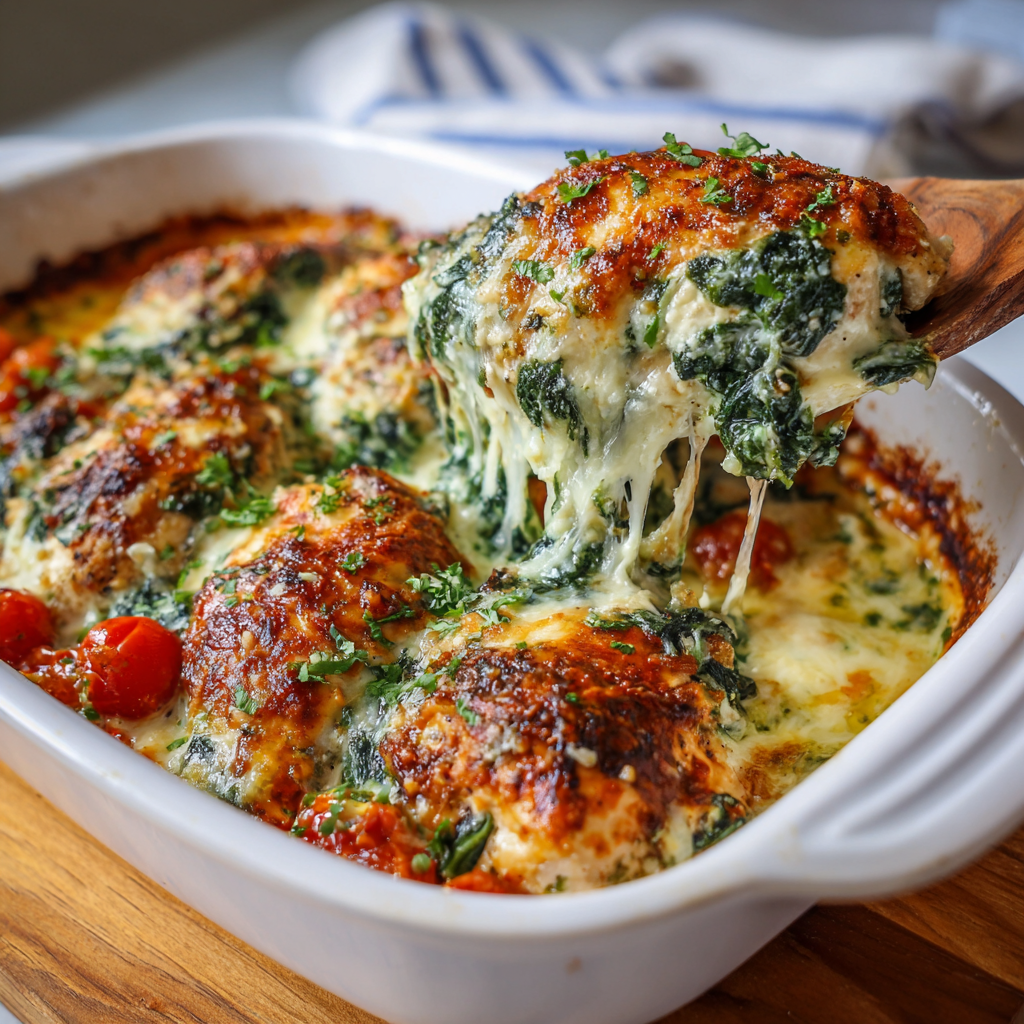
The Culinary Architect: Spinach Ricotta Chicken Bake

The Gastronomic Architecture: The “Moisture-Protein” Thermal Shield
In the hierarchy of high-protein, Mediterranean-style meals, the Spinach Ricotta Chicken Bake represents a sophisticated study in Leafy-Green Dehydration and Dairy-Protein Stabilization. The technical challenge of baking chicken with spinach is the “Water-Release” effect: fresh spinach is approximately 91% water, which can turn a creamy bake into a soupy mess. By utilizing a “Ricotta-Egg” binding matrix, you create a structural sponge that absorbs excess moisture while insulating the lean chicken breast from the drying effects of radiant oven heat.
Data from flavor science suggests the “irresistibility” factor is the Lactic-Acid Tenderization: the mild acidity of the ricotta and Parmesan begins to break down the surface proteins of the chicken, ensuring a “velvet” mouthfeel.
Essential Mise en Place: Technical Specs
To achieve a restaurant-grade “homogeneous” filling and a golden Maillard crust, the moisture management of the spinach and the thickness of the protein are the most critical factors.
The Foundation (The Protein)
- Chicken Breasts (750g / 1.5 lbs): Technical Requirement: Slice the breasts into thin cutlets or pound them to a uniform 1.5cm thickness. This ensures the chicken reaches its safe internal temperature (74°C) at the exact moment the cheese topping achieves its optimal “bubble.”
- Dry Seasoning: A mix of Italian herbs, garlic powder, and onion powder to “up-regulate” the savory profile of the poultry.
The “Florentine” Matrix (The Filling)
- Whole Milk Ricotta (425g / 15 oz): Provides the high-lipid base.
- Fresh or Frozen Spinach (250g): Expert Tip: If using fresh, sauté and squeeze bone-dry in a kitchen towel. If the spinach is damp, the ricotta will separate.
- Large Egg (1): Acts as the primary thermal binder to keep the stuffing cohesive.
- Mozzarella & Parmesan: For the “lacework” melt and saline depth.
The Masterclass: Step-by-Step Culinary Execution
Phase 1: The “Moisture-Extraction” Prep
Sauté your spinach until fully wilted. Place it in a clean tea towel and wring it out until no more liquid escapes. This “Mechanical Dehydration” is the single most important step for a creamy, non-watery result.
Phase 2: The “Structural” Blend
In a medium bowl, fold together the dried spinach, ricotta, egg, minced garlic, and half of the Parmesan. Technical Requirement: Season the mixture aggressively with salt and nutmeg. Nutmeg is a “flavor-bridge” that amplifies the earthiness of both the spinach and the dairy.
Phase 3: The “Stratification” Assembly
Place the seasoned chicken cutlets in a single layer in a greased baking dish. Spread a generous layer of the spinach-ricotta mixture over each breast, sealing it to the edges. This creates a Thermal Shield that prevents the chicken’s juices from evaporating.
Phase 4: The “Maillard” Finish
Top with shredded mozzarella and the remaining Parmesan. Bake at 190°C (375°F) for 20–25 minutes. Technical Requirement: Use an instant-read thermometer. Pull the chicken when the internal temperature hits 71°C (160°F); carry-over cooking will finish the job while keeping the meat succulent.
Common Technical Pitfalls to Avoid
- The “Watery” Pan: Usually caused by un-squeezed spinach or using “Part-Skim” ricotta, which has a higher whey content. Stick to Whole Milk Ricotta for a more stable emulsion.
- Rubbery Chicken: Caused by overcooking. Because the chicken is covered, it’s easy to lose track of the internal temp. Check early and often.
- Bland Filling: Ricotta is very neutral. Ensure you use a high-quality Parmesan (Reggiano) and plenty of fresh garlic to provide the necessary “Umami Spike.”
Frequently Asked Questions (Q&A)
| Question | Expert Answer |
|---|---|
| Can I use frozen spinach? | Absolutely. Thaw it completely and follow the “Mechanical Dehydration” (squeezing) step exactly as you would with fresh. |
| Can I make this Keto? | It is naturally very low-carb! Just ensure your ricotta doesn’t have added starches or fillers. |
| What’s the best side? | To balance the richness, serve with Zucchini Noodles or a Lemon-Vinaigrette Arugula Salad. |