Follow Me On Social Media!
The Umami Architect: Beef Bulgogi Bowls

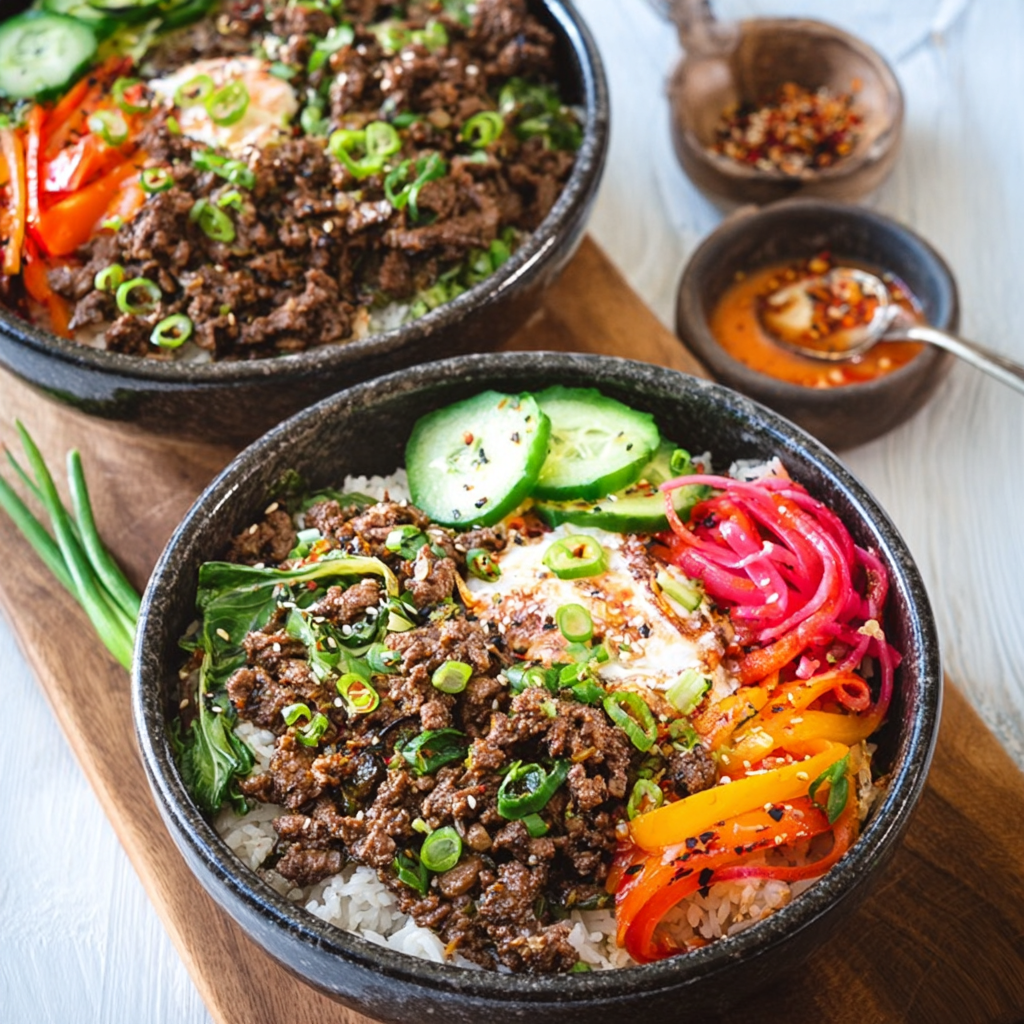
The Gastronomic Architecture: The “Enzymatic-Maillard” Synergy
In the hierarchy of Korean-inspired cuisine, Beef Bulgogi represents a sophisticated study in Proteolytic Tenderization and Sugar-Amino Acid Carbonyl Reactions. The technical challenge of Bulgogi is achieving “Velvet” tenderness in a lean cut of beef. This is solved via an Enzymatic Infusion: traditional Korean pear contains calpain, a protease enzyme that physically breaks down tough muscle fibers during the marination phase.
Data from flavor science suggests the “irresistibility” factor is the Pyrazine-Soy Emulsion: the high-heat searing of the sugars in the marinade creates complex pyrazines (savory, nutty aromas) that are trapped by the sesame oil, delivering a high-intensity umami payload to the palate.
Essential Mise en Place: Technical Specs
To achieve a restaurant-grade “char-glaze” and crisp vegetable contrast, the thickness of the protein and the “Flash-Point” of the pan are the most critical factors.
The Foundation (The Protein)
- Ribeye or Flank Steak (500g): Technical Requirement: Slice the beef against the grain into paper-thin shavings (2mm-3mm).
- Expert Tip: Freeze the beef for 45 minutes before slicing; the semi-solid state allows for precision cuts that would be impossible at room temperature.
The “Bulgogi” Matrix (The Marinade)
- Korean Pear or Fuji Apple (1/2, grated): The essential enzymatic tenderizer.
- Soy Sauce (60ml) & Brown Sugar (2 tbsp): The primary salinity and caramelization agents.
- Toasted Sesame Oil (1 tbsp): The lipid carrier for aromatics.
- Aromatic Trio: Grated ginger, 4 cloves of minced garlic, and sliced scallions.
The Bowl Architecture
- Short-Grain Steamed Rice: To provide a starchy, “sticky” base for sauce absorption.
- The “Banchan” Array: Pickled cucumbers, shredded carrots, and kimchi for acidic contrast.
The Masterclass: Step-by-Step Culinary Execution
Phase 1: The “Protease” Infusion
Whisk the marinade ingredients in a bowl. Submerge the beef shavings and marinate for at least 30 minutes (or up to 4 hours). Technical Requirement: Do not marinate overnight; the enzymes in the pear are so effective they can eventually turn the meat into a “mushy” texture by over-degrading the proteins.
Phase 2: The “High-Shear” Sear
Heat a cast-iron skillet or wok over high heat until it begins to wispy-smoke. Add a high-smoke-point oil. Add the beef in a single layer. Expert Tip: Do not crowd the pan. If you add too much meat, the temperature drops, the juices leak out, and the beef “stews” in its own liquid rather than searing.
Phase 3: The “Lacquer” Reduction
Cook for only 1–2 minutes per side. The high sugar content in the marinade will rapidly caramelize into a dark, glossy “lacquer.” The moment the edges turn dark brown and slightly crisp, remove from the heat to preserve the internal moisture.
Phase 4: The “Stratified” Assembly
Layer the rice at the bottom, followed by the bulgogi. Arrange the cold, pickled vegetables in distinct sections. This “Temperature-Texture Contrast” (hot savory beef vs. cold acidic pickles) is the hallmark of a balanced Bulgogi bowl.
Common Technical Pitfalls to Avoid
- The “Tough” Bite: Caused by slicing with the grain or skipping the pear/apple. Slicing against the grain shortens the muscle fibers, making them easier to shear with the teeth.
- Steam-Cooking: If the pan isn’t hot enough, you won’t get the “char.” Ensure the pan is smoking before the first slice hits the surface.
- Excess Liquid: Drain excess marinade off the beef before adding it to the pan to ensure an immediate sear.
Frequently Asked Questions (Q&A)
| Question | Expert Answer |
|---|---|
| Can I use ground beef? | Yes, though you lose the “flake” texture of sliced steak. It is often called “Bulgogi Crumble” and works well for rapid meal prep. |
| What if I can’t find Korean pear? | A grated Fuji apple or even 2 tablespoons of mirin (rice wine) can provide a similar enzymatic and sugar profile. |
| How do I make it spicy? | Fold 1 tablespoon of Gochujang (Korean chili paste) into the marinade for a fermented, savory heat. |