Follow Me On Social Media!
The Culinary Architect: Easy Chicken Piccata Casserole

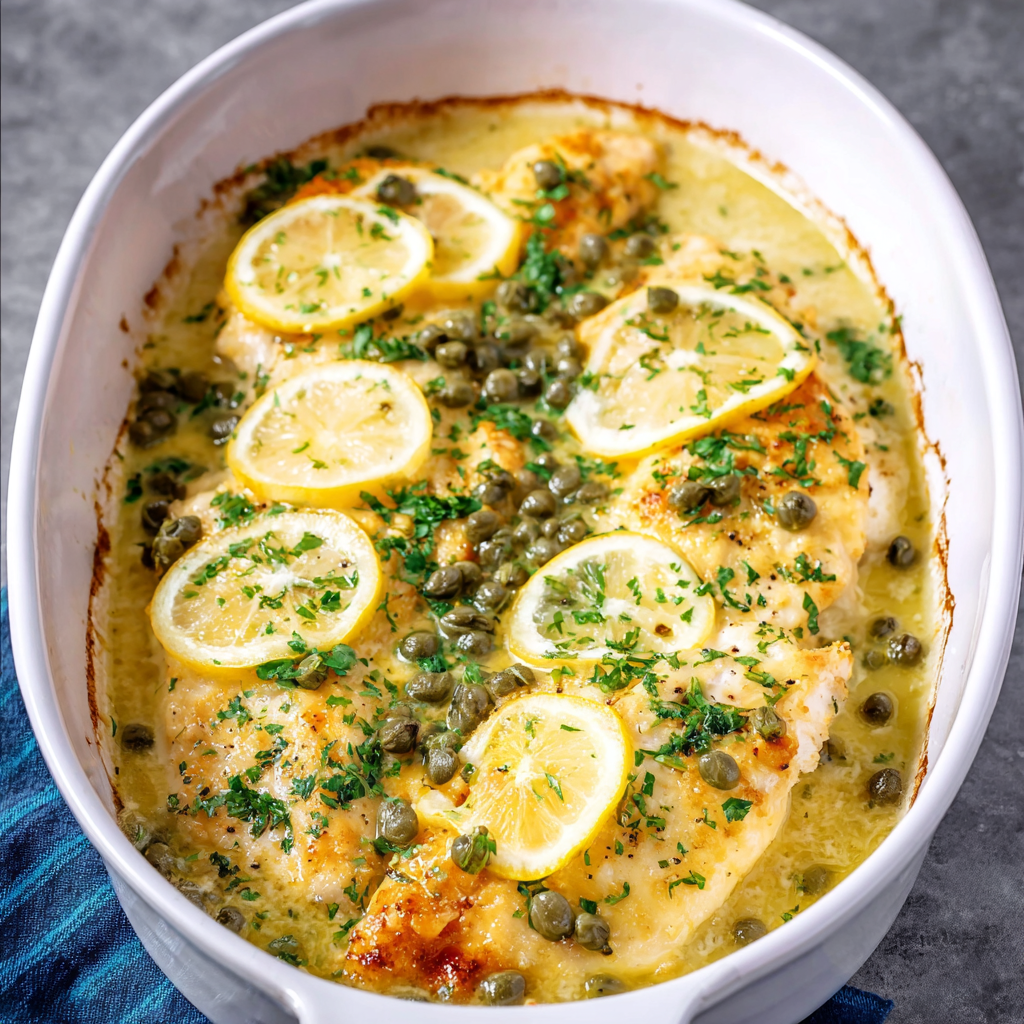
The Gastronomic Architecture: The “Acid-Lipid” Emulsion
In the hierarchy of high-protein bakes, Chicken Piccata Casserole represents a sophisticated study in Saline-Acid Balancing and Hydrophobic Moisture Retention. The technical challenge of the piccata profile is the “Sharpness-to-Silky” equilibrium: lemon juice and capers provide high acidity and salt, which can become overpowering if not properly emulsified into a dairy or starch matrix. By converting the traditional pan-sear into a casserole, you utilize a Creamy Lemon-Caper Velouté to insulate the chicken, preventing the “Dry-Out Point” while the pasta or rice base absorbs the piquant juices.
Data from flavor science suggests the “irresistibility” factor is the Citrus-Caper-Butter Loop: the bright citric acid from the lemon cuts through the heavy lipids of the butter, while the briny capers provide a “high-frequency” salt spike that cleanses the palate between bites.
Essential Mise en Place: Technical Specs
To achieve a restaurant-grade “velvet” mouthfeel and a golden, bubbling crust, the uniformity of the protein and the “Anti-Clumping” of the sauce are the most critical factors.
The Foundation (The Protein & Starch)
- Chicken Breasts or Thighs (750g): Technical Requirement: Cut into uniform 2cm cubes. This ensures synchronized cooking throughout the casserole dish.
- Pasta (350g): Penne or Rotini. Expert Tip: Cook the pasta 3 minutes less than “al dente.” It will finish hydrating by absorbing the lemon-butter sauce during the bake.
The “Piccata” Matrix (The Sauce)
- Unsalted Butter (60g) & All-Purpose Flour (30g): To create a “Blond Roux” for thickening.
- Chicken Stock (500ml) & Heavy Cream (125ml): The aqueous and lipid base.
- The Piquant Trio: 1/4 cup Lemon Juice, 3 tbsp Capers (drained), and 3 cloves of minced Garlic.
- Parmesan Cheese & Panko: For the “Shatter-Crisp” Maillard topping.
The Masterclass: Step-by-Step Culinary Execution
Phase 1: The “Velouté” Thickening
In a large saucepan, melt the butter and whisk in the flour for 1 minute. Slowly add the chicken stock and cream, whisking constantly until thickened. Stir in the lemon juice, garlic, and capers. Technical Requirement: Do not boil aggressively after adding the lemon; high heat + acid can sometimes cause lower-fat dairy to “grain.”
Phase 2: The “Homogeneous” Integration
In a large bowl, toss the cubed chicken (raw or lightly seared), par-cooked pasta, and the lemon-caper sauce. Expert Tip: Season the raw chicken with salt and pepper before mixing to ensure the seasoning is “locked” to the protein fibers.
Phase 3: The “Thermal Shield” Assembly
Transfer the mixture to a greased baking dish. The sauce should surround the chicken and pasta, acting as a Thermal Insulator that prevents moisture from escaping the meat. Top with a generous layer of Parmesan and Panko breadcrumbs.
Phase 4: The “Gold-Standard” Bake
Bake at 190°C (375°F) for 25–30 minutes. Technical Requirement: The casserole is finished when the internal temperature of the chicken reaches 74°C and the edges are bubbling. For a professional finish, broil (grill) for the last 2 minutes until the Panko is deeply bronzed.
Common Technical Pitfalls to Avoid
- The “Mushy” Pasta: Usually caused by over-boiling the pasta before baking. The pasta must be “firm-to-the-bite” (under-done) so it can soak up the flavorful sauce without losing its structural integrity.
- Metallic Aftertaste: Often occurs if using bottled lemon juice. Always use Fresh Lemons; the volatile oils in the zest provide a floral depth that bottled juice lacks.
- The “Broken” Sauce: If the sauce looks oily, the temperature was too high. Ensure you use heavy cream rather than milk, as the higher fat content provides better thermal stability against the lemon’s acidity.
Frequently Asked Questions (Q&A)
| Question | Expert Answer |
|---|---|
| Can I make it low-carb? | Yes. Replace the pasta with Roasted Cauliflower Florets. The cauliflower acts as a sponge for the lemon-caper sauce. |
| Why add capers? | Capers provide a “Briny Pungency” (isothiocyanates) that mimics the complexity of fermented foods, adding a deep savory layer to the bright citrus. |
| Can I use frozen chicken? | Thaw completely and pat bone-dry before cubing. Excess ice crystals will dilute the sauce and prevent the chicken from “grabbing” the flavors. |