Follow Me On Social Media!
The Culinary Architect: Garlic Parmesan Roasted Potatoes

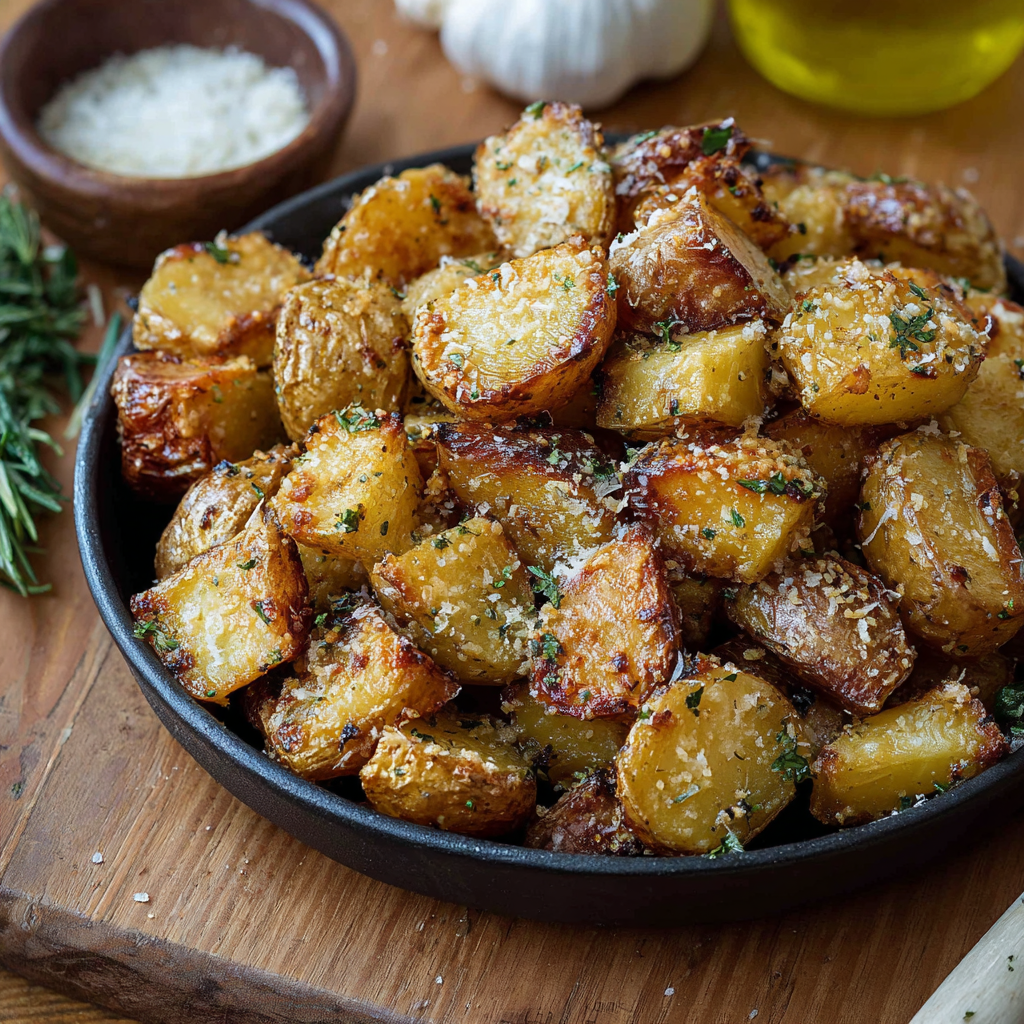
The Gastronomic Architecture: The “Starch-Dehydration” Crust
In the hierarchy of side-dish engineering, Garlic Parmesan Roasted Potatoes represent a sophisticated study in Amylopectin Gelatinization and the Maillard-Cheese Fusion. The technical challenge of the roasted potato is the “Soggy-Center” paradox: potatoes contain high internal moisture that can steam the exterior, preventing a crisp finish. By utilizing a Par-Boiling and “Scuffing” technique, you create a high-surface-area starch slurry on the exterior of the potato. This slurry dehydrates into a “shatter-crisp” shell that traps the aromatic garlic and Parmesan.
The “irresistibility” factor is driven by the Lactic-Alliaceous Maillard Loop: the proteins in the Parmesan cheese undergo rapid browning at 200°C, bonding with the garlic sulfur compounds to create a savory, crystalline crust.
Essential Mise en Place: Technical Specs
To achieve a restaurant-grade “crunch” and a fluffy, cloud-like interior, the potato variety and the “Surface-Roughening” phase are the most critical factors.
The Foundation (The Starch)
- Yukon Gold or Russet Potatoes (1kg): Technical Requirement: Yukon Golds offer a buttery, dense texture, while Russets provide the maximum “crisp-potential” due to their high starch content.
- Expert Tip: Cut into uniform 3cm cubes. This ensures a synchronized “Center-Point” cook across the entire batch.
The “Flavor-Infusion” Matrix
- Extra Virgin Olive Oil or Rendered Duck Fat (60ml): The lipid carrier for heat and aromatics.
- Fresh Garlic (5–6 cloves): Technical Requirement: Use finely minced garlic. DO NOT add it at the beginning of the roast, or it will carbonize and turn bitter.
- Parmesan Cheese (50g): Finely grated (powdery) to ensure maximum “Structural Bonding” with the potato starch.
- Herbs: Fresh rosemary or thyme (finely chopped).
The Masterclass: Step-by-Step Culinary Execution
Phase 1: The “Alkaline-Parch” (Optional but Recommended)
Boil the potato cubes in salted water with a pinch of Baking Soda for 8–10 minutes until the edges are soft. Technical Requirement: The baking soda breaks down the potato’s pectin, creating a starchy “fuzz” on the surface that becomes ultra-crispy in the oven.
Phase 2: The “Surface-Scuffing”
Drain the potatoes and let the steam escape for 2 minutes. Close the lid and shake the pot vigorously. This “Mechanical Agitation” creates the starchy paste necessary for the Parmesan to adhere to.
Phase 3: The “Lipid-Coating”
Toss the “scuffed” potatoes with the oil, salt, and pepper. Technical Requirement: Spread them on a preheated baking sheet. Do not crowd the pan. If the potatoes touch, they will trap steam and become “grey” and soft.
Phase 4: The “Two-Stage” Roast
Bake at 220°C (425°F) for 20 minutes. Remove from the oven, toss with the minced garlic, herbs, and Parmesan. Return to the oven for a final 10–15 minutes. Expert Tip: Adding the garlic and cheese at this stage allows them to toast and brown without burning.
Common Technical Pitfalls to Avoid
- The “Burnt-Garlic” Profile: Garlic burns at a much lower temperature than potatoes roast. Always add aromatics during the final 1/3 of the cooking time.
- The “Soggy” Potato: Caused by overcrowding or low heat. Roasted potatoes require high-intensity Radiant Heat to dehydrate the surface faster than the interior overcooks.
- Sticking to the Pan: Use parchment paper or ensure your baking sheet is well-oiled and preheated before the potatoes touch it.
Frequently Asked Questions (Q&A)
| Question | Expert Answer |
|---|---|
| Why use baking soda? | It raises the pH of the water, which breaks down the potato surface, creating more area for the Maillard reaction (browning) to occur. |
| Can I use an Air Fryer? | Yes. Air fry at 200°C for 15–20 minutes, adding the cheese and garlic for the last 4 minutes. |
| Which Parmesan is best? | Use Parmigiano-Reggiano grated on a microplane. The fine “snow-like” texture provides a more uniform savory coating. |