Follow Me On Social Media!
The Culinary Architect: Chicken Avocado Melt Sandwich

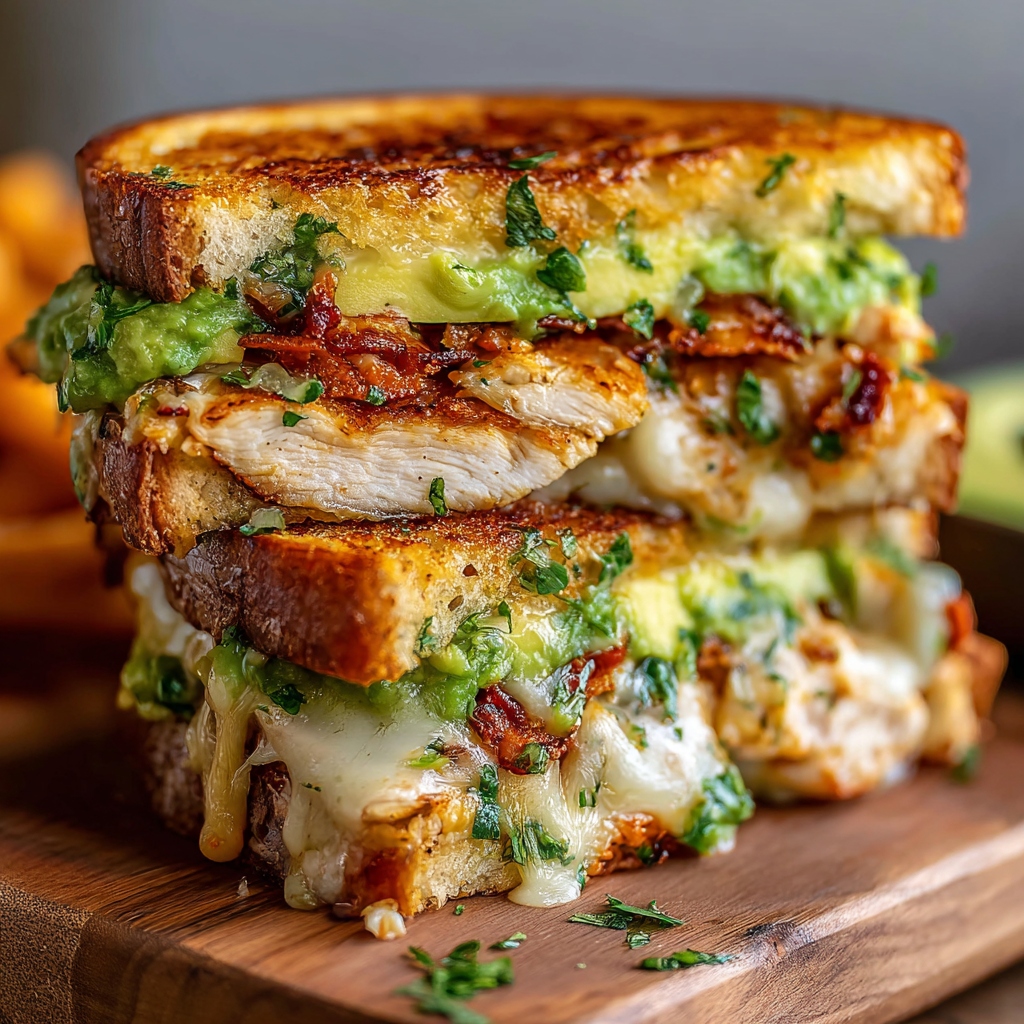
The Gastronomic Architecture: The “Lipid-Structural” Synergy
In the hierarchy of high-efficiency handhelds, the Chicken Avocado Melt represents a sophisticated study in Thermal Insulation and Textural Stratification. The technical challenge of an avocado-based melt is “Oxidation and Thermal Degradation”: avocado loses its vibrant hue and buttery structure when exposed to prolonged high heat. By utilizing the “Insulated Layering” technique—placing the avocado between the cold protein and the melting cheese—you create a thermal buffer that allows the cheese to reach its “Flow Point” without turning the avocado into a watery mash.
The “irresistibility” factor is driven by the Acetic-Lipid-Maillard Triad: the acidity of a spread (like dijonnaise), the healthy monounsaturated fats of the avocado, and the buttery, toasted exterior of the bread.
Essential Mise en Place: Technical Specs
To achieve a restaurant-grade “crunch” and prevent a “soggy-core,” the bread selection and the “Moisture-Barrier” application are the most critical factors.
The Foundation (The Bread & Protein)
- Sourdough or Ciabatta: Technical Requirement: These breads have a “Large-Alveoli” (holey) structure and a sturdy crust that can support the weight of the avocado without collapsing.
- Cooked Chicken Breast (150g): Thinly sliced or shredded. Expert Tip: Using seasoned, rotisserie-style chicken provides a pre-established umami base.
The “Melt” Matrix
- Ripe Avocado (1/2 per sandwich): Technical Requirement: Must be at the “Butter-Soft” stage. Slice into 0.5cm thick fans for uniform distribution.
- Cheese (2 slices): Sharp Cheddar, Monterey Jack, or Havarti. These have a medium “Melt-Index” and high fat content for a glossy finish.
- The “Moisture-Barrier” Spread: A blend of Mayonnaise, Dijon mustard, and a hint of lemon juice.
The Masterclass: Step-by-Step Culinary Execution
Phase 1: The “External-Lipid” Application
Generously butter the outside of your bread slices. Technical Requirement: Butter provides the milk solids necessary for a deep golden Maillard reaction, while a thin swipe of mayo on the outside can be used for an even “shatter-crisp” crust.
Phase 2: The “Internal-Barrier” Layering
Apply the dijonnaise to the inside of both slices. This acts as a Hydrophobic Barrier, preventing the juices from the chicken and avocado from migrating into the bread and making it soggy.
Phase 3: The “Thermal-Stack” Assembly
Place the chicken on the bottom slice, followed by the avocado fans. Sprinkle the avocado with salt and a squeeze of lemon (to inhibit enzyme-driven browning). Top with the cheese. Expert Tip: The cheese acts as a “glue,” anchoring the avocado to the top slice of bread.
Phase 4: The “Weighted-Radiant” Toast
Place the sandwich in a medium-low heat skillet. Use a Sandwich Press or a heavy pan to apply light pressure. Technical Requirement: Low heat is essential. You need enough time for the internal “Cold-Core” (the chicken and avocado) to reach ambient temperature before the bread burns. Flip when the bottom is mahogany-gold.
Common Technical Pitfalls to Avoid
- The “Sliding-Core”: If the avocado slices are too thick, the sandwich will lose structural integrity and “squish” out the sides. Keep slices thin and uniform.
- The “Soggy-Bottom”: Caused by using heat that is too low for too long. If the butter melts but doesn’t “sizzle,” the bread will absorb the fat rather than frying in it.
- Bland Profile: Avocado is a neutral fat. It requires acid and salt to activate its flavor. Never skip the lemon juice and sea salt on the avocado layer.
Frequently Asked Questions (Q&A)
| Question | Expert Answer |
|---|---|
| Can I add bacon? | Yes. It provides a “High-Frequency” salt-and-crunch contrast. Place it directly against the cheese for maximum adhesion. |
| Best way to keep it green? | The citric acid in the lemon juice and the “Oxygen-Barrier” created by the melted cheese will keep the avocado green for the duration of the meal. |
| What’s a good spicy kick? | Add sliced Pickled Jalapeños or a swirl of Sriracha into the dijonnaise spread. |