Follow Me On Social Media!
The Culinary Architect: Creamy Chicken Feta Pasta

The Gastronomic Architecture: The “Lactic-Emulsion” Balance
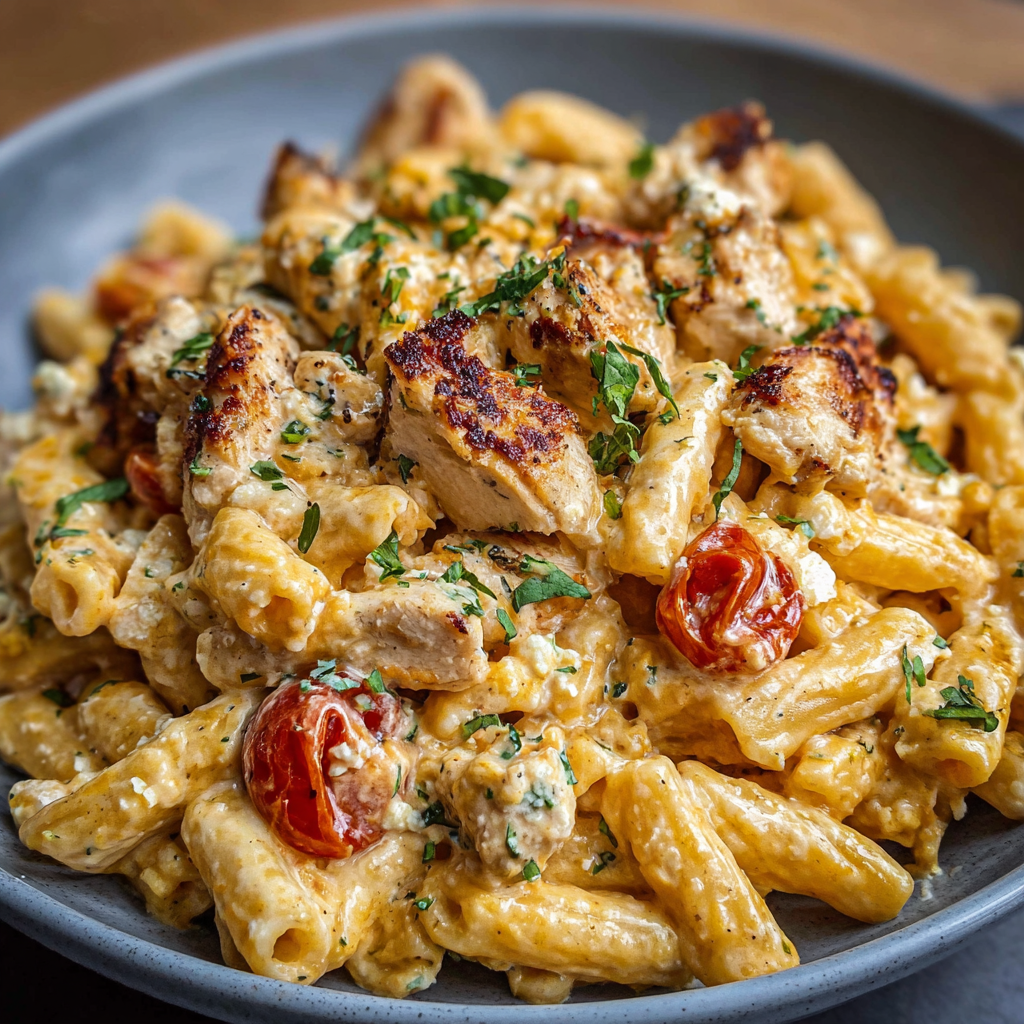
In the hierarchy of Mediterranean-inspired comfort food, Creamy Chicken Feta Pasta represents a sophisticated study in Ionic Destabilization and Lipid-Acidity Tuning. The technical challenge of feta cheese is its high protein-to-fat ratio and low pH, which causes it to resist melting into a smooth sauce unlike Brie or Mozzarella. By utilizing Hot Pasta Water and a Starch-Stabilized Matrix, you create a “Cremo-Feta” emulsion where the briny, sharp notes of the cheese are suspended in a silky, savory glaze that clings to the pasta’s surface.
The “irresistibility” factor is driven by the Saline-Acid-Alliaceous Triad: the salt from the feta brine, the citric acid of lemon, and the sulfurous depth of sautéed garlic create a flavor profile that is simultaneously rich and refreshing.
Essential Mise en Place: Technical Specs
To achieve a restaurant-grade “velvet” finish and succulent chicken, the pasta shape and the “Starch-Water” retention are the most critical factors.
The Foundation (The Protein & Grain)
- Chicken Breast or Thighs (500g): Technical Requirement: Cut into uniform 2cm strips. Season with dried oregano and paprika to establish a “Maillard-Spice” base.
- Rigatoni or Penne (350g): Expert Tip: Choose a “Rigate” (ridged) pasta. The ridges act as micro-channels that trap the feta emulsion, ensuring a higher sauce-to-pasta ratio in every bite.
The “Feta-Cream” Matrix
- Feta Cheese (200g): Technical Requirement: Use feta stored in brine. It has a higher moisture content and melts more effectively than “dry-crumb” varieties.
- Heavy Cream (150ml) & Pasta Water (120ml): The primary thinning and stabilizing agents.
- Fresh Additions: 2 cups Baby Spinach and 100g Sun-dried tomatoes (in oil).
- Aromatics: 4 cloves minced garlic and 1 tsp lemon zest.
The Masterclass: Step-by-Step Culinary Execution
Phase 1: The “Fond-Building” Sear
Heat olive oil in a large skillet. Sear the chicken until a golden crust forms and the interior hits 74°C. Remove the chicken. Technical Requirement: The caramelized bits (fond) remaining in the pan contain the concentrated essence of the oregano and chicken juices—do not wash the pan.
Phase 2: The “Aromatic-Deglaze”
Add the sun-dried tomatoes and garlic to the skillet. Sauté for 60 seconds until the garlic is a “Pale Straw” color. Pour in the heavy cream and half of the crumbled feta. Expert Tip: Use a wooden spoon to scrape up the fond; this integrates the savory brown bits into the white cream for a “Toasted-Lactic” depth.
Phase 3: The “Starch-Water” Emulsion
Boil your pasta until al dente. Just before draining, reserve 1 cup of the cloudy pasta water. Add 120ml of this water to the skillet. Technical Requirement: The starches in the water act as a bridge between the oily cheese fats and the liquid cream, preventing the sauce from “breaking.”
Phase 4: The “Structural-Wilting” Assembly
Fold the pasta, chicken, and baby spinach into the sauce. Toss over low heat for 2 minutes. The residual heat will wilt the spinach and allow the remaining feta crumbles to soften into “lava-like” pockets of salt and cream. Finish with lemon zest.
Common Technical Pitfalls to Avoid
- The “Grainy” Sauce: Caused by overheating the feta too quickly. Keep the heat on low-medium once the cheese is added to prevent the proteins from “seizing” into hard curds.
- The “Dry” Pasta: Pasta continues to absorb liquid after it is cooked. If the dish looks dry, add more of the reserved pasta water one tablespoon at a time until the sauce is glossy.
- The “Salt-Surcharge”: Feta is exceptionally salty. Do not salt the sauce until you have tasted it at the very end. The pasta water and cheese usually provide sufficient salinity.
Frequently Asked Questions (Q&A)
| Question | Expert Answer |
|---|---|
| Why add lemon zest? | The zest contains Limonene oils which provide a high-frequency aromatic lift that cuts through the heavy lipids of the feta and cream. |
| Can I use baked feta? | Yes. This is the “Viral TikTok” method. Baking the feta with tomatoes first creates a “confit” texture that is even creamier but lacks the sautéed garlic depth. |
| Best vegetable swaps? | Artichoke hearts or Kalamata olives provide a high-acid, Mediterranean complexity that complements the brine of the feta. |