Follow Me On Social Media!
Shrimp Saganaki (Greek Shrimp in Tomato Feta Sauce, 30 Min)
Shrimp saganaki — Greek classic with plump shrimp in chunky tomato sauce, melted feta, fresh oregano. Authentic Mediterranean dinner in 30 minutes.

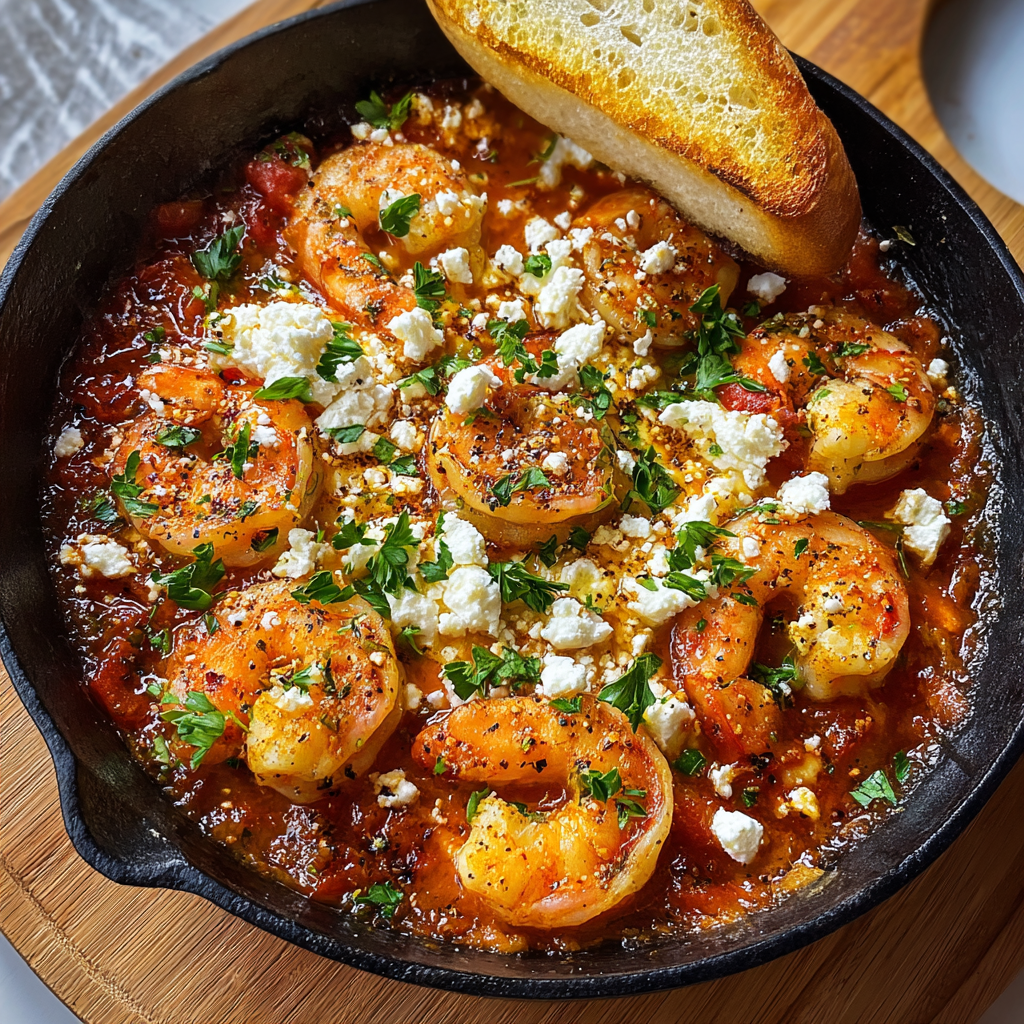
This is the Greek dish I order at every Greek restaurant, then finally taught myself to make at home. Shrimp saganaki is bright pink shrimp simmered in chunky tomato sauce with garlic and herbs, topped with crumbled feta that melts into salty pockets, broiled until bubbly and slightly charred. Served straight from the skillet with crusty bread for sopping up every drop of sauce. Authentic Mediterranean dinner in 30 minutes — fancier than it should be for the effort.
Fun fact: “saganaki” doesn’t refer to a dish — it refers to the small two-handled Greek skillet (“sagani”) it’s traditionally served in. Anything cooked in this pan is “saganaki.” So fried cheese saganaki, shrimp saganaki, mussel saganaki — they’re all named after the dish, not the cooking method. The Greek tradition is to bring the bubbling sagani straight to the table for theater.
Why this recipe works
- Don’t fully cook the shrimp before the broiler. They finish under the broiler — overcooked shrimp turn rubbery, and you only get one chance.
- Use block feta, not crumbled. The big chunks melt into pockets that contrast with the chunky tomato sauce. Pre-crumbled feta has anti-caking agents that prevent melting.
- Cast-iron is the right pan. It can go from stovetop to broiler safely and retains heat for serving bubbly hot at the table.
Ingredients
Serves 4 as a main with bread, 6 as an appetizer.
For the shrimp
- 1.5 lb large peeled and deveined shrimp (16-20 count is ideal)
- 1 tsp salt + 1/2 tsp black pepper + 1/2 tsp dried oregano
For aromatics
- 1/4 cup good olive oil + 1 medium yellow onion diced + 5 cloves garlic minced
- 1 tsp red pepper flakes (or more for heat)
For the tomato base
- 1 (28 oz) can crushed or diced tomatoes (San Marzano if you can find them)
- 2 tbsp tomato paste + 1 tsp dried oregano + 1 tsp dried thyme + 1 bay leaf
- 1/2 cup dry white wine OR 2 tbsp ouzo (traditional Greek anise spirit — optional but special)
For the feta topping
- 8 oz Greek feta (block in brine), broken into large irregular chunks
To finish
- 2 tbsp fresh chopped dill + 2 tbsp fresh chopped parsley
- 1 tbsp fresh lemon juice + lemon wedges + crusty bread for serving
Smart substitutions
- Without wine or ouzo: Use 1/2 cup chicken broth + 1 tbsp red wine vinegar
- Different seafood: Mussels (steam them in the sauce), scallops, or chunks of firm white fish
- Spicier: Double the red pepper flakes or add a chopped Calabrian chile
Instructions
Step 1: Season the shrimp
Pat shrimp dry with paper towels and season with salt, pepper, and oregano. Let them sit at room temperature while you start the sauce — taking the chill off helps them cook evenly.
Step 2: Sauté aromatics
Heat olive oil in a large oven-safe skillet (cast-iron is ideal) over medium heat. Add diced onion; cook 5 minutes until softened. Add garlic and red pepper flakes; cook 1 minute more — don’t let the garlic brown.
Step 3: Build the tomato sauce
Add tomato paste; stir 30 seconds. Pour in wine or ouzo; let it bubble 1 minute to cook off the alcohol. Add crushed tomatoes, oregano, thyme, and the bay leaf. Bring to a simmer; cook uncovered 10 minutes until the sauce thickens slightly. Remove the bay leaf.
Step 4: Add the shrimp
Nestle the seasoned shrimp into the sauce in a single layer. Spoon some sauce over each piece. Simmer 3-4 minutes — the shrimp will turn pink and curl, but should still be slightly underdone. They finish under the broiler.
Step 5: Top with feta and broil
Preheat the broiler. Scatter the feta chunks over the shrimp and sauce. Transfer the skillet to the broiler; broil 3-4 minutes until the feta is melted, lightly golden in spots, and bubbling. Watch carefully — it goes from perfect to burnt in 30 seconds.
Step 6: Garnish and serve
Pull the skillet from the broiler. Sprinkle with fresh dill and parsley. Squeeze fresh lemon over the top. Serve straight from the skillet (carefully — it’s hot) with lemon wedges and warm crusty bread for sopping up the sauce. Bring it to the table while it’s still bubbling for maximum drama.
Nutrition information
Per serving (1/4 of recipe, no bread):
- Calories: 440 kcal
- Protein: 36 g
- Carbohydrates: 18 g
- Fat: 22 g (mostly from olive oil and feta — heart-healthy Mediterranean fats)
- Selenium: 90% DV
- Calcium: 35% DV (from feta)
Pro tips for restaurant-quality results
- Find real Greek feta in brine. Trader Joe’s sells it, as does most Whole Foods. The brine is what keeps it creamy.
- Add ouzo for authenticity. Even a tablespoon adds that anise note that makes the dish feel really Greek. Trader Joe’s or Total Wine carry it.
- Serve over orzo. Toss cooked orzo pasta with olive oil and lemon zest as a base — the sauce coats it beautifully and turns the dish into a heartier dinner.
- Don’t skip the herbs. Fresh dill and parsley aren’t garnish — they’re the flavor finish. Dried won’t substitute.
Frequently asked questions
Can I use frozen shrimp?
Yes — thaw fully overnight in the fridge (or under cold running water if rushed) and pat very dry before cooking. Wet shrimp won’t sear properly.
What if I don’t have an oven-safe skillet?
Make the sauce in a regular skillet, then transfer everything to a baking dish, top with feta, and broil. Slightly less dramatic presentation but identical flavor.
Can I prepare this in advance?
Make the tomato sauce up to 2 days ahead and refrigerate. When ready to serve, warm the sauce, add fresh shrimp and feta, broil, and serve. The shrimp must be cooked fresh for best texture.
What’s ouzo and where do I find it?
Ouzo is a Greek anise-flavored spirit (similar to French pastis or Italian sambuca). Most well-stocked liquor stores carry it. If you can’t find ouzo, sub a splash of pastis or just use white wine — the dish is great either way.
Can I add other vegetables?
Diced bell peppers, sliced fennel, or cherry tomatoes all work added with the onion. For greens, fold in baby spinach or arugula off the heat at the end so they wilt without overcooking.
What wine pairs with shrimp saganaki?
A crisp Greek Assyrtiko (from Santorini) is the traditional pairing. Otherwise, Sauvignon Blanc, Pinot Grigio, or a dry rosé all work beautifully. Avoid heavy reds — they overpower the bright Mediterranean flavors.