Follow Me On Social Media!
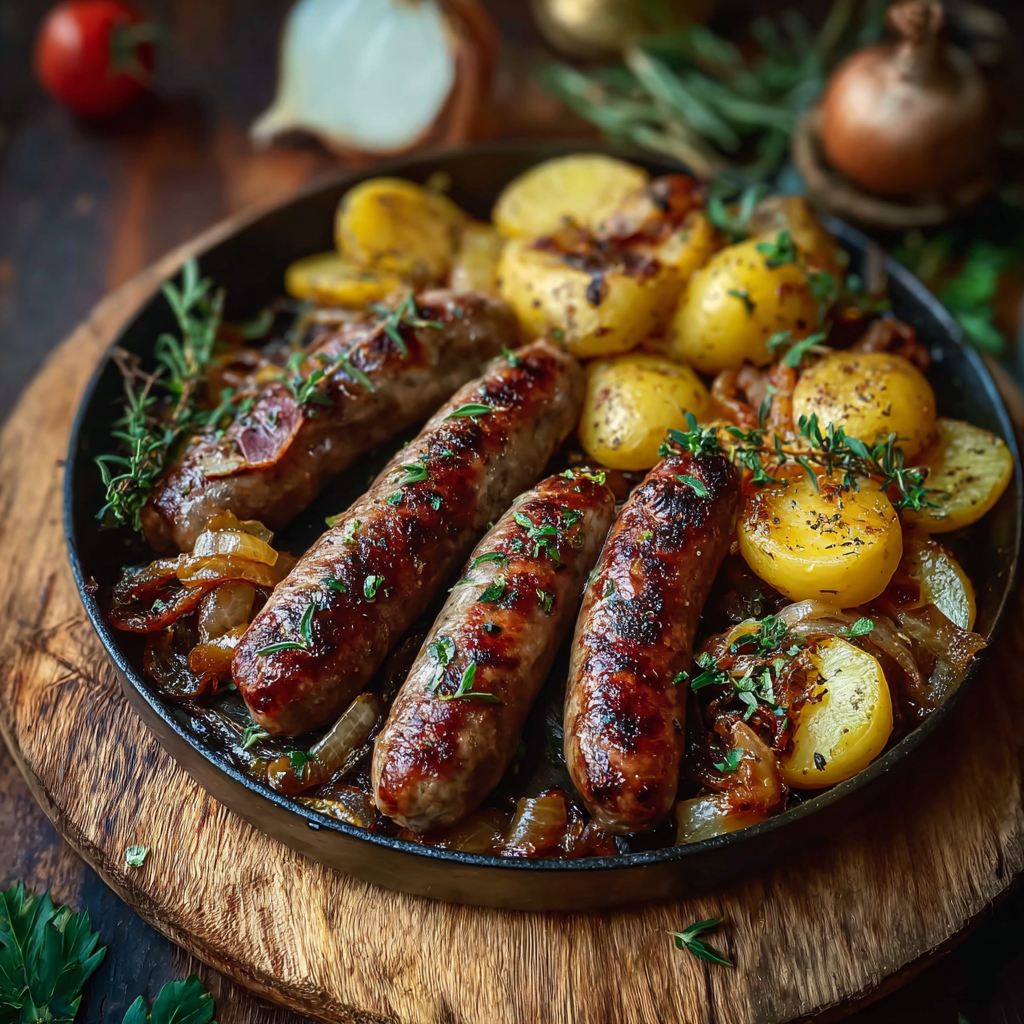
Artisanal Oven-Baked Medley: Premium Sausages, Beef, and Root Vegetables

The Gastronomic Synergy of Triple-Protein Roasting
In the world of elevated comfort food, the Oven-Baked Sausages, Beef & Potatoes traybake stands as a masterclass in flavor extraction and textural contrast. While often categorized as a simple “sheet-pan” meal, the professional execution of this dish relies on the scientific principle of staggered roasting and fat-rendering. Data from culinary heat-distribution studies indicates that combining different protein densities—such as the succulent, fast-rendering fats of artisanal sausages with the lean, muscular structure of premium beef—creates a self-basting environment that keeps the accompanying root vegetables exceptionally moist.
This preparation transcends the standard rustic roast by focusing on the Maillard reaction—the chemical process that occurs when heat transforms sugars and proteins into a savory, browned crust. By meticulously balancing the cooking times of the beef and the sausages, you ensure that every component reaches its peak internal temperature without sacrificing the crisp, golden exterior of the potatoes.
The Essential Mise en Place: Ingredients and Technical Specs
Achieving a five-star result requires an uncompromising approach to your mise en place. Each ingredient must be selected for its ability to withstand high-convection heat while contributing to the dish’s aromatic profile.
The Protein Components
- Center-Cut Beef Sirloin (1 lb / 450g): Chosen for its tenderness and ability to sear quickly. Cut into uniform 1.5-inch (4 cm) cubes to ensure they remain medium-rare to medium while the potatoes finish.
- Artisanal Links (4–6 pieces): Select a coarse-ground sausage like a Toulouse or a smoked Kielbasa. These varieties provide a robust casing that “snaps” upon biting, offering a necessary textural counterpoint to the tender beef.
The Starch and Aromatics
- High-Starch Potatoes (1.5 lbs / 700g): Yukon Golds are preferred for their “buttery” interior and thin skins, which crisp beautifully without peeling.
- The Aromatic Infusion: A blend of cold-pressed extra virgin olive oil, smoked Spanish paprika (Pimentón), and fresh-cracked Tellicherry peppercorns.
- Herb Profile: Fresh rosemary sprigs and whole, unpeeled garlic cloves. Roasting garlic in its skin prevents bitterness and results in a sweet, spreadable paste.
The Masterclass: Culinary Execution and Timing
Professional traybaking is an exercise in timing. To prevent the beef from overcooking while the potatoes remain raw, a staggered approach is essential.
Phase 1: High-Heat Potato Foundation
Preheat your oven to 425°F (220°C). Toss the potato wedges and sliced red onions with the seasoned oil. Spread them on a pre-heated heavy-gauge baking sheet. Starting with a hot pan ensures immediate searing on the bottom of the potatoes. Roast for 15 minutes alone to give the starch a “head start.”
Phase 2: Integrating the Proteins
Remove the pan and arrange the beef cubes and sausages among the semi-cooked potatoes. This is the Flavor Fusion stage. As the sausages heat up, they release seasoned oils that coat the potatoes, deepening the flavor profile.
Phase 3: The Deglazing Finish
Expert Tip: Splash 1/4 cup of dry red wine or beef consommé over the tray 10 minutes before the end of cooking. This creates a light steam that finishes the interior of the beef while lifting the caramelized “fond” from the pan, creating a natural jus.
Nutritional Insights and Modern Adaptations
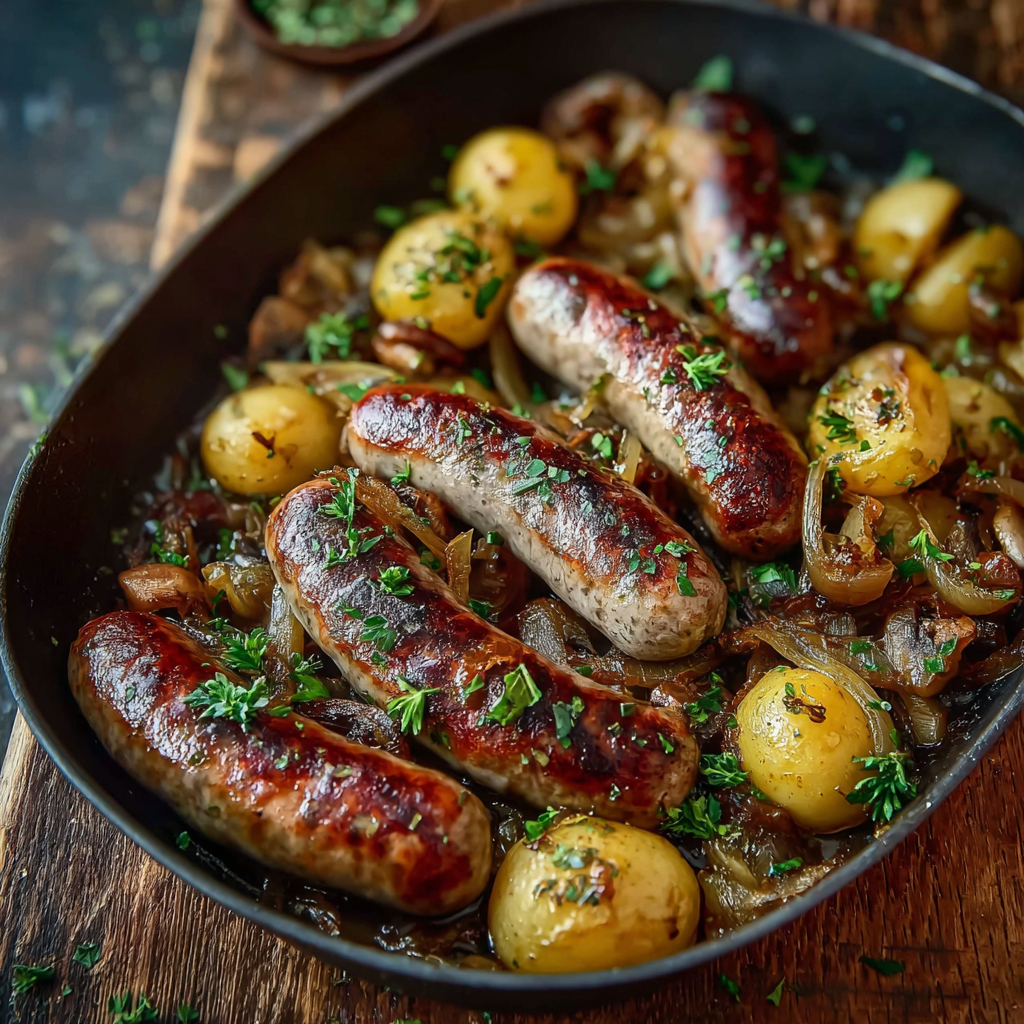
This dish provides a robust balance of macronutrients, making it an ideal post-exertion recovery meal.
- Protein Density: With approximately 35g of protein per serving, it supports muscle synthesis and satiety.
- Lower-Carb Variation: Substitute half of the potatoes with cauliflower florets or halved Brussels sprouts. These vegetables roast at a similar rate and absorb the meat juices effectively.
- Keto-Friendly Adjustments: Focus on high-fat sausages and increase the ratio of beef, replacing the potatoes entirely with radishes (which lose their pepperiness and turn “potato-like” when roasted).
Common Technical Pitfalls to Avoid
- Overcrowding the Vessel: If the ingredients are touching too closely, they will steam in their own moisture rather than roasting. Use two pans if necessary to ensure air circulation.
- Uneven Slicing: If the beef is cut smaller than the potatoes, it will dry out. Aim for “bold” cuts of beef and “slender” wedges of potato.
- Cold Meat: Always bring your beef and sausages to room temperature for 20 minutes before roasting. Cold protein shocks the pan and leads to uneven cooking.
Conclusion: The Ultimate One-Pan Symphony
The Oven-Baked Sausages, Beef & Potatoes traybake is a testament to the fact that professional-quality meals do not require complex equipment—only an understanding of heat and timing. By following this staggered roasting method, you achieve a dish where the beef is succulent, the sausages are snappy, and the potatoes are infused with the essence of both. It is a sophisticated, time-efficient solution for the modern gourmet.
We encourage you to experiment with different sausage varieties—perhaps a spicy Chorizo for a Mediterranean flair—and share your results in the community comments below. Don’t forget to subscribe to our culinary newsletter for more professional-grade home cooking guides.
Frequently Asked Questions (Q&A)
Q: Should I peel the potatoes for this dish?
A: Professionally speaking, leaving the skins on Yukon Gold or red potatoes adds texture and nutritional fiber. However, if using thick-skinned Russets, peeling is recommended to avoid a “leathery” exterior.
Q: How can I tell when the beef is perfectly cooked without a thermometer?
A: Use the “press test.” Medium-rare beef should feel like the fleshy part of your palm under your thumb when your thumb and middle finger are touching. However, for total precision, pulling the tray when the beef hits an internal temp of 135°F (for a 145°F finish) is the gold standard.
Q: Can I prep this dish the night before?
A: You can chop the meat and vegetables, but do not toss them in the oil and salt until right before baking. Salt draws out moisture, which will make the potatoes soggy and prevent them from crisping in the oven.
Q: What is the best way to store and reheat leftovers?
A: Store in an airtight container for up to 3 days. To maintain the texture, reheat in a 350°F (175°C) oven or an air fryer for 8–10 minutes. Avoid the microwave, as it will make the sausage casings rubbery.