Follow Me On Social Media!
Baked Caesar Chicken: The Science of “Proteolytic Tenderness”

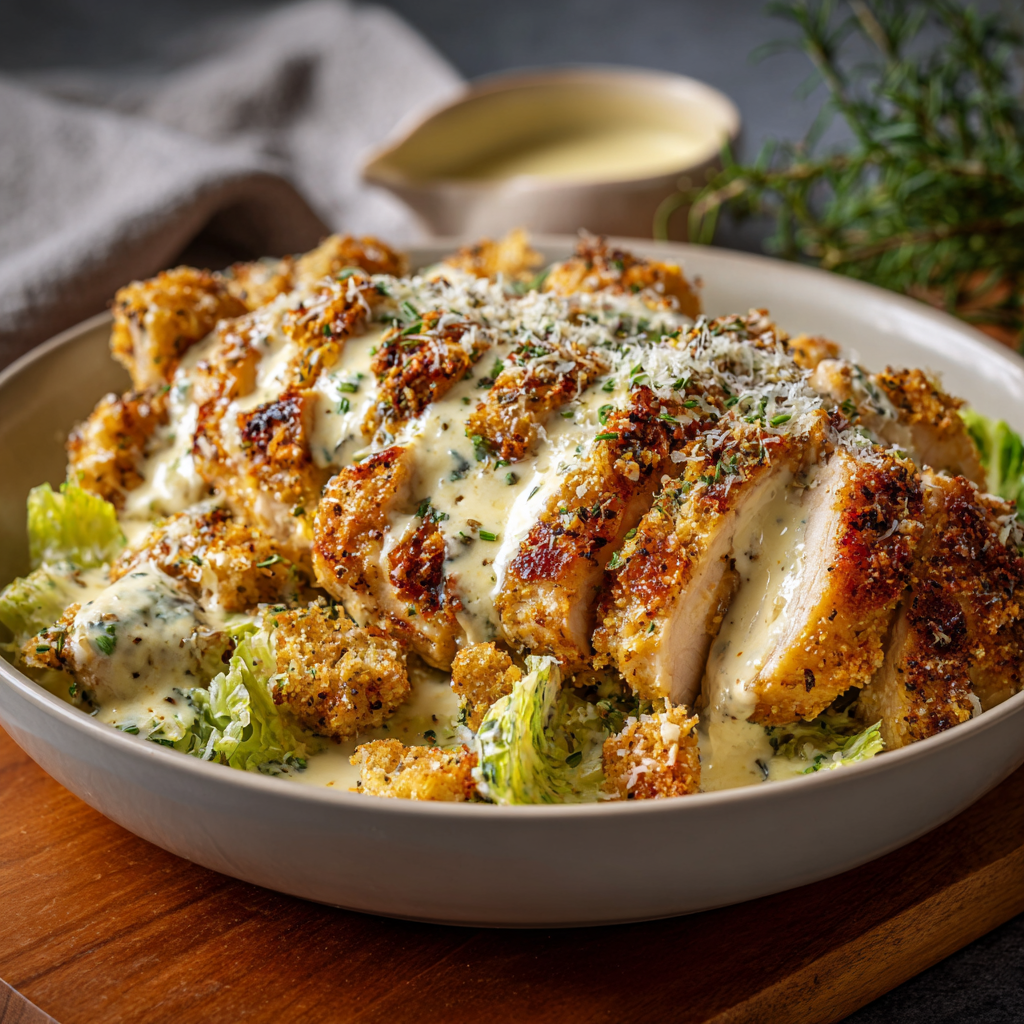
Why Caesar Dressing is a Secret Culinary Weapon
While traditionally a salad topper, Caesar dressing is a masterclass in Enzymatic Marination. The dressing contains two key components that transform chicken breast: Lactic Acid (from Parmesan and lemon) and Proteases (enzymes often found in the egg-based emulsion or fermented anchovy base).
According to food chemistry, the acid gently denatures the surface proteins, allowing moisture to be trapped inside, while the fats in the dressing create a Lipid Barrier that prevents the chicken from drying out in the high-heat environment of the oven. The result is a “velveting” effect similar to high-end stir-fry techniques.
Ingredients List: The Savory Emulsion Matrix
- 4 Boneless, Skinless Chicken Breasts: (Approx. 1.5 – 2 lbs).
- 1 cup Creamy Caesar Dressing: Use a high-quality, refrigerated brand for the best “clinging” properties.
- 1/2 cup Greek Yogurt or Sour Cream: The Logic: This boosts the acidity and thickness, ensuring the sauce doesn’t just run off the meat.
- 1 cup Shredded Parmesan Cheese: Divided.
- 1/2 tsp Garlic Powder & 1/2 tsp Black Pepper.
- Optional: 1/2 cup Panko Breadcrumbs for a “crunch” factor.
Timing: Data-Driven Efficiency
| Phase | Duration | Data Insight |
| The Coating | 2 Minutes | Ensuring total coverage prevents “evaporative dry-out.” |
| The Bake ($190$°C) | 25-30 Minutes | Chicken is safe at $74$°C ($165$°F); pull at $71$°C ($160$°F). |
| The Broil | 2 Minutes | High heat triggers the Maillard Reaction on the cheese. |
| Total Time | Approx. 35 Minutes | High-efficiency weeknight protein. |
Step-by-Step Instructions
Step 1: The Protein Prep
Preheat oven to 375°F (190°C). Pat the chicken breasts dry with paper towels. The Science: Moisture on the surface of the meat will dilute the sauce and prevent it from adhering properly.
Step 2: The Sauce Synthesis
In a medium bowl, whisk together the Caesar dressing, Greek yogurt, garlic powder, pepper, and 1/2 cup of the Parmesan cheese. Actionable Tip: If the sauce feels too thin, add another tablespoon of Parmesan. You want a “heavy cream” consistency.
Step 3: The Enrobing
Place the chicken in a baking dish. Spread the sauce generously over each breast. The Logic: You are essentially “braising” the chicken in a fat-rich environment, which protects the delicate fibers from the direct heat of the oven.
Step 4: The Thermal Set
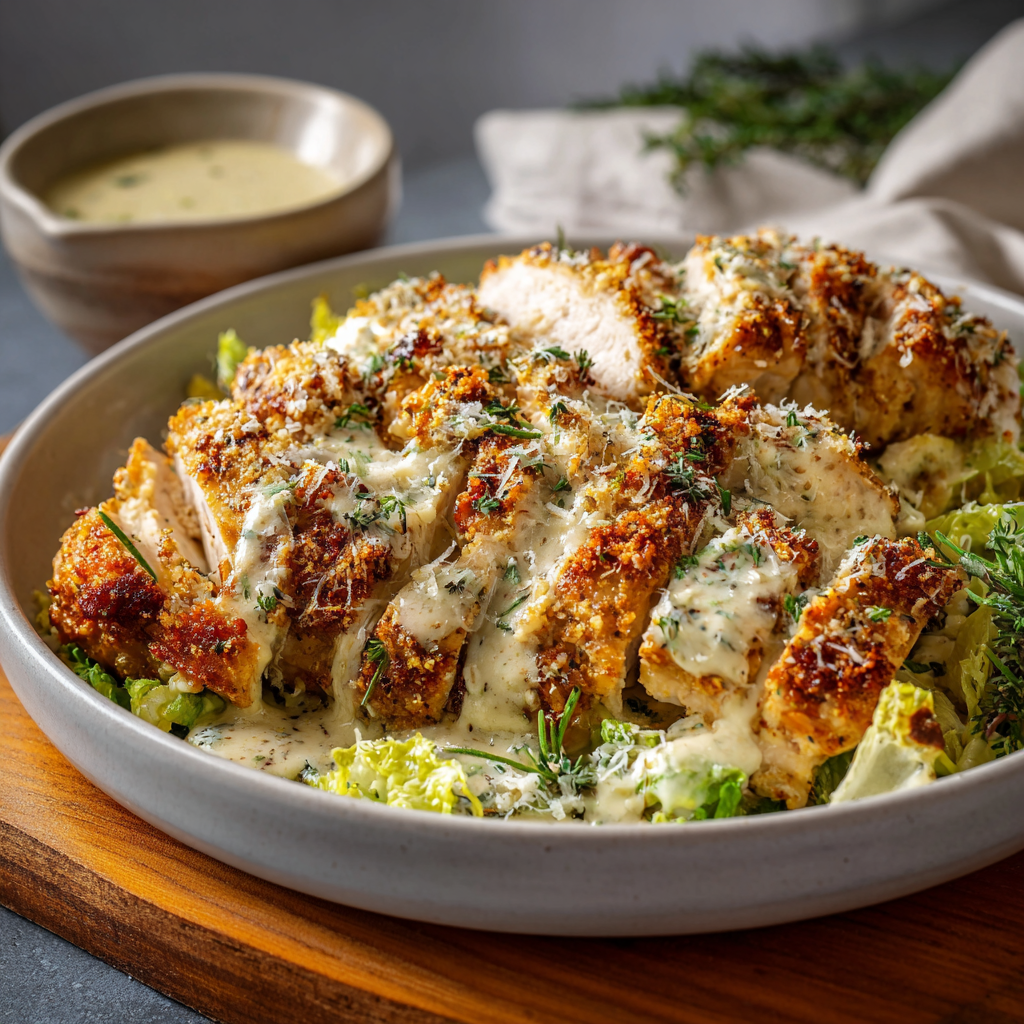
Bake for 25–30 minutes. Visual Cue: The sauce should look opaque and begin to bubble at the edges.
Step 5: The Crust Crystallization
Sprinkle the remaining 1/2 cup of Parmesan (and Panko, if using) over the chicken. Turn the oven to Broil for 2–3 minutes. The Physics: The high heat causes the cheese to undergo dehydration and browning, creating a savory, salty crust that contrasts with the tender meat.
Success Tips & Common Mistakes
- The “Watery Sauce” Fail: This usually happens if the chicken was frozen and not thawed/dried properly. Excess water from the chicken will “leak” into the sauce, breaking the emulsion.
- The “Rubbery” Fail: Check your internal temperature! Because of the sauce, the chicken looks moist even when overcooked. Use a meat thermometer to pull the chicken the moment it hits 160°F (71°C).
- The Flavor Boost: Stir in a teaspoon of Dijon mustard or a splash of Worcestershire sauce into the dressing for extra depth.
Nutritional Information (Per Serving)
- Calories: 380 kcal.
- Protein: 42g.
- Total Fat: 18g.
- Net Carbs: 4g.

Conclusion
Baked Caesar Chicken is a triumph of pantry-staple engineering. By utilizing the pre-balanced acidity and fats of Caesar dressing, you create a complex, “melt-in-your-mouth” entree with almost zero active prep time.