Follow Me On Social Media!
Baked Feta Potatoes: The Science of “Osmotic Crispness & Lipid Fusion”

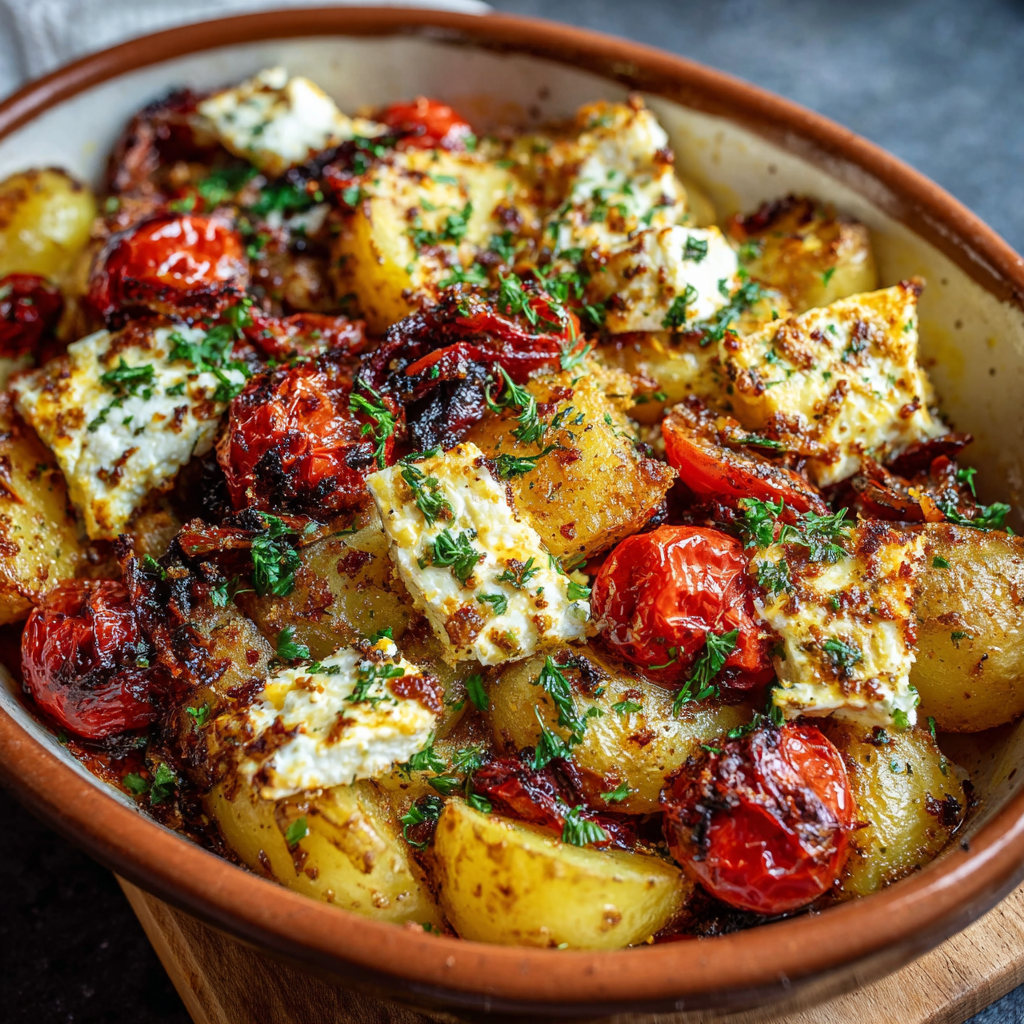
This dish—often referred to as the “Feta Roasties”—is a study in Surface Dehydration and Salty-Fat Emulsification. By roasting potatoes alongside a block of feta, you create a dual-texture environment: the potato starch undergoes gelatinization and then crystallization (crunch), while the feta’s protein structure softens but doesn’t fully melt, thanks to its high acidity.
Ingredients List: The Starch & Brine Matrix
- 2 lbs Yukon Gold or Russet Potatoes: The Science: Yukon Golds provide a “creamy” interior due to medium starch content, while Russets offer the “crispiest” exterior due to high amylose.
- 7-8 oz Block of Feta Cheese: (Sheep’s milk feta is preferred for its higher fat content and “meltability”).
- 1/3 cup Extra Virgin Olive Oil: The heat conductor.
- 1 tsp Dried Oregano & 1/2 tsp Chili Flakes.
- 3-4 cloves Garlic: Smashed.
- Fresh Lemon Zest & Parsley: To provide a “top-note” acidity.
Timing: Data-Driven Efficiency
| Phase | Duration | Data Insight |
| Parboiling (Optional) | 8 Minutes | Gelatinizes the outer starch layer for a “shagged” edge. |
| The Primary Roast | 30 Minutes | Removes internal moisture to allow for Maillard browning. |
| The Feta Fusion | 15 Minutes | Softens the cheese proteins without “breaking” the fat. |
| Total Time | Approx. 55 Minutes | High-crunch utility dish. |
Step-by-Step Instructions
Step 1: The Starch “Rough-Up”
Preheat oven to 400°F (200°C). Peel and cube your potatoes. The Physics: If you parboil them for 8 minutes and then shake them in the pot, you create a “starchy slurry” on the surface. This increased surface area results in a significantly crunchier crust once the oil hits it.
Step 2: The Lipid Coating
Toss the potatoes with olive oil, salt, and half the oregano. Spread them on a large sheet pan, leaving a space in the center. Actionable Tip: Do not crowd the pan. The Logic: If potatoes are too close, they will “steam” each other, leading to a soft, mushy texture instead of a crisp one.
Step 3: The Feta Anchor
Place the whole block of feta in the center of the pan. Drizzle with a little more oil and the remaining spices. The Science: Feta has a low pH (high acidity). Unlike mozzarella, it won’t turn into a puddle; it will soften and “weep” its brine into the surrounding potatoes, seasoning them from the inside out.
Step 4: The Maillard Completion
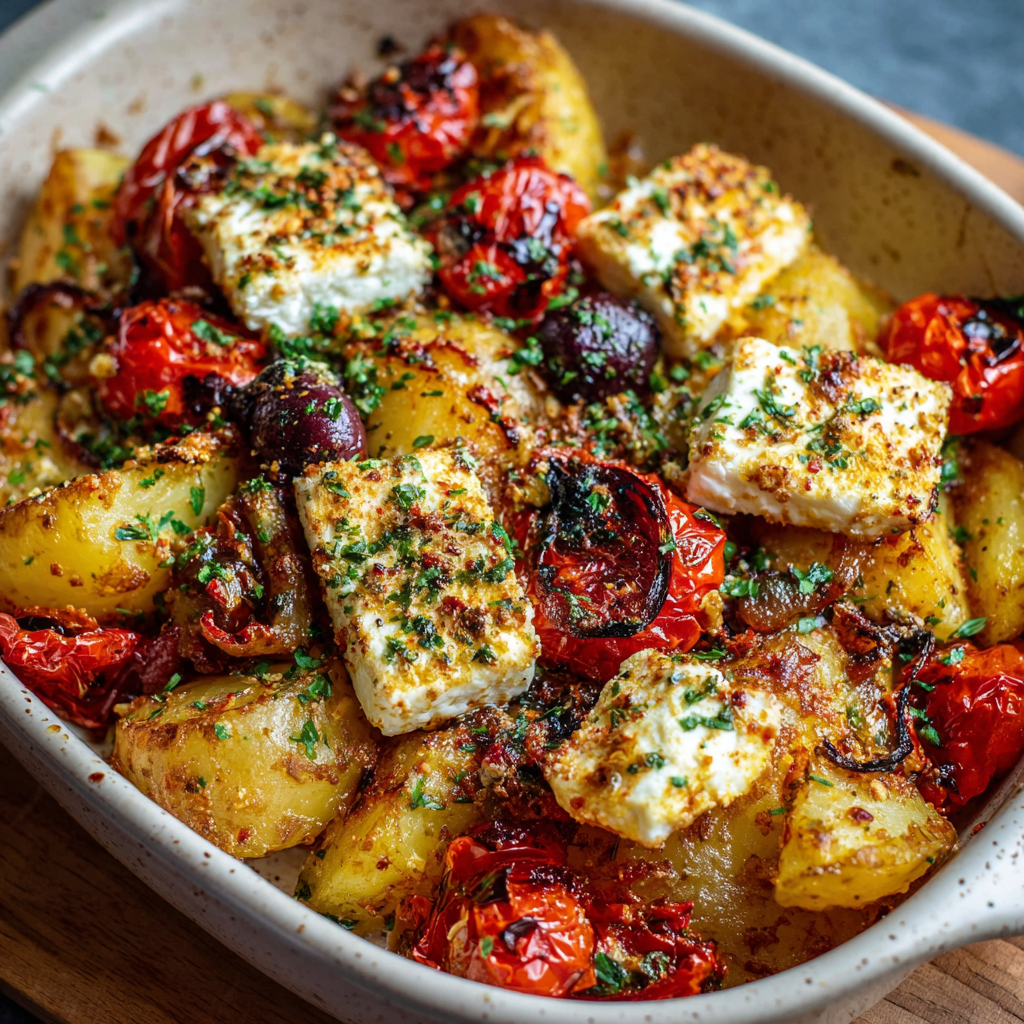
Roast for 40-45 minutes. Halfway through, flip the potatoes but leave the feta intact. Visual Cue: The potatoes should be deep golden-brown, and the edges of the feta should be slightly charred and bubbly.
Step 5: The “Smash” Integration
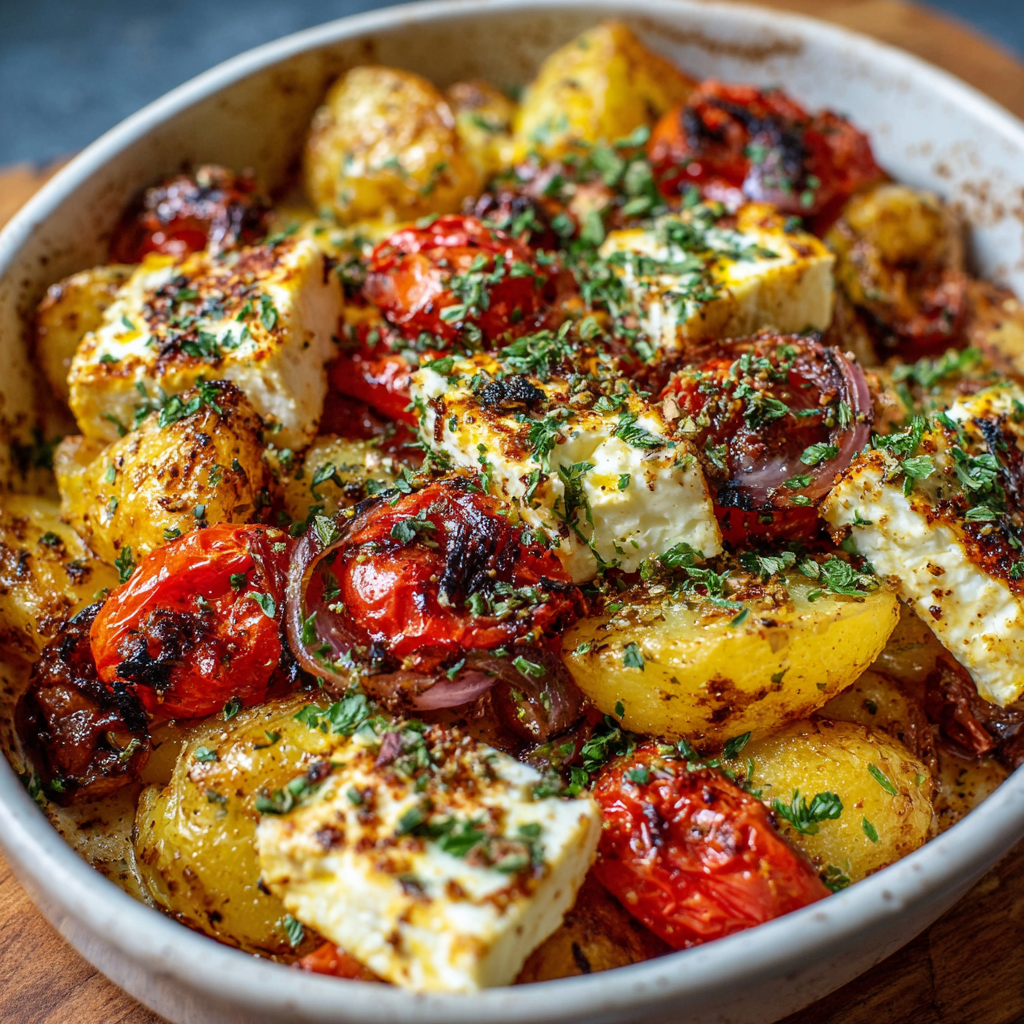
Remove from the oven. Use a fork to break the feta into chunks and toss it with the hot potatoes. Add lemon zest and parsley. The Result: The hot potato steam and the softened cheese create a “spontaneous sauce” that coats the crispy tubers.
Success Tips & Common Mistakes
- The “Soggy Potato” Fail: This happens if you use too much oil or a low temperature. You need high, dry heat to evaporate the water before the interior overcooks.
- The “Bitter Garlic” Fail: If you mince the garlic, it will burn at $200$°C. Use smashed, whole cloves to infuse the oil with flavor without the risk of carbonization.
- The Flavor Boost: Add a tablespoon of Honey over the feta in the last 5 minutes of roasting. The sugar will caramelize against the salt of the cheese, creating a “hot honey” effect.
Nutritional Information (Per Serving)
- Calories: 320 kcal.
- Total Fat: 18g.
- Carbohydrates: 34g.
- Protein: 8g.
Conclusion
Baked Feta Potatoes are a masterclass in moisture and salt management. By leveraging the heat-stability of feta and the starch-profile of the potato, you create a dish that balances a glass-like crunch with a creamy, briny finish.