Follow Me On Social Media!
Banana & Peanut Butter Smoothie: The Science of “Liquid Emulsification & Satiety”

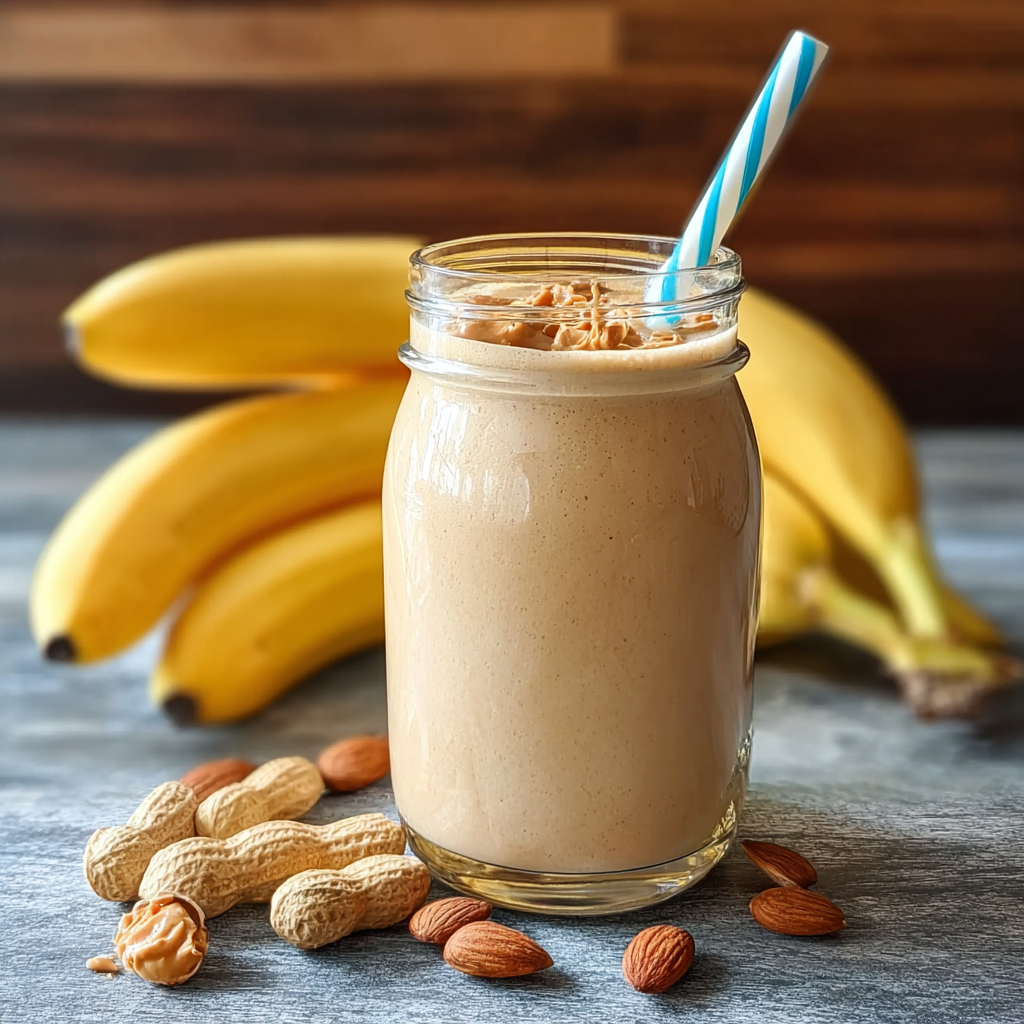
A Banana & Peanut Butter Smoothie is a textbook example of a Starch-Lipid Colloid. The creamy texture isn’t just luck; it’s the result of the banana’s pectin and sucrose acting as a stabilizer for the peanut butter’s healthy fats.
When blended, the mechanical shear breaks the peanut butter into microscopic droplets, which are then suspended in the liquid base. This creates a thick, “slow-moving” liquid that coats the palate and triggers satiety hormones (PYY and GLP-1) faster than a thin, watery drink.
Ingredients List: The Macro-Nutrient Matrix
- 1 Large Banana: The Science: For the best texture, use a frozen banana. Freezing creates tiny ice crystals that, when blended, mimic the “mouthfeel” of dairy fat without the extra calories.
- 2 tbsp Natural Peanut Butter: Provides the monounsaturated lipids and protein.
- 1 cup Liquid Base: (Milk, Almond milk, or Oat milk). The Logic: Oat milk contains beta-glucans which further thicken the emulsion.
- 1/2 cup Greek Yogurt: Adds probiotic density and a slight lactic tang to balance the sugars.
- 1/2 tsp Cinnamon: Contains cinnamaldehyde, which helps manage the insulin response to the banana’s natural sugars.
- Optional: A handful of spinach (the chlorophyll is tasteless when masked by peanut butter) or a scoop of protein powder.
Timing: Data-Driven Efficiency
| Phase | Duration | Data Insight |
| The Layering | 30 Seconds | Placing liquids at the bottom prevents “blade-lock.” |
| High-Shear Blend | 45 Seconds | Required to fully emulsify the peanut butter lipids. |
| The Pulse Finish | 10 Seconds | Re-incorporates air for a “mousse-like” lightness. |
| Total Time | Approx. 2 Minutes | High-fuel utility meal. |
Step-by-Step Instructions
Step 1: The Liquid-First Architecture
Pour your milk and yogurt into the blender first. The Physics: Placing liquids closest to the blades creates a vortex that pulls the heavier solids (frozen bananas) down into the “cutting zone,” ensuring a smoother blend without air pockets.
Step 2: The Lipid Drop
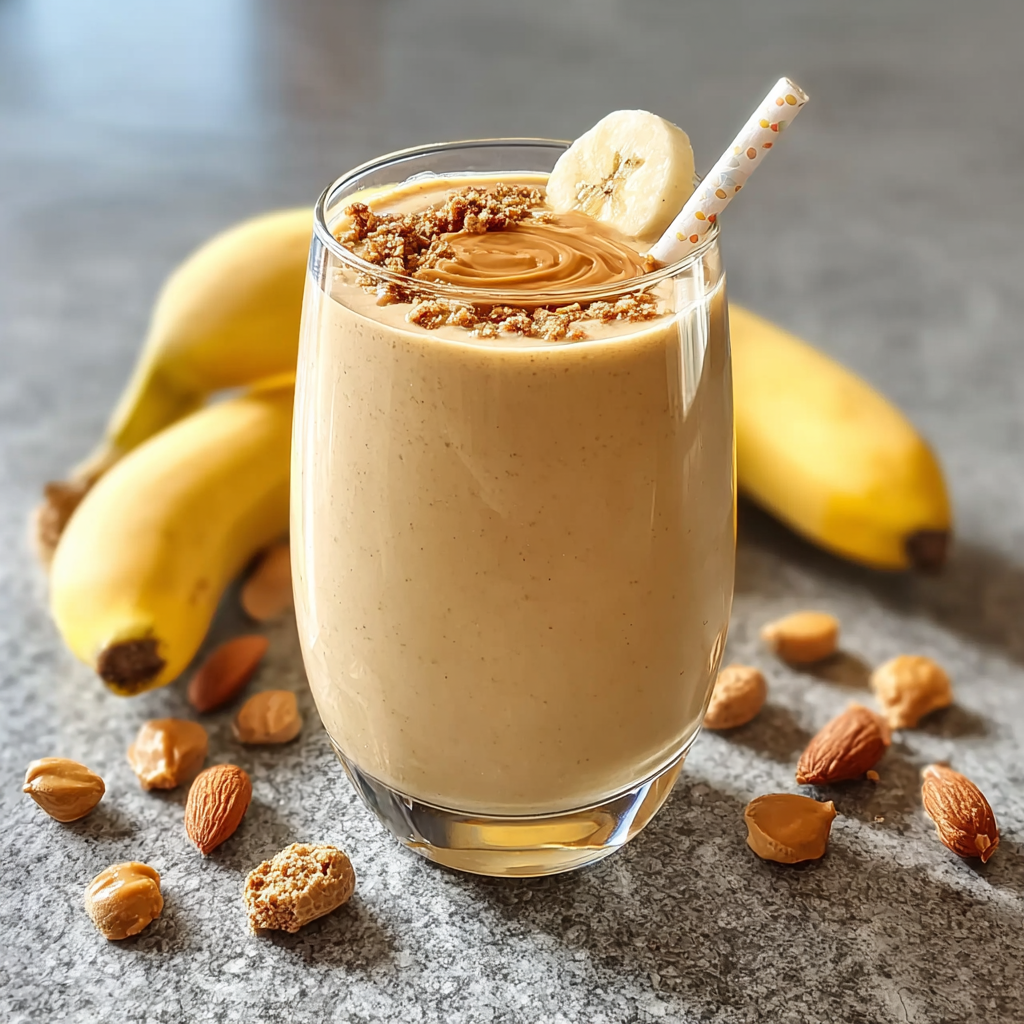
Add the peanut butter. Actionable Tip: If your peanut butter is very cold/stiff, microwave it for 10 seconds first. The Science: Warmer fats have a lower viscosity, making it easier for the blender to achieve a homogenous emulsion.
Step 3: The Thermal Shear
Add the frozen banana and cinnamon. Blend on high for 45 seconds. The Result: The friction from the blades slightly warms the peanut butter while the frozen banana cools it. This thermal exchange creates a perfectly tempered, “frosty” consistency.
Step 4: The Aeration Pulse
Stop the blender, stir once with a spatula to ensure no “frozen islands” remain, and pulse 3–5 times. The Logic: This introduces small amounts of air into the mixture, turning a dense drink into a lighter, “shake-like” experience.
Success Tips & Common Mistakes
- The “Grainy” Fail: This usually happens if you use “crunchy” peanut butter or don’t blend long enough. To fix this, add a tablespoon of hot water or warm milk to help break down the protein clumps.
- The “Watery” Fail: If your smoothie is too thin, you used a room-temperature banana. The Hack: If you only have fresh bananas, add 4–5 ice cubes, but be aware this will dilute the flavor.
- The Flavor Boost: Add a pinch of Sea Salt. Salt is a flavor enhancer that suppresses bitterness and amplifies the sweetness of the banana and the nuttiness of the peanut butter.
Nutritional Information (Per Serving)
- Calories: 380 kcal.
- Protein: 15g.
- Healthy Fats: 18g.
- Fiber: 6g.
Conclusion
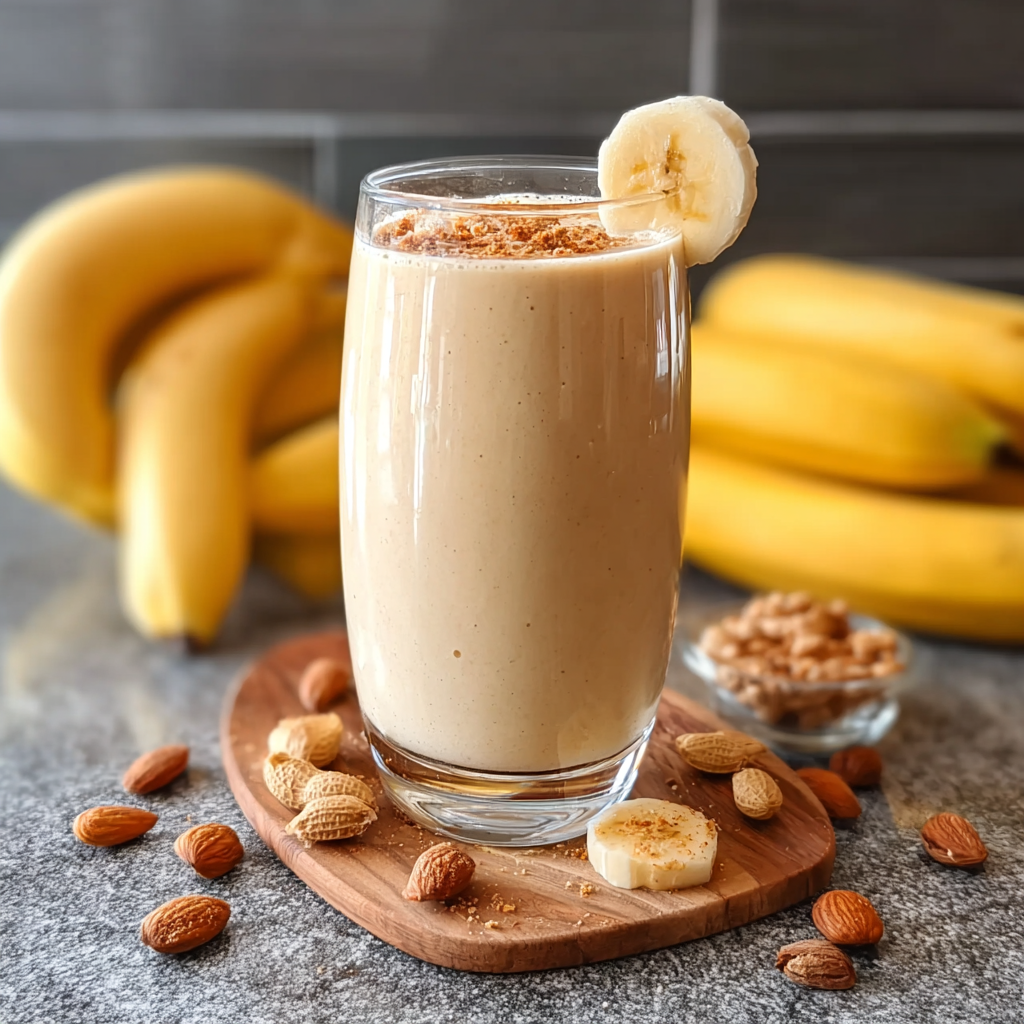
The Banana & Peanut Butter Smoothie is a masterclass in balancing nutrient density with culinary physics. By managing your ingredient temperatures and layering your blender correctly, you create a stable emulsion that provides sustained energy and a luxurious texture.