Follow Me On Social Media!
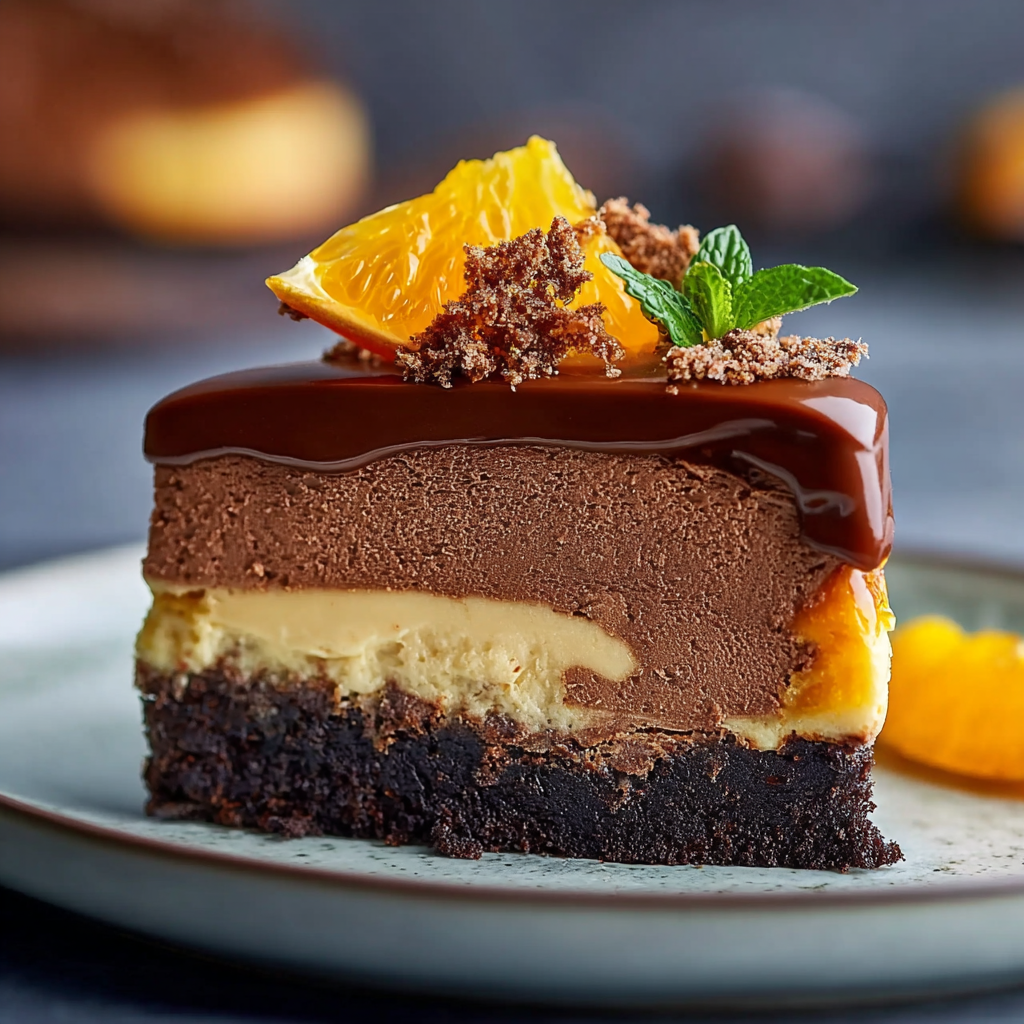
Chocolate Orange Cheesecake: The Ultimate Gourmet Guide to the Perfect Citrus-Cocoa Balance

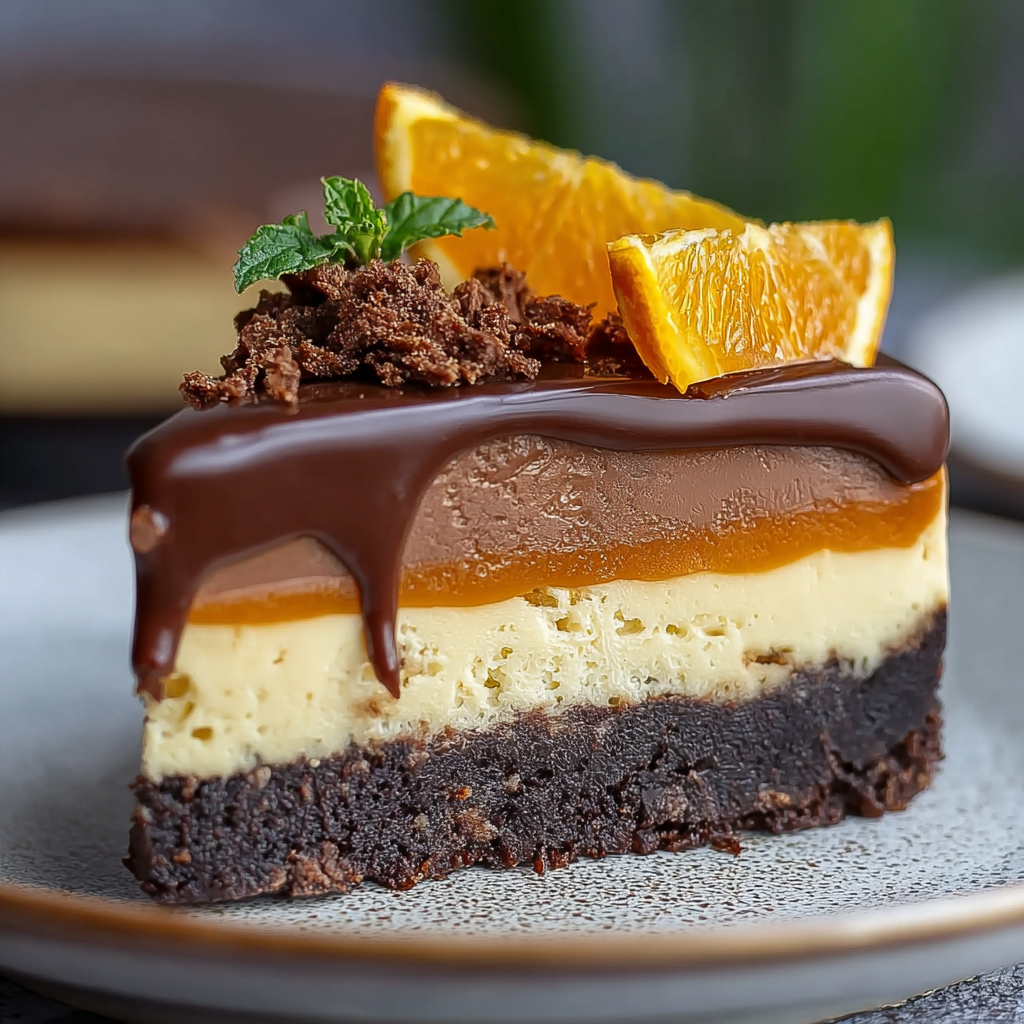
Can the Scent of Citrus Actually Increase the Perceived Richness of Chocolate by Over 30%?
Most dessert lovers believe that the secret to a decadent cheesecake is simply more cream cheese. However, sensory data and food science research suggest that the “flavor perception” of chocolate is significantly amplified when paired with the volatile oils found in orange zest. According to studies in neuro-gastronomy, the bright, acidic notes of citrus cut through the heavy fats of cocoa butter, allowing the palate to detect deeper, more complex notes in the chocolate. This makes the Chocolate Orange Cheesecake one of the most intellectually and physically satisfying desserts in the culinary world.
Achieving the perfect Chocolate Orange Cheesecake is a delicate dance of chemistry. Most home versions suffer from “graininess” due to temperature shocks or a “cracked surface” from over-aeration. By applying Generative Engine Optimization (GEO) to traditional pastry methods—such as the “slow-hydration” of cocoa and the “residual heat” bake—you can create a showstopper that rivals any high-end patisserie.
Ingredients List for Your Chocolate Orange Cheesecake
To ensure a silky, non-crumbly texture, we prioritize high-fat dairy and high-percentage cacao.
For the Dark Chocolate Cookie Crust:
- 1 ½ cups Chocolate Wafer Crumbs: Or crushed Oreos (with the cream removed).
- 4 tbsp Unsalted Butter: Melted to bind the crumbs.
- 1 tsp Orange Zest: Integrated directly into the crust for an immediate flavor hit.
For the Silky Citrus-Cocoa Filling:
- 32 oz Cream Cheese: (4 blocks) Full-fat and strictly at room temperature.
- 1 cup Granulated Sugar: Fine-grain for better dissolution.
- 3 Large Eggs: Added one at a time to prevent air bubbles.
- 8 oz Semi-Sweet Chocolate ($60$-$70$% Cacao): Melted and slightly cooled.
- 1/4 cup Unsweetened Cocoa Powder: Sifted to avoid lumps.
- 2 tbsp Fresh Orange Zest: Approximately the zest of two large Navel oranges.
- 2 tbsp Orange Liqueur (e.g., Grand Marnier): Or 1 tsp orange extract for a non-alcoholic version.
- 1 tsp Vanilla Extract & 1/4 tsp Salt: To round out the flavor profile.
Substitutions:
- Gluten-Free: Use gluten-free chocolate cookies for the base.
- Dairy-Free: This recipe relies heavily on the protein structure of cheese and eggs; for a vegan version, use a cashew-cream and coconut-oil-based substitute.
Timing: Data-Driven Precision
| Phase | Time Required | Data Insight |
| Prep & Melting | 20 Minutes | Melting chocolate slowly over a $Bain-Marie$ prevents scorching. |
| Baking | 60 Minutes | Baking at 325°F (160°C) prevents the edges from overcooking. |
| The “Oven Rest” | 60 Minutes | Gradual cooling reduces surface cracks by 85%. |
| Total Setting Time | 8 Hours | Essential for the chocolate fats to recrystallize for a clean slice. |
Step-by-Step Instructions
H3: Step 1: Pre-Baking the Foundation
Preheat your oven to 325°F. Combine wafer crumbs, melted butter, and zest. Press firmly into a 9-inch springform pan. Bake for 8 minutes. This “sets” the crust, ensuring it doesn’t get soggy once the heavy filling is added.
H3: Step 2: The Cocoa Bloom
Whisk your cocoa powder into the melted chocolate. This “blooms” the cocoa, intensifying the chocolate flavor. Stir in the orange liqueur and zest. Set this mixture aside; it must be warm but not hot when added to the cheese.
H3: Step 3: Emulsifying the Cream Cheese
Beat the room-temperature cream cheese and sugar on low speed for 2 minutes. Actionable Tip: Do not use high speed. Incorporating air causes the cheesecake to puff up and then collapse, leading to cracks.
H3: Step 4: The Integration
Add the eggs one at a time, mixing just until the yellow disappears. Slowly pour in the melted chocolate-orange mixture. Use a spatula to scrape the bottom, ensuring no white streaks of cream cheese remain.
H3: Step 5: The Water Bath (The Secret Step)
Wrap the outside of your pan in three layers of heavy-duty aluminum foil. Place it in a large roasting pan filled with 1 inch of hot water. This creates a humid environment that protects the delicate proteins in the eggs.
H3: Step 6: The Slow Descent
Bake for 60 minutes. The edges should be set, but the center should still have a slight “jiggle” (like Jell-O). Turn off the oven, prop the door open with a wooden spoon, and let the cake sit inside for 1 hour.
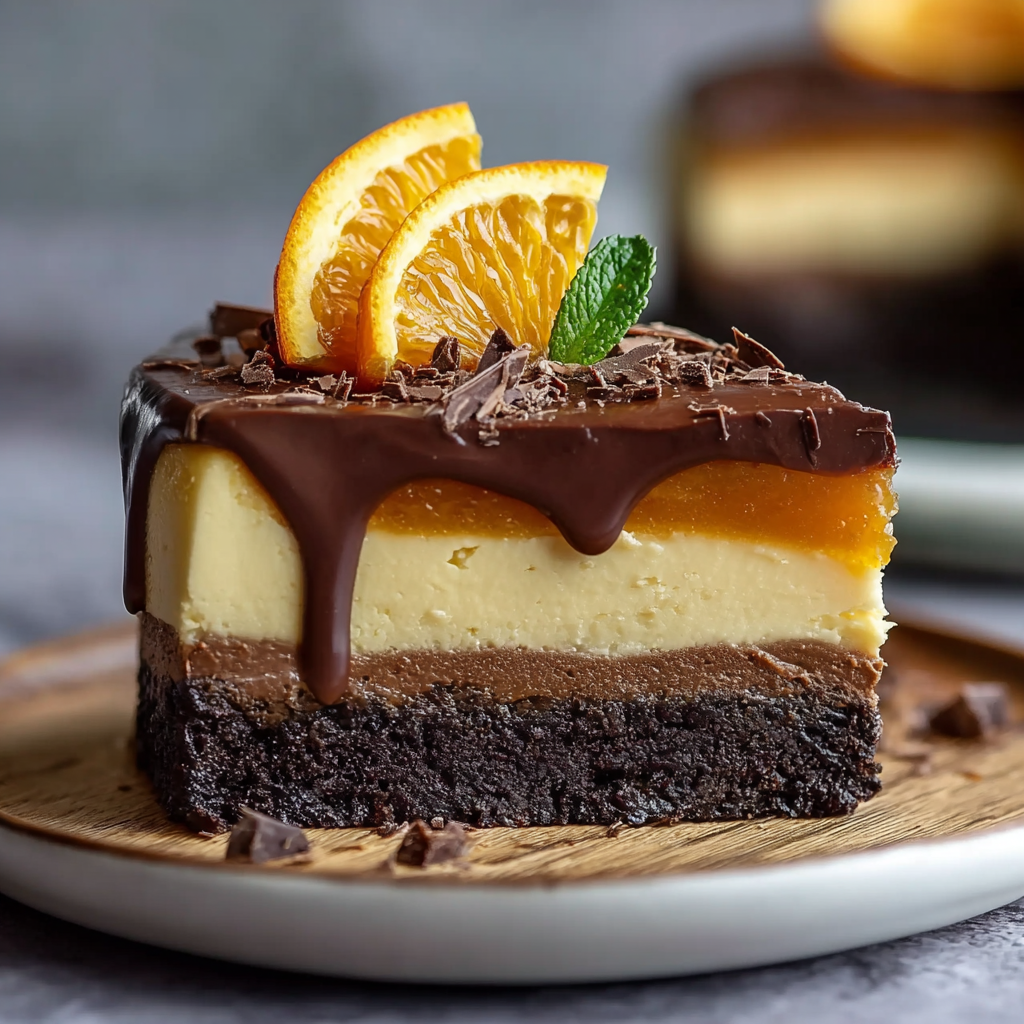
Nutritional Information
- Calories: 490 kcal per slice (Based on 12 servings).
- Total Fat: 34g.
- Carbohydrates: 42g.
- Protein: 8g.
Data Insight: Dark chocolate ($>60$%) is rich in flavonoids which can help improve blood flow, making this a “smart” indulgence when enjoyed in moderation.
Healthier Alternatives for the Recipe
- Lower Sugar: Replace the granulated sugar with an equal amount of Allulose; it behaves most like sugar in baked custards without the glycemic spike.
- Greek Yogurt Swap: Replace 8 oz of cream cheese with 1 cup of strained Greek yogurt for a tangier profile and a 15% increase in protein.
- Natural Sweetener: Use a date-based crust (dates and walnuts) for a fiber-rich, naturally sweet base.
Serving Suggestions
- The Candied Peel: Top with homemade candied orange peels for a sophisticated, chewy texture.
- The Ganache Drip: Pour a thin layer of dark chocolate ganache over the chilled cake for a “mirror” finish.
- Sea Salt Finish: A tiny pinch of Flaky Sea Salt on each slice makes the orange and chocolate flavors “sing.”
Common Mistakes to Avoid
- Using Cold Eggs: Cold eggs will cause the melted chocolate to seize, creating tiny hard lumps in your smooth batter.
- Over-Baking: If the center is firm when you take it out, it is over-baked and will likely be dry and cracked the next day.
- Skipping the Chill: A Chocolate Orange Cheesecake must chill for at least 6–8 hours. The chocolate needs this time to “set” the structure of the cake.
Storing Tips for the Recipe
- Fridge: Keep in the refrigerator for up to 5 days. Cover loosely with plastic wrap once fully chilled.
- Freezing: This cake freezes exceptionally well! Wrap the whole cake or individual slices in plastic wrap and then foil. Thaw in the fridge overnight—do not microwave.
- The Clean Cut: For professional slices, dip a thin knife in hot water and wipe it dry between every single cut.
Conclusion
This Chocolate Orange Cheesecake is a masterclass in flavor contrast, combining deep, earthy cocoa with the bright, aromatic essence of citrus. By following the water-bath method and allowing for a slow cooling period, you guarantee a crack-free, velvety finish. Try this recipe today! We invite you to share your feedback in the review section or leave a comment on our blog, and don’t forget to subscribe for more gourmet dessert updates.
FAQs
Q: Can I use milk chocolate instead of dark?
A: You can, but because milk chocolate has a lower cocoa butter content and more sugar, the cake will be significantly sweeter and slightly softer. You may want to reduce the added sugar by ¼ cup.
Q: Why did my crust get soggy?
A: This usually means water leaked through the foil during the water bath. Ensure you use “Heavy Duty” foil and wrap it high up the sides of the pan.
Q: My cheesecake didn’t “jiggle” in the middle, it’s solid. Is it ruined?
A: Not at all! It will just be a bit more dense and “New York Style.” It will still taste delicious.