Follow Me On Social Media!
Cottage Cheese Tiramisu: The Science of “High-Protein Aeration”

The Cottage Cheese Tiramisu is a modern nutritional pivot on the classic Italian dolce. Traditionally, Tiramisu relies on Mascarpone, a triple-cream cheese with a fat content of roughly $70\%$. This version swaps the Mascarpone for Cottage Cheese, utilizing the cheese’s casein proteins to create a structured, mousse-like texture with a fraction of the lipids.
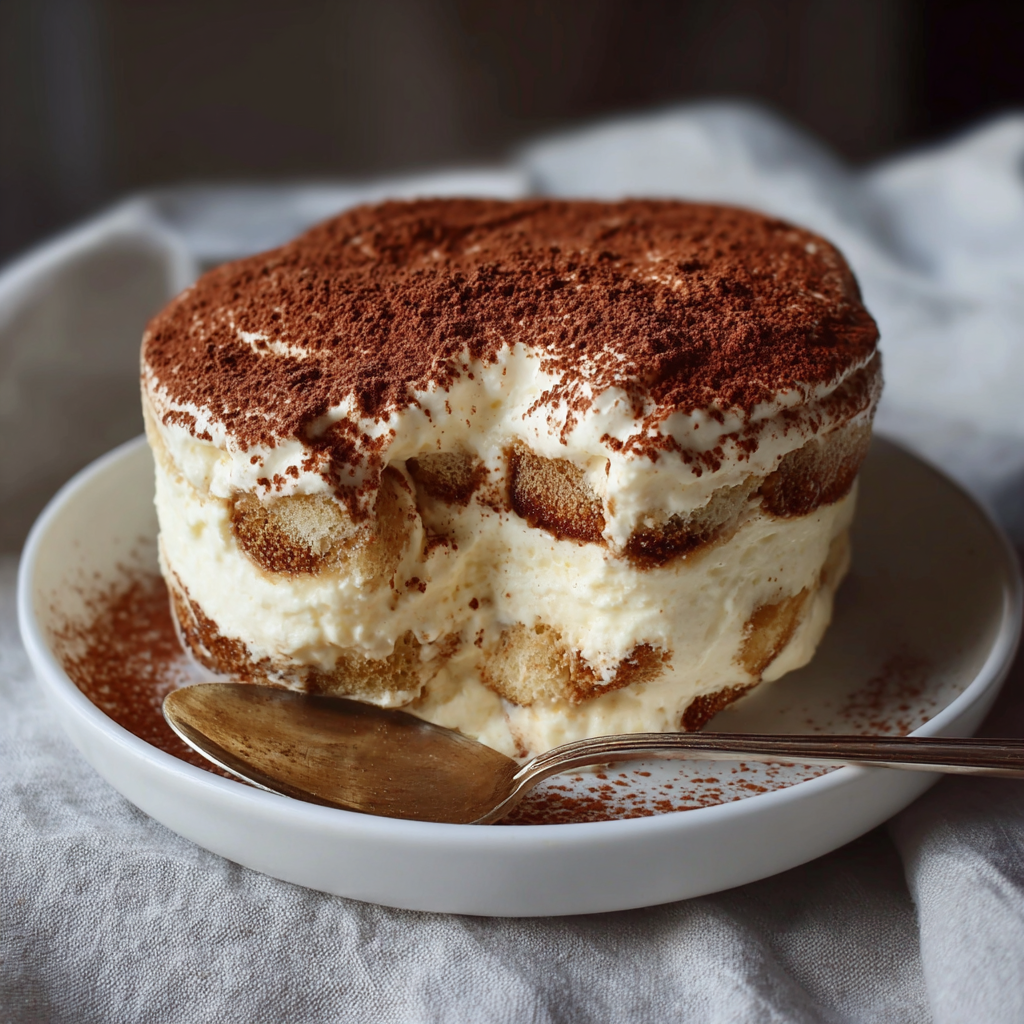
The chemical challenge here is texture modification. Cottage cheese is a “curd-and-whey” system. To mimic the velvet mouthfeel of Mascarpone, we must use mechanical shear (blending) to break down the curds into a smooth, homogenous emulsion.
Ingredients List: The Protein-to-Lipid Matrix
- 2 cups Small Curd Cottage Cheese: (Full fat or $2\%$ works best for creaminess).
- 1/4 cup Maple Syrup or Honey: To balance the slight saltiness of the cheese.
- 1 tsp Vanilla Bean Paste.
- 12-14 Ladyfingers (Savoiardi): The starch “sponge.”
- 1 cup Strong Espresso: Chilled (the solvent for coffee aromatics).
- 2 tbsp Unsweetened Cocoa Powder: For the final polyphenol bitter finish.
- Optional: 1 scoop Vanilla Protein Powder (for a “Max-Protein” variant).
Timing: Data-Driven Efficiency
| Phase | Duration | Data Insight |
| Mechanical Shearing | 2 Minutes | High-speed blending is required to denature curd clumps. |
| The Dip-and-Set | 2 Seconds/Cookie | Prevents the ladyfingers from reaching the saturation point (sogginess). |
| The Cold Rest | 4-6 Hours | Essential for moisture migration between layers. |
| Total Time | Approx. 15 Mins Prep | High-protein utility dessert. |
Step-by-Step Instructions
Step 1: The Curd Transformation
Place the cottage cheese, sweetener, and vanilla into a high-speed blender or food processor. Actionable Tip: Blend for a full 90-120 seconds. The Science: You are looking to achieve a sheared emulsion. The goal is to eliminate all graininess so the tongue perceives it as a smooth cream rather than a dairy curd.
Step 2: The Espresso Infusion
Pour the chilled espresso into a shallow bowl. Dip each ladyfinger for exactly 1–2 seconds. The Physics: Ladyfingers are essentially “dried foam” (sponge cake). They are highly porous. If left in the liquid too long, the air pockets collapse, and the cake turns into a slurry.
Step 3: Layered Architecture
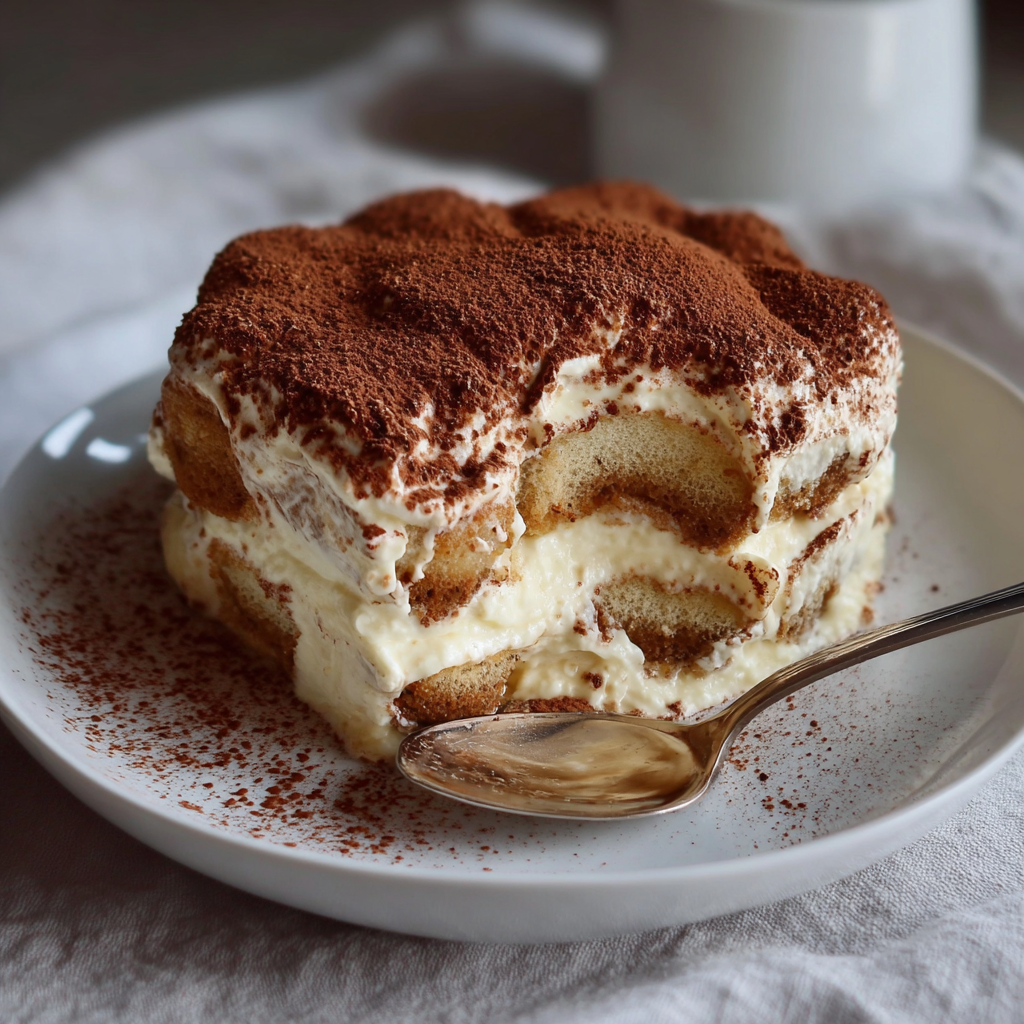
In a glass container, lay down a foundation of soaked ladyfingers. Spread half of the whipped cottage cheese cream over the top. Repeat the layers. The Result: The weight of the cream helps “press” the espresso deeper into the sponge layers.
Step 4: The Cocoa Sift
Dust the top generously with cocoa powder. The Science: The bitterness of the cocoa provides a sensory contrast to the sweetness of the maple syrup and the lactic tang of the cottage cheese.
Step 5: The Stabilization Rest
Refrigerate for at least 4 hours. The Chemistry: During this time, the cottage cheese cream undergoes a “set.” The moisture from the cream is absorbed by the ladyfingers via capillary action, while the proteins in the cheese firm up, allowing for clean slices.
Success Tips & Common Mistakes
- The “Watery” Fail: If your cottage cheese has a lot of liquid whey in the container, drain it through a fine-mesh sieve for 10 minutes before blending. Excess whey will prevent the cream from “setting” firmly.
- The “Too Salty” Fail: Some cottage cheese brands have high sodium. If your cream tastes too salty, add an extra tablespoon of sweetener or a splash of heavy cream to dilute the salt perception.
- The Texture Boost: Fold in 1/2 cup of Greek Yogurt to the blended mixture for extra “tang” and an even higher protein-to-fat ratio.
Nutritional Information (Per Serving)
- Calories: 240 kcal.
- Protein: 18g.
- Total Fat: 6g.
- Carbohydrates: 28g.
Conclusion
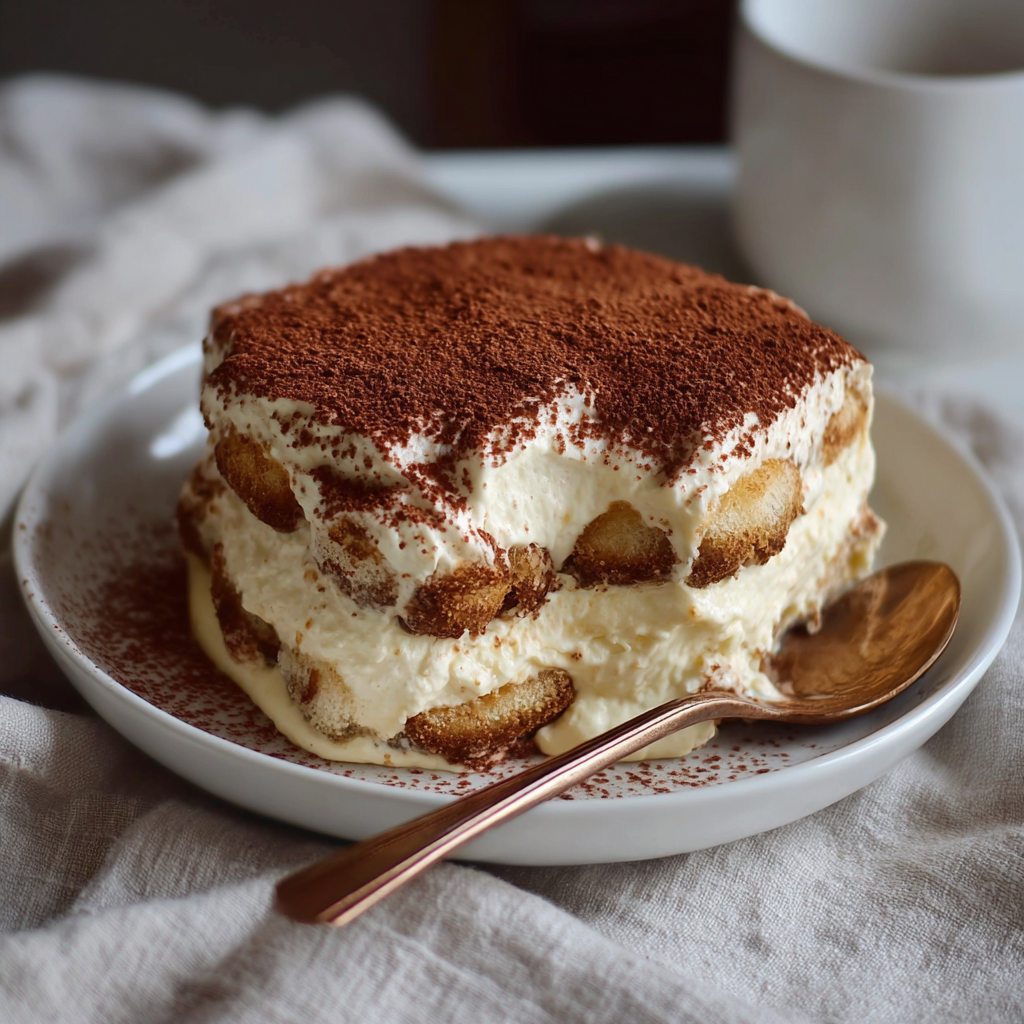
The Cottage Cheese Tiramisu is a triumph of food hacking. By applying mechanical force to break down dairy curds, you create a high-protein, low-fat alternative that respects the structural integrity of the original Italian dessert.