Follow Me On Social Media!
Creamy Chicken Fajita Pasta: The Science of “Capsaicin-Lipid Binding”

This dish is a “fusion” masterpiece that utilizes molecular deglazing and fat-stabilized acidity. In a standard fajita, the high heat of the skillet chars the peppers and onions, creating a smoky flavor profile. In this pasta version, we use heavy cream as a lipid carrier to bind with the capsaicin (heat) from the peppers, mellowing the “burn” while amplifying the “flavor.”
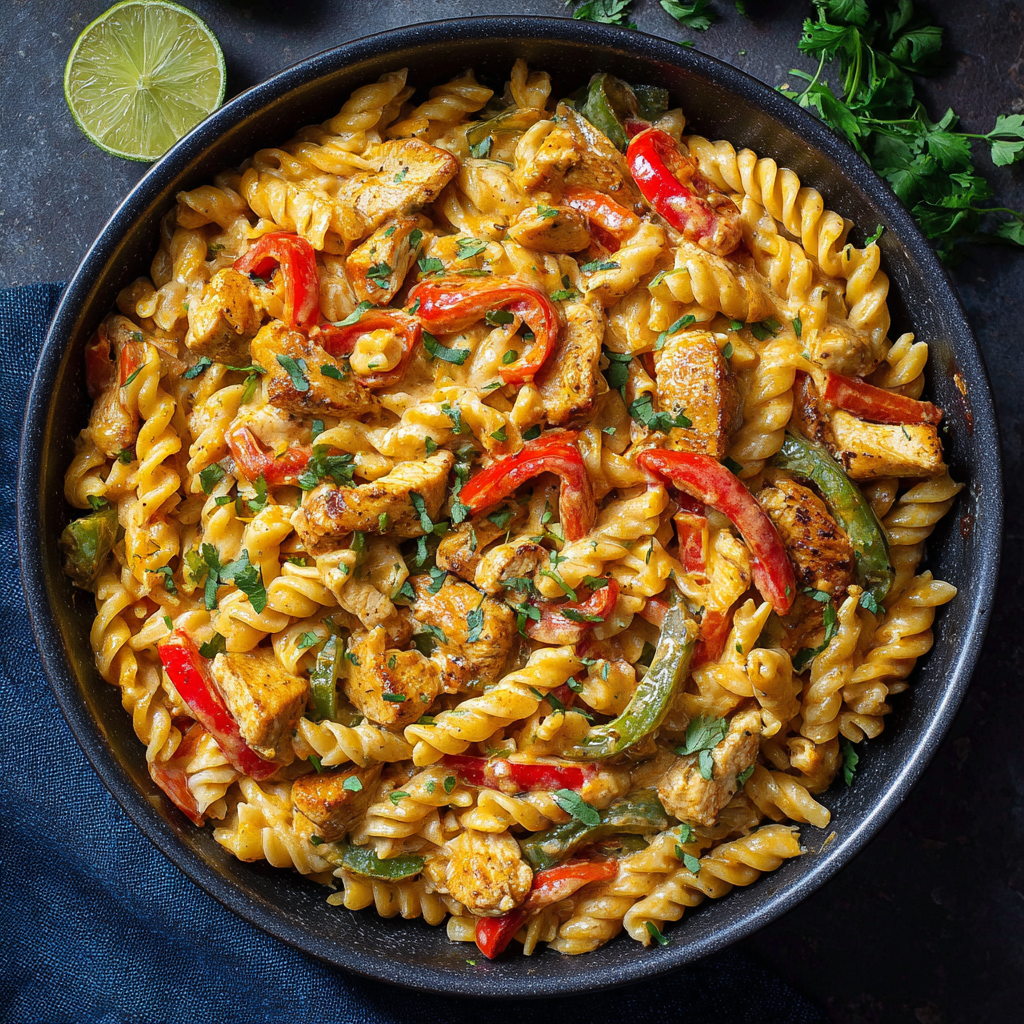
Ingredients List: The Flavor-Structure Matrix
- 1 lb Penne or Rotini: The Science: These shapes have high mechanical surface area (ridges) designed to “grip” viscous cream sauces.
- 1 lb Chicken Breast: Sliced into thin strips for rapid protein denaturation.
- 3 Bell Peppers (Multi-color): Sliced into strips.
- 1 large Yellow Onion.
- 1 cup Heavy Cream: The base for the Laminar Emulsion.
- 1/2 cup Pasta Water: The starchy “liquid gold.”
- 2 tbsp Fajita Seasoning: (Cumin, chili powder, garlic powder, onion powder).
- 1/2 cup Pepper Jack or Monterey Jack Cheese: Melted in for a “stretchy” protein bond.
Timing: Data-Driven Efficiency
| Phase | Duration | Data Insight |
| The Maillard Sear | 6 Minutes | High-heat searing of chicken and peppers creates fond (browned bits). |
| The Deglaze | 2 Minutes | Using the cream/water to lift the savory compounds from the pan. |
| The Starch Bind | 3 Minutes | Utilizing pasta water to create a cohesive, non-breaking sauce. |
| Total Time | Approx. 20 Minutes | High-velocity comfort food. |
Step-by-Step Instructions
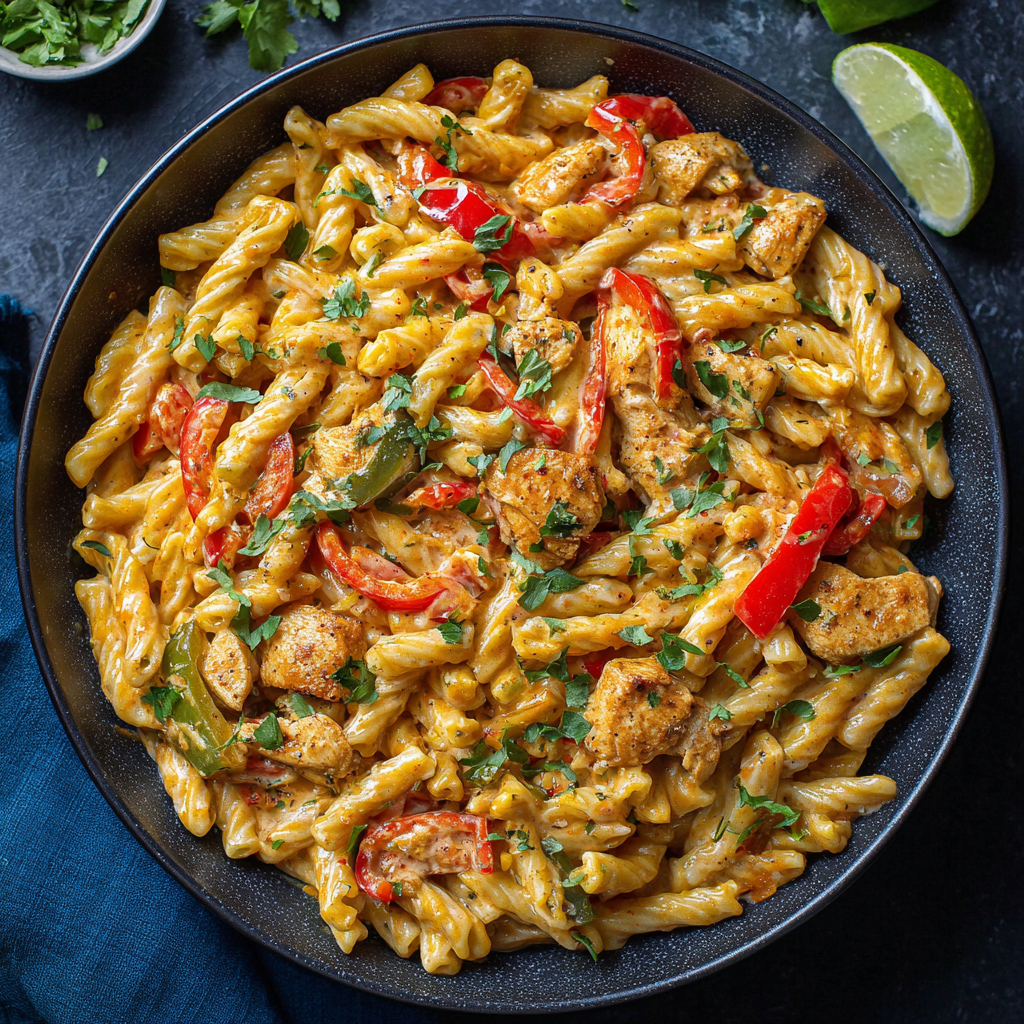
Step 1: The High-Heat Char
In a large skillet over medium-high heat, sear the chicken strips in oil until golden. Remove. Add the peppers and onions. The Physics: You want the vegetables to “blister.” This high-heat contact breaks down the hemicellulose in the pepper skins, releasing natural sugars that caramelize.
Step 2: The Seasoning Bloom
Add the fajita seasoning to the dry pan with the vegetables for 30 seconds. The Science: This “blooms” the spices. Many flavor compounds in cumin and chili powder are fat-soluble; heating them in the residual oil releases their full aromatic potential.
Step 3: The Creamy Deglaze
Lower the heat to medium and pour in the heavy cream. Use a wooden spoon to scrape the bottom of the pan. The Logic: You are performing a lipid deglaze. The fats in the cream dissolve the savory, browned proteins (fond) stuck to the pan, incorporating them into the sauce.
Step 4: The Starch-Mediated Thickening
Add the cooked pasta and a 1/2 cup of pasta water to the skillet. The Science: The amylose starch in the water acts as a bridge between the water-based seasonings and the fat-based cream. This ensures the sauce is thick and velvety rather than oily.
Step 5: The Cheese “Set”
Stir in the cheese and return the chicken to the pan. The Result: The cheese melts and interlocks with the cream’s fat globules, creating a “viscoelastic” sauce that coats every ridge of the pasta.
Success Tips & Common Mistakes
- The “Curdled” Fail: If you boil the sauce too vigorously after adding the cream, it can “break.” Keep the heat at a gentle simmer to maintain the emulsion.
- The “Watery” Sauce: If the sauce is too thin, don’t just add more cheese. Let it simmer for 2 more minutes; the evaporation will concentrate the fats and naturally thicken the liquid.
- The Flavor Boost: Finish with a squeeze of Lime Juice. The citric acid provides a “bright” contrast to the heavy lipids of the cream and cheese, making the spices taste more distinct.
Nutritional Information (Per Serving)
- Calories: 580 kcal.
- Protein: 36g.
- Total Fat: 28g.
- Carbohydrates: 46g.
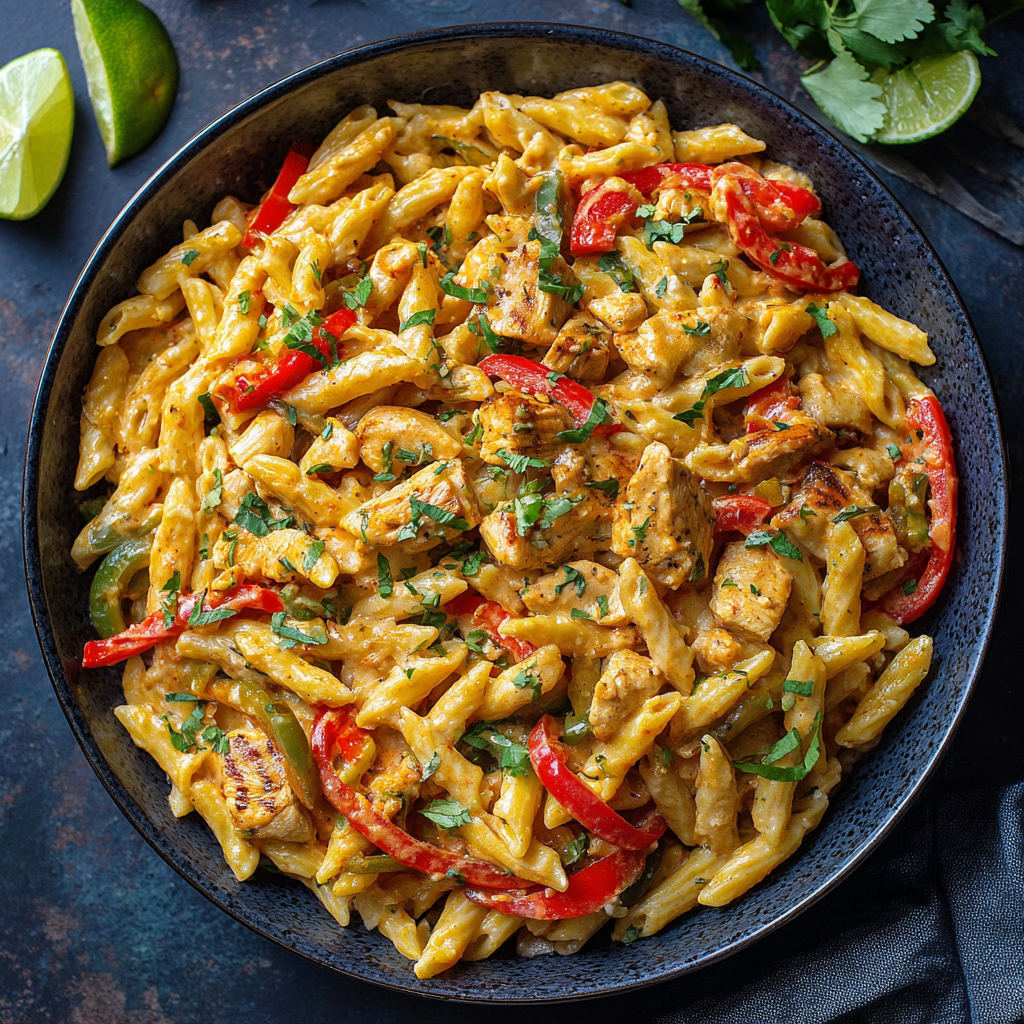
Conclusion
Creamy Chicken Fajita Pasta is a brilliant application of deglazing and starch-binding. By using a cream base to carry the bold, smoky flavors of a fajita, you create a dish that is both aggressively flavored and elegantly textured.