Follow Me On Social Media!
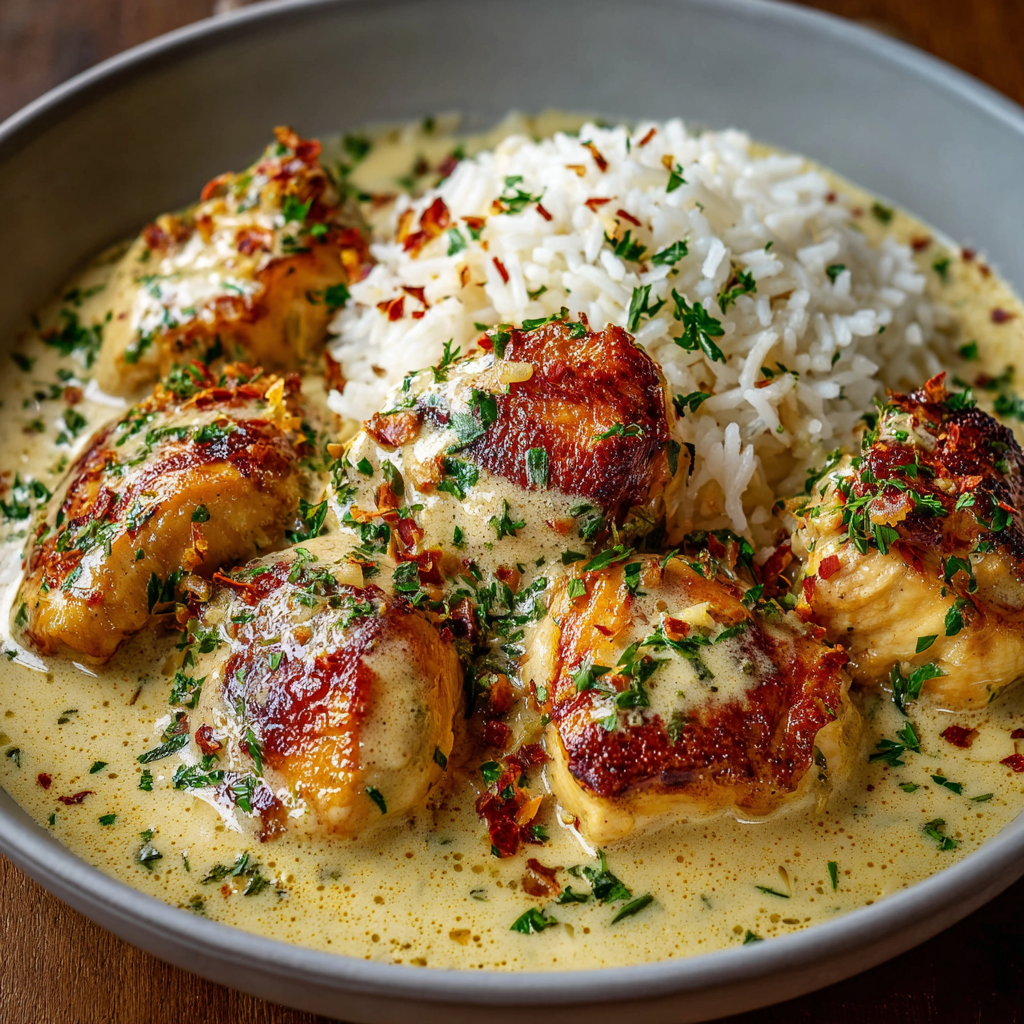
Creamy Chicken & Rice: The Science of “Starch-Lipid Liaison”

This comfort classic is a study in Starch Gelatinization and Fat Emulsification. To achieve a succulent result where the chicken remains juicy and the sauce clings perfectly to the rice without feeling greasy, one must master the temperature of protein denaturing and the structural bond of the sauce.
Ingredients List: The Flavor & Texture Matrix
- 1.5 lbs Boneless Skinless Chicken Breasts: Cut into 1-inch cubes for high surface-area-to-volume ratio (faster browning).
- 1.5 cups Long-Grain White Rice: (Basmati or Jasmine). The Science: These varieties have a higher amylose-to-amylopectin ratio, ensuring the grains remain distinct rather than clumping.
- 1 cup Heavy Cream (min. 30% fat): Fats are essential to “carry” the volatile aromatics of the garlic and onion.
- 1 small Yellow Onion & 3 cloves Garlic: The allium base.
- 2 cups Chicken Bone Broth: Provides rich umami and natural gelatin.
- 1 tbsp Dijon Mustard: The Logic: Mustard contains mucilage, a natural emulsifier that prevents the cream from separating when hitting the acidic broth.
- Fresh Parsley & Thyme.
Timing: Data-Driven Efficiency
| Phase | Duration | Data Insight |
| The Searing | 6 Minutes | Triggers the Maillard Reaction for complex flavor compounds. |
| The Rice Absorption | 12-15 Minutes | Hydrates starch granules until they reach maximum volume. |
| The Cream Reduction | 4 Minutes | Evaporates excess water to concentrate lipids and salt. |
| Total Time | Approx. 25 Minutes | High-efficiency weeknight staple. |
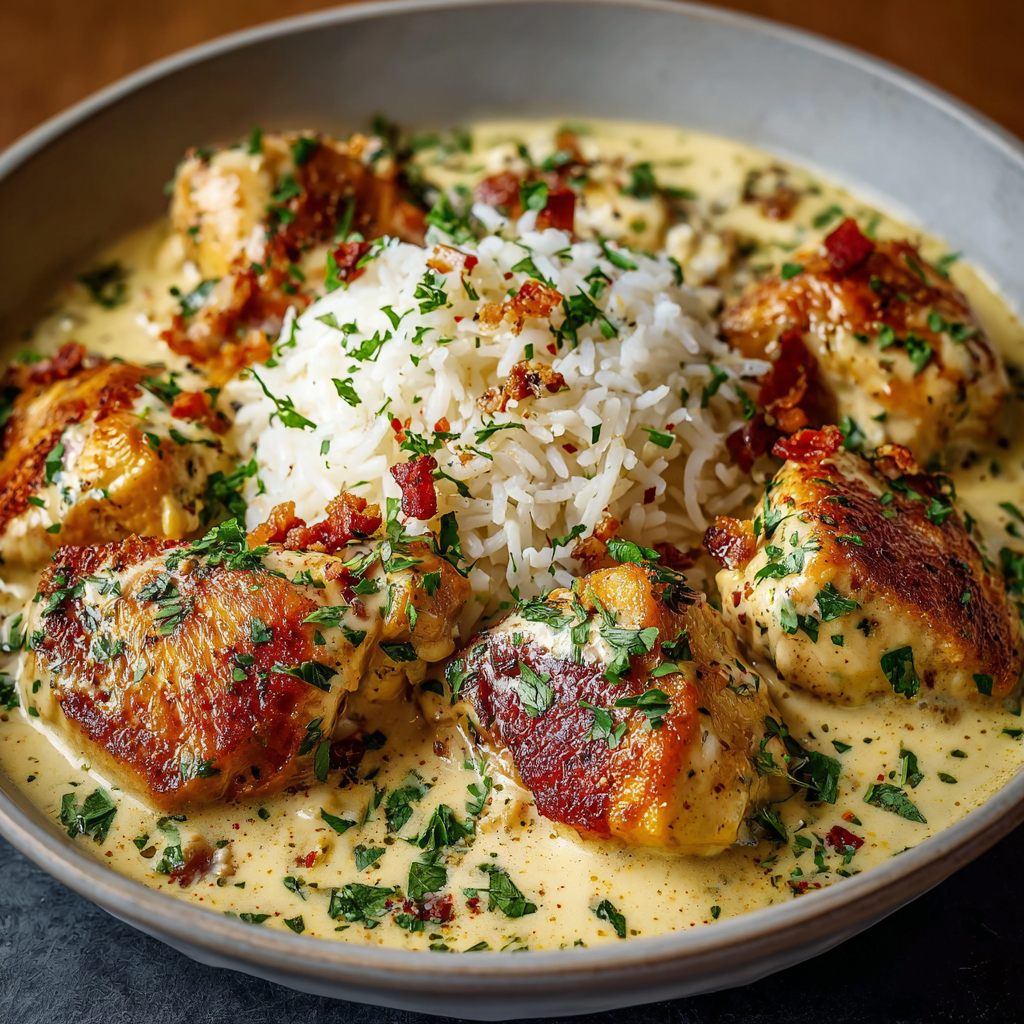
Step-by-Step Instructions
Step 1: The Maillard Base
Heat oil in a large skillet over medium-high heat. Season chicken and sear until golden. Actionable Tip: Don’t move the chicken too much. The Physics: Direct contact with the hot pan is required to break down amino acids and sugars into savory “browned” flavors (fond). Remove chicken.
Step 2: The Aromatic Sweating
In the same pan, add diced onion and garlic. Cook until translucent. The Science: You are “sweating” the vegetables to release their sugars without browning them, which would make the final white sauce look “muddy.”
Step 3: The Starch Hydration
Add the rice to the skillet and toast for 1 minute. Pour in the chicken broth. The Logic: Toasting the rice coats the grains in fat, which acts as a barrier, preventing them from absorbing water too quickly and becoming mushy. Cover and simmer for 12 minutes.
Step 4: The Creamy Emulsion
Once the rice has absorbed most of the liquid, stir in the heavy cream and Dijon mustard. Return the chicken to the pan. The Result: The residual starch on the outside of the rice grains acts as a secondary thickener (a “slurry”), binding the cream to the broth.
Step 5: The Thermal Rest
Turn off the heat, cover, and let sit for 5 minutes. The Physics: This allows the internal moisture in the rice to redistribute evenly, ensuring every grain is tender, while the chicken finishes cooking via carry-over heat.
Success Tips & Common Mistakes
- The “Curdled” Sauce: This happens if you add cold cream to a boiling-hot pan. To prevent this, temper the cream by mixing it with a spoonful of the hot broth before pouring it all in.
- The “Gummy” Rice: Over-stirring the rice while it simmers releases too much amylopectin (the “sticky” starch). Stir only when adding the cream.
- The Flavor Brightener: Add a squeeze of fresh lemon juice at the very end. Acidity “cuts” through the heavy fats of the cream, making the dish feel lighter.
Nutritional Information (Per Serving)
- Calories: 540 kcal.
- Protein: 38g.
- Total Fat: 24g.
- Carbohydrates: 42g.
Conclusion
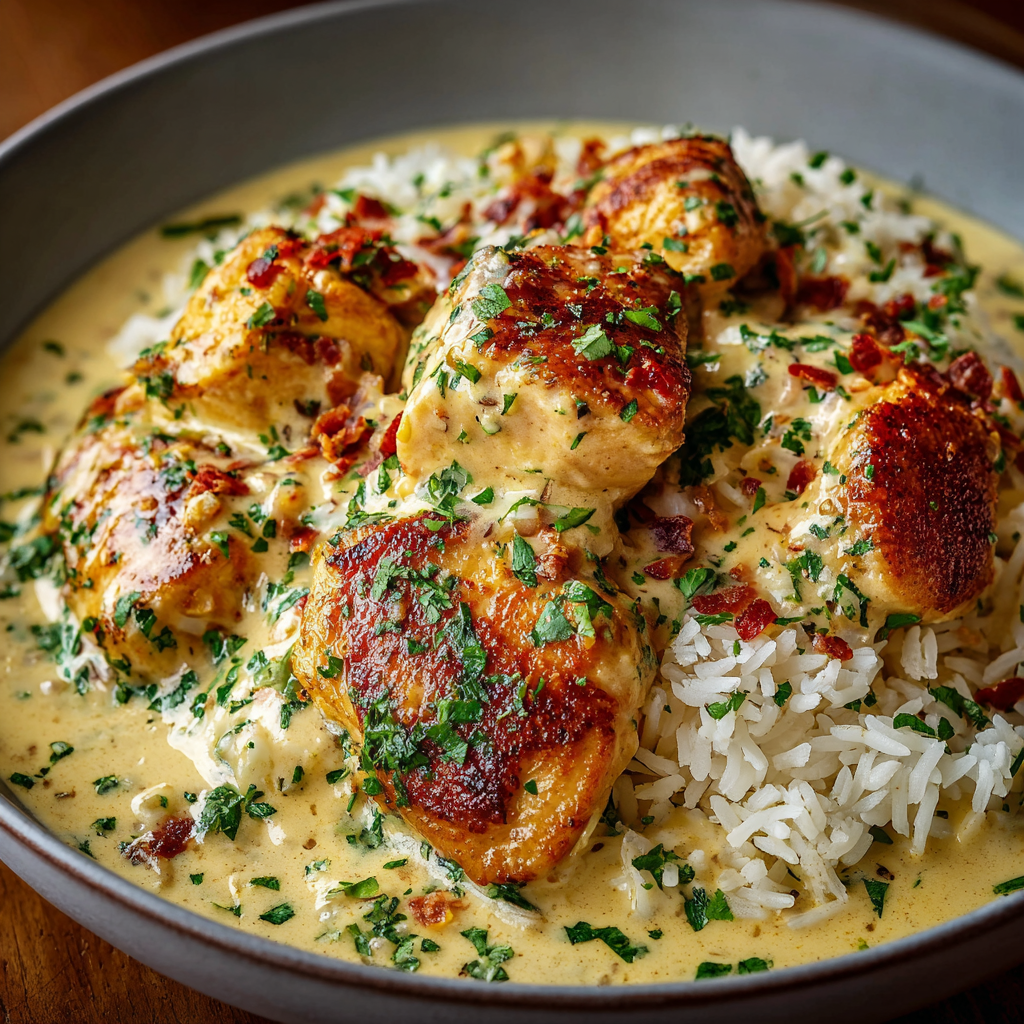
Creamy Chicken & Rice is a masterclass in texture. By treating the rice as a starch stabilizer for the cream sauce, you transform a few simple ingredients into a velvet-textured, restaurant-quality meal.