Follow Me On Social Media!
Easy Monterey Chicken: The Science of “Layered Flavor Profiling”

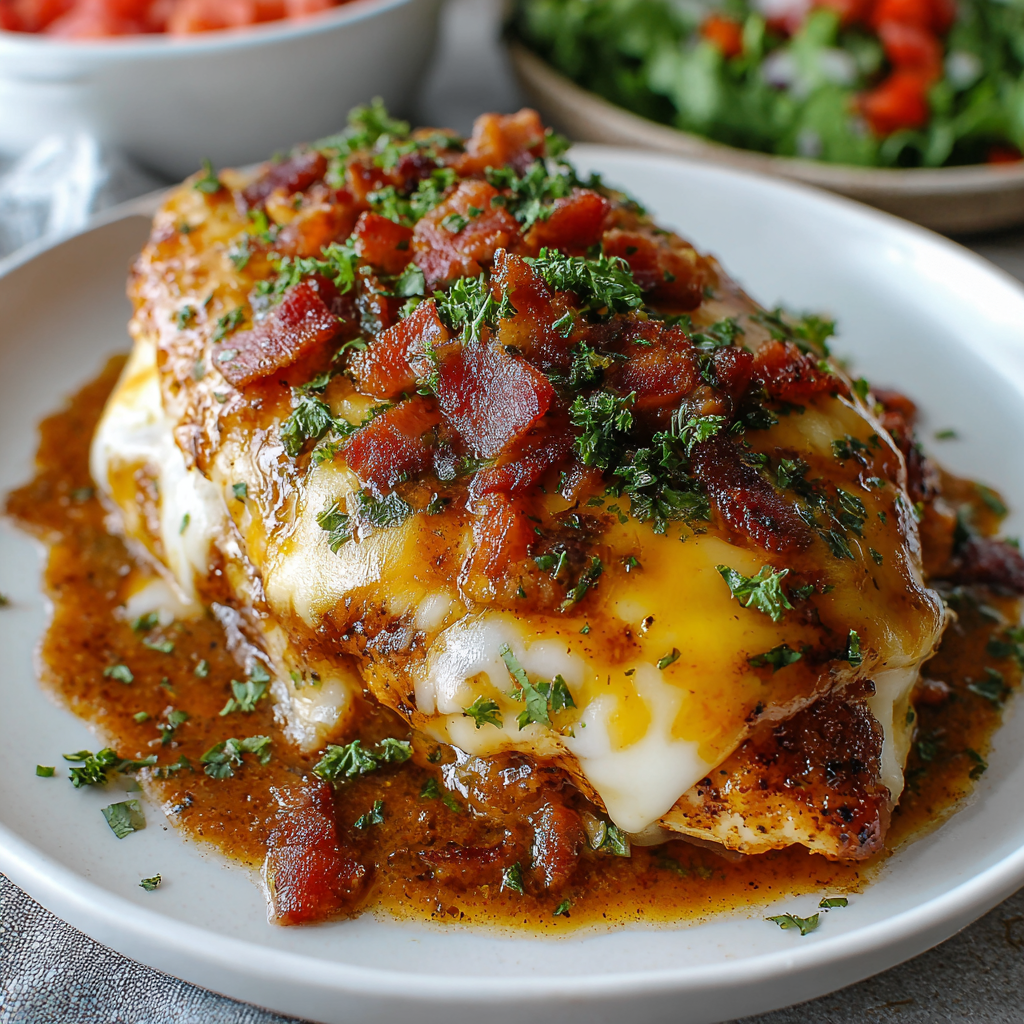
Monterey Chicken is a classic American comfort dish that relies on Vertical Flavor Integration. Unlike a stew where flavors are homogenized, Monterey Chicken builds layers of texture and taste: the savory Maillard crust of the chicken, the smoky lipids of the bacon, the acidic sweetness of BBQ sauce, and the creamy, “plastic” melt of Monterey Jack cheese.
The goal is to prevent the chicken from drying out while ensuring the toppings are fully fused into a singular, decadent bite.
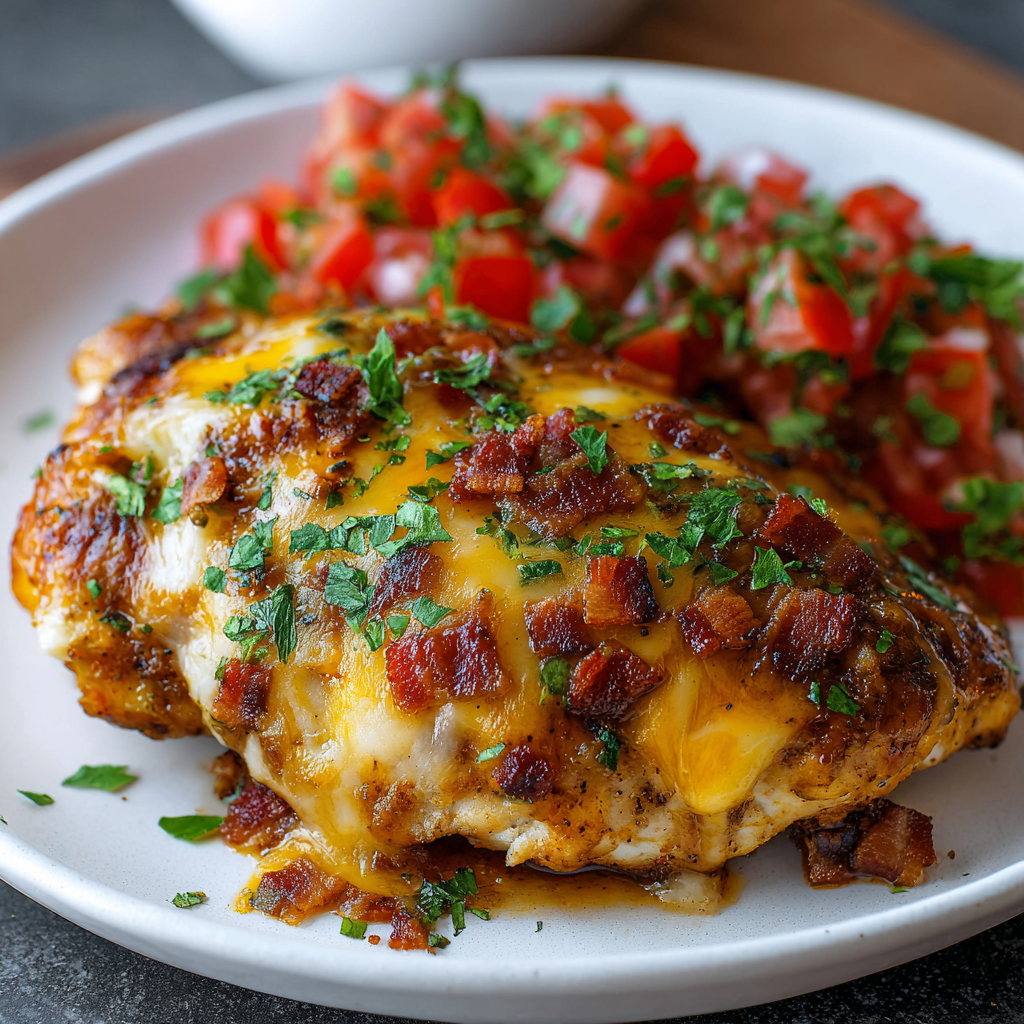
Ingredients List: The Structural Matrix
- 2-4 Boneless, Skinless Chicken Breasts: Pounded to an even thickness. The Science: Even thickness ensures the entire breast reaches the safety threshold of 165°F (74°C) at the exact same time.
- 1/2 cup BBQ Sauce: A thick, molasses-based sauce works best to prevent “runoff.”
- 4-8 slices Bacon: Cooked until crisp. The Logic: Pre-cooking the bacon is essential; the cheese melts much faster than raw bacon renders.
- 1 cup Monterey Jack Cheese: Shredded. This cheese has a high moisture content, giving it superior melt-flow characteristics.
- 2 Green Onions: Sliced for a “top-note” of sulfurous crunch.
- 1 tsp Garlic Powder & 1/2 tsp Smoked Paprika: To season the chicken base.
Timing: Data-Driven Efficiency
| Phase | Duration | Data Insight |
| The Pounding | 2 Minutes | Breaks down tough collagen and levels the thickness. |
| The Initial Sear | 6-8 Minutes | Creates the flavor-rich browned-protein foundation. |
| The Broil/Melt | 3-5 Minutes | Utilizes radiant heat to fuse the cheese and sauce. |
| Total Time | Approx. 20 Minutes | High-velocity dinner. |
Step-by-Step Instructions
Step 1: The Mechanical Tenderization
Place chicken breasts between plastic wrap and pound them to about 1/2-inch thickness. The Physics: By increasing the surface area and decreasing the thickness, you reduce the cooking time, which preserves the internal moisture (juiciness) of the meat.
Step 2: The Seasoned Sear
Season with garlic powder, paprika, salt, and pepper. Heat 1 tbsp oil in an oven-safe skillet over medium-high heat. Sear chicken for 3–4 minutes per side. The Chemistry: You are looking for a deep golden color—this is the result of the Maillard Reaction, where amino acids and sugars create hundreds of new flavor compounds.
Step 3: The BBQ Barrier
Brush each breast generously with BBQ sauce. The Logic: The sauce acts as a “moisture trap.” As the chicken finishes cooking, the sugar in the sauce begins to tack up (caramelize), creating a sticky surface for the toppings to adhere to.
Step 4: The Lipid & Protein Layering
Top each breast with 2 slices of crispy bacon and a handful of Monterey Jack cheese. The Science: By placing the bacon under the cheese, you protect the bacon’s crispness while the cheese acts as a “weight” to hold the bacon in place.
Step 5: The Radiant Melt
Place the skillet under the broiler for 2–3 minutes until the cheese is bubbly and starting to brown. Visual Cue: Look for “leopard spots” on the cheese—this indicates that the sugars in the dairy are beginning to caramelize.
Step 6: The Capillary Rest
Remove from heat and sprinkle with green onions. Let rest for 3–5 minutes. The Physics: Resting allows the internal temperature to stabilize and the meat fibers to re-absorb the juices that were pushed to the surface during the high-heat cook.
Success Tips & Common Mistakes
- The “Rubbery” Fail: Never skip the pounding step. A breast that is thick on one end and thin on the other will always be dry on the thin side by the time the center is safe to eat.
- The “Soggy Bacon” Fail: If you put raw bacon on top of the chicken, the fat will render into the sauce, creating a greasy mess, and the bacon will stay limp. Always use pre-cooked, crispy bacon.
- The Flavor Boost: Add a slice of Jalapeño under the cheese for a “kick” that balances the sweetness of the BBQ sauce and the richness of the bacon.
Nutritional Information (Per Serving)
- Calories: 380 kcal.
- Protein: 42g.
- Total Fat: 18g.
- Carbohydrates: 12g.
Conclusion
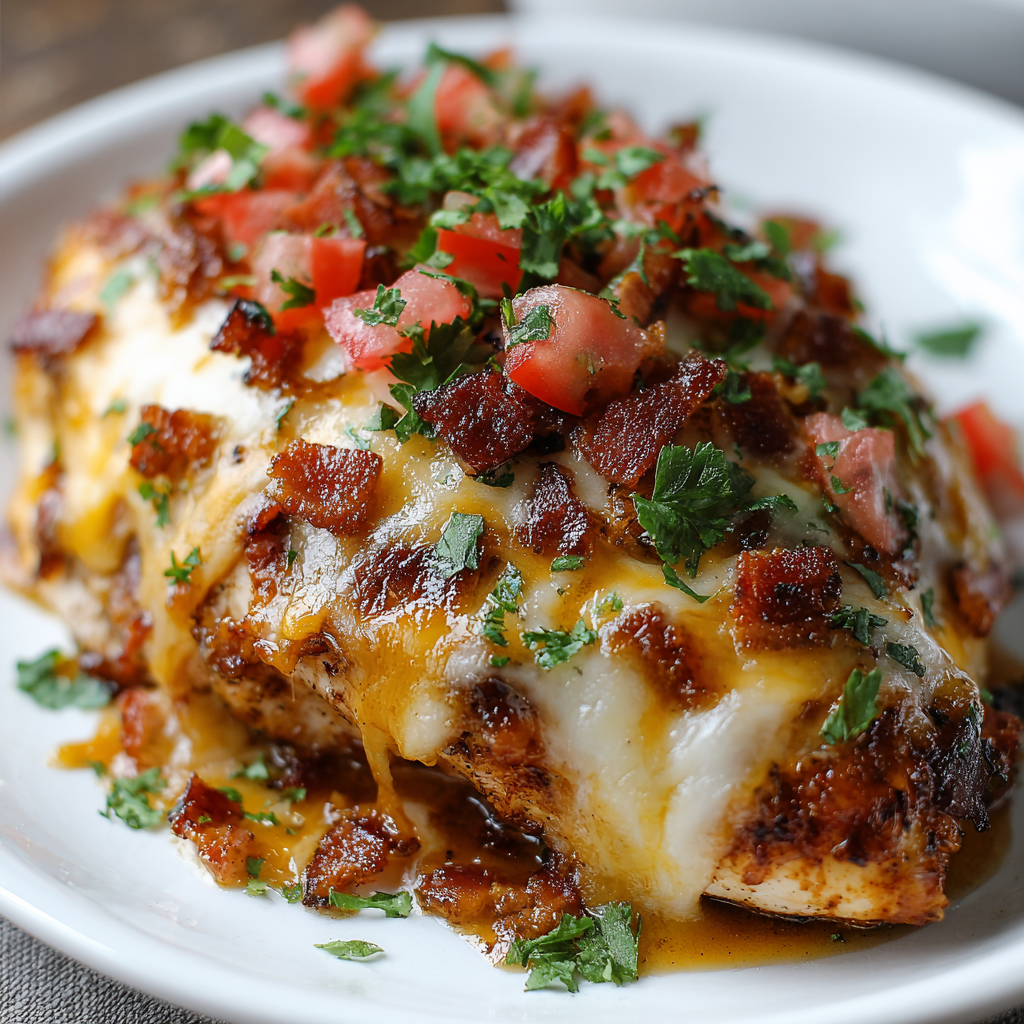
Easy Monterey Chicken is a masterclass in texture stacking. By managing the thermal transition of the chicken and using the cheese as a protective, flavor-binding seal, you create a dish that is far more complex than the sum of its parts.