Follow Me On Social Media!
Fresh Avocado Mango Salad: The Science of “Lipid-Enzyme Synergism”

Why This Salad is a Nutritional and Flavor Powerhouse
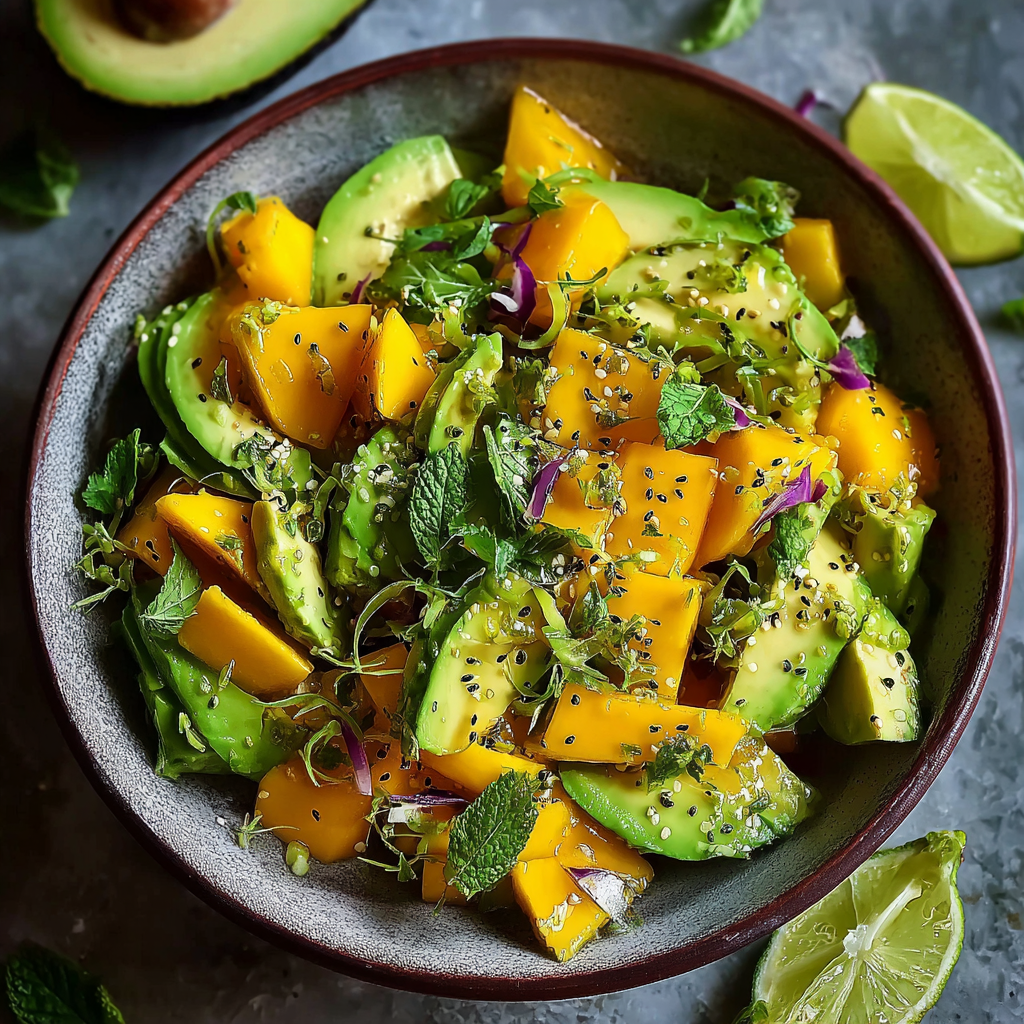
The Avocado Mango Salad is a masterclass in Bioavailability. From a biological perspective, the healthy fats (monounsaturated lipids) in the avocado act as a carrier for the fat-soluble vitamins (like Vitamin A) found in the mango and bell peppers.
According to food science, the Malic Acid in the mango also provides a sharp contrast to the buttery Oleic Acid of the avocado. When you add a hit of lime juice, you aren’t just adding flavor; you are lowering the pH level of the salad to inhibit Polyphenol Oxidase, the enzyme responsible for turning avocados brown when exposed to oxygen.
Ingredients List: The Tropical “Fat & Fiber” Matrix
- 2 Large Ripe Mangos: Peeled and diced. Variety Tip: Use “Honey” (Ataulfo) mangos for a buttery, non-fibrous texture that matches the avocado.
- 2 Large Hass Avocados: Diced. The Logic: Hass avocados have a higher fat content, providing the essential “creaminess” to balance the fruit juice.
- 1 small Red Bell Pepper: Diced for “snap” and Vitamin C.
- ¼ cup Red Onion: Finely minced.
- ½ cup Fresh Cilantro: Chopped.
- 1 medium Jalapeño: Seeded and minced (optional, for “capsaicin” warmth).
The “Brightening” Vinaigrette
- 2 tbsp Extra Virgin Olive Oil.
- 2 tbsp Fresh Lime Juice: The primary antioxidant agent.
- 1 tsp Honey or Agave: To round out the citrus acidity.
- ½ tsp Sea Salt & ¼ tsp Chili Flakes.
Timing: Data-Driven Efficiency
| Phase | Duration | Data Insight |
| The Mellowing Soak | 5 Minutes | Soaking onions in lime juice removes the “allium bite.” |
| The Precision Dice | 8 Minutes | Sizing all components to 1-cm cubes ensures “flavor parity.” |
| The Oxidation Window | <15 Minutes | Must be served quickly to preserve the Vibrant Green hue. |
| Total Time | Approx. 15 Minutes | High-density nutrient meal. |
Step-by-Step Instructions
Step 1: The Acid-Allium Pre-Treatment
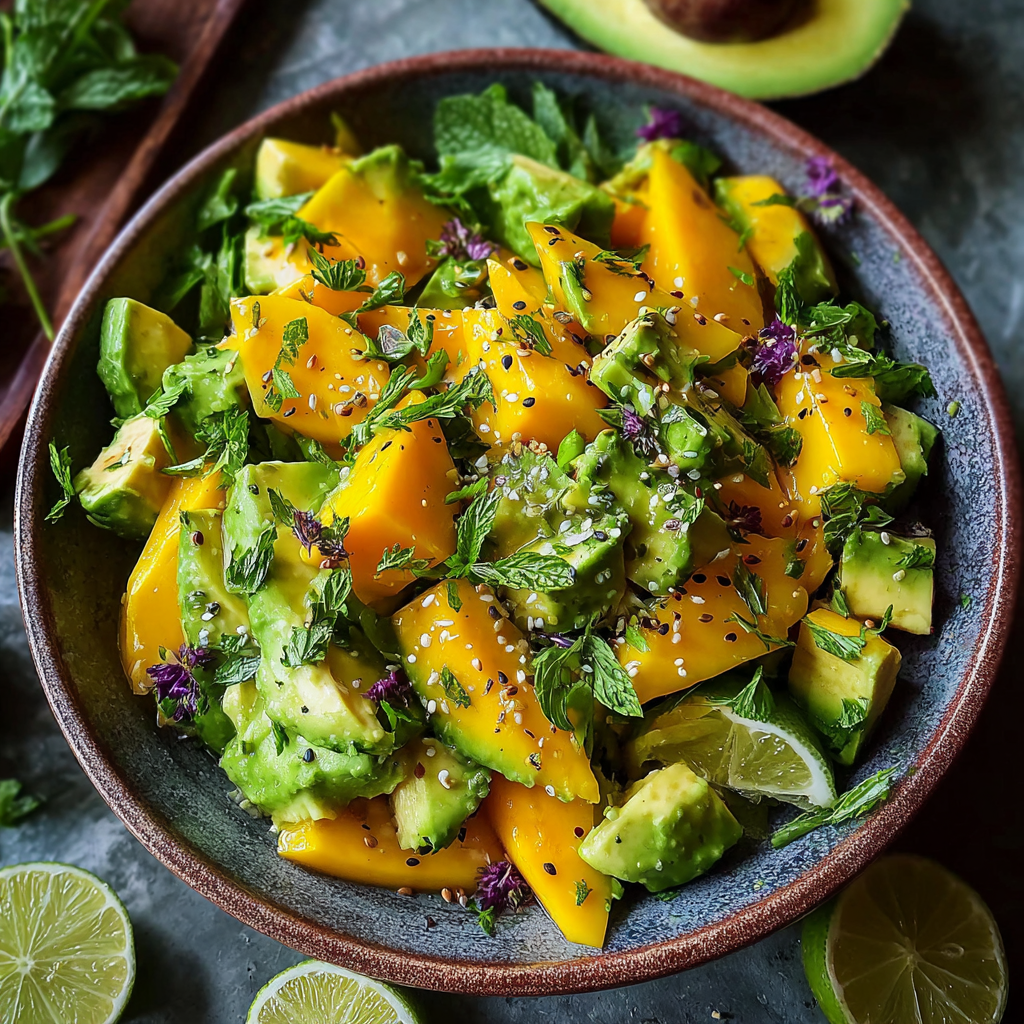
In your large serving bowl, whisk the lime juice, olive oil, honey, salt, and minced red onion. Actionable Tip: Let this sit for 5 minutes. The Science: The acid in the lime juice breaks down the onion’s sulfur compounds, making them sweeter and less likely to dominate the delicate mango.
Step 2: The Structural Layering
Add the diced mango, bell pepper, and jalapeño to the bowl. The Physics: These are the “harder” ingredients that can withstand stirring without losing their shape.
Step 3: The Avocado Integration
Add the diced avocado last. The Logic: Avocado is physically fragile. By adding it at the end, you minimize the “shearing” of its cells, preventing the salad from turning into guacamole.
Step 4: The Herbaceous Finish
Fold in the cilantro gently using a “lift and turn” motion with a spatula. The Result: This distributes the aromatics without bruising the fruit.
Success Tips & Common Mistakes
- The “Mushy” Fail: This occurs if the avocados or mangos are overripe. They should be “yielding to thumb pressure” but still firm enough to hold a clean edge when cut.
- The “Browning” Fail: If you aren’t serving the salad immediately, press a piece of plastic wrap directly onto the surface of the salad to block all oxygen.
- Texture Hack: Add ¼ cup of Toasted Pepitas (pumpkin seeds) just before serving. The Science: The addition of a dry, roasted starch/protein element provides a “crunch” that highlights the softness of the main ingredients.
Nutritional Information (Per Serving)
- Calories: 210 kcal.
- Healthy Fats: 14g (Primarily monounsaturated).
- Fiber: 7g.
- Vitamin C: 110% of Daily Value.
Conclusion
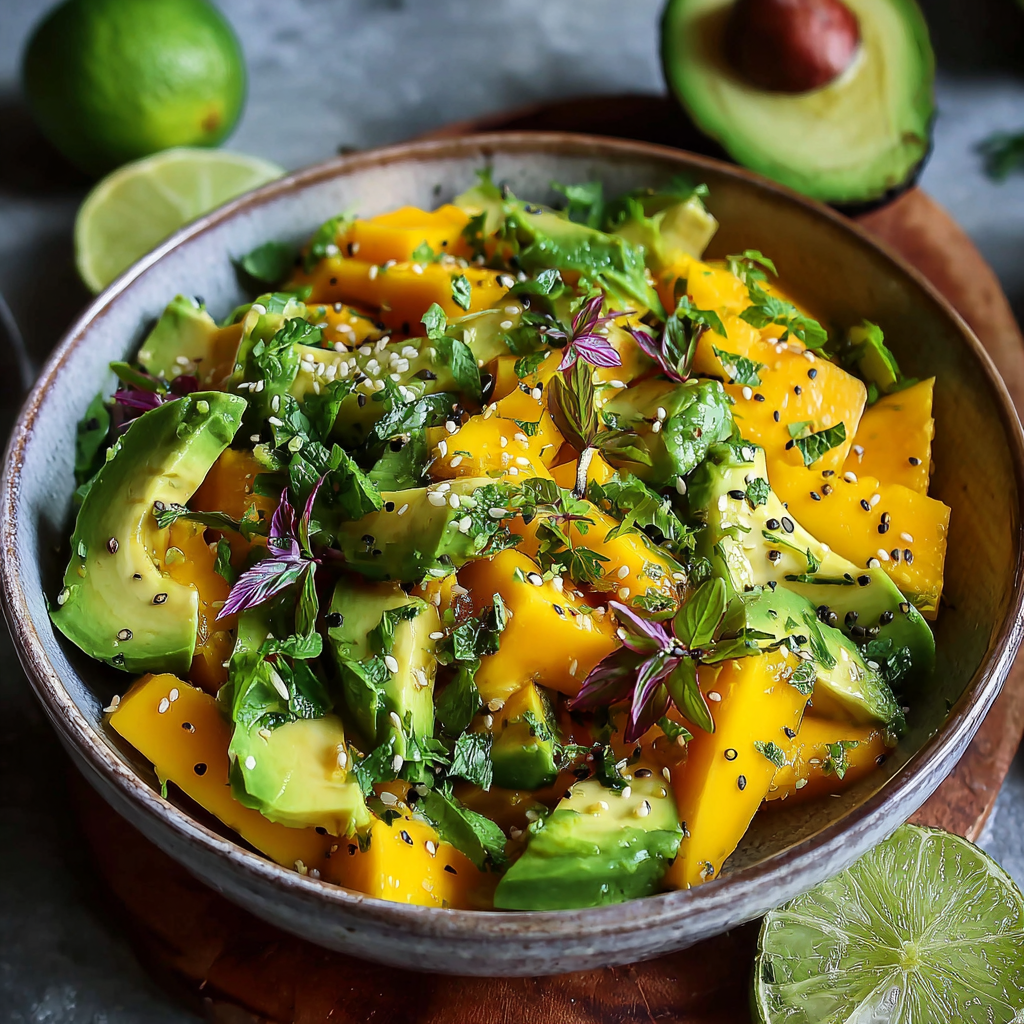
Fresh Avocado Mango Salad is a triumph of ingredient synergy. By managing enzymatic browning and balancing lipid density with fruit acidity, you create a dish that is as visually vibrant as it is nutritionally complete.