Follow Me On Social Media!
Gourmet Seafood Casserole: The Science of “Liquid Management”

The Seafood Challenge: Avoiding the “Watery Casserole”
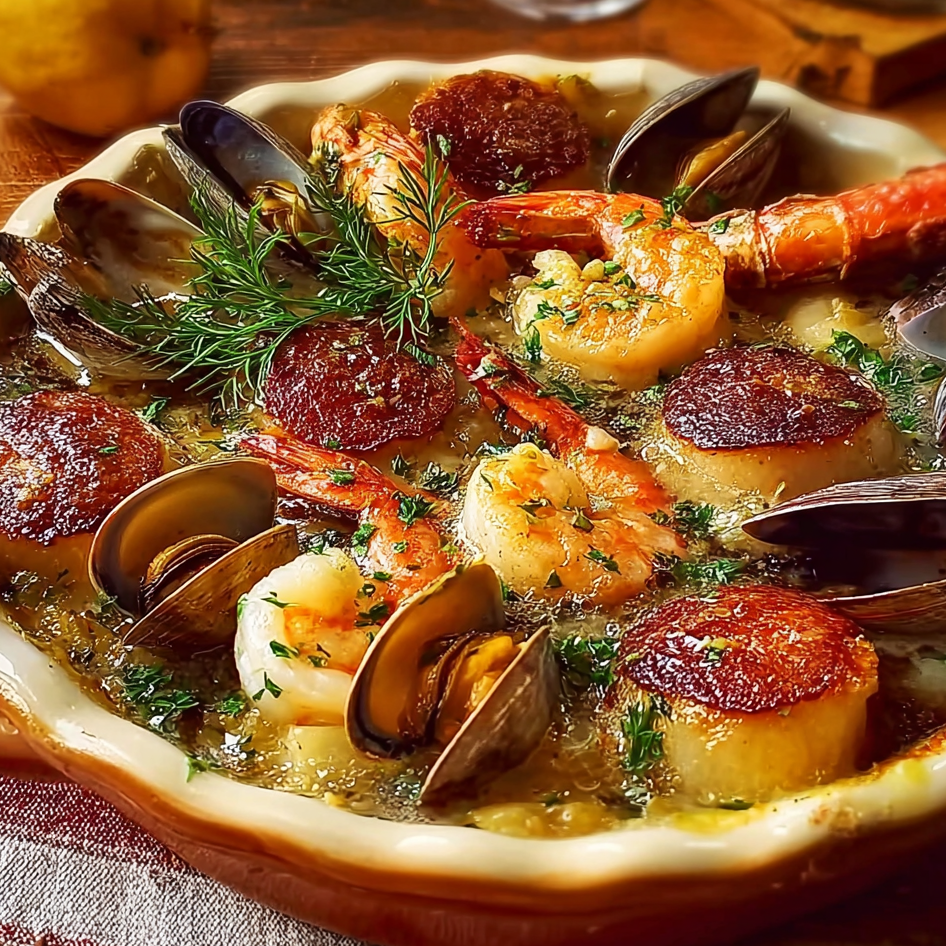
The biggest failure in seafood casseroles is a soupy, diluted sauce. According to culinary data, raw scallops and white fish can release up to $15\%-20\%$ of their weight in water when heated. This liquid often thins out the cream sauce, leading to a “boiled” rather than baked texture.
To solve this, we utilize Two-Stage Pre-Searing. By quickly searing the shrimp and scallops and “par-roasting” the white fish, we expel excess moisture before the assembly. This ensures the final Gruyère-infused Mornay sauce stays thick and velvety, coating every piece of seafood perfectly.
Ingredients List: The Ocean-to-Table Matrix
To achieve a “gourmet” profile, we skip “cream of” soups and build a high-density dairy emulsion.
The Seafood Trio:
- 1 lb Large Shrimp: Peeled and deveined.
- 1 lb Sea Scallops: Patted extremely dry. The Science: Dry scallops undergo the Maillard Reaction faster, creating a golden crust that locks in flavor.
- 1 lb Firm White Fish: (Cod, Halibut, or Haddock). Cut into 1-inch chunks.
The Gourmet Sauce (Mornay):
- 4 tbsp Unsalted Butter.
- 1/4 cup All-Purpose Flour.
- 2 cups Whole Milk.
- 1/2 cup Dry White Wine: (Sauvignon Blanc or Pinot Grigio). The Logic: The acidity in the wine balances the heavy fats of the cream and cheese.
- 1 cup Gruyère Cheese: Grated. (Adds a nutty, sophisticated profile).
- 1 tsp Dijon Mustard & 1 tbsp Fresh Dill.
The “Shatter-Crunch” Topping:
- 1 cup Panko Breadcrumbs.
- 2 tbsp Melted Butter.
- 1/4 cup Grated Parmesan.
Timing: Data-Driven Efficiency
| Phase | Duration | Data Insight |
| The Pre-Sear | 4-5 Minutes | Removes up to $30$ml of excess water from the seafood. |
| The Roux-Sauce | 8 Minutes | Whisking slowly ensures the starch granules hydrate without clumping. |
| The Bake ($200$°C) | 12-15 Minutes | High heat for a short duration prevents the seafood from turning “rubbery.” |
| Total Time | Approx. 35 Minutes | Professional-grade dinner party centerpiece. |
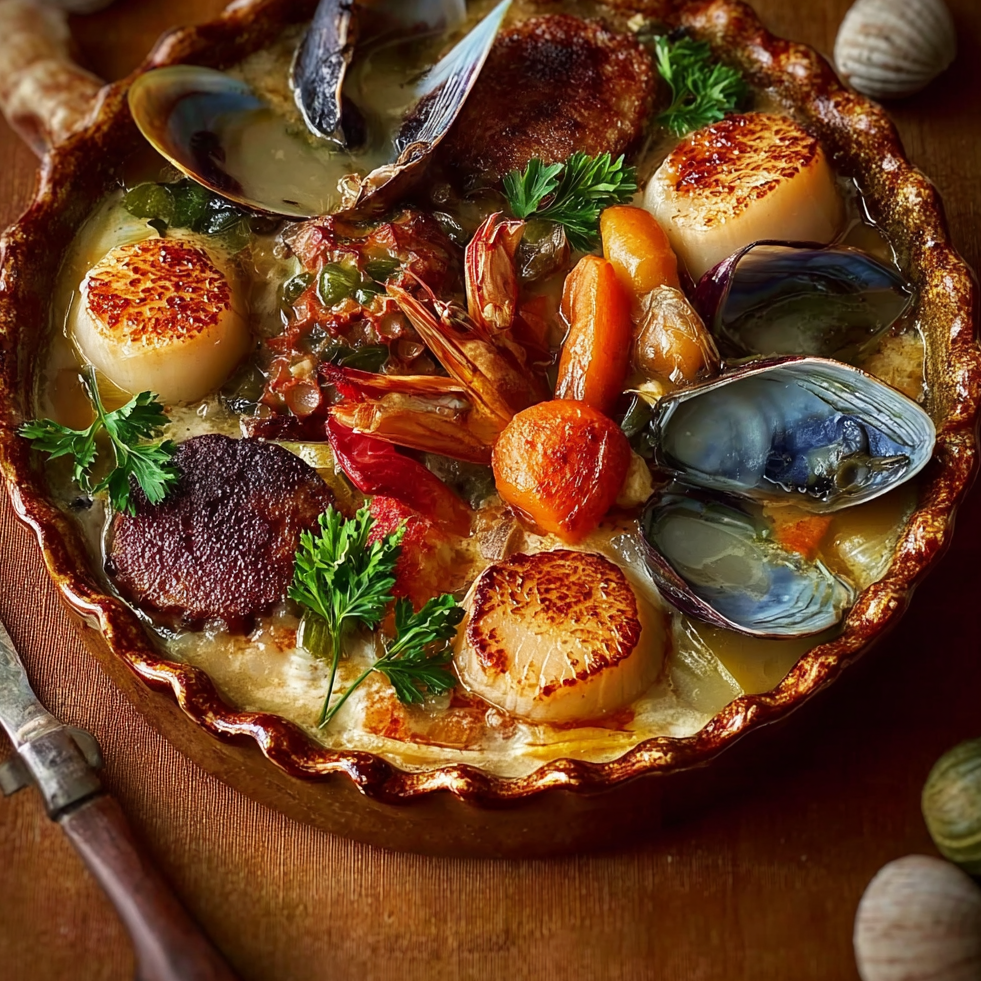
Step-by-Step Instructions
Step 1: The Moisture-Lock Sear
Pat all seafood with paper towels until bone dry. In a hot skillet with a splash of oil, sear the shrimp and scallops for 60 seconds per side. Actionable Tip: They should still be raw in the middle. Remove and drain on a paper towel.
Step 2: The Aromatic Deglaze
In the same skillet, melt 4 tbsp butter. Add a minced shallot and cook until soft. Pour in the white wine and scrape the bottom of the pan to lift the seafood fond. Let the wine reduce by half.
Step 3: The Mornay Emulsion
Whisk in the flour to create a roux. Gradually add the milk, whisking constantly until thick. Stir in the Gruyère and Dijon until the sauce is glossy. The Science: The mustard acts as a secondary emulsifier, keeping the cheese oils suspended in the milk.
Step 4: The Assembly
Gently fold the seared shrimp, scallops, and raw fish chunks into the sauce. Transfer to a buttered 9×13-inch dish. The Logic: The raw white fish will poach inside the sauce during the bake, remaining incredibly flakey.
Step 5: The “Shatter-Crunch” Finish
Mix Panko, Parmesan, and melted butter. Sprinkle evenly over the top. Bake at 400°F (200°C) for 12–15 minutes until the topping is golden-brown and the sauce is bubbling at the edges.
Success Tips & Common Mistakes
- The “Rubbery” Fail: This is caused by over-baking. Seafood only needs to reach an internal temperature of 145°F (63°C). If you bake it for 30+ minutes, it will lose its “snap.”
- The “Bland” Fail: Seafood needs acid. If the casserole tastes too “heavy,” add a squeeze of fresh lemon juice right before serving.
- Seafood Quality: Avoid “frozen seafood mixes” that contain small, pre-cooked bay scallops; they will dissolve into the sauce. Invest in large, “dry-pack” sea scallops for the best texture.
Nutritional Information (Per Serving)
- Calories: 440 kcal.
- Protein: 38g.
- Total Fat: 24g.
- Carbohydrates: 14g.
Conclusion
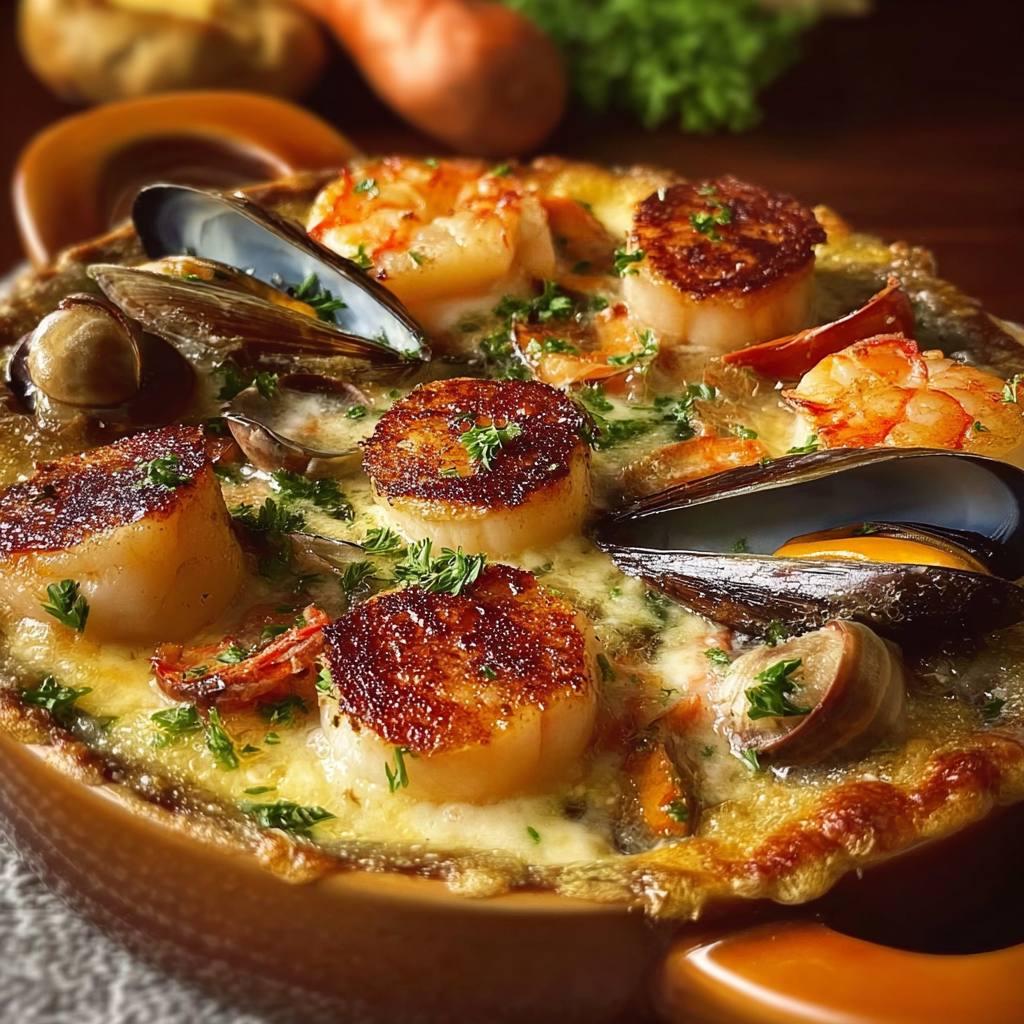
Gourmet Seafood Casserole is a masterclass in moisture control. By pre-searing the shellfish and using a wine-deglazed Mornay sauce, you create a dish that is rich, stable, and highlights the delicate natural flavors of the sea.