Follow Me On Social Media!
Greek Lemon Chicken Soup (Avgolemono): The Science of “Egg-Lemon Emulsification”

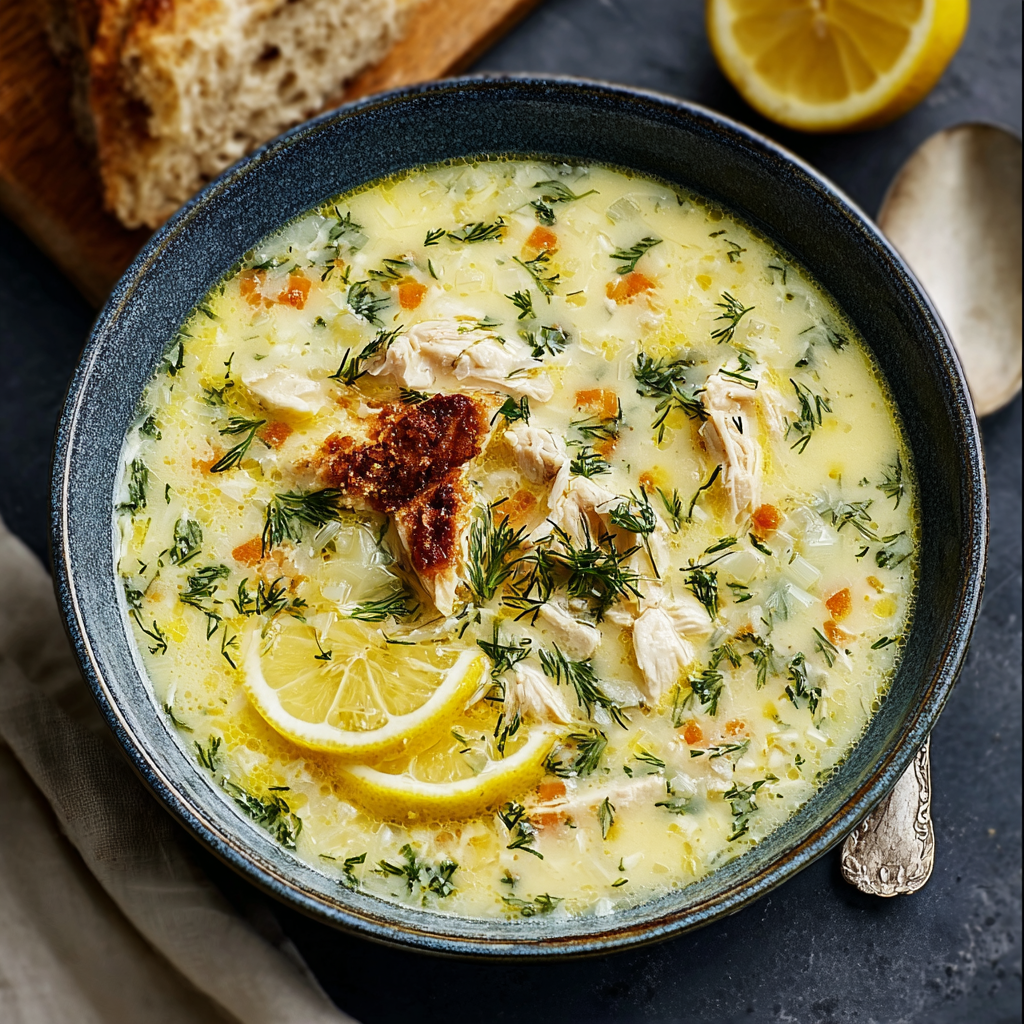
Avgolemono (Greek: αυγολέμονο) is more than just a soup; it is a sophisticated culinary emulsion. Unlike Western soups that rely on flour (roux) or heavy cream for thickness, Avgolemono achieves a “liquid velvet” texture through the liaison of eggs and lemon juice.
The lemon’s citric acid acts as a denaturant, partially unfolding the egg proteins so they can trap liquid and air more effectively. When tempered with hot broth, these proteins create a stable, creamy matrix that thickens the soup without the need for dairy.
Ingredients List: The Authentic Foundation
- 1 Whole Chicken (approx. 3 lbs): The Science: Bone-in, skin-on chicken is essential. The collagen from the bones and connective tissue melts into gelatin, which provides the necessary body and “mouthfeel” to the broth.
- 1/2 cup Short-Grain Rice (Arborio or Carolina): These varieties release more amylopectin starch, which helps stabilize the egg emulsion.
- 2-3 Large Eggs: (At room temperature to minimize thermal shock).
- 1/2 cup Fresh Lemon Juice: Never bottled; you need the active citric acid and volatile oils for the correct chemical reaction.
- Aromatics: 1 yellow onion, 2 carrots, 2 celery stalks, and 1 bay leaf.
Timing: The Precision Window
| Phase | Duration | Data Insight |
| The Broth Extraction | 60-90 Minutes | Extracts maximum gelatin and minerals from the chicken. |
| The Starch Cook | 15-20 Minutes | Rice must be tender to release its stabilizing starches. |
| The Tempering | 5 Minutes | The “Critical Path”—requires slow heat integration to avoid scrambling. |
| Total Time | Approx. 2 Hours | Artisanal comfort. |
Step-by-Step Instructions
Step 1: The Gelatinous Stock
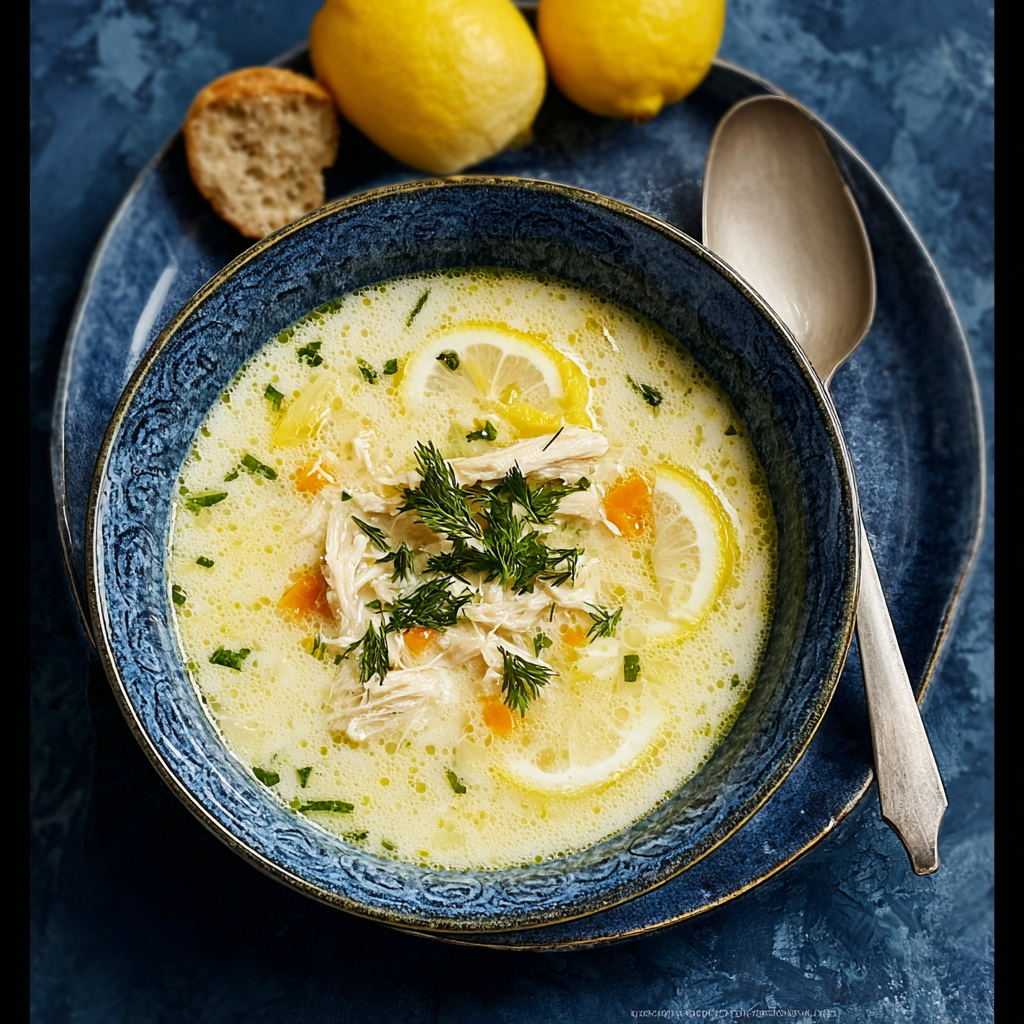
Place the whole chicken and aromatics in a large pot. Cover with water and simmer. The Chemistry: Skim the “scum” (denatured proteins) that rises to the top for a clear, professional broth. Once the chicken is falling off the bone, remove the meat to shred and strain the broth.
Step 2: The Starch Release
Return the strained broth to a simmer and add the rice. The Physics: Cooking the rice directly in the broth ensures the released starch is incorporated into the soup base, which will act as an “insurance policy” against the eggs curdling later.
Step 3: The “Froth” Synthesis
In a separate bowl, whisk the egg whites until foamy and soft peaks begin to form, then whisk in the yolks and lemon juice. The Science: Beating the whites separately introduces air, creating a gas-in-liquid foam that results in a much lighter, fluffier soup.
Step 4: The Tempering (Liaison)
This is the most critical step. Slowly ladle 2 cups of the hot broth into the egg-lemon mixture while whisking vigorously. The Logic: You are slowly raising the temperature of the egg proteins. By the time the eggs hit the main pot, they are already warm enough that they won’t “seize” or scramble.
Step 5: The Final Fusion
Turn off the heat (this is vital). Stir the tempered egg mixture back into the main pot. The Result: The soup will instantly transform from a clear broth to a creamy, opaque yellow. The residual heat of the broth is enough to “set” the eggs without boiling them.
Success Tips & Common Mistakes
- The “Scrambled” Fail: Never add the eggs to a boiling pot. High heat ($100$°C) causes egg proteins to bond too tightly and squeeze out water, resulting in “curds.” Always turn the heat off before adding the Avgolemono sauce.
- The “Thin” Fail: If your soup is too watery, you likely didn’t use enough rice or eggs. The Hack: You can blend a small amount of the cooked rice into the broth before adding the eggs to provide extra mechanical thickness.
- The Flavor Boost: Garnish with Fresh Dill and a crack of Black Pepper. The pepper contains piperine, which provides a sharp contrast to the silky, fatty emulsion of the eggs.
Nutritional Information (Per Bowl)
- Calories: 320 kcal.
- Protein: 26g.
- Vitamin C: 25% of Daily Value.
- Hydration: Excellent (Electrolyte-rich broth).
Conclusion
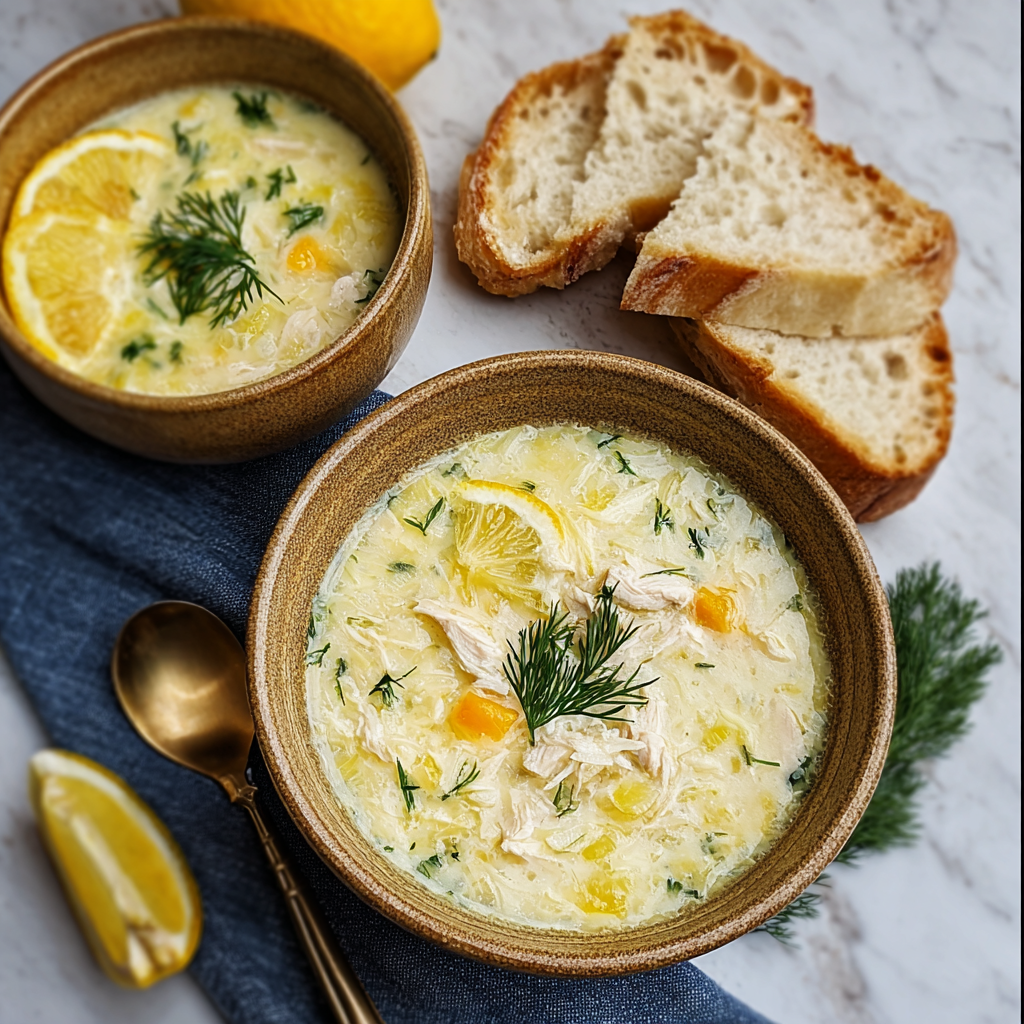
Greek Lemon Chicken Soup is the ultimate example of how simple ingredients—chicken, rice, eggs, and lemon—can be transformed through careful thermal management. It is a meal that nourishes both the body and the senses.