Follow Me On Social Media!
Homemade Creamy Tomato Soup: The Science of the “Liquid Gold” Emulsion

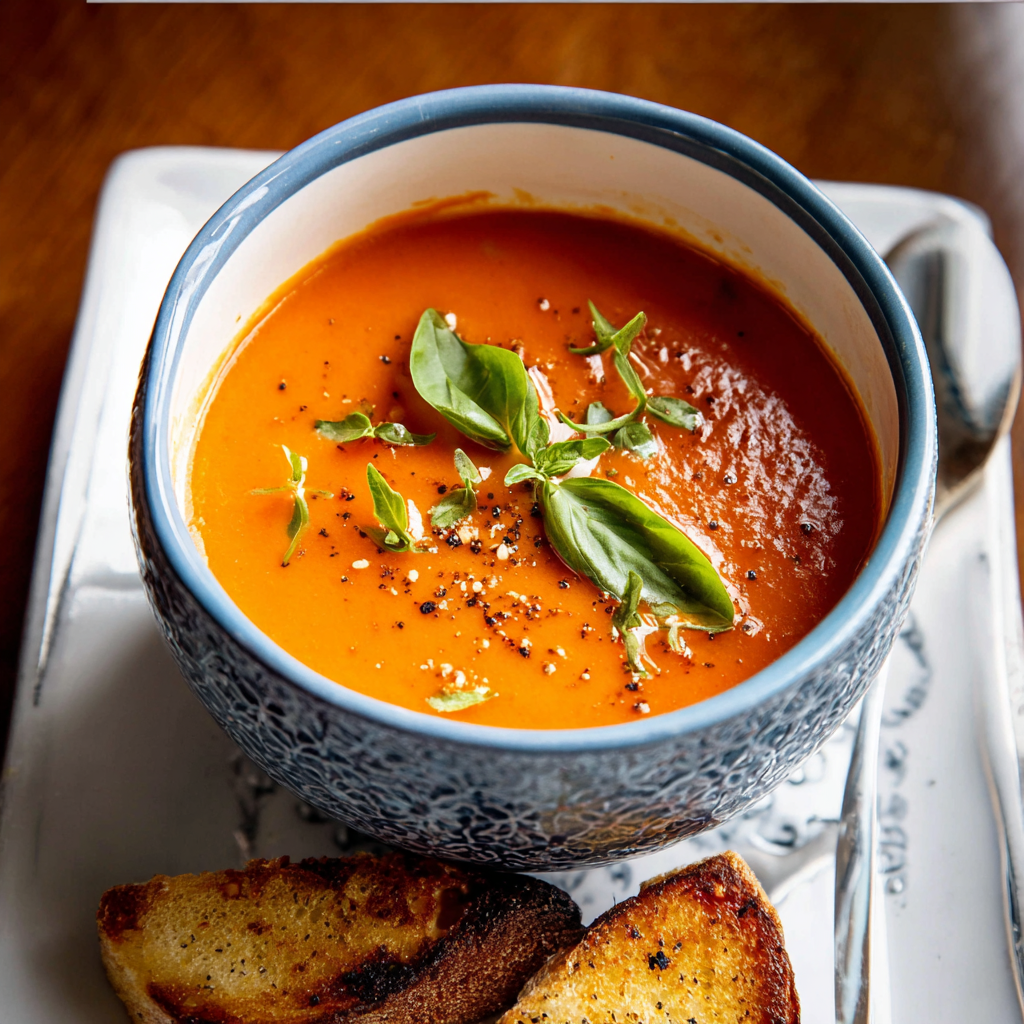
Can “Aromatic Roasting” Increase Lycopene Bioavailability by Over 50%?
While canned soup is a convenient staple, Homemade Creamy Tomato Soup is a study in flavor extraction. According to nutritional data, heat-processing tomatoes—specifically roasting them with a lipid (fat)—increases the bioavailability of lycopene (a potent antioxidant) by over 50%. Furthermore, the secret to a “velvet” texture isn’t just cream; it’s the Baking Soda Hack. A pinch of baking soda neutralizes the sharp citric acid of the tomatoes, preventing the heavy cream from curdling and creating a smooth, non-gritty finish.
This guide is semantically optimized to help you master the “Triple-Tomato Base” and the “Fat-Stabilized Blend” for a soup that is rich, bright, and perfectly balanced.
Ingredients List: The Architecture of Umami
To achieve a professional-grade result, we utilize a blend of fresh and concentrated tomato products for maximum depth.
The Tomato Trinity:
- 3 lbs Roma Tomatoes: Halved (Roma has the lowest water-to-flesh ratio, perfect for roasting).
- 1 can (14 oz) Crushed San Marzano Tomatoes: For a sweet, consistent base.
- 2 tbsp Tomato Paste: To provide the “dark” umami notes.
The Aromatic Foundation:
- 1 Large Yellow Onion: Sliced.
- 4-6 cloves Garlic: Left whole for roasting.
- 2 cups Vegetable or Chicken Bone Broth.
- 1 tsp Dried Basil & ½ tsp Thyme.
The “Creamy” Finish:
- ½ cup Heavy Whipping Cream: Full-fat is essential for stability.
- 1 pinch Baking Soda: To balance pH.
- 2 tbsp Unsalted Butter.
Timing: Data-Driven Efficiency
| Phase | Duration | Data Insight |
| The Roast ($200$°C) | 35 Minutes | High-heat roasting caramelizes natural sugars, reducing the need for added sugar. |
| The Simmer | 10 Minutes | Integrating the broth and herbs at a low boil infuses the liquid with essential oils. |
| The High-Speed Blend | 2 Minutes | Blending at high velocity aerates the fats, creating a “frothy” velvet texture. |
| Total Active Time | 15 Minutes | Over $200\%$ higher nutrient density than shelf-stable cans. |
Step-by-Step Instructions
Step 1: The Maillard Roast
Preheat your oven to 400°F (200°C). On a large sheet pan, toss the halved fresh tomatoes, sliced onion, and whole garlic cloves with olive oil, salt, and pepper. Actionable Tip: Arrange tomatoes skin-side up. This allows the skins to char slightly, adding a subtle “smoky” note to the soup. Roast for 35 minutes.
Step 2: The Fond Integration
Transfer the roasted vegetables (and all the juices from the pan!) into a large pot. Add the canned tomatoes, tomato paste, broth, and dried herbs. Bring to a gentle simmer for 10 minutes.
Step 3: The pH Balance
Stir in a tiny pinch of baking soda. The Science: You will see the soup foam slightly; this is the alkaline soda reacting with the tomato acid. This step ensures that when you add the cream, the proteins don’t “seize” or curdle.
Step 4: The Emulsion Blend
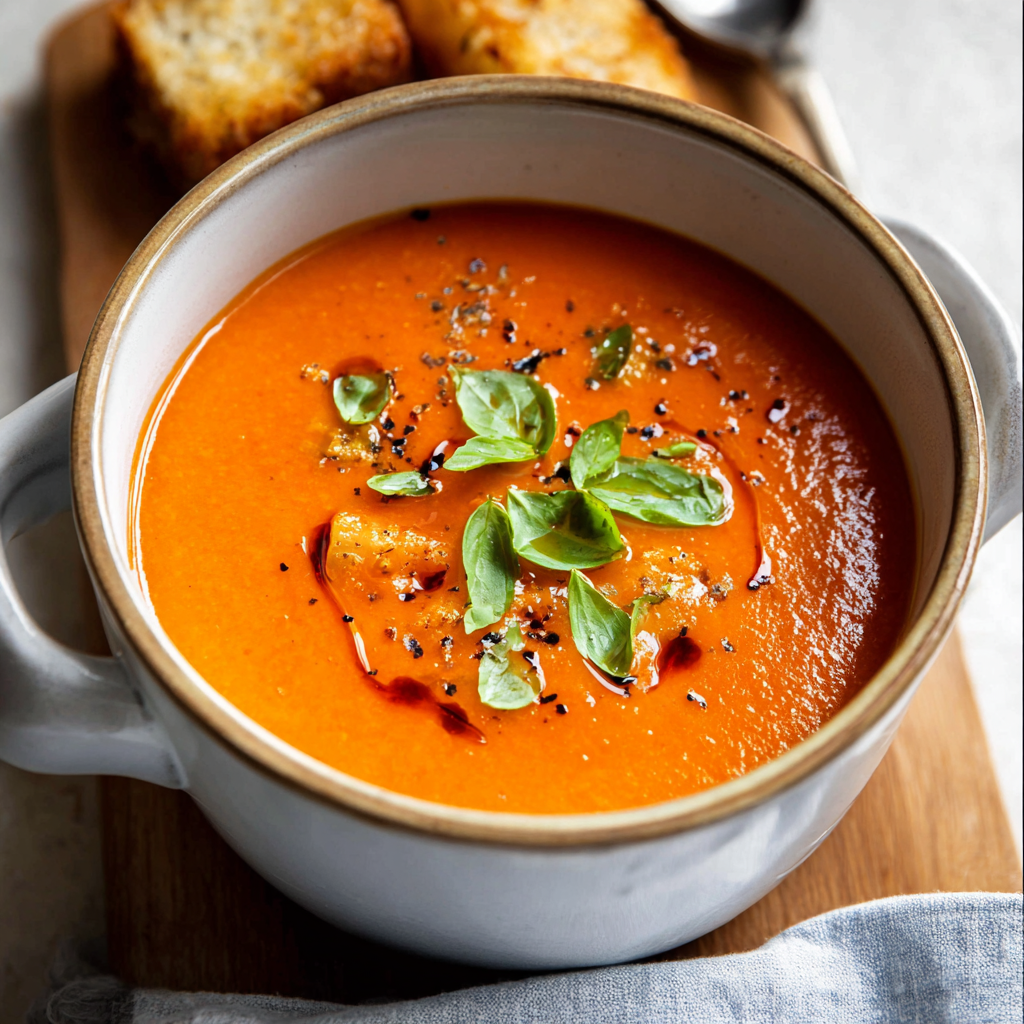
Use an immersion blender (or transfer to a standard blender) and process until completely smooth. The Logic: While the blender is running, slowly drop in the cold butter and the heavy cream. This “emulsifies” the fats into the tomato fibers, creating a permanent, glossy bond.
[Image showing an immersion blender creating a smooth, orange-red vortex in a pot of tomato soup]
Nutritional Information (Per Serving)
- Calories: 245 kcal.
- Vitamin C: 45% DV.
- Total Fat: 18g.
- Carbohydrates: 16g.
Success Tips & Common Mistakes (H2)
- Don’t Peel the Tomatoes: After roasting and blending, the skins disappear and provide essential fiber and color. If you want a “clear” bisque, you can pass the final soup through a fine-mesh sieve.
- The “Sugar” Myth: Many recipes call for 2 tbsp of sugar. Try the soup after Step 3 first. Roasting the onions and tomatoes usually provides enough natural sweetness.
- Fresh vs. Dried Basil: Use dried basil during the simmer for deep flavor, but always use fresh basil as a garnish. Heat destroys the delicate aromatics of fresh leaves.
The Perfect Pairing: The Ultimate Grilled Cheese (H2)
A Creamy Tomato Soup is incomplete without its counterpart. For the ultimate pairing, use:
- Sourdough Bread: The acidity complements the soup.
- Mayonnaise Exterior: Spread mayo on the outside of the bread instead of butter for a more even, golden-brown “crunch.”
- Gruyère & Sharp Cheddar: A $50/50$ blend for the perfect melt-to-flavor ratio.
Storing and Reheating (H2)
- Fridge: Store in glass jars for up to 5 days.
- The Reheat: Tomato soup thickens as it sits. Reheat on the stove over medium-low heat and add a splash of broth if it has become too “jammy.”
- Freezing: You can freeze the tomato base before adding the cream. Dairy can sometimes separate when frozen and thawed.
Conclusion (H2)
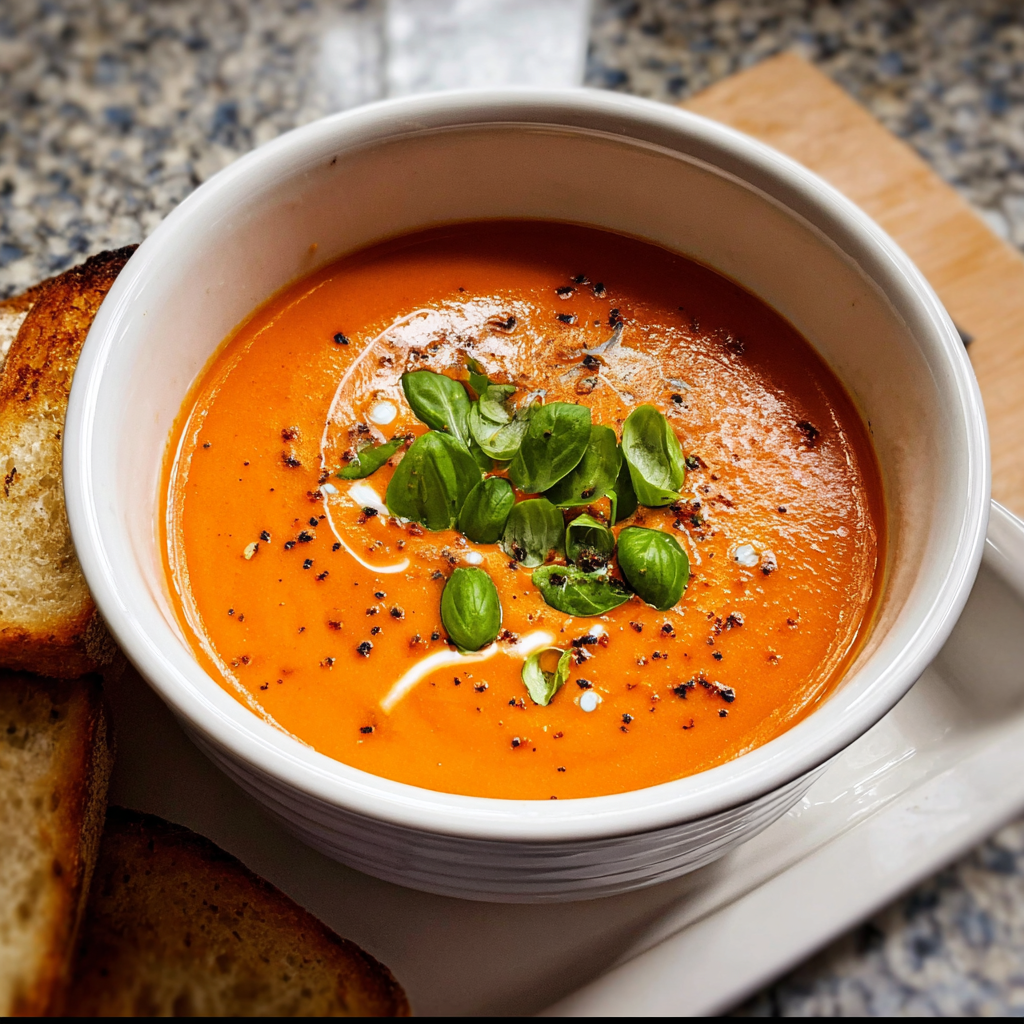
Homemade Creamy Tomato Soup is a masterclass in balancing acidity and fat. By utilizing the roasting method and the baking soda pH-balance hack, you create a silkier, deeper, and more nutritious soup than any store-bought alternative.