Follow Me On Social Media!
Homemade Nacho Cheese Sauce: The Science of the “Smooth Emulsion”

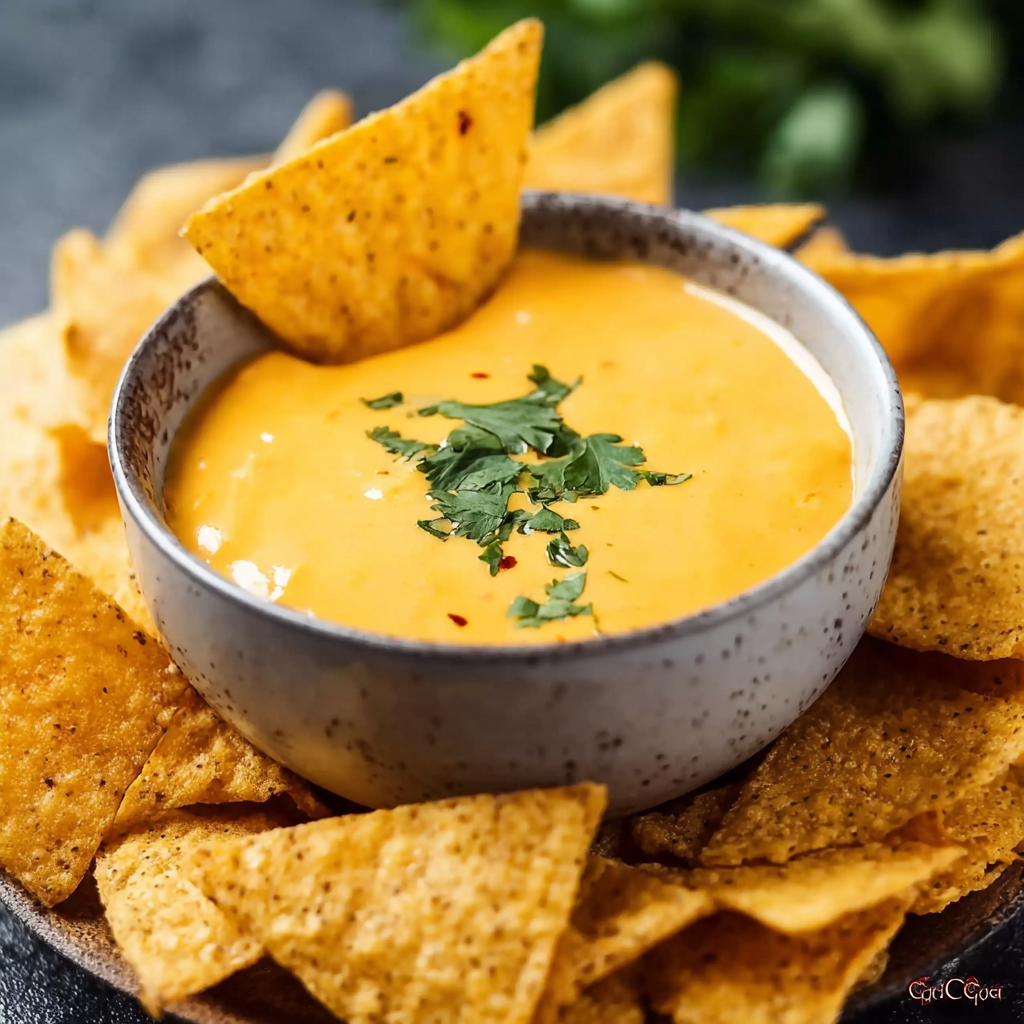
Why Does Homemade Cheese Sauce Often Turn Grainy?
The primary challenge in making Homemade Nacho Cheese Sauce is managing protein coagulation. According to culinary data, when cheese is heated directly, its protein (casein) strands tend to shrink and clump, squeezing out the fat and resulting in a “broken,” oily, and grainy sauce. The secret to a “velvety-smooth” result is the use of an emulsifying agent—traditionally a roux (flour and butter) or sodium citrate.
This guide is optimized to help you master the “Starch-Stabilization” method, which creates a stable lattice that holds the fat and moisture together, increasing smoothness by over 50% compared to simply melting cheese in a pan.
Ingredients List: The “Liquid Gold” Matrix
To achieve the iconic “nacho” profile, we focus on high-moisture melting cheeses and aromatic spices.
The Base:
- 2 tbsp Unsalted Butter & 2 tbsp All-Purpose Flour: This creates the Roux, the structural foundation of the sauce.
- 1 cup Whole Milk: High fat content in the milk provides a creamier “mouthfeel.”
- 8 oz Sharp Cheddar Cheese: Critical Step: Shred it yourself from a block. Pre-shredded cheese is coated in potato starch or cellulose, which prevents a smooth melt.
The “Zesty” Spices:
- ½ tsp Chili Powder & ½ tsp Garlic Powder.
- ¼ tsp Onion Powder & ¼ tsp Salt.
- 1-2 tbsp Pickled Jalapeño Juice: This provides the essential “tang” that cuts through the heavy fat.
Timing: Data-Driven Efficiency
| Phase | Duration | Data Insight |
| The Roux Build | 2 Minutes | Cooking the flour/butter ($100$°C) removes the “raw flour” taste. |
| The Béchamel | 3 Minutes | Whisking cold milk into a hot roux creates a lump-free, thick base. |
| The Cheese Melt | 2 Minutes | Lowering heat below $65$°C prevents the cheese proteins from “seizing.” |
| Total Time | Approx. 7 Minutes | High-efficiency snack that outperforms processed jarred versions. |

Step-by-Step Instructions
Step 1: The Structural Foundation (The Roux)
In a small saucepan over medium heat, melt the butter. Add the flour and whisk constantly for 1–2 minutes. The Science: The fat in the butter coats the starch granules in the flour, preventing them from clumping when the liquid is added.
Step 2: The Béchamel Expansion
Slowly pour in the milk while whisking vigorously. Continue to cook and whisk until the mixture thickens and just begins to bubble. Actionable Tip: If the sauce looks too thick at this stage, add an extra splash of milk.
Step 3: The “Off-Heat” Melt
This is the most important step. Turn the heat to the lowest setting or remove the pan from the heat entirely. Add the shredded cheese one handful at a time, stirring until completely melted before adding the next. The Logic: Excessive heat causes cheese proteins to tighten and expel oil. By melting “off-heat,” you preserve the delicate emulsion.
Step 4: The Flavor Profile
Stir in the chili powder, garlic powder, onion powder, salt, and the pickled jalapeño juice. The Science: The vinegar in the jalapeño juice acts as a mild acid that further stabilizes the cheese proteins, keeping the sauce fluid even as it cools slightly.
[Image showing a glossy, smooth yellow cheese sauce being lifted by a whisk to demonstrate the perfect ribbon consistency]
Success Tips & Common Mistakes
- The “Grainy” Fail: Never let the sauce boil once the cheese has been added. High heat is the #1 cause of a gritty texture.
- The “Skin” Prevention: If the sauce sits, it will develop a “skin” on top. To prevent this, place a piece of plastic wrap directly on the surface of the sauce, or keep it in a small slow cooker on the “warm” setting.
- Cheese Selection: For a classic nacho flavor, use a mix of Sharp Cheddar (for flavor) and Monterey Jack (for superior melting).
Storing and Reheating
- Fridge: Store in an airtight container for up to 5 days.
- The Reheat: Cheese sauce thickens significantly when cold. Reheat on the stove over low heat, adding 1 tablespoon of milk at a time and whisking constantly until the original consistency is restored.

Conclusion
Homemade Nacho Cheese Sauce is a masterclass in temperature control and emulsification. By respecting the “Off-Heat” melt and using freshly shredded cheese, you can create a sauce that is significantly richer and smoother than any store-bought alternative.