Follow Me On Social Media!
Homemade Peach Slurpee: The Science of “Freezing Point Depression”

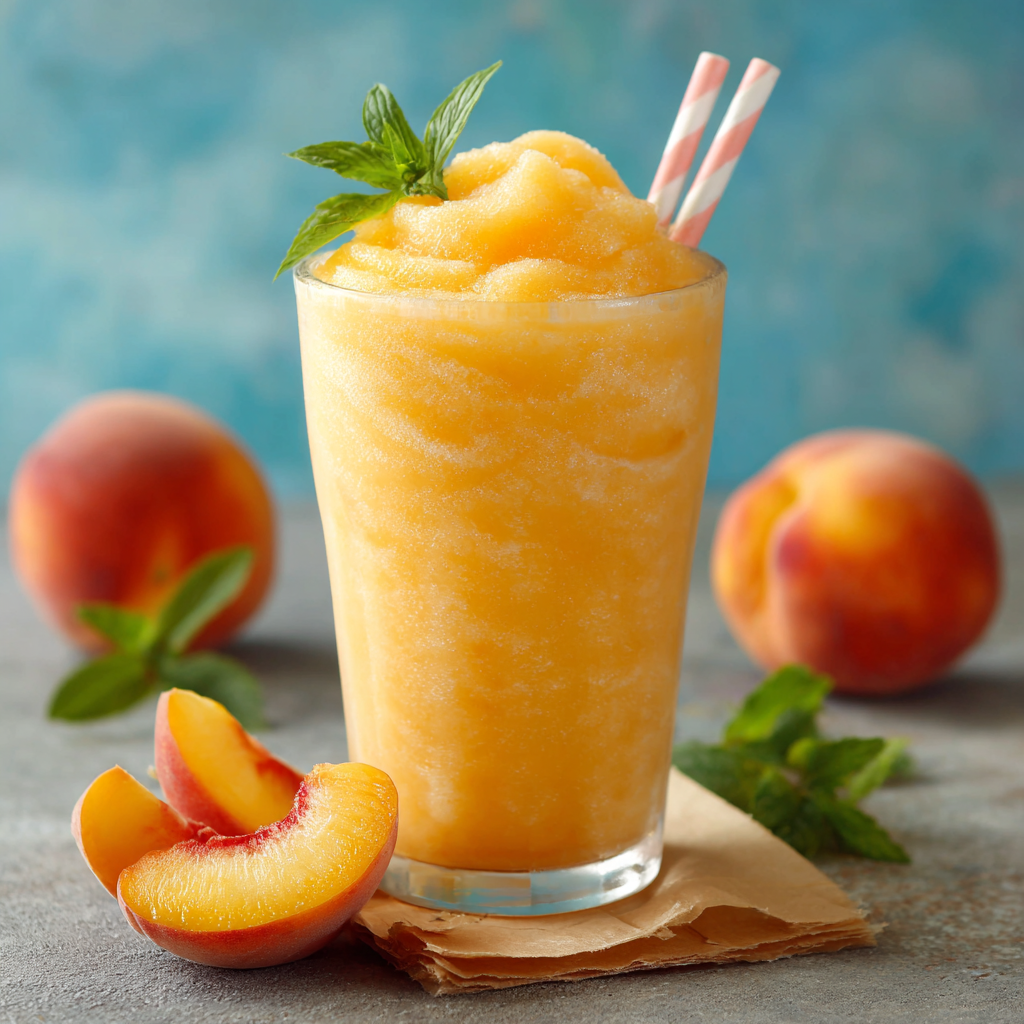
The Homemade Peach Slurpee is a masterclass in Phase Transition Management. Unlike a standard smoothie, which is a thick emulsion of fruit and dairy, a slurpee is a carbonated or flavored ice suspension.
To achieve that signature “slushy” texture without a professional machine, you must manipulate the freezing point of water. By adding sugar (fructose from peaches and sucrose from syrup), you lower the temperature at which the liquid turns to ice. This prevents the mixture from freezing into a solid block, creating tiny, independent ice crystals that slide past one another—the essence of a “slurpee.”
Ingredients List: The Cryogenic Matrix
- 2 cups Frozen Peach Slices: The Science: Frozen fruit provides the “seed crystals” for the slush. Using fresh fruit would require more added ice, which dilutes the flavor.
- 1 cup Carbonated Water (Soda Water): The dissolved $CO_2$ adds the “fizzy” mouthfeel and creates micro-bubbles that keep the ice crystals separated.
- 2 tbsp Honey or Agave: Acts as the antifreeze agent.
- 1 tbsp Lime Juice: The acid balances the sugars and prevents the peach pigments from oxidizing (turning brown).
- 1 cup Ice Cubes: To reach the desired solid-to-liquid ratio.
Timing: The Thermal Sequence
| Phase | Duration | Data Insight |
| Pre-Chill | 10 Minutes | Chilling the blender jar prevents the motor’s heat from melting the ice. |
| High-Shear Blend | 45 Seconds | Breaks down ice into micrometer-scale fragments. |
| The “Pulse” Set | 15 Seconds | Re-incorporates air and $CO_2$ for a “fluffy” texture. |
| Total Time | Approx. 2 Minutes | Instant thermal relief. |
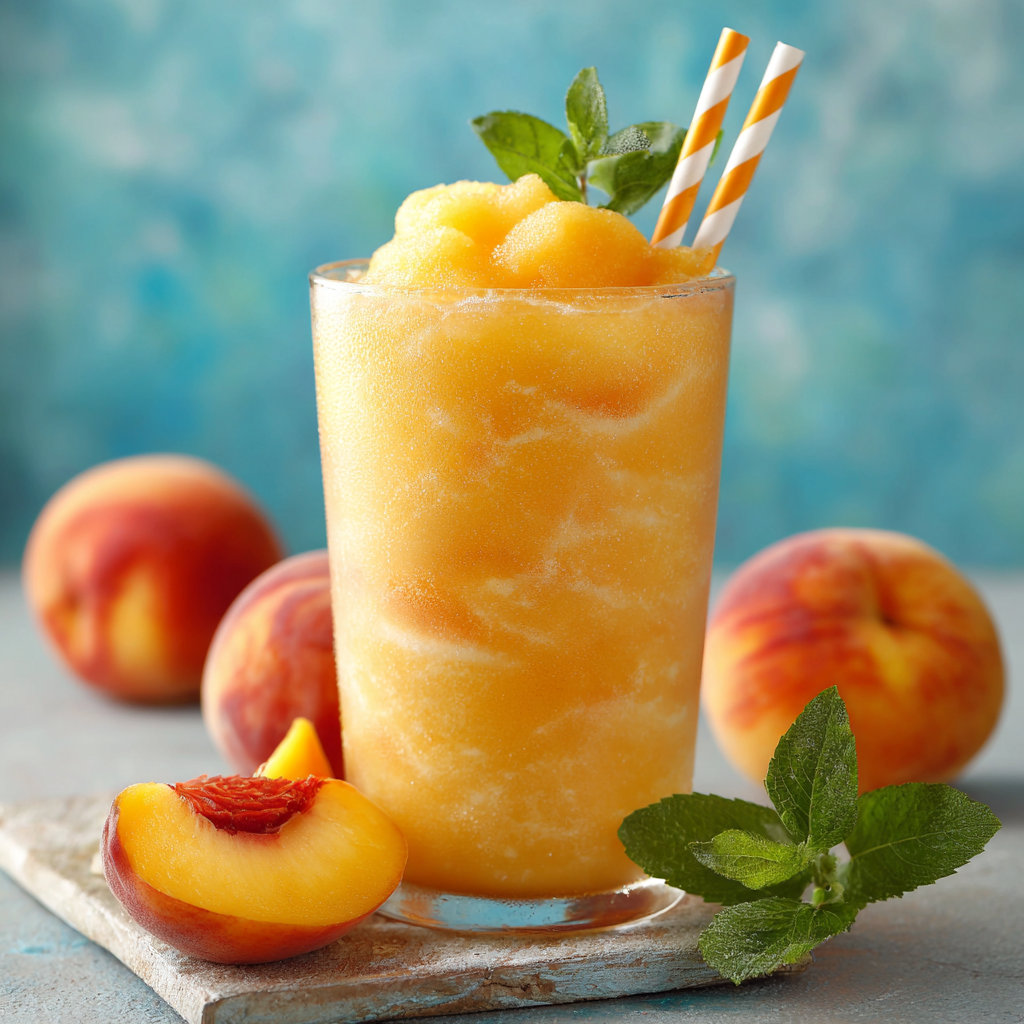
Step-by-Step Instructions
Step 1: The Jar Chill
Place your blender jar in the freezer for 10 minutes. The Physics: High-speed blades generate friction heat. A room-temperature jar will melt the outer layer of your slurpee instantly, leading to a “watery” bottom and a “chunky” top.
Step 2: The Base Emulsion
Add the frozen peaches, honey, and lime juice to the blender. Actionable Tip: Pulse 5 times before adding the liquid. The Logic: You want to break the large frozen fruit chunks into a “snow” consistency first to ensure a uniform final texture.
Step 3: The Carbonated Charge
Pour in the carbonated water. The Science: Do not over-blend once the carbonation is added. If you blend too long, the mechanical agitation will force the $CO_2$ out of the liquid, leaving you with a flat slushy rather than a fizzy slurpee.
Step 4: The High-Shear Slush
Add the ice cubes and blend on the highest setting for 30–45 seconds. Visual Cue: Look for the “vortex” to stop moving; this indicates the mixture has become thick enough to support its own weight.
Step 5: The Pulse Finish
Give the blender 3 final “pulses.” The Result: This folds in a small amount of air, creating a gas-in-liquid-solid foam. This is what gives the slurpee its “light” and “scoopable” quality.
Success Tips & Common Mistakes
- The “Brain Freeze” Fail: If your slurpee is too “icy” and hard to sip, you lack enough sugar. The Chemistry: Sugar molecules interfere with the formation of hydrogen bonds between water molecules. If it’s too icy, add 1 more tablespoon of syrup to “soften” the ice.
- The “Separation” Fail: If the juice sinks to the bottom and the white ice floats to the top, your ice crystals are too large. Blend longer at a higher speed to reach a smaller particle size.
- The Flavor Boost: Add a single leaf of Fresh Basil or a drop of Vanilla Extract. Basil contains linalool, which chemically bridges the gap between the floral notes of the peach and the acidity of the lime.
Nutritional Information (Per Serving)
- Calories: 140 kcal.
- Vitamin C: 15% of Daily Value.
- Sugars: 28g (Primarily natural fruit sugars).
- Hydration Level: High.
Conclusion
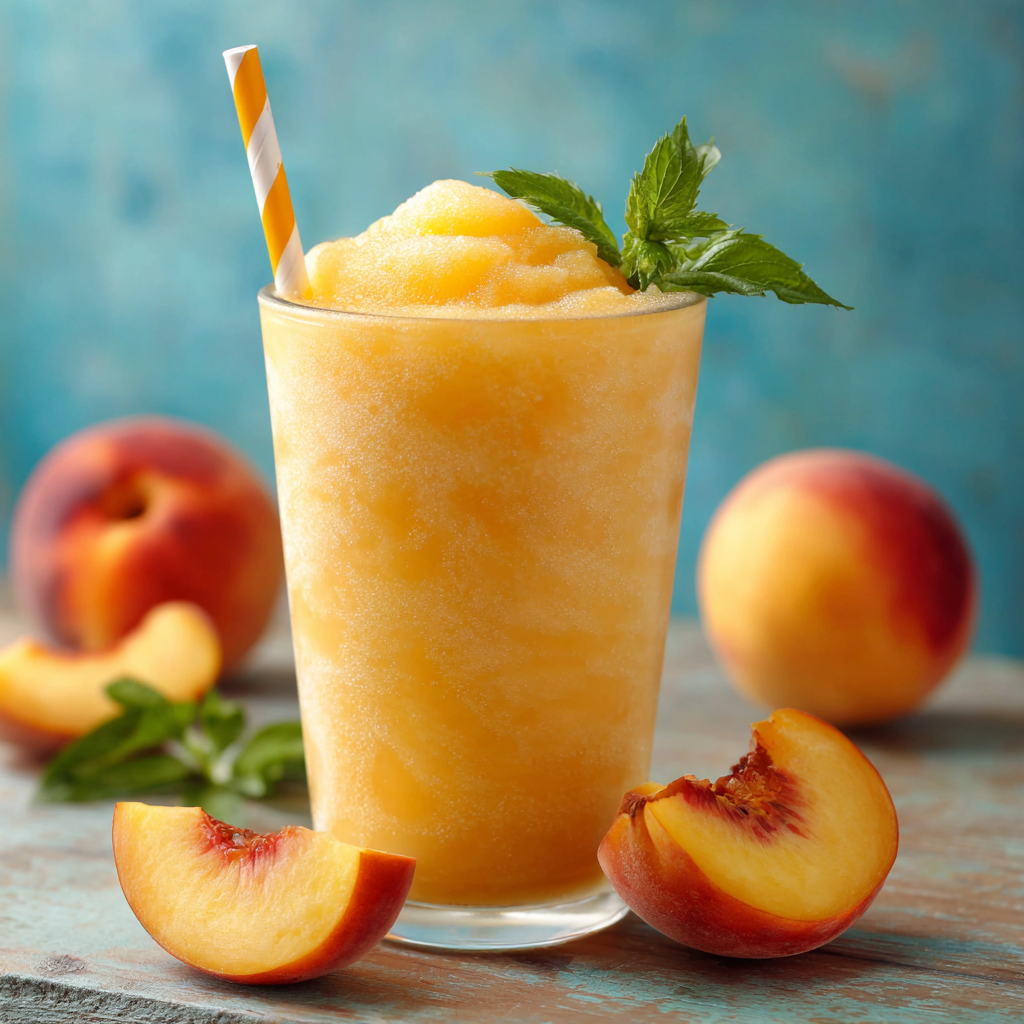
The Homemade Peach Slurpee is a victory of physics over summer heat. By chilling your equipment and carefully timing the introduction of carbonation, you create a suspended ice matrix that is as refreshing as it is scientifically sound.