Follow Me On Social Media!
Honey Chipotle Salmon Tacos with Pineapple Salsa: The Science of “Capsaicin-Sugar Synergy”

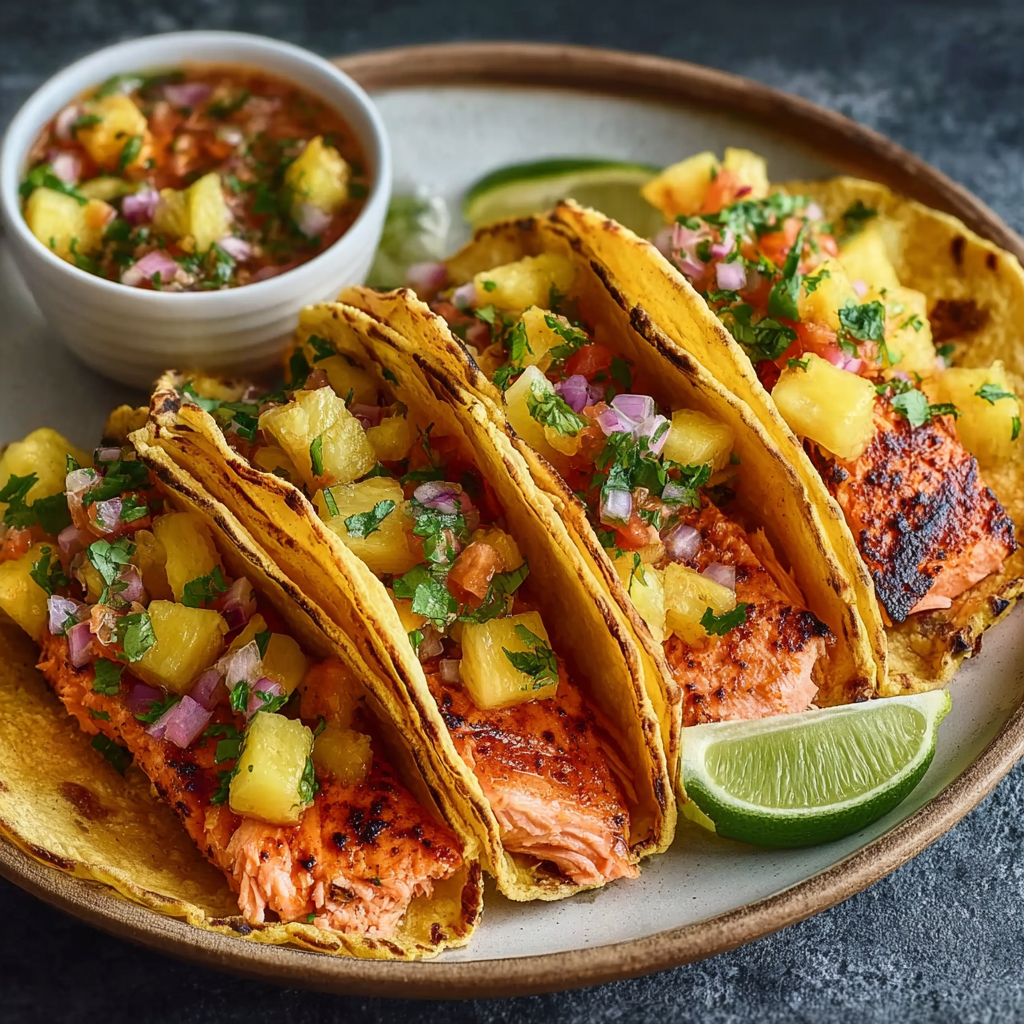
These tacos are a masterclass in balancing pH and heat. Salmon is a high-fat (omega-3) fish, which acts as a “flavor sponge” for the smokiness of chipotle. The addition of honey isn’t just for sweetness; it creates a glaze-state that protects the delicate fish proteins from drying out under high heat.
The pineapple salsa provides a critical enzymatic contrast. Pineapple contains bromelain, an enzyme that partially breaks down proteins, while its high citric acid content “cuts” through the fatty lipids of the salmon to refresh the palate.
Ingredients List: The Flavor-Texture Matrix
- 1 lb Salmon Fillet: Cut into 1-inch cubes. The Science: Small cubes increase the surface-area-to-volume ratio, allowing for more caramelization per bite.
- 2 tbsp Honey: The primary glazing agent.
- 1-2 tbsp Chipotle in Adobo: Smashed into a paste. Contains Capsaicin for heat and smoked jalapeños for depth.
- 1 tbsp Lime Juice: To balance the honey’s pH.
- 1 cup Fresh Pineapple: Diced. (Fresh is essential for the bromelain effect).
- 1/4 cup Red Onion & Cilantro: For sulfurous and herbaceous top notes.
- Small Corn Tortillas: The toasted starch base.
Timing: Data-Driven Efficiency
| Phase | Duration | Data Insight |
| The Glaze Infusion | 10 Minutes | Honey and chipotle penetrate the outer $2$ mm of the fish. |
| The Flash Sear | 5-6 Minutes | High heat ($200$°C) triggers the Maillard Reaction on the honey. |
| Salsa Maceration | 10 Minutes | Allows salt to draw juices from the pineapple via osmosis. |
| Total Time | Approx. 25 Minutes | Elite-tier nutrient density. |
Step-by-Step Instructions
Step 1: The Honey-Chipotle Emulsion
In a bowl, whisk honey, chipotle paste, lime juice, and a pinch of salt. Toss the salmon cubes in this mixture. The Chemistry: The sugar in the honey will lower the “burning point” of the glaze, so keep a close eye on the pan to ensure it caramelizes without carbonizing.
Step 2: The Enzymatic Salsa
Combine diced pineapple, red onion, cilantro, and lime juice. Actionable Tip: Let this sit for 10 minutes before serving. The Physics: The salt and acid will break down the pineapple’s cell walls, creating a “natural juice dressing” that binds the salsa ingredients together.
Step 3: The High-Heat Glaze Sear
Heat a non-stick skillet over medium-high heat with a splash of oil. Add the salmon cubes in a single layer. The Physics: Do not stir for the first 2 minutes. This allows the honey and protein to form a Maillard crust. Flip gently to sear the other sides.
Step 4: The Tortilla Toast
Briefly heat the corn tortillas over an open flame or in a dry pan. The Logic: This triggers a secondary Maillard reaction in the corn, making the tortilla more flexible and aromatic (releasing 2-acetyl-1-pyrroline, the smell of popcorn/toasted bread).
Step 5: The Assembly
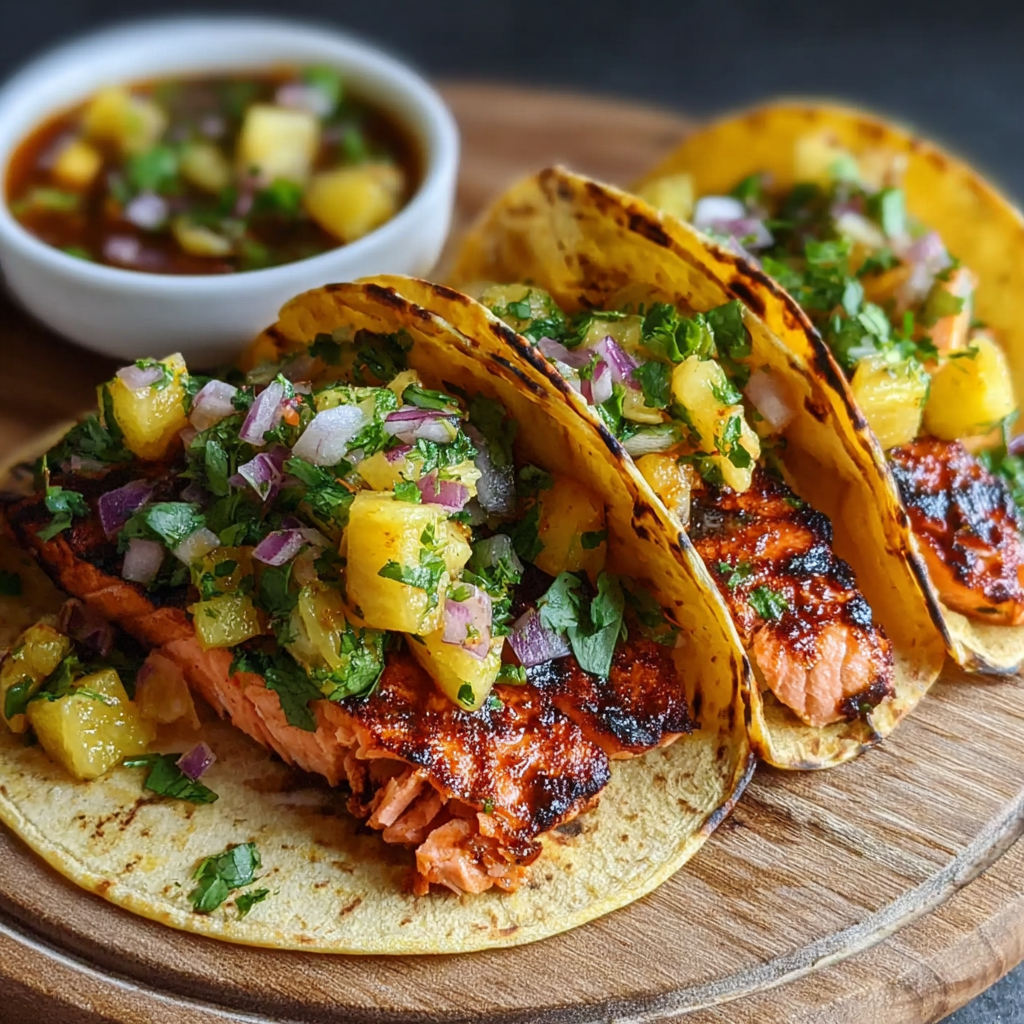
Layer the caramelized salmon onto the warm tortillas and top with a generous spoonful of pineapple salsa. The Result: The heat from the chipotle is immediately followed by the cooling, acidic sweetness of the pineapple, creating a “clean” finish.
Success Tips & Common Mistakes
- The “Mushy Fish” Fail: If you marinate the salmon in lime juice for more than 20 minutes, the acid will “cook” the fish (like ceviche), making the texture mealy once it hits the hot pan. Add the lime juice to the glaze just before cooking.
- The “Watery Salsa” Fail: If your salsa is too watery, you likely cut the pineapple too small or let it sit for hours. For the best “snap,” dice the pineapple into 1/2-cm cubes and serve within 30 minutes.
- The Flavor Boost: Add a dollop of Greek Yogurt or Avocado Crema. The cool lipids will bind with any excess capsaicin, allowing you to enjoy the smoky flavor of the chipotle without the “burn.”
Nutritional Information (Per 2 Tacos)
- Calories: 360 kcal.
- Omega-3 Fatty Acids: High.
- Protein: 28g.
- Vitamin C: 40% of Daily Value.
Conclusion
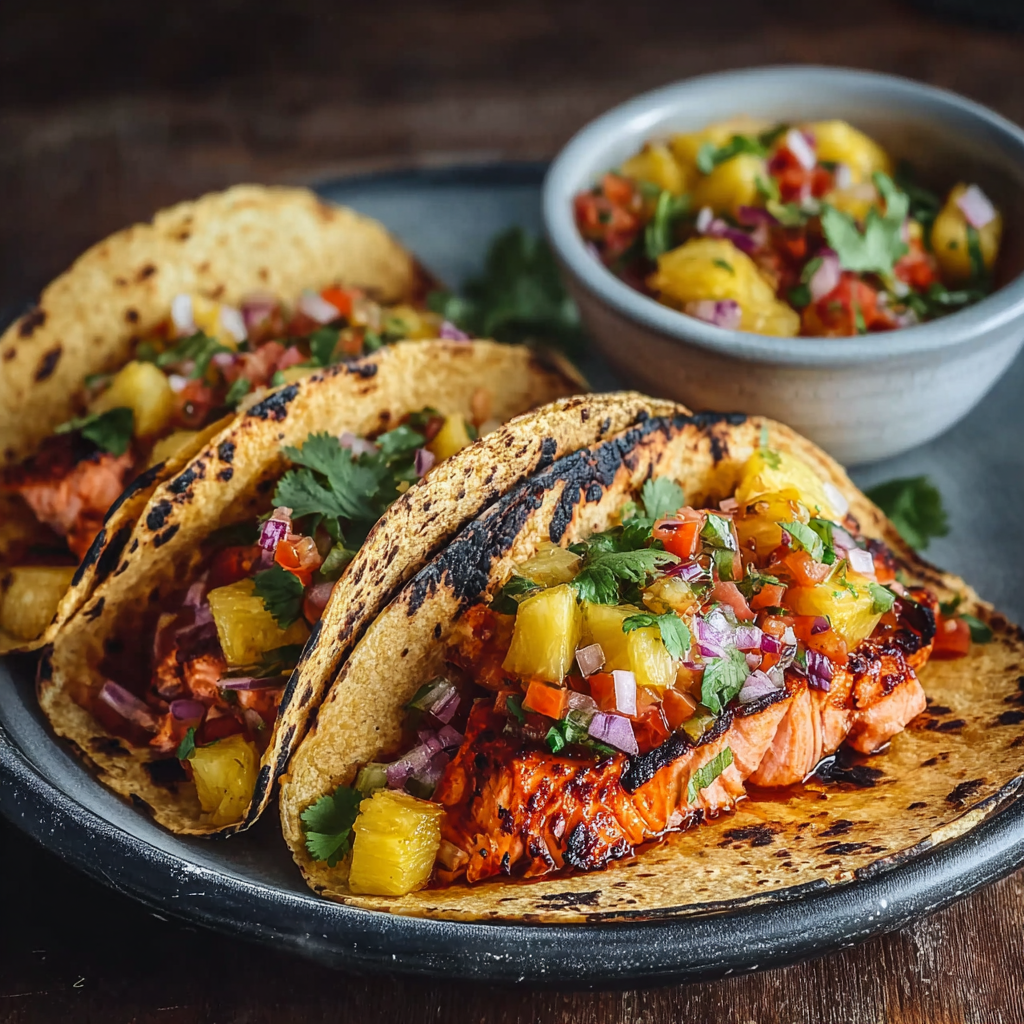
Honey Chipotle Salmon Tacos represent a perfect chemical balance between spicy, sweet, and acidic elements. By utilizing a high-sugar glaze for a rapid sear and a fresh enzymatic salsa for contrast, you achieve a professional-grade flavor profile in under 30 minutes.