Follow Me On Social Media!
Mango Sago: The Science of “Spherical Starch Hydration”

Why Mango Sago is a Textural Masterpiece
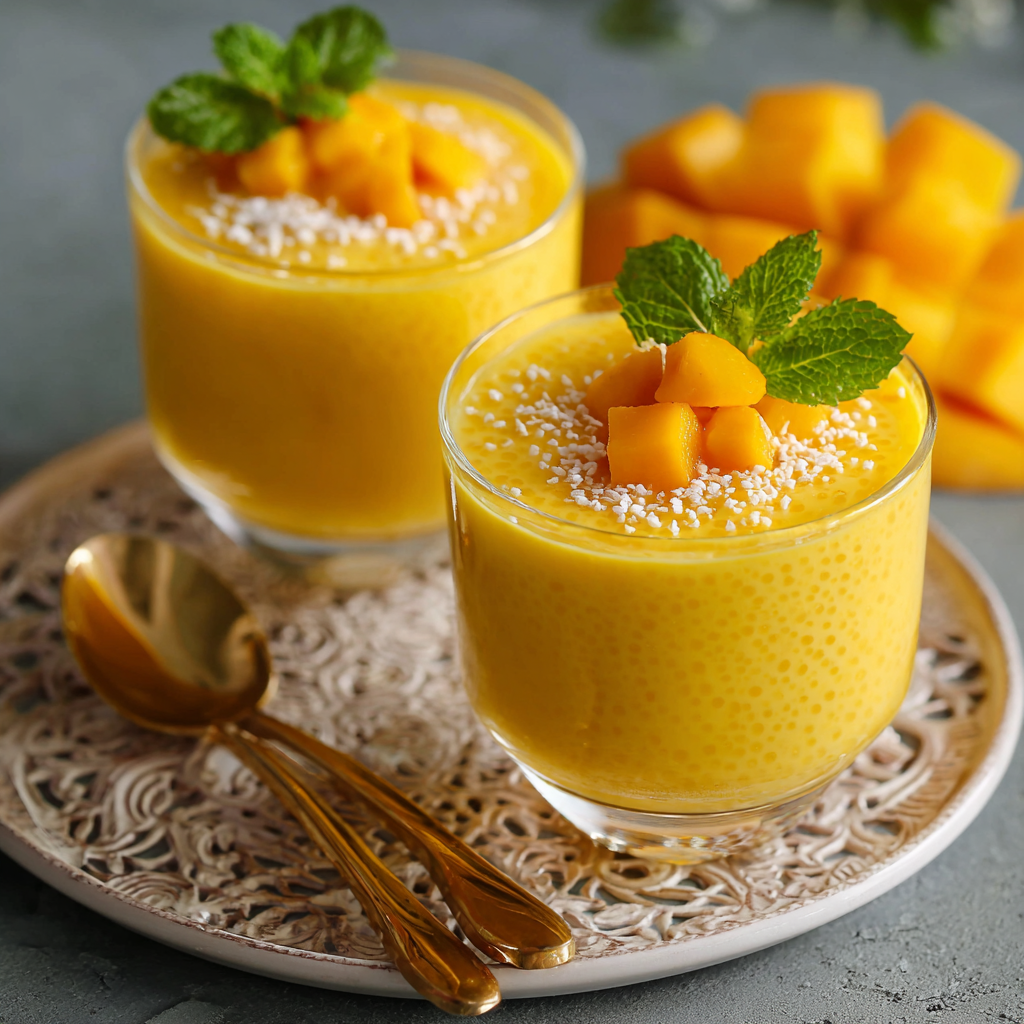
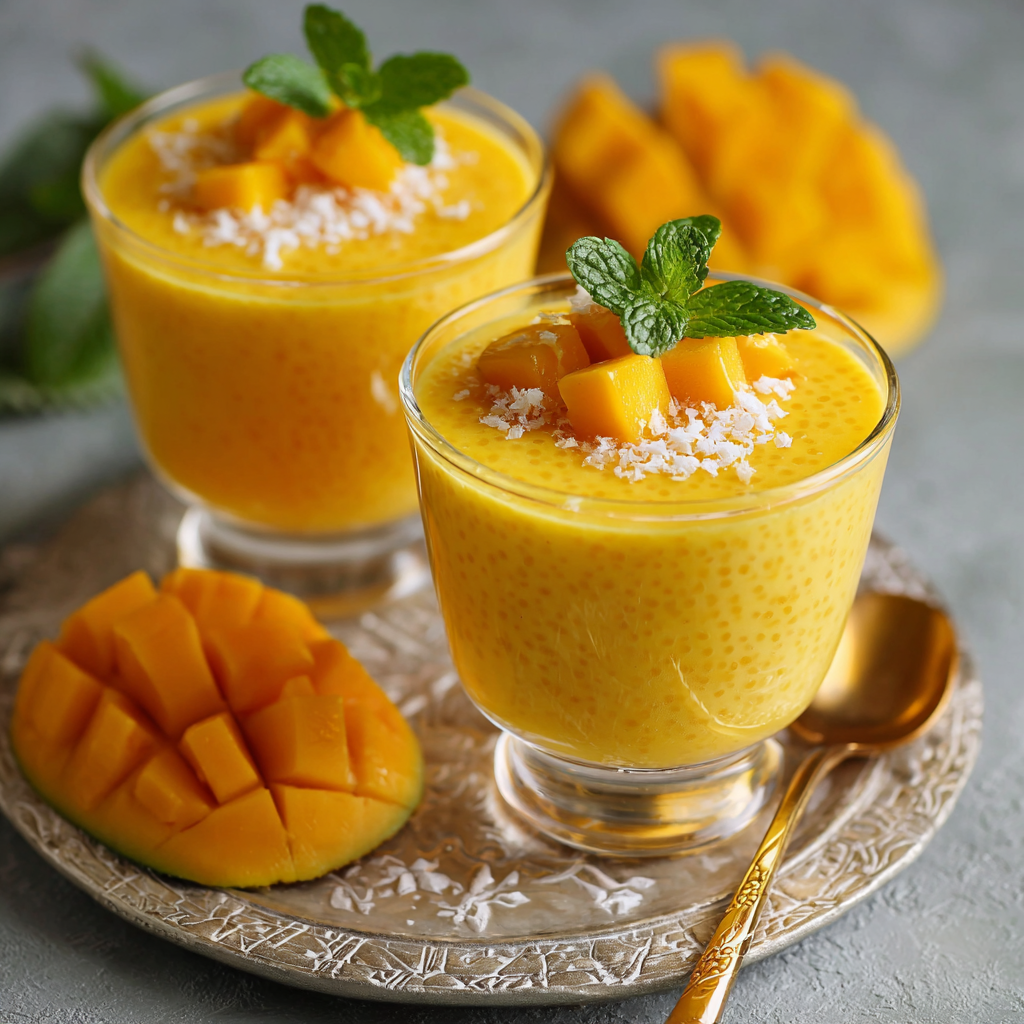
Mango Sago is a classic Hong Kong dessert that relies on the contrast between high-viscosity fruit purees and low-density starch spheres.
The “Sago” (tapioca pearls) provides a unique mouthfeel called Q-texture in East Asian culinary science. This refers to a specific level of elastic resistance. Achieving this requires precise gelatinization—if undercooked, the center remains a chalky solid; if overcooked, the starch molecules break down entirely, turning the pearls into a gummy mass. When paired with the natural pectin in fresh mangoes, you create a self-thickening soup that is both creamy and refreshing.
Ingredients List: The Tropical Emulsion
- 1/2 cup Small Tapioca Pearls (Sago): The primary starch component.
- 2 Large Ripe Mangoes: (Ataulfo or Honey mangoes are best for their low fiber content).
- 1 cup Coconut Milk: Provides the lipids for a silky mouthfeel.
- 1/4 cup Evaporated Milk or Condensed Milk: Adds “dairy weight” and sweetness.
- Optional: Fresh pomelo segments (for the classic “Yang Zhi Gan Lu” style).
Timing: Data-Driven Efficiency
| Phase | Duration | Data Insight |
| The Pearl Boil | 10-12 Minutes | High heat is required to initiate starch swelling. |
| The Residual Soak | 10 Minutes | Uses “carry-over heat” to clear the opaque center without dissolving the surface. |
| The Puree Blend | 2 Minutes | Shearing the mango fibers creates a smooth, suspended emulsion. |
| Total Time | Approx. 25 Minutes | High-refreshment utility. |
Step-by-Step Instructions
Step 1: The Boiling Point
Bring 4–5 cups of water to a rolling boil. Add the sago pearls. Critical Rule: Do not add pearls to cold water; they will dissolve into a starch paste before they can set. Stir immediately to prevent the pearls from clumping together via surface adhesion.
Step 2: The “Translucency” Soak
Boil for 10 minutes, then turn off the heat, cover the pot, and let it sit for another 10 minutes. The Science: The pearls are done when they are completely translucent. The “soak” phase allows the heat to penetrate the core of the starch sphere slowly, ensuring the entire pearl reaches the same state of gelatinization.
Step 3: The Thermal Shock
Drain the pearls and immediately plunge them into a bowl of ice-cold water. The Physics: This “shocks” the starch, stopping the cooking process instantly and washing away excess surface starch. This ensures each pearl remains a distinct, individual sphere.
Step 4: The Mango Dual-Processing
Peel and dice both mangoes. Take half of the cubes and blend them with the coconut milk and condensed milk until smooth. Keep the other half as whole cubes. The Logic: This creates two distinct “phases”—a thick, flavorful liquid phase and a solid, structural fruit phase.
Step 5: The Final Assembly
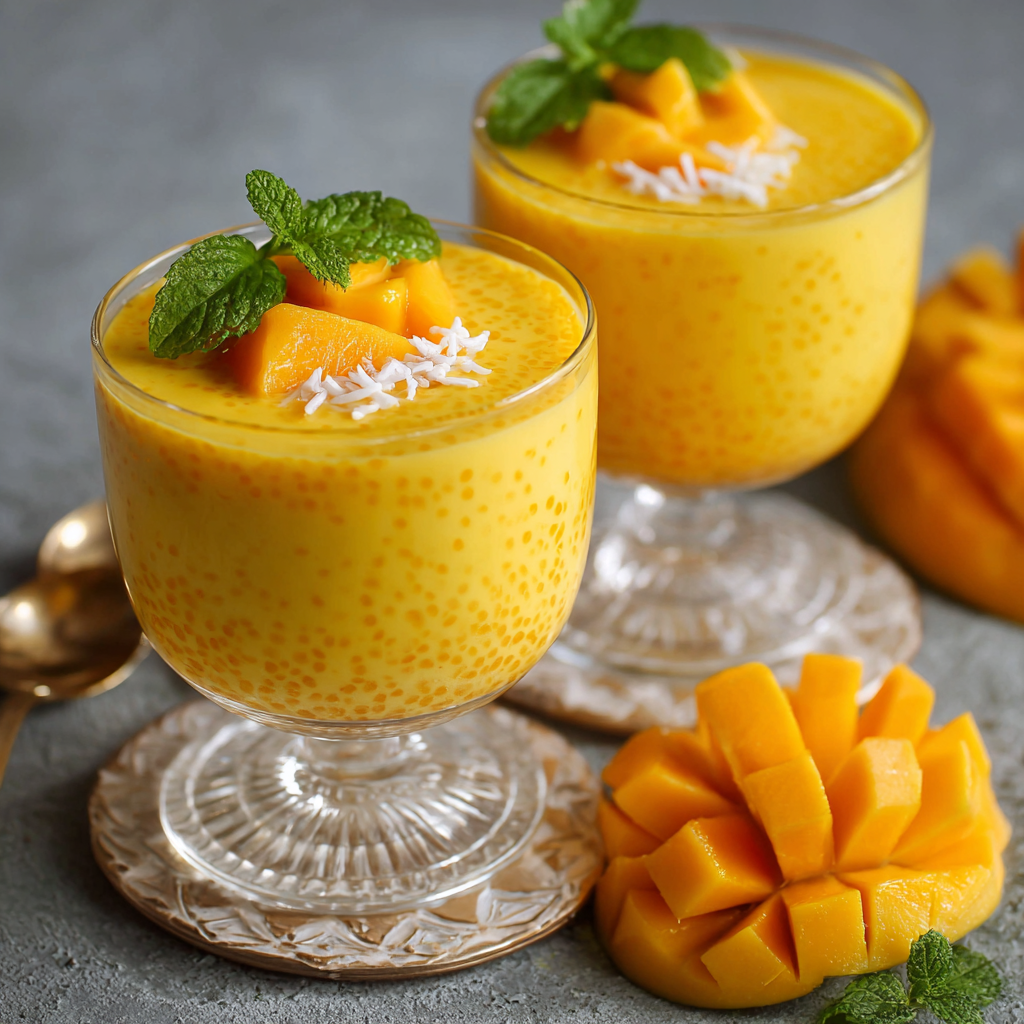
In a large bowl, combine the mango puree, the chilled sago pearls, and the remaining mango cubes. Stir gently. The Result: The sago pearls will act as “flavor sponges,” picking up the coconut and mango notes while providing a playful, chewy contrast to the creamy base.
Success Tips & Common Mistakes
- The “Gummy” Fail: If you don’t rinse the pearls thoroughly in cold water, the residual starch will thicken the coconut milk into a glue-like consistency.
- The “Sour” Fail: Mango acidity varies wildly. Always taste your puree; if it’s too tart, add a tablespoon of honey or condensed milk to balance the pH level and enhance the tropical aromatics.
- Storage: Mango Sago is best eaten within 4 hours. Over time, the sago will continue to absorb liquid and lose its “snap,” eventually becoming mushy.
Nutritional Information (Per Serving)
- Calories: 280 kcal.
- Total Fat: 9g (Healthy fats from coconut).
- Carbohydrates: 48g.
- Vitamin C: 60% of Daily Value.
Conclusion
Mango Sago is a masterclass in starch management. By controlling the hydration and cooling of the tapioca, you transform a simple root starch into a sophisticated textural element that defines one of the world’s most popular tropical desserts.