Follow Me On Social Media!
Orange Roasted Chicken: The Science of “Citrus-Sugar Lacquering”

Why Orange is the Perfect Poultry Pairing
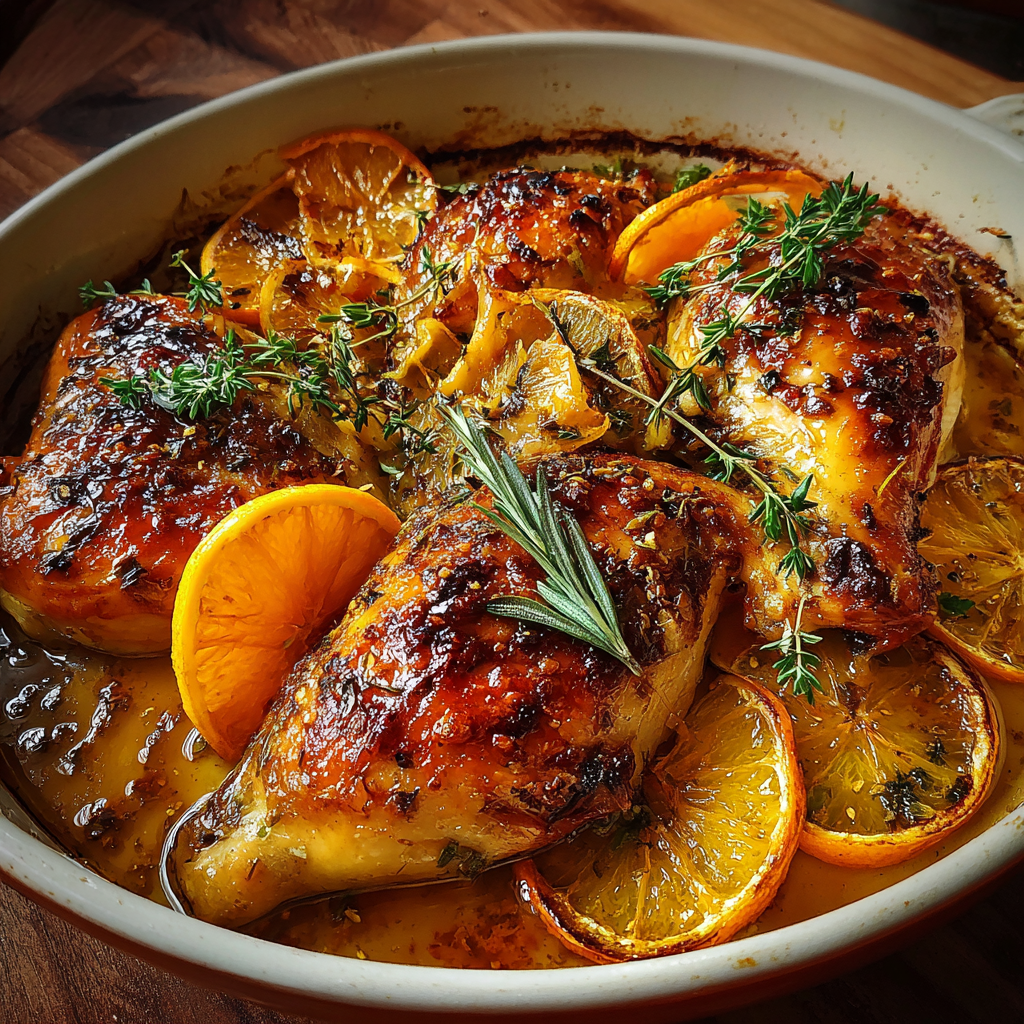
The Orange Roasted Chicken is a classic study in Enzymatic Tenderization and Sugar Polymerization. Oranges contain Citric Acid, which acts as a mild denaturant, breaking down the tough connective tissues on the surface of the chicken skin.
More importantly, orange juice is rich in Fructose and Glucose. When subjected to the dry, high heat of an oven ($200$°C), these sugars undergo Caramelization, while the amino acids in the chicken skin undergo the Maillard Reaction. The result is a “lacquered” finish—a mahogany-colored, crispy skin that traps the internal moisture of the meat.
Ingredients List: The Citrus-Lipid Matrix
- 1 Whole Chicken (approx. 4 lbs): Pat dry for maximum skin crispness.
- 3 Large Oranges: (2 for juice/zest, 1 sliced for the cavity).
- 1/4 cup Honey or Maple Syrup: Provides the “tack” for the glaze.
- 4 tbsp Unsalted Butter: Softened. The Logic: Butter provides the lipids necessary to conduct heat evenly across the skin.
- 3 cloves Garlic & 1 tbsp Fresh Ginger: Minced.
- Fresh Herbs: Rosemary and Thyme.
- 1 tsp Smoked Paprika: For color and a hint of “char” flavor.
Timing: Data-Driven Efficiency
| Phase | Duration | Data Insight |
| The Citrus Brine | 30 Minutes | Salt and acid begin to penetrate the muscle fibers. |
| The High-Heat Roast | 20 Minutes | Initial blast ($220$°C) triggers rapid surface dehydration. |
| The Glaze Finish | 40-50 Minutes | Lower heat ($180$°C) allows for a deep, even sugar-browning. |
| Total Time | Approx. 1.5 Hours | Centerpiece-tier dinner. |
Step-by-Step Instructions
Step 1: The Aromatic Compound Butter
In a small bowl, mash the softened butter with orange zest, minced garlic, ginger, and chopped herbs. Actionable Tip: Carefully loosen the skin over the breast and thighs and tuck the butter underneath. The Science: By placing the fat directly against the meat, you prevent the lean breast tissue from drying out during the long roast.
Step 2: The Cavity Infusion
Stuff the cavity of the chicken with orange halves and onion wedges. The Physics: As the chicken heats up, the moisture inside the orange turns to steam. This Internal Steam Hydration cooks the chicken from the inside out, keeping the meat succulent while the outside crisps.
Step 3: The Initial Thermal Shock
Preheat oven to 425°F (220°C). Roast the chicken for 20 minutes. The Goal: You want to reach the “searing point” quickly to lock in juices before the skin starts to render too much fat.
Step 4: The Glaze Reduction
Whisk orange juice, honey, and smoked paprika in a small saucepan. Simmer until reduced by half. The Result: You are creating a high-viscosity syrup that will cling to the chicken rather than running off into the pan.
Step 5: The Basting Cycle
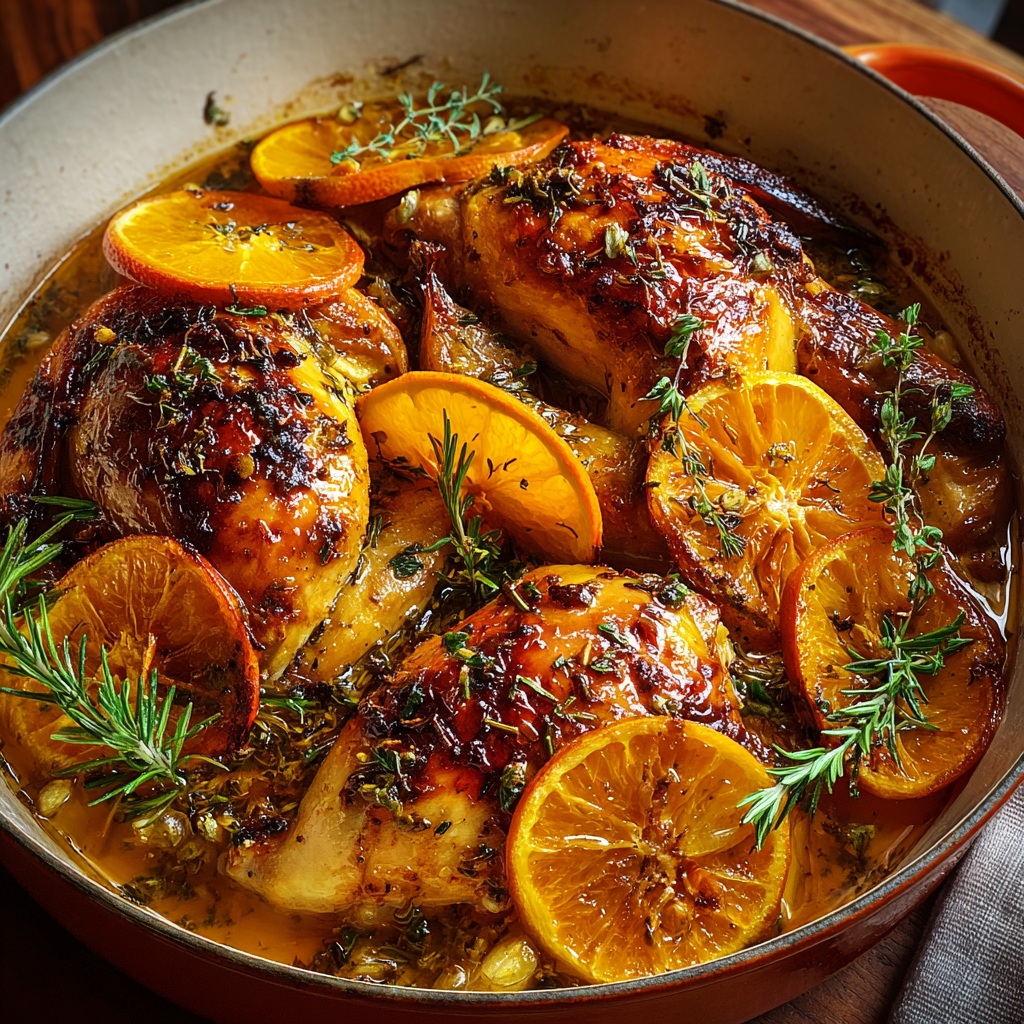
Reduce oven heat to 350°F (180°C). Every 15 minutes, brush the chicken generously with the orange glaze. The Science: Each layer of glaze builds a “lacquer.” The water evaporates, leaving behind a concentrated layer of sugars and orange oils that harden into a flavorful crust.
Success Tips & Common Mistakes
- The “Rubbery Skin” Fail: This happens if the chicken is wet when it goes into the oven. The Hack: Leave the chicken uncovered in the fridge for 4 hours before cooking. This “air-chilling” dehydrates the skin, ensuring a glass-like crunch.
- The “Burnt Sugar” Fail: Because orange glaze is high in sugar, it can burn if the oven is too hot. If the chicken is getting too dark before the internal temperature hits 165°F (74°C), tent it loosely with aluminum foil.
- The Gravy Secret: Don’t throw away the pan drippings! The combination of rendered chicken fat (schmaltz) and caramelized orange juice makes for a world-class sauce. Simply whisk in a little flour and chicken stock to thicken.
Nutritional Information (Per 6 oz Serving)
- Calories: 380 kcal.
- Protein: 32g.
- Total Fat: 22g.
- Vitamin C: 35% of Daily Value.
Conclusion
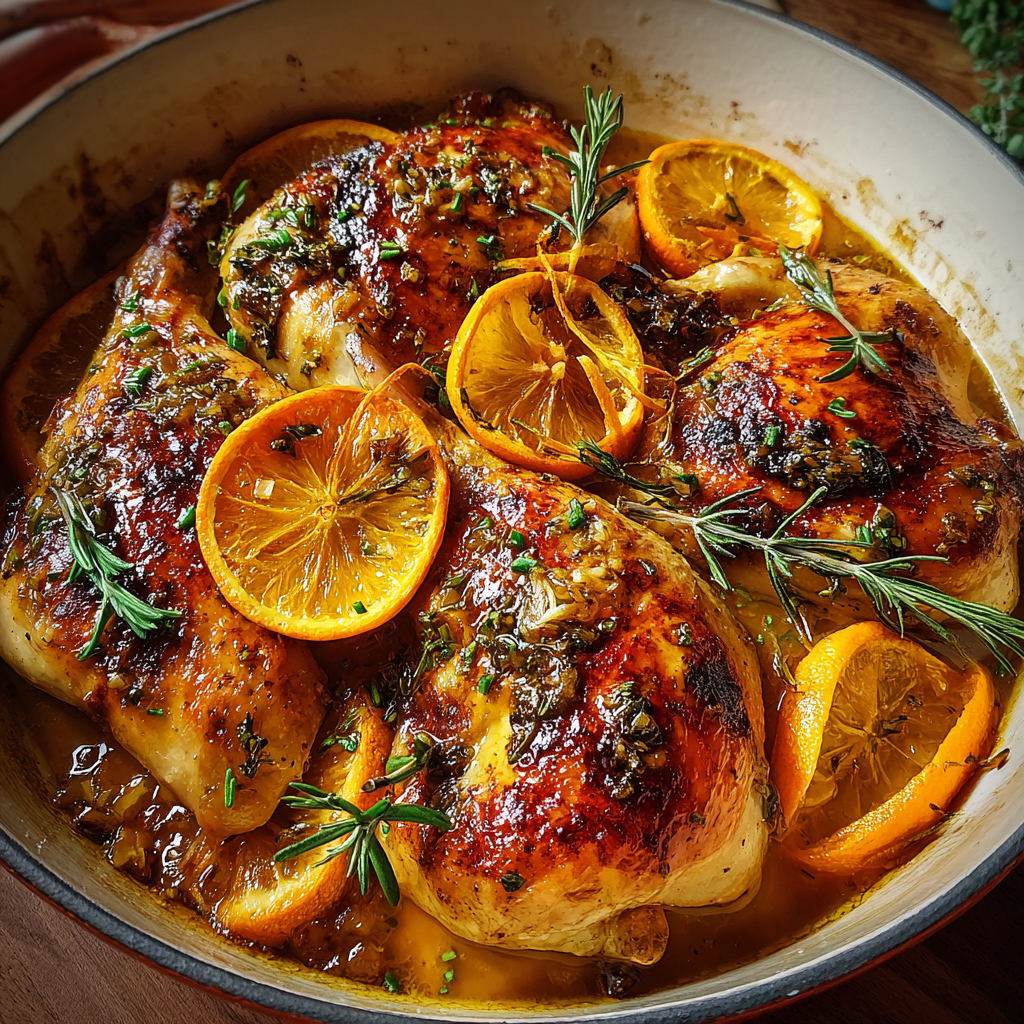
Orange Roasted Chicken is a masterclass in the chemistry of browning. By balancing the acidity of the citrus with the richness of the butter and the sweetness of the glaze, you create a dish that is both visually stunning and deeply savory.