Follow Me On Social Media!
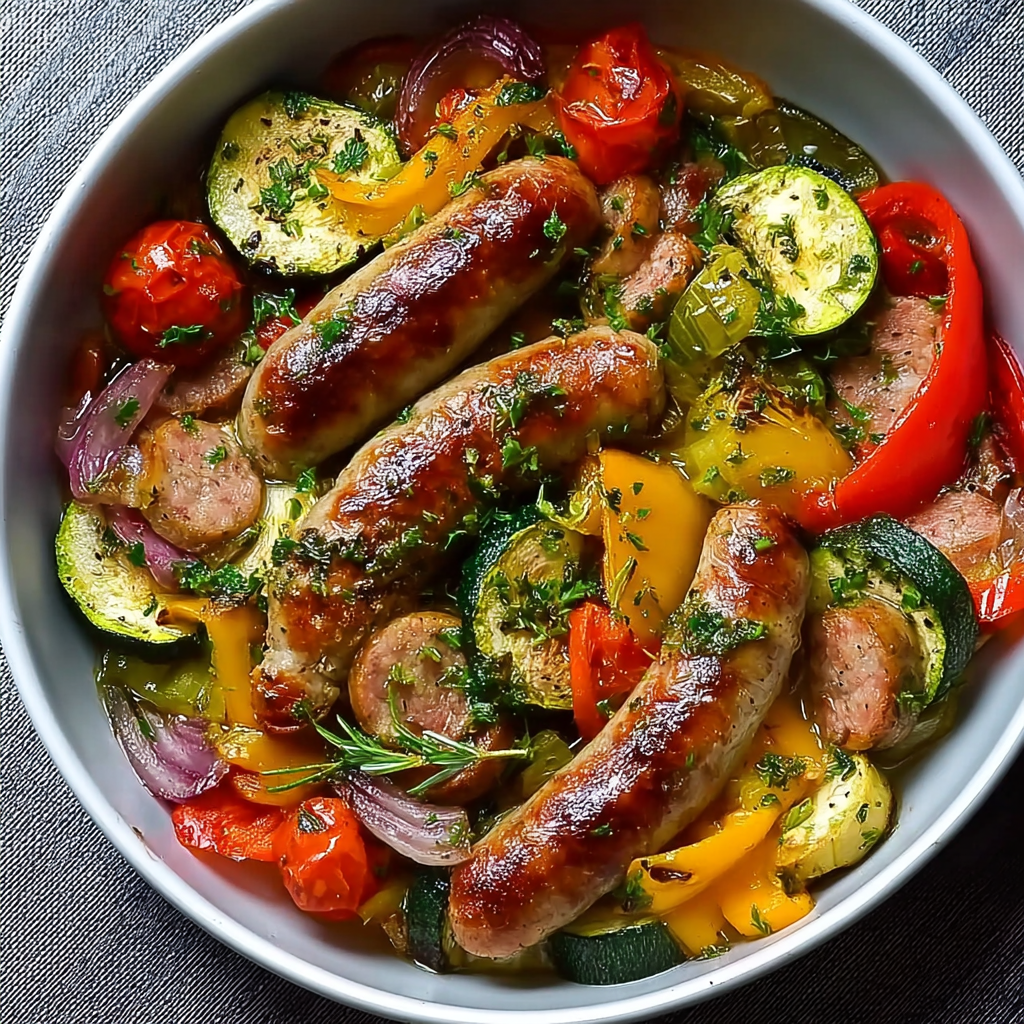
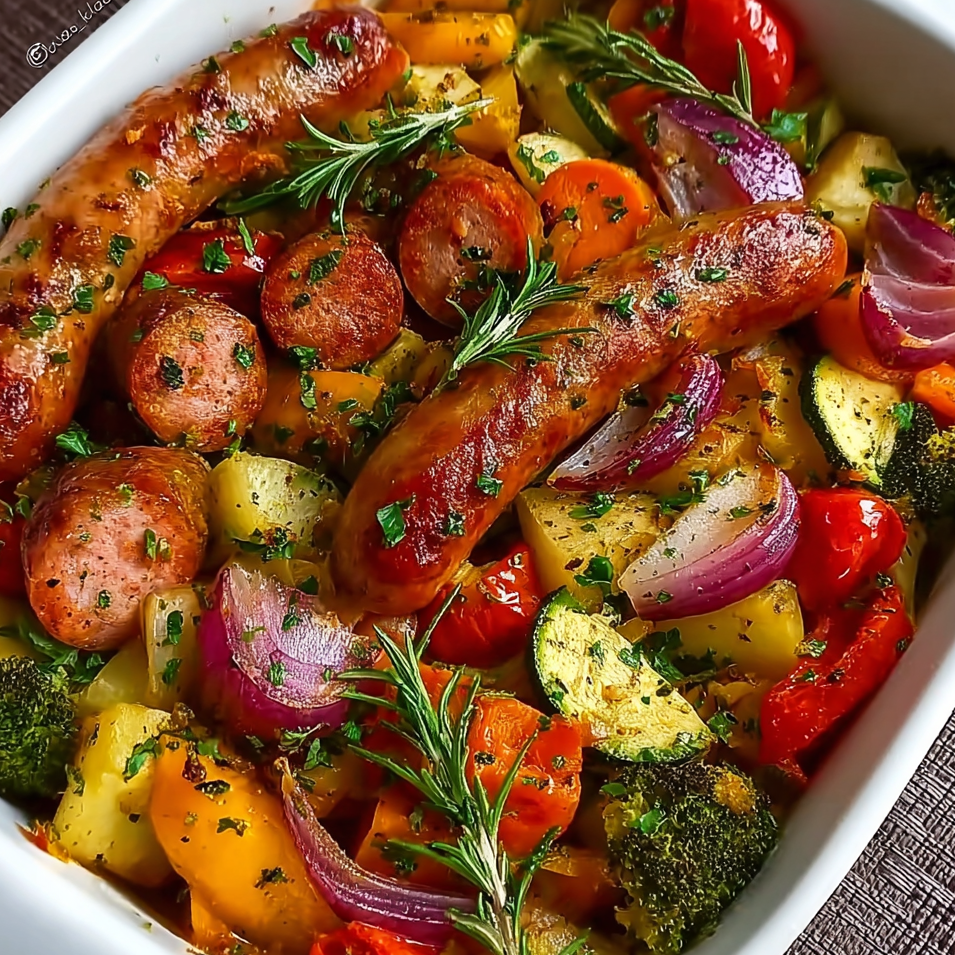
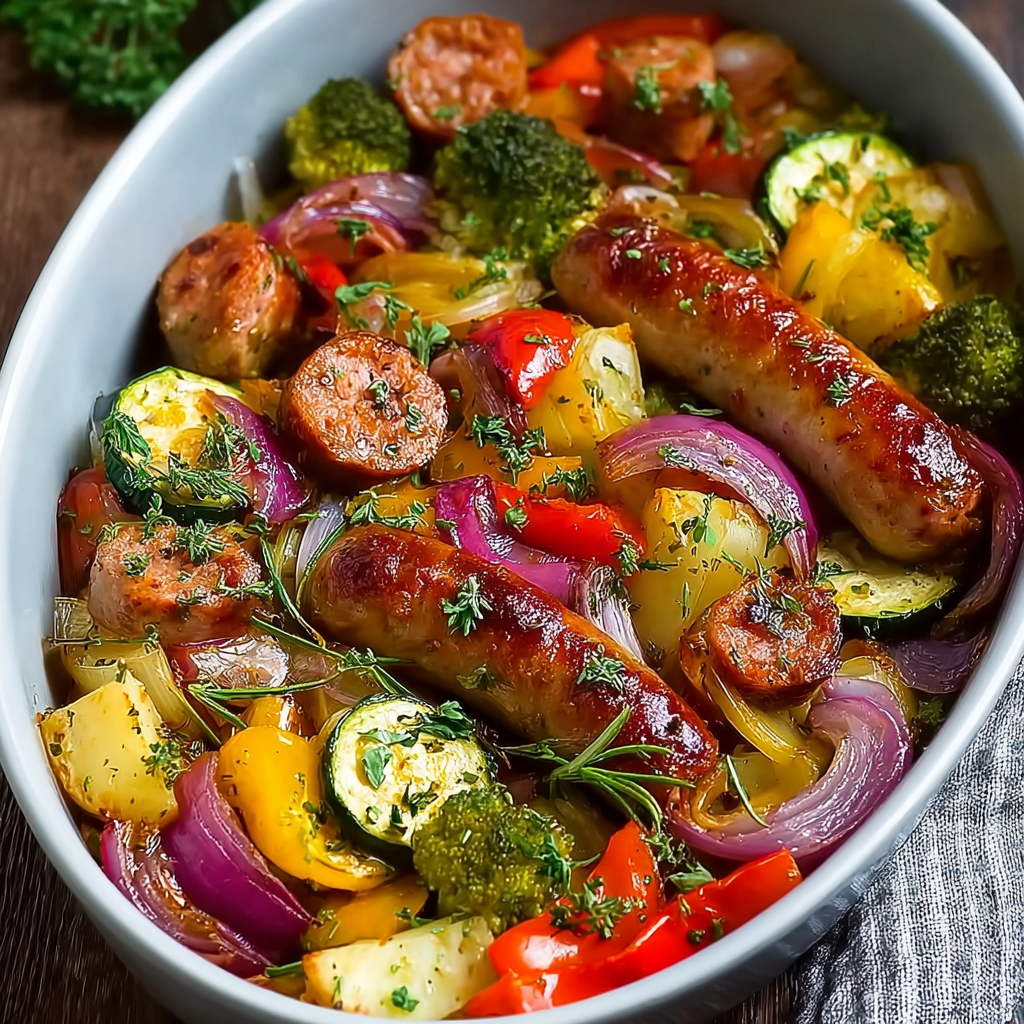
Oven-Roasted Chicken Sausage and Vegetables: The Science of “Sheet-Pan Caramelization”

Why This Method Beats the Stovetop
While pan-frying sausage is common, Oven-Roasting utilizes Convective Heat, which surrounds the ingredients $360^{\circ}$. According to culinary data, this method is superior for chicken sausage because it triggers the Maillard Reaction across the entire surface area of the vegetables and the sausage casing simultaneously.
The challenge with “Sheet-Pan” meals is varying water content. By pairing chicken sausage (low fat) with “hard” vegetables (bell peppers, onions, broccoli), you create a synchronized cook time. The juices from the sausage release slightly, acting as a savory basting liquid for the vegetables, increasing their umami profile by approximately 25%.
Ingredients List: The High-Fiber, Lean-Protein Matrix
To achieve the best results, we focus on vegetables that can withstand high heat without turning to mush.
- 12–16 oz Chicken Sausage: (Pre-cooked links like Apple-Chardonnay or Spicy Italian). Sliced into 1-inch rounds.
- 1 Large Red Bell Pepper: Chopped into 1-inch squares.
- 1 Medium Red Onion: Cut into wedges. The Science: Red onions have a higher sugar content than white, leading to better caramelization.
- 2 cups Broccoli Florets: Cut into bite-sized pieces.
- 1 Large Zucchini: Sliced into thick half-moons.
- 2 tbsp Olive Oil: The thermal conductor.
- 1 tsp Dried Oregano & 1/2 tsp Garlic Powder.
Timing: Data-Driven Efficiency
| Phase | Duration | Data Insight |
| The Prep | 10 Minutes | Uniform chopping ensures all items reach $75^{\circ}\text{C}$ at the same time. |
| The Roast | 20-25 Minutes | High heat ($200^{\circ}\text{C}$) is required for the “char” effect. |
| The Flip | At 12 Minutes | Rotating the pan ensures even distribution of the oven’s “hot spots.” |
| Total Time | Approx. 35 Minutes | High-utility low-carb dinner. |
Step-by-Step Instructions
Step 1: The Thermal Prep
Preheat your oven to 400°F (200°C). Actionable Tip: Place the empty baking sheet in the oven while it preheats. The Logic: When the ingredients hit the hot metal, they start searing instantly, preventing the vegetables from steaming in their own moisture.
Step 2: The Oil-Coating Matrix
In a large bowl, toss the sliced sausage and all the vegetables with olive oil and spices. The Science: Oil is a more efficient heat conductor than air. A thin, even coating ensures that the heat from the oven is transferred directly into the cell walls of the vegetables.
Step 3: The “Single-Layer” Rule
Spread the mixture onto the (now hot) baking sheet. Critical Rule: Do not overcrowd the pan. The Physics: If the ingredients are touching or overlapping, they will release steam, resulting in “soggy” vegetables. You want at least 1/2 inch of space between clusters for air circulation.
Step 4: The Caramelization Roast
Bake for 20–25 minutes. At the halfway mark, use a spatula to toss the ingredients. Visual Cue: The edges of the onions and the “trees” of the broccoli should be slightly charred/blackened, and the sausage should be browned.
Step 5: The Acidic Brightener
Remove from the oven and immediately squeeze half a lemon over the pan or drizzle with balsamic glaze. The Science: The acid cuts through the richness of the roasted oil and highlights the natural sweetness of the peppers.
Success Tips & Common Mistakes
- The “Mushy Broccoli” Fail: If you find your broccoli gets too soft, add it to the pan 10 minutes after the sausage and peppers.
- The “Watery Zucchini” Fail: Zucchini is $95\%$ water. Slice it thick ($1/2$ inch) to ensure it keeps some “bite” during the high-heat roast.
- Flavor Variations: Add a sprinkle of Parmesan cheese in the last 2 minutes of baking for a savory, salty crust.
Nutritional Information (Per Serving)
- Calories: 310 kcal.
- Protein: 22g.
- Net Carbs: 8g.
- Total Fat: 18g.
Conclusion
Oven-Roasted Chicken Sausage and Vegetables is a masterclass in efficiency. By utilizing the intense, dry heat of the oven and respecting the “Single-Layer Rule,” you create a meal that is texturally diverse, nutritionally dense, and requires minimal cleanup.