Follow Me On Social Media!
Peanut Butter Greek Frozen Yogurt: The Science of “Cryoprotectant Emulsification”

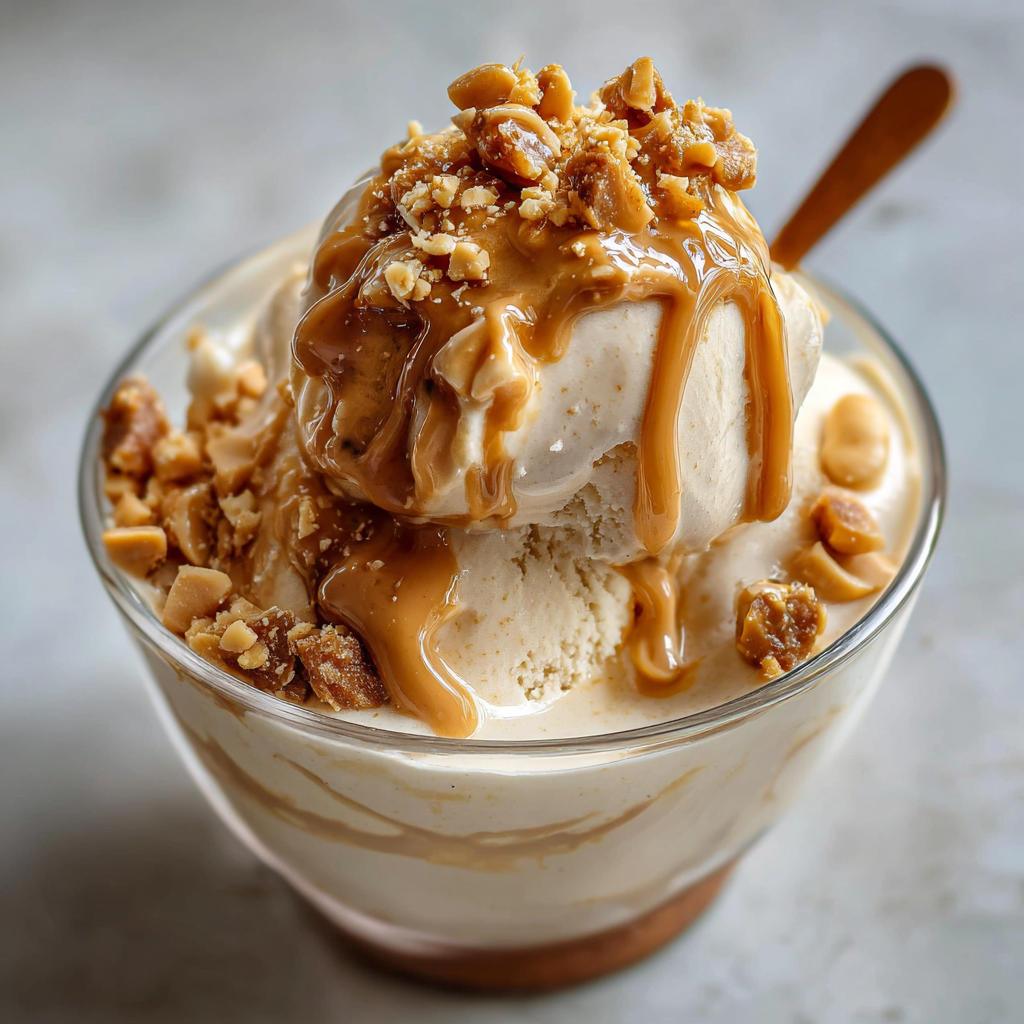
Why Greek Yogurt is the Ultimate Frozen Base
The primary challenge with homemade frozen yogurt is Ice Crystallization. Standard yogurt has high water content; when frozen, that water forms large, jagged crystals that result in a “gritty” mouthfeel.
Greek Yogurt is the solution because it has been strained to remove excess whey, resulting in a higher concentration of casein proteins and fats. By adding peanut butter—which is a stable emulsion of lipids and solids—you introduce “Cryoprotectants.” These fats and proteins coat the remaining water molecules, physically preventing them from hooking together into large ice crystals. This results in a texture that mimics premium “full-fat” ice cream but with a significant protein boost.
Ingredients List: The High-Protein Matrix
- 2 cups Full-Fat Greek Yogurt: (Plain or Vanilla). The Science: Do not use $0\%$ fat; the lack of lipids will cause the yogurt to freeze rock-hard.
- 1/2 cup Creamy Peanut Butter: Natural or stabilized.
- 1/2 cup Honey or Maple Syrup: The Logic: Liquid sweeteners lower the Freezing Point Depression, keeping the yogurt “scoopable” even at $0$°F ($-18$°C).
- 1 tsp Vanilla Extract.
- 1/4 tsp Sea Salt: Enhances the peanut aromatics.
- Optional: 1/2 cup Dark Chocolate Chips (added at the end).
Timing: Data-Driven Efficiency
| Phase | Duration | Data Insight |
| The Emulsion Blend | 2 Minutes | High-speed mixing creates a uniform fat-protein bond. |
| The Churn (Optional) | 20 Minutes | Incorporates “Overrun” (air) for a lighter texture. |
| The Deep Freeze | 4-6 Hours | Required for Thermal Equilibrium. |
| Total Time | Approx. 10 Mins Active | Performance-grade snack. |
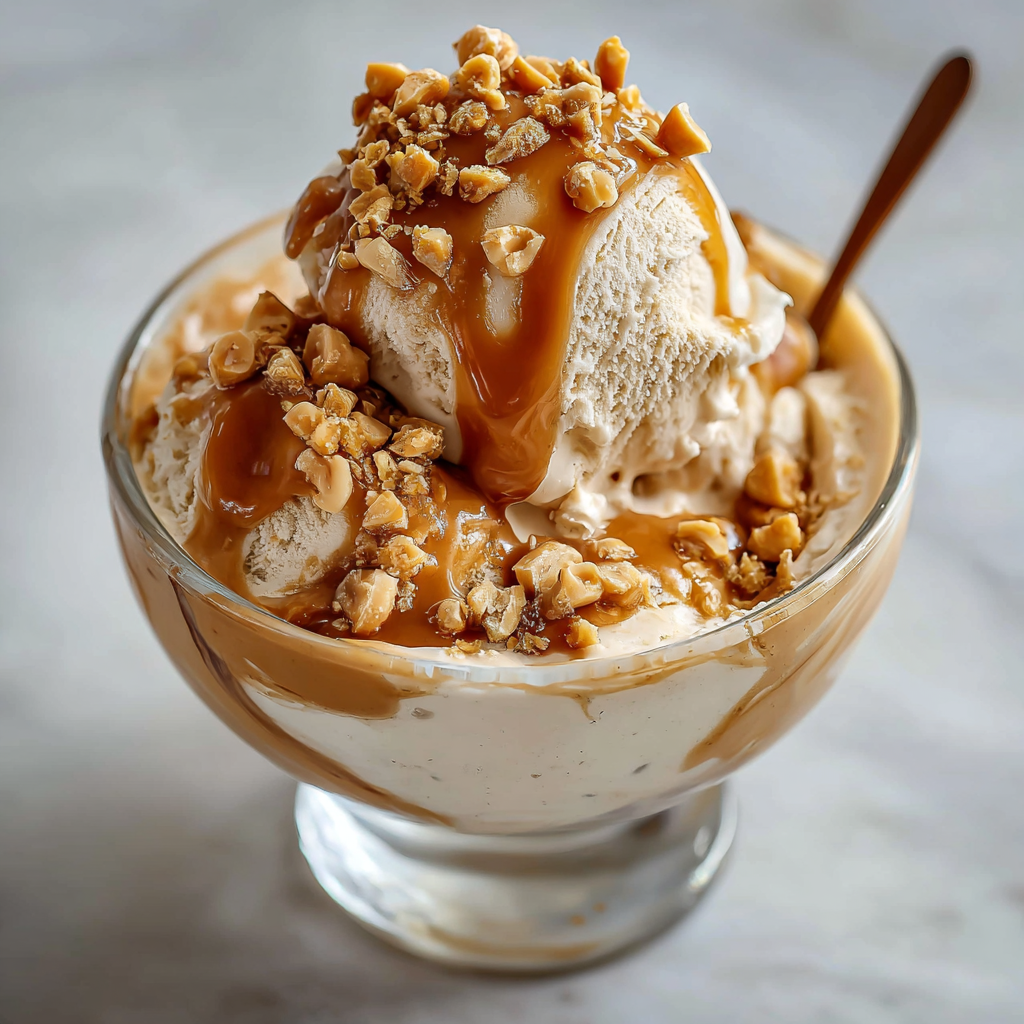
Step-by-Step Instructions
Step 1: The Homogenization
In a large bowl or blender, combine the Greek yogurt, peanut butter, honey, vanilla, and salt. Actionable Tip: If your peanut butter is stiff, microwave it for 15 seconds first. The Physics: Warm peanut butter has a lower viscosity, allowing it to integrate seamlessly into the cold yogurt without forming “clumps.”
Step 2: The Aeration (The “No-Churn” Method)
If you don’t have an ice cream maker, use a hand mixer to whip the mixture for 3 minutes. The Science: This introduces micro-bubbles of air. Air is a poor conductor of heat, meaning it acts as an insulator, preventing the yogurt from turning into a solid block of ice.
Step 3: The Inclusion Fold
Gently fold in chocolate chips or crushed peanuts. The Logic: Adding solids provides “textural anchors” that break up the smoothness of the yogurt, making the eating experience more satisfying.
Step 4: The Shallow Freeze
Pour the mixture into a shallow, pre-chilled metal container (like a loaf pan). The Physics: Metal conducts cold faster than plastic, and a shallow layer freezes more evenly, reducing the time water molecules have to grow into large crystals.
Step 5: The “Temper” Before Tasting
Remove from the freezer 10–15 minutes before serving. The Result: Because this is a high-protein, lower-fat dessert than traditional ice cream, it needs a few minutes of “tempering” (slight warming) to allow the fats to soften for that perfect creamy scoop.
Success Tips & Common Mistakes
- The “Icy” Fail: This happens if you use watery, low-quality yogurt. If your yogurt looks thin, strain it through a coffee filter for 1 hour before using to remove excess moisture.
- The “Too Tart” Fail: Greek yogurt is naturally acidic. If the tang is too sharp, add an extra tablespoon of peanut butter; the fats will coat the tongue and “mask” the perception of acidity.
- The Storage Hack: To prevent “freezer burn” (sublimation), press a piece of plastic wrap directly onto the surface of the yogurt before putting the lid on the container.
Nutritional Information (Per 1/2 Cup)
- Calories: 240 kcal.
- Protein: 12g.
- Total Fat: 14g.
- Sugars: 16g (Natural).
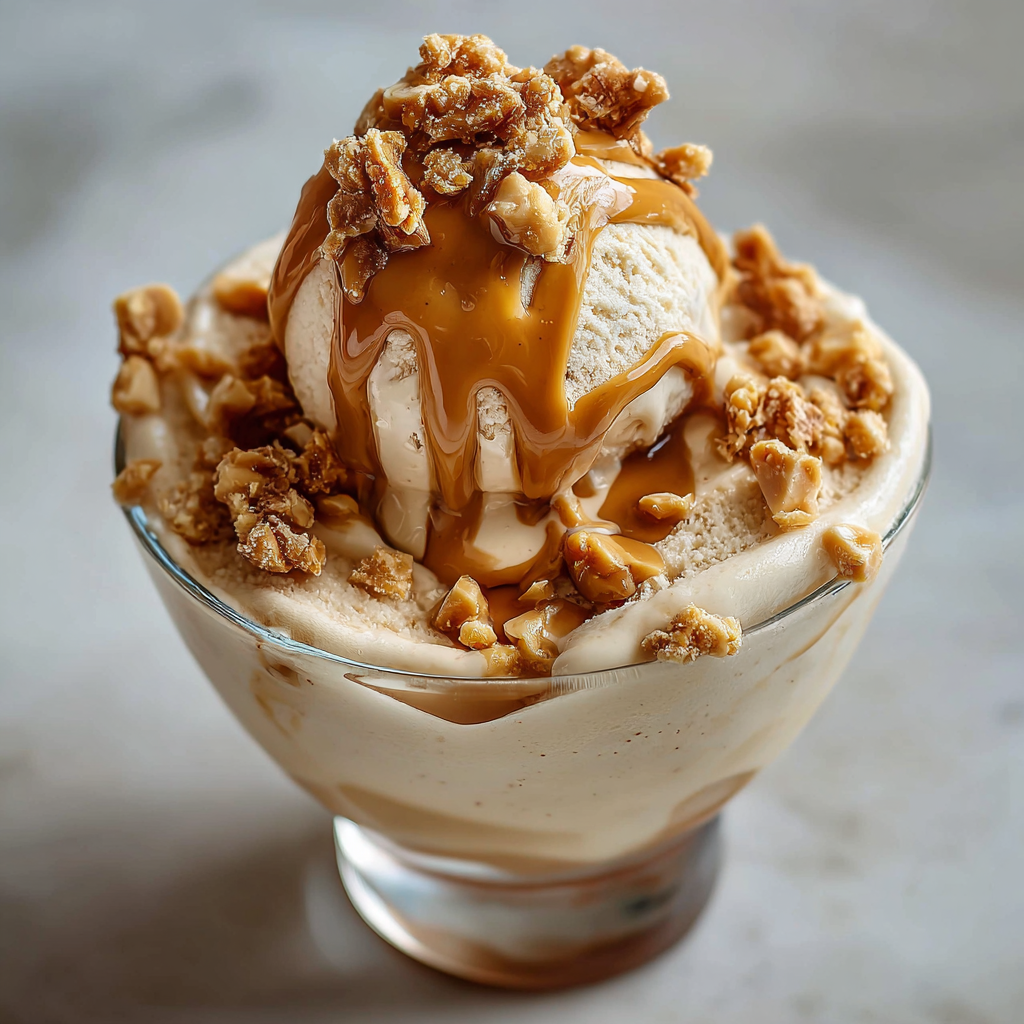
Conclusion
Peanut Butter Greek Frozen Yogurt is a masterclass in functional nutrition. By leveraging the protein density of Greek yogurt and the stabilizing fats of peanut butter, you create a dessert that is biologically restorative and culinarily decadent.