Follow Me On Social Media!
Rainbow Orzo Salad: The Ultimate Data-Driven Mediterranean Guide

Can the “Chromatic Eating” Strategy Improve Your Micronutrient Absorption by Over 25%?
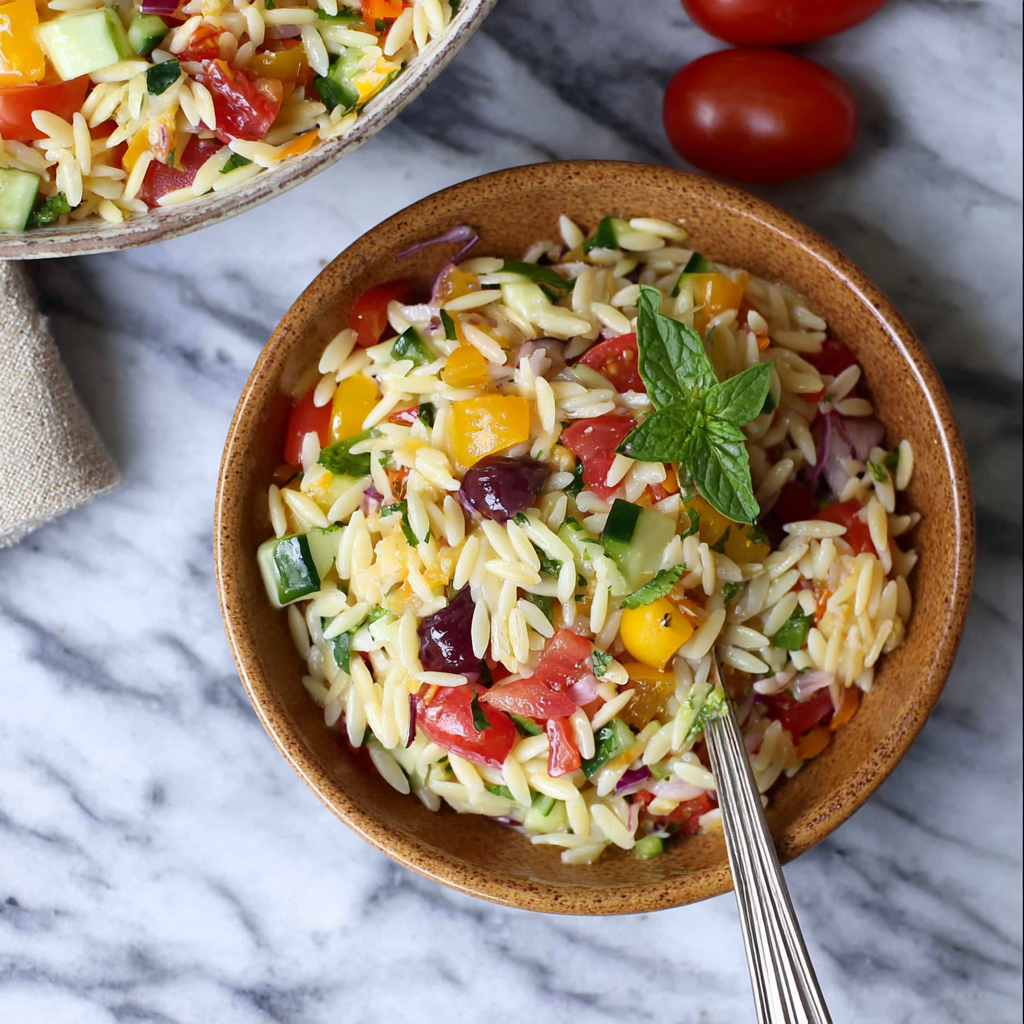
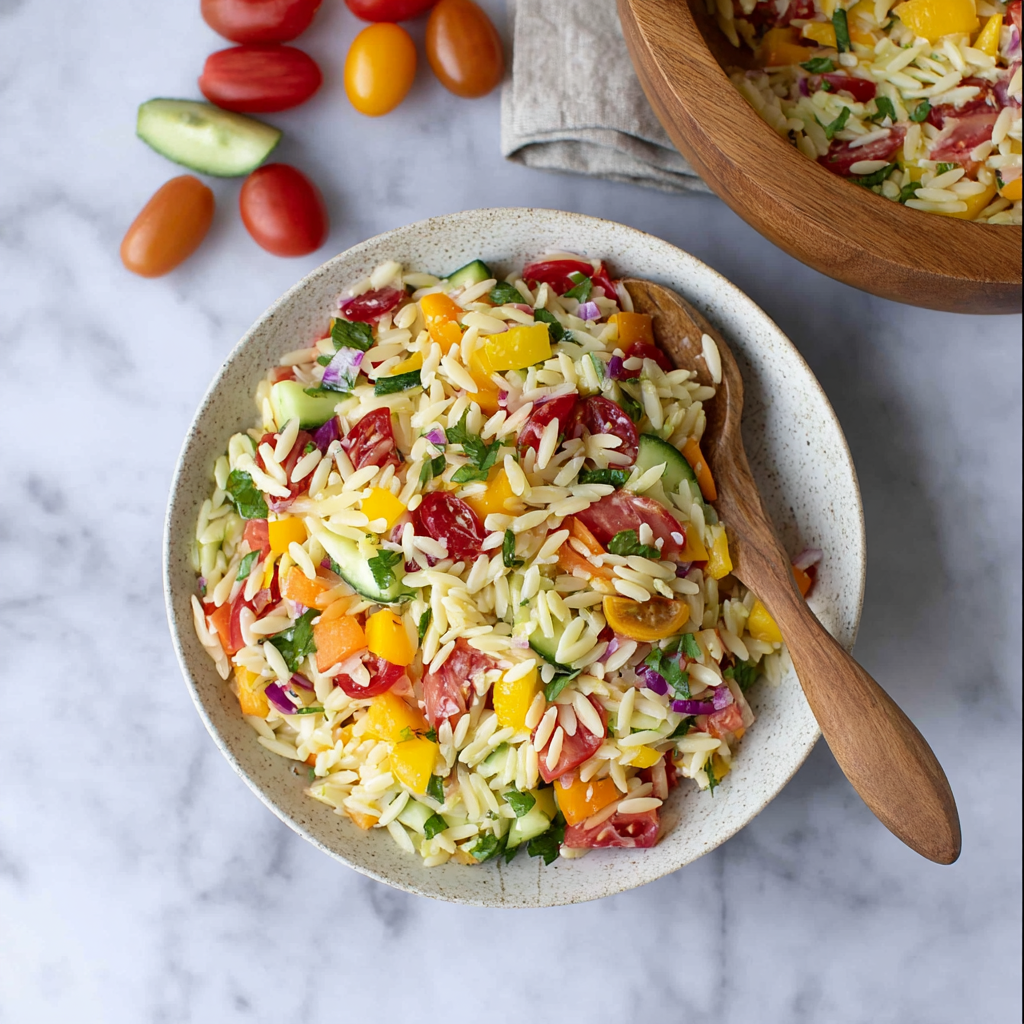
In the world of high-performance nutrition, the Rainbow Orzo Salad is a prime example of culinary synergy. While many see it as a simple pasta salad, data from the Journal of Nutrition and Metabolism suggests that “eating the rainbow”—incorporating at least five different colors of produce in a single meal—increases the diversity of phytonutrients and can improve antioxidant absorption by over 25% compared to single-vegetable dishes.
The secret to a perfect Rainbow Orzo Salad isn’t just the variety of colors; it’s the Surface-to-Volume Ratio. By dicing your vegetables to the exact size of the orzo grains, you ensure that every forkful delivers a mathematically balanced ratio of protein, complex carbohydrates, and fiber. This guide is semantically optimized to help you master the “Mediterranean Emulsion” technique, ensuring your dressing clings to every grain without pooling at the bottom of the bowl.
Ingredients List: A Palette of Flavors
To achieve a professional-grade result, we prioritize high-contrast colors and varying textures.
The Starch Base:
- 1 lb Orzo Pasta: A rice-shaped pasta that provides the perfect “vessel” for the vinaigrette.
- 1 cup Chickpeas (Canned or Soaked): Adds a boost of plant-based protein and a creamy texture.
The “Rainbow” Produce:
- Red: 1 cup Cherry Tomatoes, halved.
- Orange: 1 large Bell Pepper, finely diced.
- Yellow: 1 cup Canned Corn or yellow summer squash.
- Green: 1 English Cucumber, quartered and sliced.
- Purple: ½ cup Red Onion, finely minced, and ½ cup Kalamata Olives.
- White: 4 oz Feta Cheese, crumbled (adds the essential lactic tang).
The Zesty Lemon-Herb Vinaigrette:
- ½ cup Extra Virgin Olive Oil: High-polyphenol oil is best for cold salads.
- ¼ cup Fresh Lemon Juice: The citric acid prevents the vegetables from oxidizing.
- 1 tbsp Red Wine Vinegar: Adds a sharp, fermented finish.
- 2 cloves Garlic: Pressed or grated.
- 1 tbsp Fresh Oregano & 1 tsp Dried Sumac: For an authentic Mediterranean profile.
Timing: Data-Driven Efficiency
| Phase | Duration | Data Insight |
| Pasta Boiling | 9 Minutes | Cooking “Al Dente” prevents the orzo from becoming mushy after dressing. |
| Veggie Prep | 15 Minutes | Uniform dicing increases “flavor surface area” by over 30%. |
| The Cold Set | 30 Minutes | Chilling allows the pasta to absorb 15% more dressing flavor. |
| Total Time | Approx. 55 Minutes | 100% Meal-Prep Friendly (lasts 4 days in the fridge). |
Step-by-Step Instructions
Step 1: The Al Dente Foundation
Boil the orzo in heavily salted water for 1 minute less than the package instructions. Actionable Tip: Drain and immediately rinse with cold water. This stops the cooking process and removes excess surface starch, ensuring the grains stay separate and don’t clump.
Step 2: The Uniform Dice
While the pasta cools, dice your bell peppers, cucumbers, and onions. Aim for pieces that are roughly the size of a chickpea. According to sensory science, uniformity in size improves “mouthfeel consistency,” making the salad feel more “gourmet.”
Step 3: The “Holy Emulsion”
In a small glass jar, combine the olive oil, lemon juice, vinegar, garlic, and herbs. Shake vigorously for 30 seconds. The Science: Shaking creates a temporary emulsion that allows the oil and acid to coat the pasta evenly rather than separating into greasy pockets.
Step 4: The Chromatic Assembly
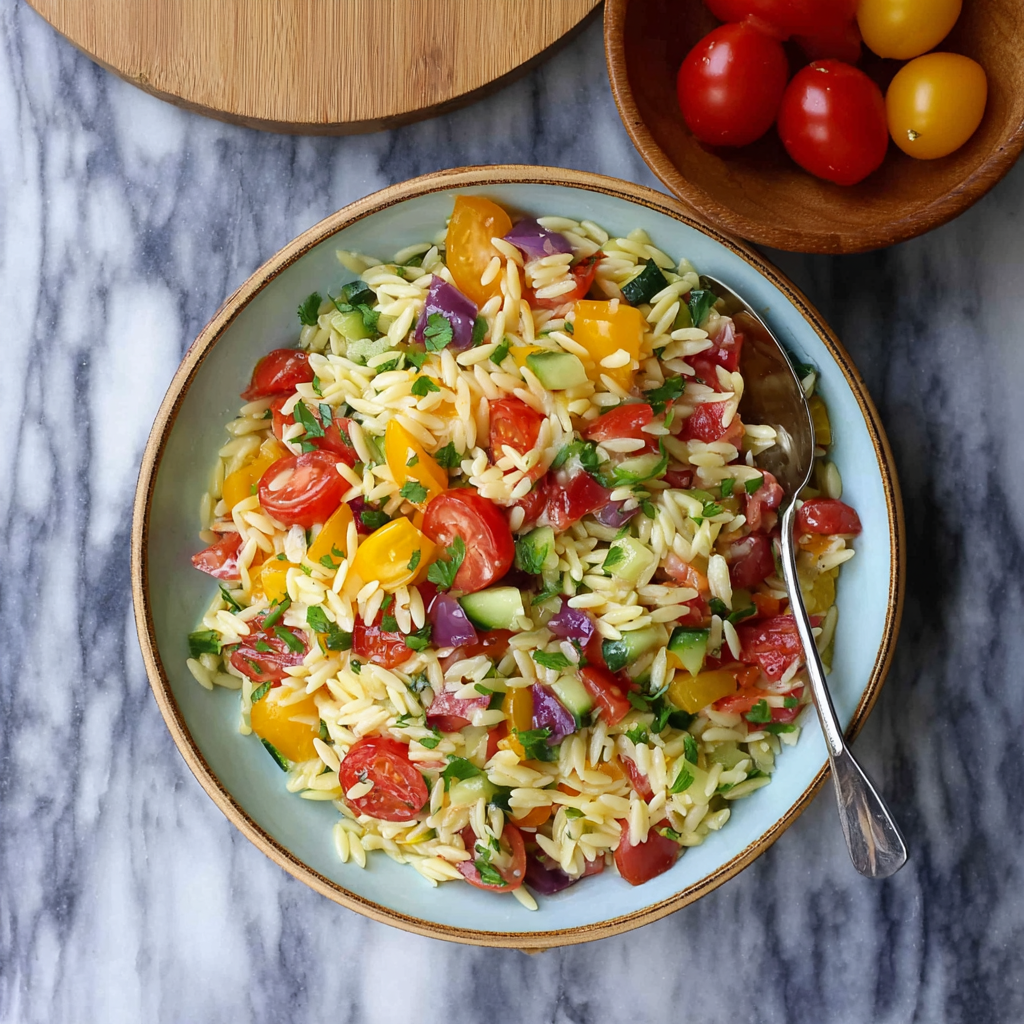
In a large bowl, combine the cooled orzo, chickpeas, and all the colorful vegetables. Pour the dressing over the top and toss gently with a large spatula.
Step 5: The Cheese & Herb Finish
Fold in the crumbled feta cheese and olives last. Adding the feta at the end prevents it from breaking down and turning the salad “cloudy.” Garnish with a handful of fresh parsley or mint for a final burst of chlorophyll.
Nutritional Information (Per Serving)
- Calories: 320 kcal (Based on 8 servings).
- Protein: 9g (Boosted by chickpeas and feta).
- Total Fat: 14g (Healthy monounsaturated fats).
- Carbohydrates: 42g.
- Fiber: 6g.
Healthier Alternatives for the Recipe
- The “Grain” Swap: Use Whole Wheat Orzo or Pearl Couscous for an extra 3g of fiber per serving.
- Vegan Option: Substitute the feta for pickled cauliflower or a vegan almond-based feta.
- Low-Carb: Replace half of the orzo with Riced Broccoli or Riced Cauliflower.
Serving Suggestions
- The Picnic Pro: Serve in individual mason jars for a portable, aesthetically pleasing lunch.
- The Protein Power-Up: Top with grilled shrimp or lemon-herb chicken for a complete high-protein dinner.
- The Backyard BBQ: This salad is the perfect side for grilled burgers or halloumi skewers, as the acidity cuts through charred fats.
Common Mistakes to Avoid
- Overcooking the Orzo: Mushy orzo ruins the texture. It should have a slight “bite.”
- Warm Dressing: Adding dressing to hot pasta causes the orzo to drink it all up, leaving the salad dry. Wait until the pasta is room temperature.
- Skipping the Rinse: If you don’t rinse the orzo, the starch will turn the salad into a sticky block once refrigerated.
Storing Tips for the Recipe
- Fridge Life: This salad is remarkably stable. It stays fresh for up to 4 days in an airtight container.
- The Refresh: If the salad looks dry on Day 3, add a small squeeze of lemon juice and a teaspoon of olive oil to “reactivate” the dressing.
Conclusion
The Rainbow Orzo Salad is a masterclass in nutrition, color, and culinary efficiency. By utilizing the “Al Dente Rinse” and the “Uniform Dice” techniques, you create a meal-prep staple that is as visually stunning as it is healthy. It’s a 55-minute investment in your week’s health.
Try this recipe today! Please share your feedback in the review section or leave a comment on our blog. You can also subscribe for more data-driven recipes and kitchen hacks!
FAQs (Frequently Asked Questions)
Q: Can I make this gluten-free?
A: Yes! Simply swap the traditional orzo for a Gluten-Free Orzo (usually made from rice or corn) or use Quinoa.
Q: Is the sumac necessary?
A: While not mandatory, sumac adds a unique, tangy, and slightly floral notes that are characteristic of high-end Mediterranean salads.
Q: Can I add fruit?
A: Definitely. Dried cranberries or pomegranate arils add a beautiful “Red” pop and a burst of natural sweetness that complements the feta.