Follow Me On Social Media!
Raspberry Angel Food Cake: The Science of “Protein Stabilization & Foam Aeration”

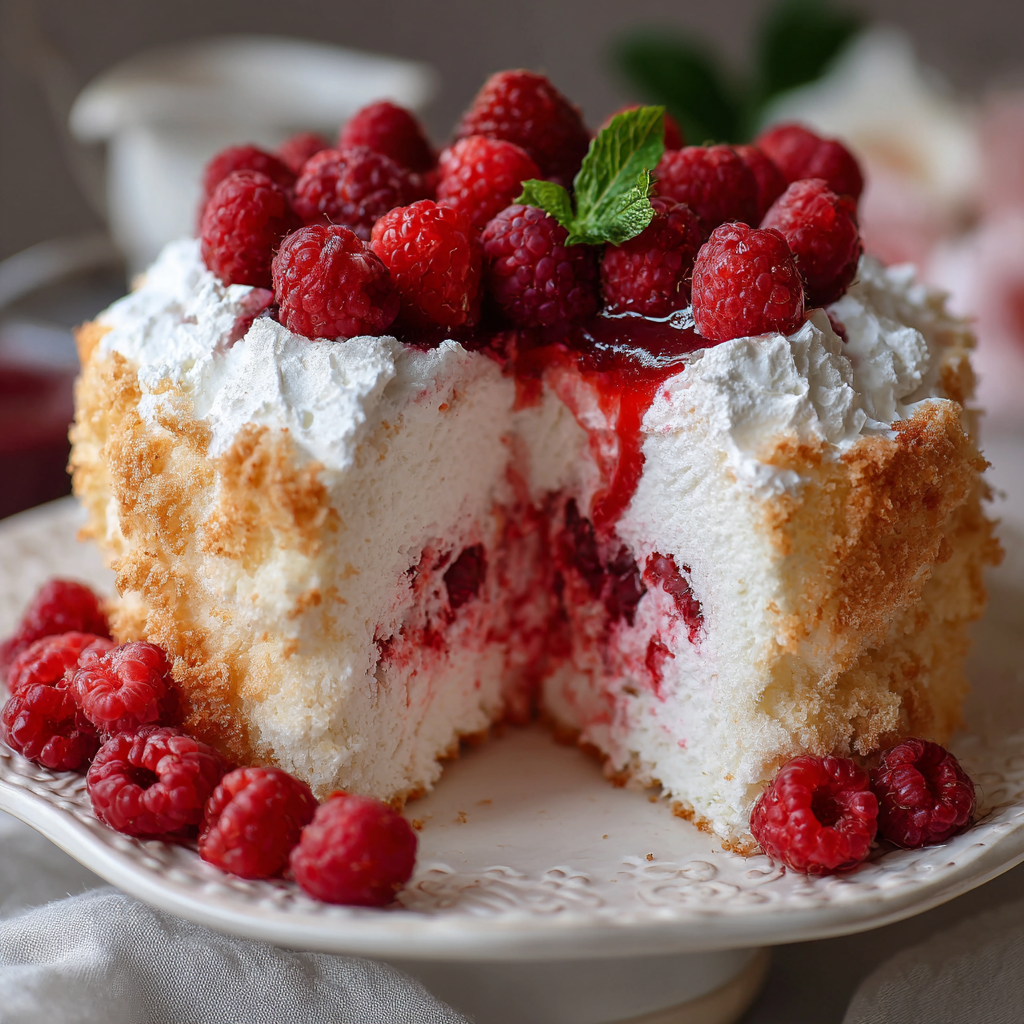
The Raspberry Angel Food Cake is a feat of culinary physics. Unlike traditional cakes that rely on chemical leavening (baking powder) or lipids (butter), this cake is a Mechanical Foam. It is supported entirely by a matrix of air bubbles trapped within denatured egg white proteins.
The addition of raspberries introduces a chemical challenge: Acidity and Moisture. Raspberry juice can break down the delicate protein walls of the foam. To solve this, we use a “swirl” technique or a “folding” method to ensure the fruit’s acid doesn’t collapse the cake’s structural integrity before it sets in the oven.
Ingredients List: The Structural Matrix
- 12 Large Egg Whites: Room temperature ($21$°C). The Science: Room temperature proteins have lower surface tension, allowing them to expand into a larger volume of foam.
- 1 ½ cups Granulated Sugar: (Divided). Sugar acts as a stabilizer, coating the air bubbles to prevent them from bursting.
- 1 cup Cake Flour: Sifted. The Logic: Cake flour has lower protein (gluten) content, ensuring the cake remains “ethereal” rather than “bready.”
- 1 ½ tsp Cream of Tartar: An acidic salt that lowers the pH of the whites, making the protein network more flexible and less likely to over-beat.
- 1 cup Fresh Raspberries: Pureed and strained (to remove seeds/excess weight).
Timing: Data-Driven Efficiency
| Phase | Duration | Data Insight |
| The Sifting | 5 Minutes | Aerating the flour 3 times ensures it doesn’t “clump” and deflate the foam. |
| The Meringue Stage | 8-10 Minutes | Whipping to Medium Peaks allows for maximum expansion in the oven. |
| The Bake ($175$°C) | 35-40 Minutes | Heat triggers the Physical Expansion of air and sets the protein walls. |
| The Inverted Cool | 1.5 Hours | Essential to prevent the cake from collapsing under its own weight. |
Step-by-Step Instructions
Step 1: The Triple-Sifted Dry Base
Sift the cake flour and half the sugar together three times. The Physics: Large particles of flour will act like “weights” on the egg white bubbles. Sifting ensures the flour is light enough to “float” within the foam during folding.
Step 2: The Acidified Foam
Beat egg whites and cream of tartar until foamy. Gradually add the remaining sugar. Actionable Tip: Beat until you reach Medium Peaks—the peaks should curve over like a bird’s beak when the whisk is lifted. The Science: Stiff peaks are too rigid and will crack as the air expands in the oven.
Step 3: The Gentle Fold
Sift the flour mixture over the whites in four stages, folding gently with a spatula. The Logic: You are trying to incorporate the solids without “shearing” the air bubbles you just created.
Step 4: The Raspberry Infusion
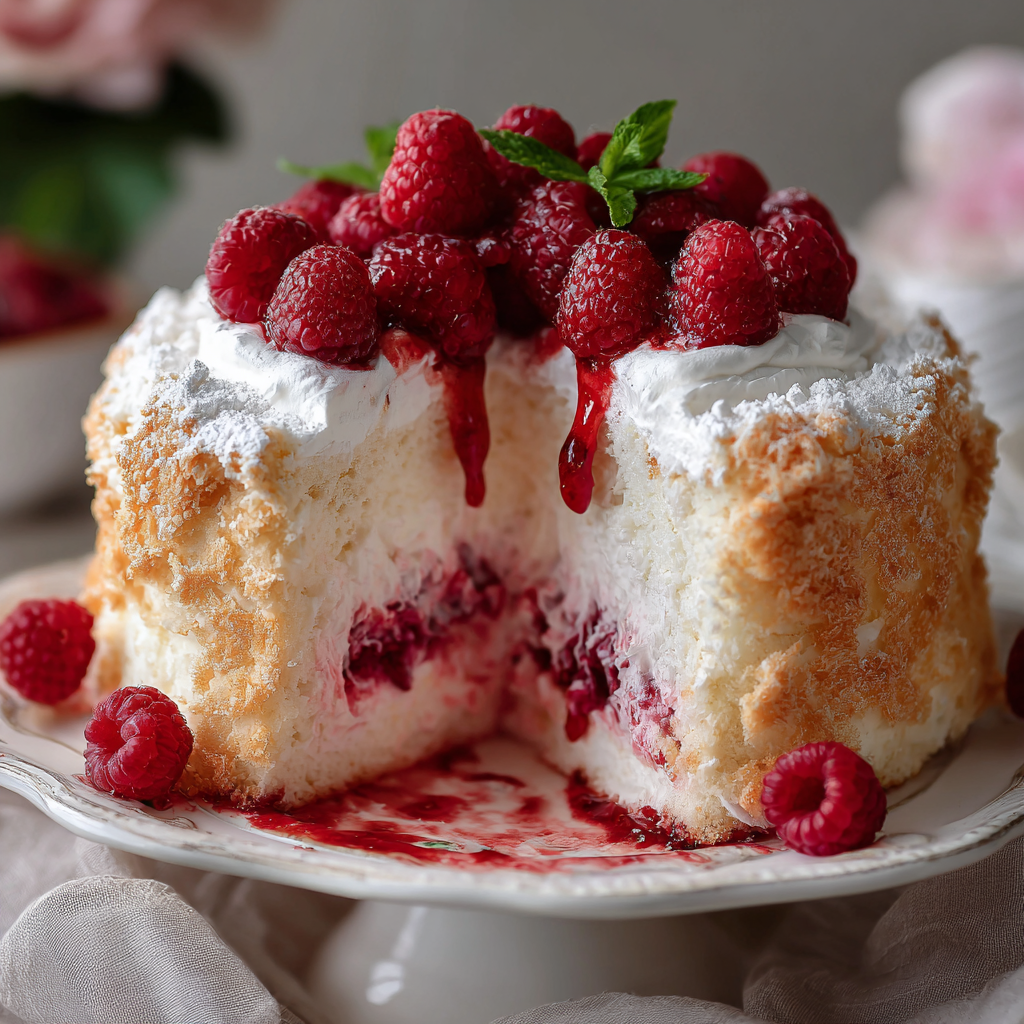
Gently swirl the raspberry puree into the batter. Do not over-mix. The Result: This creates a marbled effect. By keeping the puree in “streaks,” you limit the contact between the fruit’s acid and the overall protein structure.
Step 5: The Inverted Cooling (Critical)
Bake in an ungreased tube pan. Once done, immediately turn the pan upside down over a bottle neck or the pan’s “feet.” The Physics: An Angel Food Cake is so delicate that if it cools upright, the weight of the cooling proteins will cause the cells to implode. Hanging it upside down uses gravity to stretch the cells while they solidify.
Success Tips & Common Mistakes
- The “Grease” Fail: Never grease the pan. The batter needs to “climb” the walls of the pan to rise. If the pan is slippery, the cake will stay flat and dense.
- The “Fat” Contamination: Even a microscopic drop of egg yolk or oil on your whisk will prevent the whites from foaming. The Hack: Wipe your bowl and whisk with a paper towel dipped in lemon juice before starting.
- The Raspberry “Bleed”: If using frozen berries, thaw and drain them completely. Excess water will create steam pockets that can lead to large, unsightly holes in the cake.
Nutritional Information (Per Slice)
- Calories: 180 kcal.
- Total Fat: 0g.
- Carbohydrates: 42g.
- Protein: 5g.
Conclusion
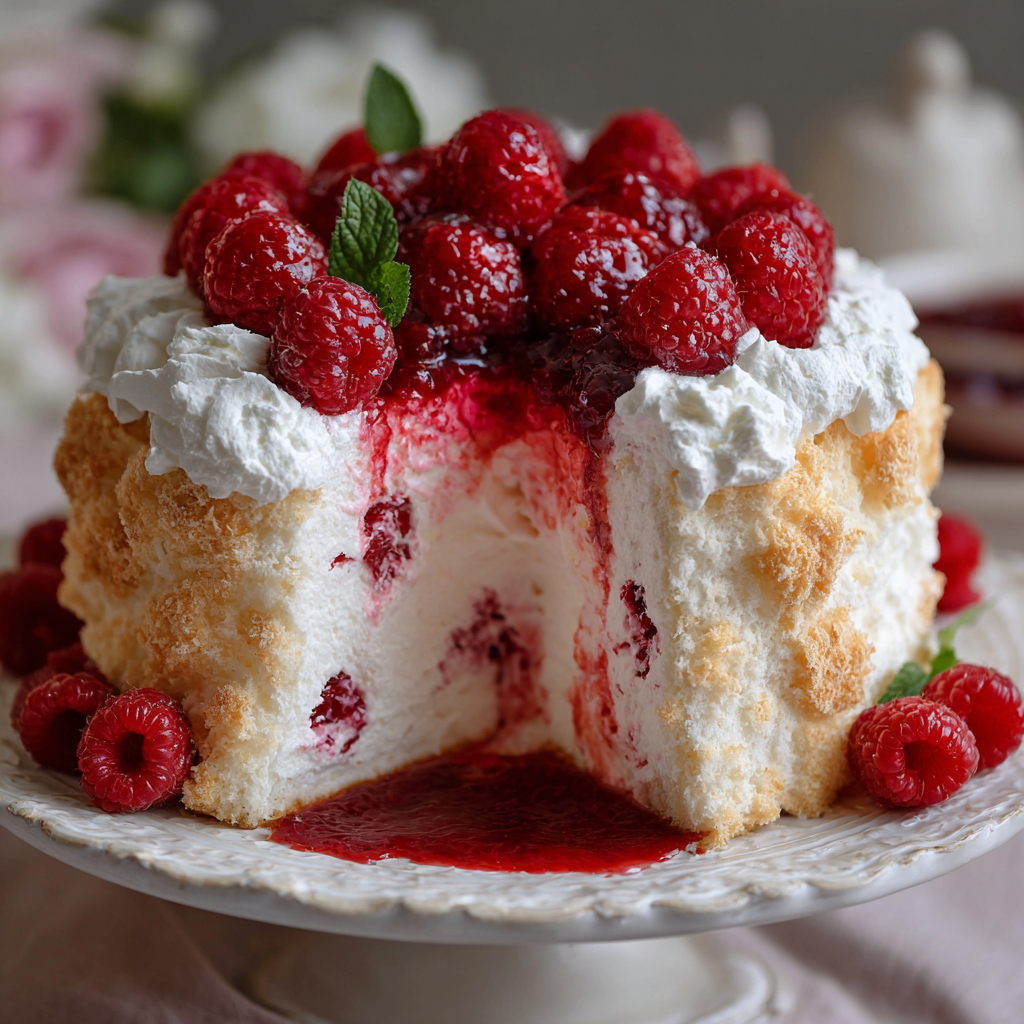
The Raspberry Angel Food Cake is a masterclass in architectural baking. By protecting your protein foam from fats and acids, and utilizing gravity during the cooling process, you create a dessert that is essentially “baked air” flavored with the tart essence of summer.