Follow Me On Social Media!
Shirley Temple Ice Cream Float: The Science of “Carbonation & Lipid Emulsion”

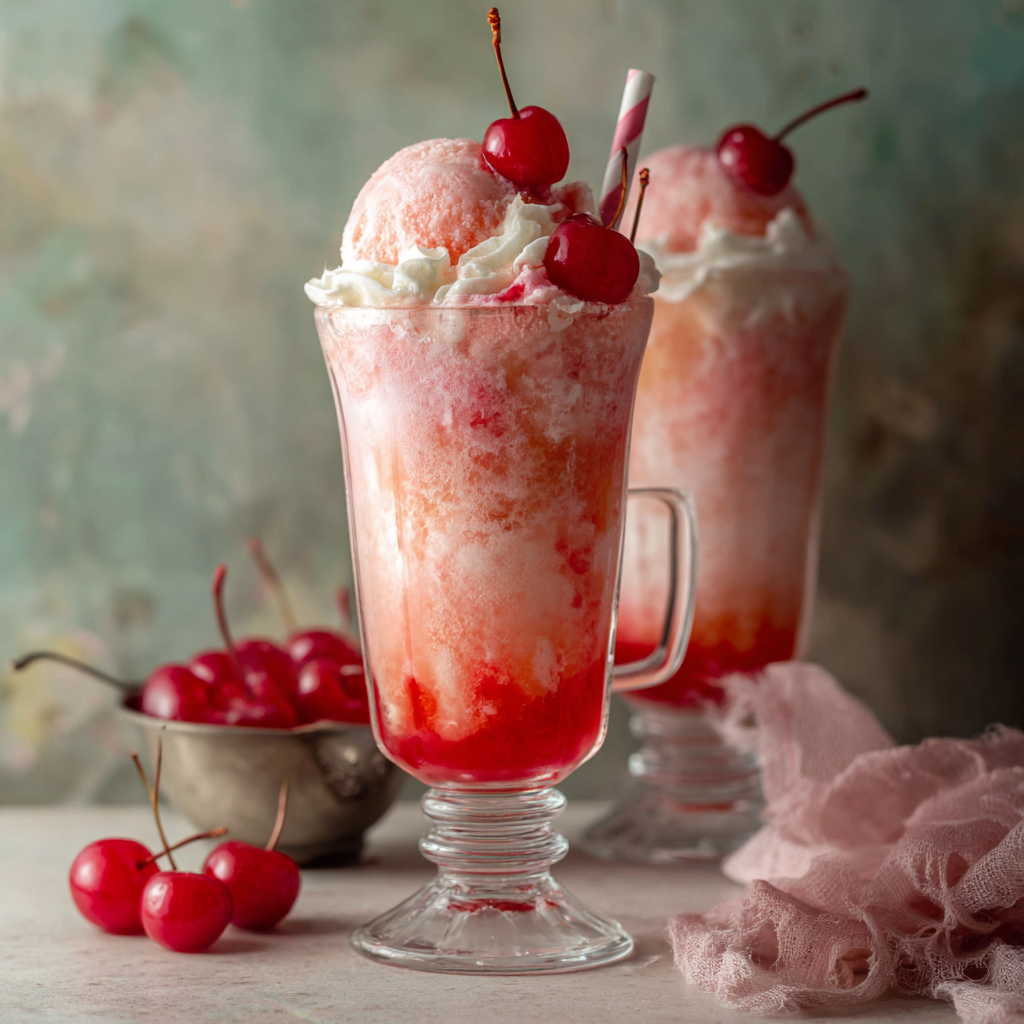
The Shirley Temple Ice Cream Float is a nostalgic, high-contrast beverage that utilizes the physics of Nucleation and Fat Stabilization. A standard Shirley Temple is a mixture of ginger ale (acidic carbonation) and grenadine (dense sucrose). By adding vanilla ice cream (a frozen emulsion of lipids and air), you create a “foam head” that is chemically different from a standard soda.
The proteins in the ice cream (caseins) act as surfactants, coating the $CO_2$ bubbles from the soda. This prevents the bubbles from popping instantly, resulting in a thick, creamy, “cloud-like” foam that carries the aromatic ginger and pomegranate notes.
Ingredients List: The Density & Flavor Matrix
- 1 cup Ginger Ale or Lemon-Lime Soda: The carbonated solvent.
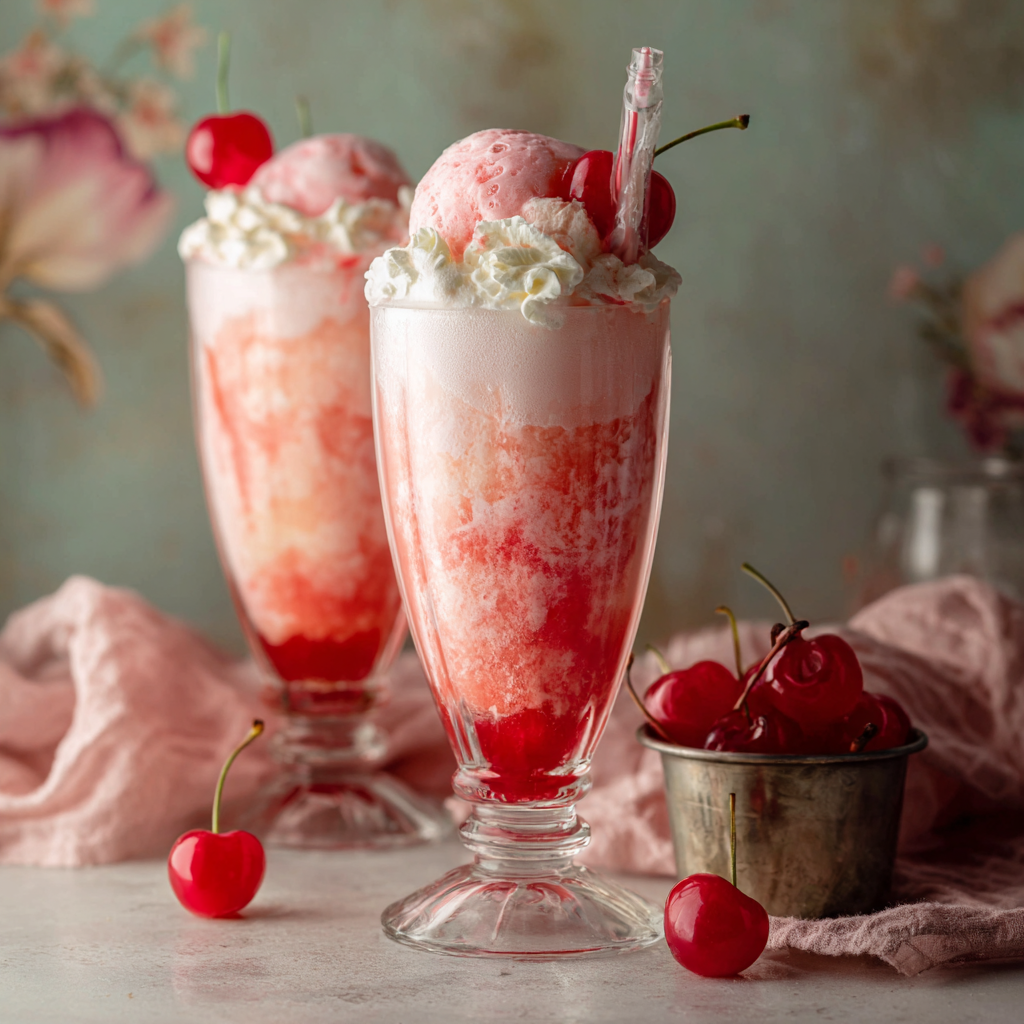
- 2 tbsp Grenadine Syrup: The Science: Grenadine has a high specific gravity (it is denser than soda), so it naturally sinks to the bottom, creating a “sunset” gradient.
- 2 scoops Vanilla Bean Ice Cream: The lipid-protein stabilizer.
- Maraschino Cherries: The garnish (traditionally preserved in high-fructose syrup).
- Optional: A splash of orange juice for a “Dirty Shirley” flavor profile.
Timing: The Thermal Sequence
| Phase | Duration | Data Insight |
| The Syrup Base | 10 Seconds | Establishing the sugar gradient at the bottom of the glass. |
| The Slow Pour | 20 Seconds | Minimizes early $CO_2$ loss to ensure maximum “fizz” later. |
| The Nucleation | 5 Seconds | Occurs the moment ice cream hits the liquid. |
| Total Time | Approx. 2 Minutes | Instant refreshment. |
Step-by-Step Instructions
Step 1: The Density Layering
Pour the grenadine into the bottom of a tall glass. The Physics: Because the syrup is mostly sugar, it is much denser than the soda you are about to add. If you pour the soda slowly over the back of a spoon, you can keep the red layer distinct from the clear layer.
Step 2: The Carbonated Fill
Fill the glass about 3/4 full with chilled ginger ale or lemon-lime soda. Actionable Tip: Leave at least 2 inches of “headspace” at the top of the glass. The Logic: As soon as the ice cream is added, the carbonation will react with the rough surface of the ice cream, causing a rapid volume expansion.
Step 3: The Nucleation Event
Gently place two scoops of vanilla ice cream into the glass. The Science: This is a Nucleation Event. The ice cream contains tiny air bubbles and ice crystals. These act as “nucleation sites” where the dissolved $CO_2$ in the soda can rapidly turn back into gas, creating the signature foam.
Step 4: The Emulsification Finish
Top with a final splash of soda if needed to bring the foam to the rim. Garnish with maraschino cherries. The Result: As the ice cream melts, the fats and proteins mingle with the acidic soda and sweet syrup, creating a “creamy pomegranate” flavor profile.
Success Tips & Common Mistakes
- The “Volcano” Fail: If you pour the soda over the ice cream too quickly, the $CO_2$ will release all at once, causing the glass to overflow. Always add the ice cream to the soda, or pour the soda very slowly down the side of the glass.
- The “Icy Crunch” Fail: Sometimes, “ice shards” form on the surface of the ice cream. The Physics: This is caused by the soda freezing onto the colder ice cream. To prevent this, let the ice cream sit at room temperature for 2 minutes before adding it to the soda so the surface is slightly softened.
- The Flavor Boost: Use a Ginger Beer instead of ginger ale for a sharper, “spicier” contrast to the sweet vanilla and grenadine.
Nutritional Information (Per Float)
- Calories: 310 kcal.
- Total Fat: 11g.
- Carbohydrates: 52g.
- Vitamin C: 4% of Daily Value.
Conclusion
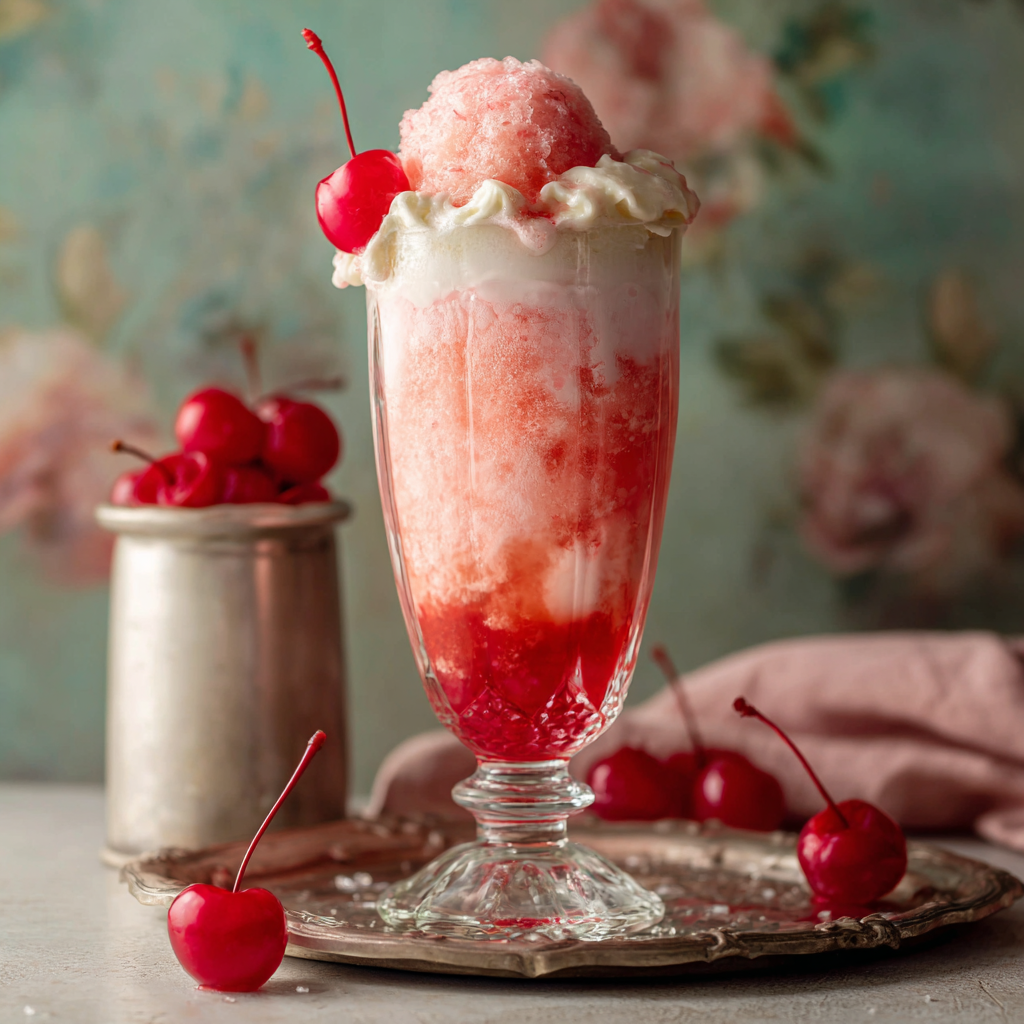
The Shirley Temple Ice Cream Float is a masterclass in liquid density and gas release. By layering your ingredients and respecting the nucleation process, you transform a simple soda into a complex, multi-textured dessert beverage.