Follow Me On Social Media!
The Bio-Aromatic Architect: Concentrated Ginger Shots

The Gastronomic Architecture: The “Gingerol-Extraction” Matrix
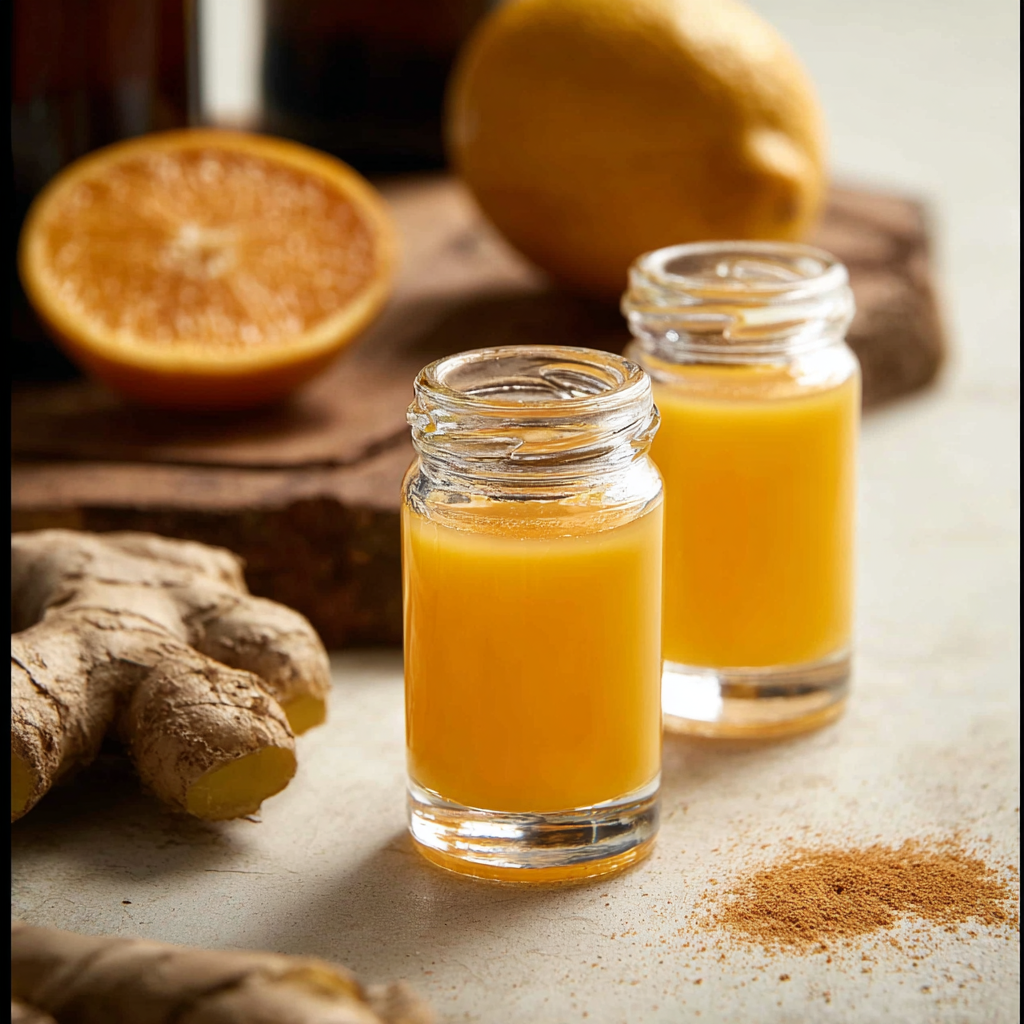
In the hierarchy of functional elixirs, the Ginger Shot represents a sophisticated study in Alkaloid Concentration and Oxidation Control. The technical challenge of raw ginger is the “Pungency Threshold”: gingerol, the active phenolic compound, provides an intense thermal sensation that can overwhelm the palate. By utilizing an Acid-Lipid Buffer (lemon and oil), you modulate the pH and provide a carrier for fat-soluble nutrients, transforming a harsh liquid into a balanced, high-intensity tonic.
Data from botanical science suggests the “Vibrancy” factor is driven by the Ascorbic-Rhizome Synergy: the Vitamin C in lemon juice prevents the rapid oxidation of the fresh ginger juice, maintaining its bright yellow hue and “high-frequency” aromatic profile.
Essential Mise en Place: Technical Specs
To achieve a “burn-free” finish and maximum nutrient density, the mechanical extraction method and the “Purity-Ratio” are the most critical factors.
The Foundation (The Rhizome)
- Fresh Ginger Root (250g): Technical Requirement: Look for firm, smooth skin. Older, shriveled ginger has higher fiber density and lower juice yield.
- Fresh Turmeric Root (50g): For the Curcumin-Gold profile and secondary earthy depth.
- Lemon Juice (125ml): The primary acid for preservation and flavor “brightness.”
The “Bio-Availability” Boosters
- Black Pepper (a pinch): Technical Requirement: Contains piperine, which is chemically required to increase the absorption of turmeric’s curcumin by up to 2,000%.
- Coconut Water or Pure Water (125ml): To calibrate the “Specific Gravity” and make the shot drinkable.
- Raw Honey or Maple Syrup (Optional): To balance the “High-Acid” profile.
The Masterclass: Step-by-Step Culinary Execution
Phase 1: The “Mechanical-Surface” Prep
Scrub the ginger and turmeric thoroughly. Expert Tip: Use the edge of a spoon to peel the ginger. It navigates the “knobs” of the rhizome more efficiently than a vegetable peeler, preserving the nutrient-dense flesh just beneath the skin.
Phase 2: The “High-Shear” Pulverization
Combine all ingredients in a high-speed blender. Process on high for 60 seconds. Technical Requirement: You are looking for a complete cellular breakdown. The finer the pulp, the higher the yield of essential oils and gingerols.
Phase 3: The “Micron-Level” Filtration
Pour the mixture through a nut milk bag or an ultra-fine mesh strainer. Squeeze forcefully to extract every milliliter of “Liquid Gold.” Expert Tip: Save the leftover fiber! It can be dehydrated to create homemade ginger-turmeric tea powder.
Phase 4: The “Cold-Chain” Storage
Transfer the juice to glass vials or a sealed jar. Technical Requirement: Store in the refrigerator immediately. The volatile aromatics begin to degrade at room temperature. For peak “Aromatic Frequency,” consume within 5–7 days.
Common Technical Pitfalls to Avoid
- The “Dirty” Flavor: Occurs if the ginger isn’t cleaned properly. The skin can carry earthy microbes that dull the bright citrus notes.
- The “Turmeric Stain”: Turmeric is a powerful natural dye. Use glass equipment rather than plastic to avoid permanent yellow discoloration.
- Excessive Heat: If using a centrifugal juicer, the heat from the blades can oxidize the enzymes. A blender or cold-press juicer is superior for nutrient preservation.
Frequently Asked Questions (Q&A)
| Question | Expert Answer |
|---|---|
| Why add black pepper? | Pepper contains piperine, which inhibits the metabolic pathway that would otherwise flush turmeric’s nutrients out of your system too quickly. |
| Can I freeze them? | Yes. Pour the liquid into ice cube trays. One “Ginger Cube” can be dropped into hot water for an instant morning tonic. |
| Is it too spicy? | Increase the coconut water ratio or add a splash of Apple Juice. The natural malic acid in apples rounds out the sharp ginger burn. |