Follow Me On Social Media!
The Culinary Architect: Baked Creamy “Spinach Dip” Chicken

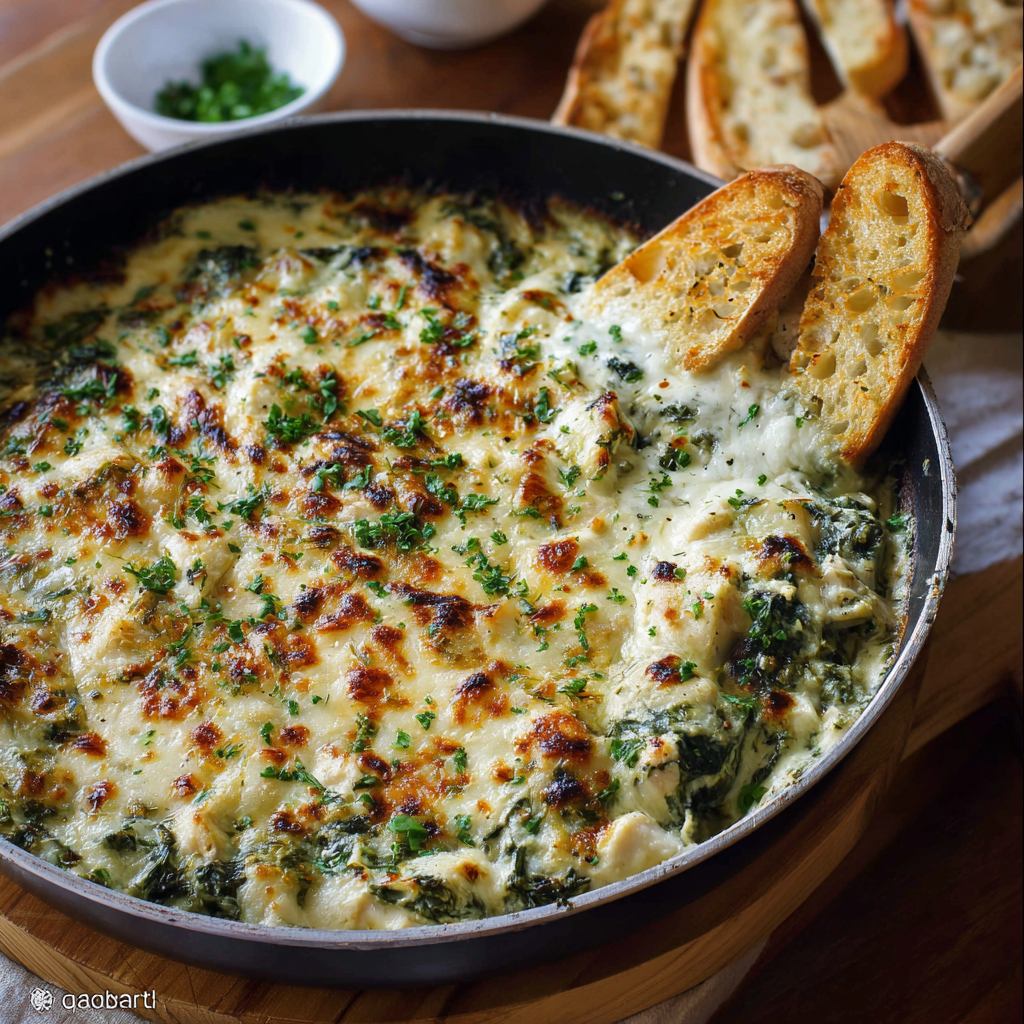
The Gastronomic Architecture: The “Lipid-Foliage” Emulsion
In the hierarchy of comfort cuisine, Spinach Dip Chicken represents a sophisticated study in Dairy Stabilization and Brassica Moisture Management. The technical challenge lies in the “Release Point”: fresh spinach consists of approximately 90% water, which can dilute the sauce and render the dish aqueous. By utilizing a Cream Cheese and Parmesan base, you create a dense lipid matrix that encapsulates the spinach fibers, ensuring a velvety texture while shielding the chicken from thermal desiccation.
The “irresistibility” factor is driven by the Acid-Glutamate Synergy: the mild acidity of the cream cheese cuts through the heavy fats, while the Parmesan provides an umami depth that highlights the natural sweetness of the chicken.
Essential Mise en Place: Technical Specs
To achieve a restaurant-grade “velvet” finish and a golden crust, the choice of protein and the extraction of vegetable moisture are the most critical factors.
The Foundation (The Protein)
- Chicken Breasts (600g – 800g): Technical Requirement: Slice them in half horizontally (cutlets) to maximize surface area contact with the sauce and ensure rapid, uniform cooking.
- Base Seasoning: Salt, pepper, garlic powder, and smoked paprika.
The “Spinach Dip” Matrix (The Topping)
- Fresh Spinach (200g) or Frozen (150g): Technical Requirement: If using frozen, squeeze out all water. If fresh, sauté briefly beforehand to collapse the volume and release initial moisture.
- Cream Cheese (225g/8oz): Must be at room temperature for a homogenous emulsion.
- The Cheese Duo: 100g Mozzarella (for elasticity) and 50g Parmesan (for flavor and crust).
- Aromatics: 3 cloves minced garlic and a pinch of red chili flakes (to “awaken” the fats).
The Masterclass: Step-by-Step Culinary Execution
Phase 1: The Maillard Searing
Brown the chicken in a hot skillet with a splash of oil for 2 minutes per side. Technical Note: The goal is not to cook the chicken through, but to create complex flavor compounds (Maillard reaction) that the oven alone cannot produce at lower temperatures.
Phase 2: Creamy Matrix Assembly
In a bowl, mix the cream cheese, drained spinach, garlic, and half of the mozzarella and parmesan. Expert Tip: Add a tablespoon of sour cream or Greek yogurt to loosen the texture if the mixture is too stiff.
Phase 3: Thermal Insulation
Place the chicken in a baking dish. Spread the spinach mixture generously over each piece, acting as a Thermal Shield. Top with the remaining mozzarella.
Phase 4: Oven Crystallization
Bake at 190°C (375°F) for 15–20 minutes. Technical Requirement: For a professional finish, switch to “Broil” (grill) for the last 2 minutes until the cheese forms golden-brown bubbles (“Leopard spotting”).
Common Technical Pitfalls to Avoid
- The Aqueous Dish: This is the result of poorly drained spinach. Water accumulates at the bottom and breaks the cheese emulsion.
- Dry Chicken: If the internal temperature exceeds 74°C, muscle fibers contract. The creamy topping helps retain moisture, but it cannot compensate for massive overcooking.
- “Grainy” Texture: Avoid pre-shredded Parmesan in bags, which contains cellulose. Grate it yourself for a perfect melt.
Frequently Asked Questions (Q&A)
| Question | Expert Answer |
|---|---|
| Can I add artichokes? | Absolutely. This creates the classic “Spinach Artichoke Dip” profile. Use canned artichoke hearts, well-rinsed and chopped. |
| What side dish should I choose? | To balance the lipids, serve with Al Dente Pasta or Basmati Rice to soak up the extra sauce. |
| Can I prep this in advance? | Yes. Assemble the dish, cover, and refrigerate. Bake when ready, adding 5 minutes to the cook time. |