Follow Me On Social Media!
The Culinary Architect: Chicken Broccoli Stuffed Shells

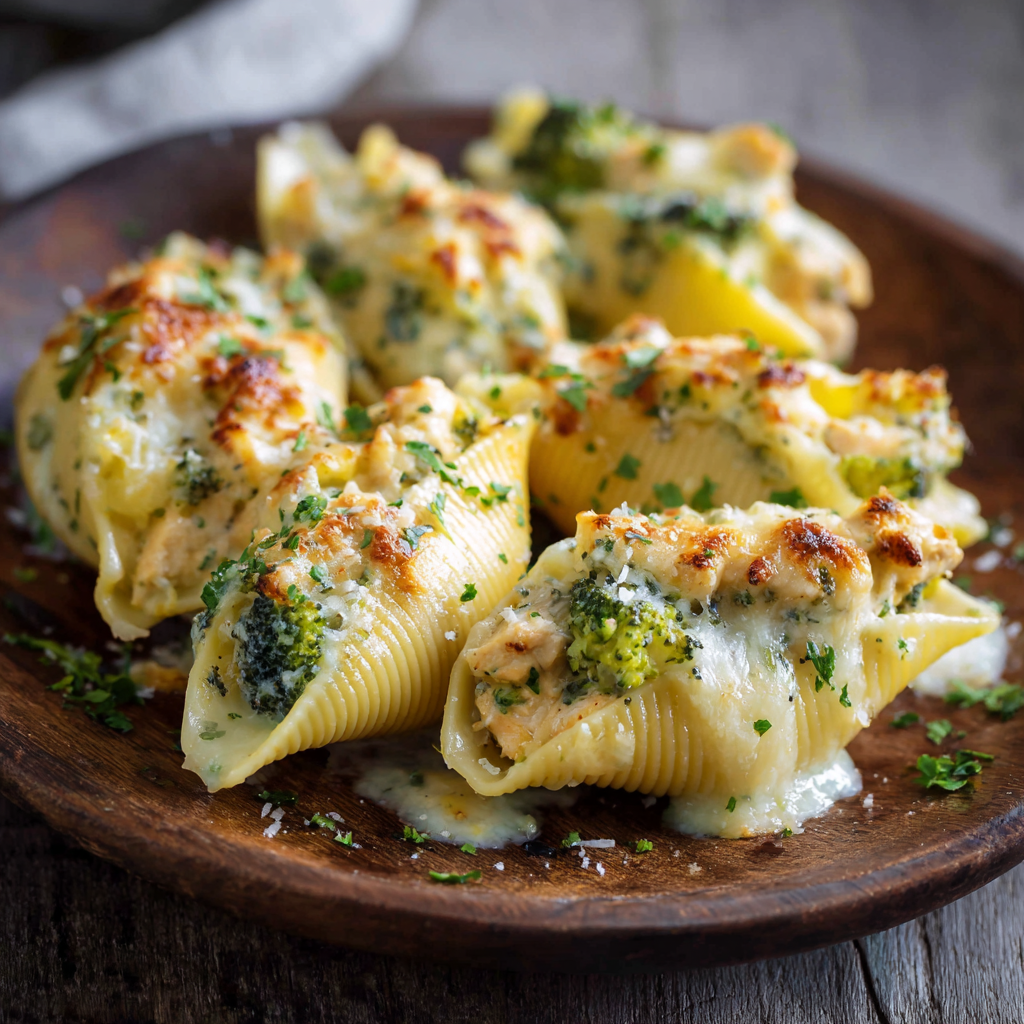
The Gastronomic Architecture: The “Three-Phase” Moisture Seal
In the hierarchy of baked pasta engineering, Chicken Broccoli Stuffed Shells represent a sophisticated study in Thermal Moisture Management and Enzymatic Protein Stabilization. The technical challenge of stuffed pasta is the “Edge-Desiccation” effect: the exposed ridges of the pasta shells dry out in the oven’s radiant heat while the interior remains under-hydrated. By utilizing a “Sauce-Cap” method—enveloping the shells in a high-viscosity Alfredo or Béchamel—you create a Hydration Chamber that steams the pasta and filling simultaneously.
The “irresistibility” factor is driven by the Lactic-Acid-Brassica Synergy: the mild sulfur compounds in the broccoli (brassica) are neutralized by the fats in the ricotta and Parmesan, transforming “vegetal” notes into a complex, savory depth.
Essential Mise en Place: Technical Specs
To achieve a restaurant-grade “homogeneous” filling and a golden Maillard crust, the moisture management of the vegetables and the “Anti-Clumping” of the cheese are the most critical factors.
The Foundation (The Vessel & Protein)
- Jumbo Pasta Shells (approx. 20–24): Technical Requirement: Boil the shells for 2 minutes less than the “al dente” instructions. They must be structurally rigid enough to handle during stuffing and will finish hydrating in the sauce.
- Cooked Chicken (400g): Expert Tip: Shredded rotisserie chicken or poached thighs are ideal. Thighs offer a higher lipid content, preventing the filling from becoming “stringy” during the bake.
The “Florentine-Style” Matrix
- Broccoli Florets (300g): Technical Requirement: Steam and finely chop. Large chunks create air pockets that cause the shells to collapse; a fine mince ensures a cohesive “mousse-like” filling.
- Whole Milk Ricotta (400g): Provides the structural base.
- The “Glue” Matrix: 1 egg (binder), 1 cup shredded Mozzarella, and 1/2 cup grated Parmesan.
The Masterclass: Step-by-Step Culinary Execution
Phase 1: The “Moisture-Extraction” Prep
After steaming your broccoli, pat it bone-dry with a kitchen towel. Technical Requirement: Any residual water on the broccoli will cause the ricotta to “weep” during baking, leading to a watery sauce.
Phase 2: The “Structural” Blend
In a large bowl, fold together the shredded chicken, minced broccoli, ricotta, egg, and half the Parmesan. Expert Tip: Season aggressively with garlic powder, nutmeg, and black pepper. Ricotta is a “flavor-sink” that requires heavy seasoning to reach its optimal savory profile.
Phase 3: The “Injection” Assembly
Spread a thin layer of sauce (Alfredo or Marinara) on the bottom of a baking dish. Pipe or spoon the filling into each shell. Technical Requirement: Pack the filling tightly to eliminate oxygen pockets, which ensures the chicken remains succulent.
Phase 4: The “Maillard” Finish
Top with the remaining sauce and Mozzarella. Bake at 190°C (375°F) for 25–30 minutes. The dish is finished when the sauce is bubbling and the cheese has achieved a “Leopard-Spot” golden-brown char.
Common Technical Pitfalls to Avoid
- The “Crunchy” Shell Edge: Caused by leaving the tops of the shells uncovered. Ensure every millimeter of pasta is coated in sauce before baking.
- The “Grit” Factor: Caused by using pre-shredded Parmesan. Always grate from a block to ensure the cheese melts into the sauce rather than sitting on top as a waxy layer.
- Bland Interior: Because the pasta shell is a neutral starch, the filling must be “over-seasoned” relative to a standalone dish.
Frequently Asked Questions (Q&A)
| Question | Expert Answer |
|---|---|
| Can I use frozen broccoli? | Yes. Thaw completely and follow the “Moisture-Extraction” step. Frozen broccoli holds more water than fresh. |
| Why add an egg? | The egg protein denatures and sets during baking, acting as “biological rebar” to keep the filling from sliding out of the shell. |
| What is the best sauce? | A Garlic Alfredo provides the classic creamy profile, but a Roasted Garlic Tomato Sauce offers a bright acidic contrast. |