Follow Me On Social Media!
The Culinary Architect: Classic Delicatessen Ham Salad

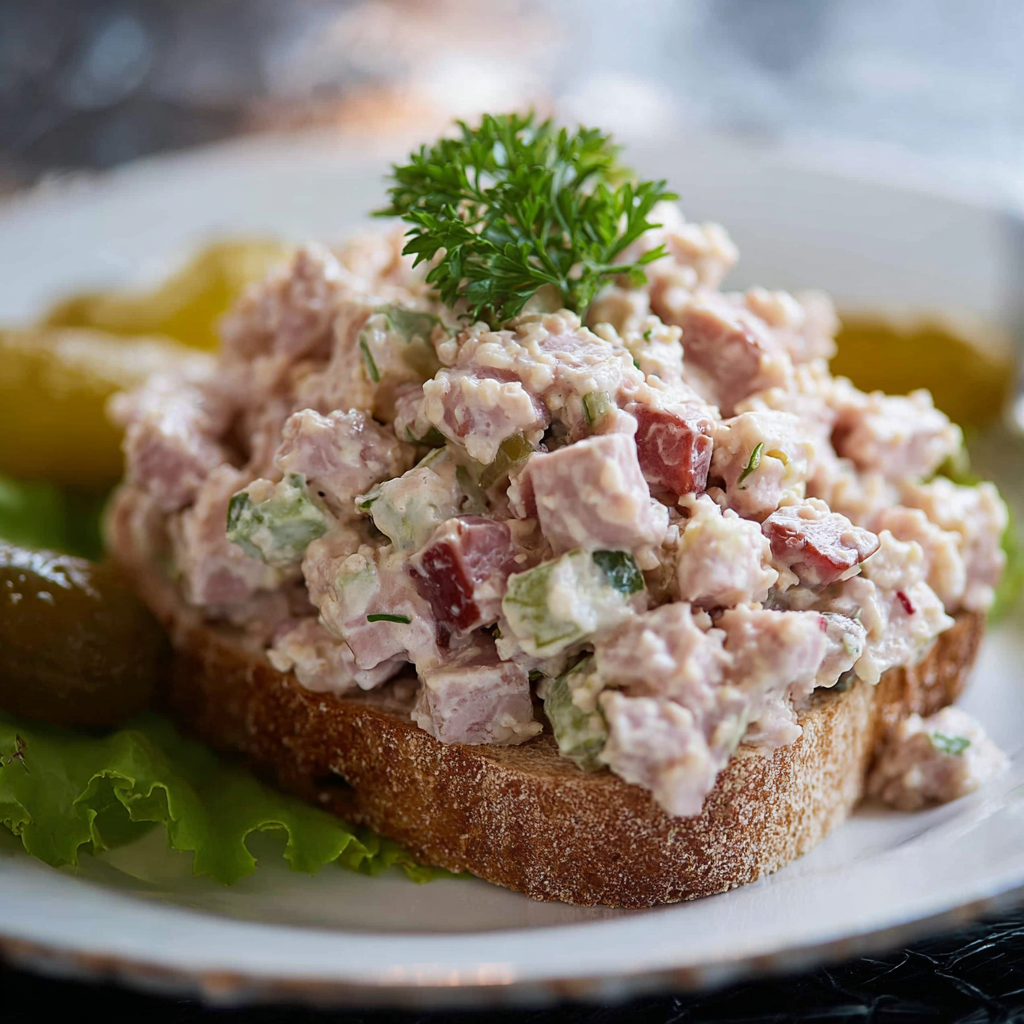
The Gastronomic Architecture: The “Saline-Acetic” Emulsion
In the hierarchy of cold-protein spreads, Ham Salad represents a sophisticated study in Texture Contrast and Lipid-Acid Balancing. The technical challenge of a ham-based salad is the “Salt-Saturation” point: because ham is a cured product with high sodium and nitrate content, adding traditional seasonings can easily lead to an over-salted profile. By utilizing a Sweet-Acetic Matrix (relish and mustard), you introduce high-frequency acid and sugar notes that cut through the heavy salt and fat, creating a balanced, spreadable emulsion.
The “irresistibility” factor is driven by the Mechanical Grind: unlike chicken or tuna salad which are often flaked, ham salad requires a “fine-pulse” texture. This maximizes surface area, allowing the dressing to coat every microscopic protein fiber for a “velvety” mouthfeel.
Essential Mise en Place: Technical Specs
To achieve a restaurant-grade “spread” and avoid a watery or chunky mess, the temperature of the ham and the “pulsing” technique are the most critical factors.
The Foundation (The Protein)
- Cooked Ham (500g): Technical Requirement: Use a high-quality “City Ham” or leftover holiday ham. Avoid ultra-thin deli slices, as they lack the structural density needed for a proper grind.
- Expert Tip: Ensure the ham is ice-cold. Cold fat pulses into clean granules; warm fat smears and creates a “pasty” texture.
The “Deli-Style” Matrix (The Dressing)
- Mayonnaise (125ml): The primary lipid binder.
- Sweet Pickle Relish (3 tbsp): To provide the “Snap-Acid” contrast.
- Yellow or Dijon Mustard (1 tbsp): Acts as an emulsifier and provides a pungent counterpoint to the salt.
- Aromatics: 2 stalks of celery (finely minced) and 1/4 small white onion.
The Masterclass: Step-by-Step Culinary Execution
Phase 1: The “Granular” Pulse
Cut the cold ham into 2cm cubes. Place them in a food processor. Technical Requirement: Pulse 5–7 times in short bursts. You are aiming for “small crumbles,” not a purée. If you over-process, the meat will turn into a “pâté,” losing the classic deli-salad bite.
Phase 2: The “Aromatic-Crunch” Integration
Finely mince the celery and onion by hand. Expert Tip: Do not put the vegetables in the food processor with the ham. The processor will pulverize them into liquid, making your salad watery. Hand-chopping preserves the Cellular Integrity of the vegetables for a crisp contrast.
Phase 3: The “Zero-Salt” Emulsion
In a large bowl, whisk together the mayonnaise, mustard, and relish. Technical Requirement: Do not add salt initially. Taste the ham first—the curing salts in the meat are usually sufficient to season the entire dish. Add a heavy crack of black pepper to provide “floral” heat.
Phase 4: The “Maturation” Chill
Fold the ham and vegetables into the dressing. Cover and refrigerate for at least 1 hour. This “Flavor-Equilibrium” phase allows the acidity of the relish to permeate the ham fibers and the mayo to stabilize into a cohesive spread.
Common Technical Pitfalls to Avoid
- The “Watery” Salad: Caused by using a relish with too much brine. Always drain your relish in a fine-mesh sieve before adding it to the mayo.
- The “Pasty” Mouthfeel: Occurs if the ham is processed while warm. Always chill your meat before grinding to maintain distinct protein granules.
- Bland Profile: If the salad feels “flat,” add a teaspoon of apple cider vinegar or lemon juice. The extra acid “awakens” the savory notes of the ham.
Frequently Asked Questions (Q&A)
| Question | Expert Answer |
|---|---|
| Can I add eggs? | Yes. Hard-boiled eggs provide a “Sulfuric-Creamy” depth that complements ham perfectly. Dice them by hand and fold in at the end. |
| How long does it last? | Due to the mayo and ham, keep it for no more than 3–4 days in the refrigerator. Do not freeze. |
| What is the best vessel? | For a high-contrast experience, serve on Toasted Rye Bread or inside a Buttery Croissant. |