Follow Me On Social Media!
The Emulsion Architect: Creamy Sausage Rigatoni

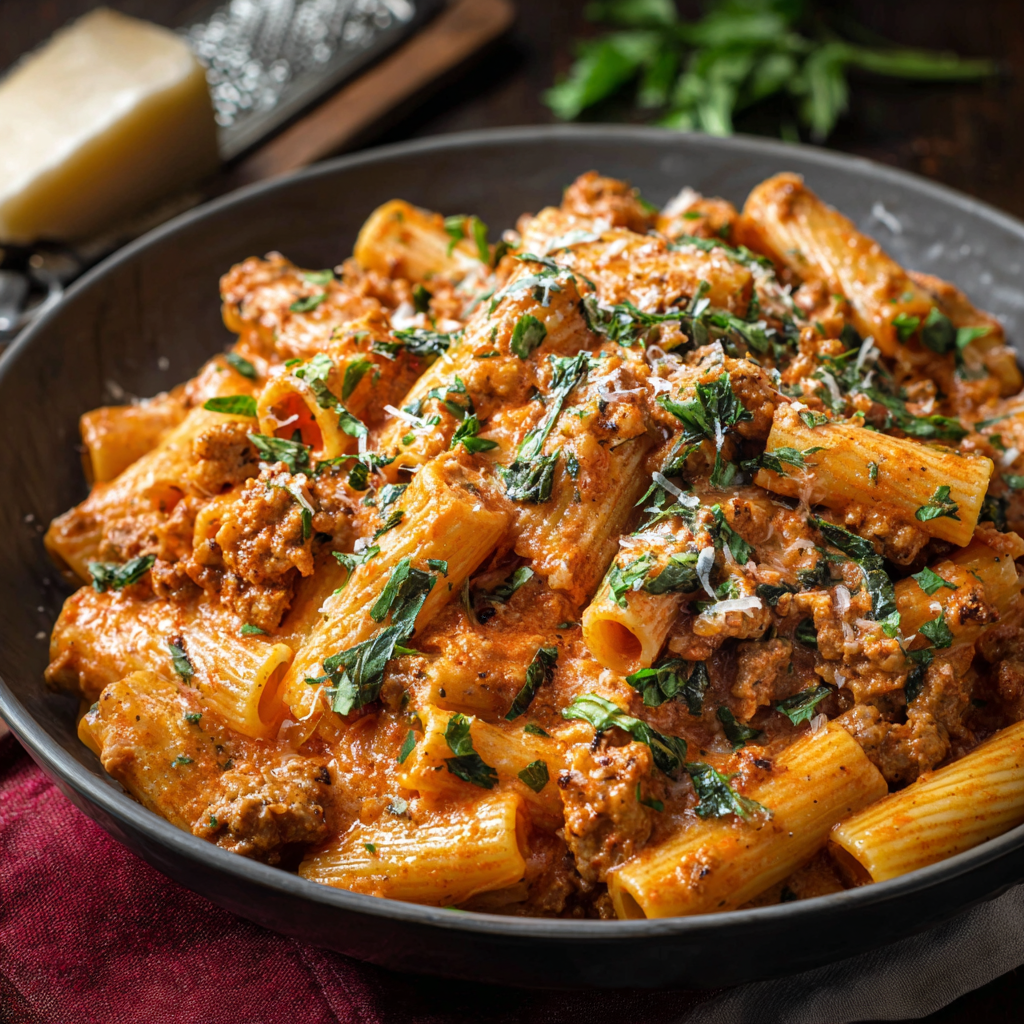
The Gastronomic Architecture: The “Starch-Lipid” Bridge
In the hierarchy of Italian-American comfort, Creamy Sausage Rigatoni represents a sophisticated study in Starch Gelatinization and Dairy Stabilization. The technical challenge lies in the “Sauce-to-Pasta Bond”: rigatoni is engineered with internal hollows and external ridges (striae) specifically to trap high-viscosity sauces. By utilizing starchy pasta water, you create a biological bridge between the heavy pork lipids (fat) and the dairy proteins, resulting in a glossy, “clinging” sauce rather than a pool of oil at the bottom of the bowl.
The objective is to achieve Pasta-Sauce Homogeneity, where the heavy cream and rendered sausage fat are emulsified into a single, cohesive velvet coating.
Essential Mise en Place: Technical Specs
To achieve a restaurant-grade “silk” finish, the choice of pasta shape and the fat content of the sausage are the most critical factors.
The Foundation (The Texture)
- Rigatoni (500g): Technical Requirement: Bronze-die extruded pasta is preferred. The rougher surface texture increases the surface area for the sauce to grip.
- Italian Sausage (400g): Use “Hot” or “Sweet” bulk sausage. The high fat content (approx. 20-30%) provides the foundational flavor base.
- Heavy Cream (240ml / 1 cup): Acts as the primary lipid stabilizer and provides the “ivory” hue.
The Aromatic & Acid Matrix
- Tomato Paste (2 tbsp): To provide “Umami Depth” and a sunset-orange color.
- Fresh Garlic & Shallots: Finely minced to melt into the sauce.
- Dry White Wine (60ml): (Pinot Grigio) to deglaze the pan and provide a sharp acidic counterpoint to the heavy dairy.
- Parmigiano-Reggiano: Freshly grated to act as a secondary emulsifier.
The Masterclass: Step-by-Step Culinary Execution
Phase 1: The “Fond” Extraction
In a large skillet, brown the sausage over medium-high heat. Technical Requirement: Do not move the meat constantly. Let it develop a deep brown crust (the fond) on the bottom of the pan. This is concentrated flavor that will be released during deglazing. Remove excess fat, leaving about 1 tablespoon.
Phase 2: The Aromatic Bloom & Deglaze
Add shallots and garlic to the pan until translucent. Stir in the tomato paste and cook for 2 minutes until it turns a deep rust color (this removes the “raw” metallic taste). Pour in the white wine, scraping the bottom of the pan to release the fond.
Phase 3: The “Cream-Simmer” Reduction
Pour in the heavy cream. Reduce the heat to low and simmer for 5–7 minutes. This “Thermal Reduction” evaporates excess water from the cream, concentrating the fats and proteins to create a thicker, more stable sauce.
Phase 4: The “Mantegatura” (The Finish)
Boil the rigatoni in salted water until 2 minutes before al dente. Transfer the pasta directly into the sauce. Add 60ml (1/4 cup) of the starchy pasta water and the Parmesan cheese. Toss vigorously over medium heat. The friction and the starch will “marry” the sauce to the pasta.
Common Technical Pitfalls to Avoid
- The “Broken” Sauce: If the sauce looks oily or separated, it usually means the heat was too high after adding the cheese. Add a splash more pasta water and whisk vigorously to re-emulsify.
- Mushy Pasta: Rigatoni continues to cook in the sauce. Always undercook it in the water to ensure the final bite has a “toothsome” resistance.
- Bland Profile: Heavy cream mutes spices. Be generous with black pepper and a pinch of red chili flakes to ensure the flavor cuts through the fat.
Frequently Asked Questions (Q&A)
| Question | Expert Answer |
|---|---|
| Can I add greens? | Absolutely. Fresh baby spinach or chopped kale can be folded in during Phase 4; the residual heat will wilt them perfectly. |
| Why pasta water? | It contains dissolved starches that act as a “glue,” helping the fat and water in the sauce stay bonded together. |
| Can I use milk instead? | Not recommended. Milk lacks the fat content to stabilize the sauce at high temperatures and will likely result in a thin, watery texture. |