Follow Me On Social Media!
The Flavor Architect: Sheet Pan Sweet and Sour Chicken

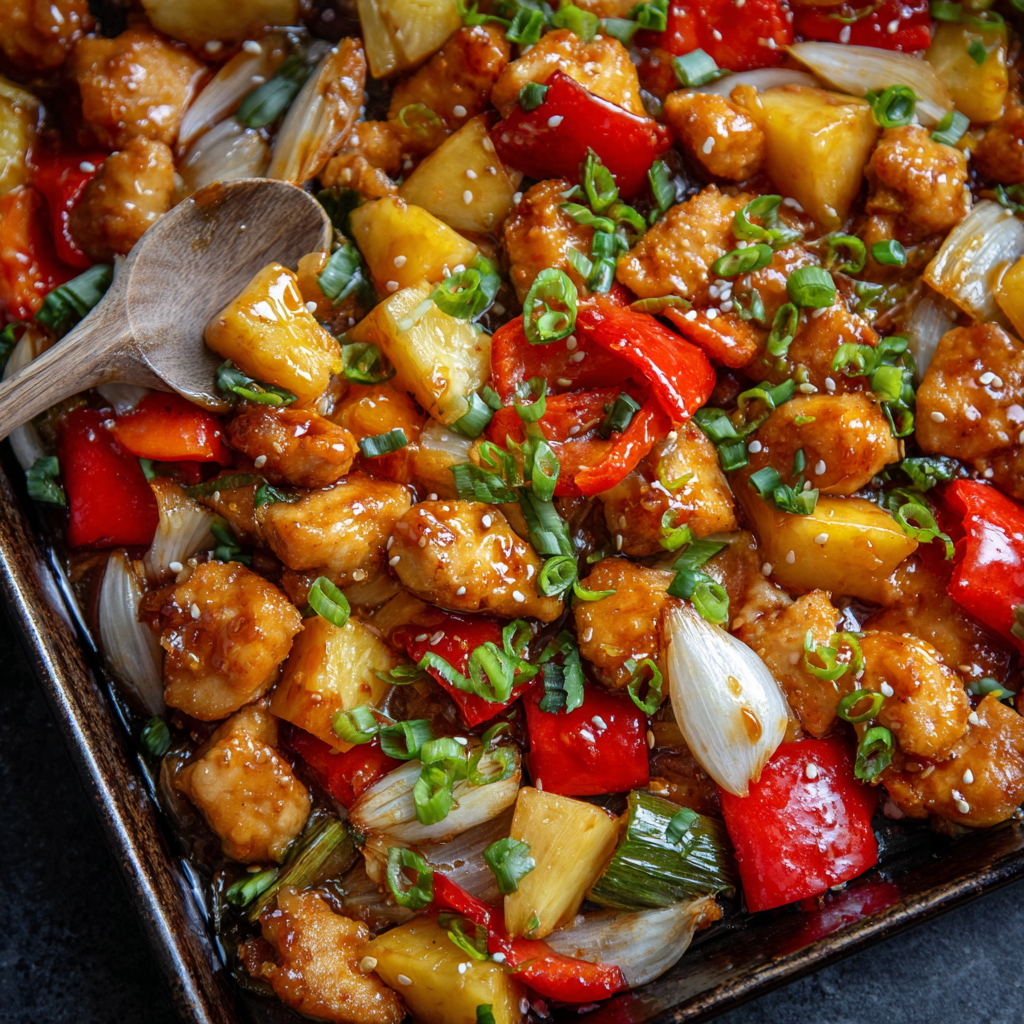
The Gastronomic Architecture: The “Dry-Heat” Caramelization
In the hierarchy of efficient weeknight meals, Sheet Pan Sweet and Sour Chicken represents a sophisticated study in Thermal Moisture Management and Glaze Reduction. The technical challenge of sheet-pan cooking is the “Steam-vs-Sear” paradox: vegetables release water (steam), while chicken requires dry heat to achieve the Maillard reaction. By utilizing a high-surface-area sheet pan at elevated temperatures, you maximize evaporation, allowing the “Sweet and Sour” sugars to dehydrate and “lacquer” onto the protein rather than pooling into a watery sauce.
Data from flavor science suggests the “irresistibility” factor is the Acetate-Sucrose Balance: the high acidity of rice vinegar cuts through the density of the chicken thighs, while the pineapple’s natural bromelain enzymes act as a secondary tenderizer during the brief roasting window.
Essential Mise en Place: Technical Specs
To achieve a restaurant-grade “sticky” finish and crisp-tender vegetables, the uniform size of the components and the “Smoke-Point” of your oil are the most critical factors.
The Foundation (The Protein & Fruit)
- Chicken Thighs (600g): Technical Requirement: Use boneless, skinless thighs cut into 2.5cm cubes. Thighs have a higher lipid content than breasts, preventing them from drying out during the 20-minute roast.
- Fresh Pineapple (200g): Provides the “Acid-Sugar” base. Fresh is superior to canned as it retains structural integrity under high heat.
The Aromatic & Glaze Matrix
- Cornstarch (2 tbsp): To coat the chicken. This creates a “Velvety” barrier that grabs the sauce and creates a micro-crust.
- The “Sweet-Sour” Emulsion: 1/2 cup pineapple juice, 1/4 cup rice vinegar, 3 tbsp ketchup, 2 tbsp soy sauce, and 1 tbsp brown sugar.
- The Aromatics: Freshly grated ginger and garlic.
The Masterclass: Step-by-Step Culinary Execution
Phase 1: The “Cornstarch-Dredge” Barrier
Toss the chicken cubes in cornstarch, salt, and pepper. Technical Requirement: This is not for deep-frying, but for “Seizing” the juices. The starch hydrates with the chicken’s surface moisture, creating a sticky interface for the sauce to bond to later.
Phase 2: The “High-Radiant” Roast
Arrange the chicken, bell peppers, red onions, and pineapple on a large, parchment-lined sheet pan. Drizzle with a high-smoke-point oil (avocado or grapeseed). Bake at 220°C (425°F) for 15 minutes. Expert Tip: Space the ingredients out! If the pan is crowded, the moisture from the peppers will “steam” the chicken, preventing any browning.
Phase 3: The “Lacquer-Glaze” Reduction
While the chicken roasts, whisk the glaze ingredients in a small saucepan and simmer for 3 minutes until it thickens slightly. This “Pre-Reduction” ensures the sauce doesn’t just run off the chicken once applied.
Phase 4: The “Flash-Set” Finish
Remove the pan from the oven, pour the thickened sauce over the chicken and vegetables, and toss to coat. Return to the oven for a final 5 minutes. The intense heat will “flash-caramelize” the sugars in the sauce, creating that signature glossy, sticky coating.
Common Technical Pitfalls to Avoid
- The “Soggy” Bell Pepper: Caused by cutting vegetables too small. Keep peppers in 3cm chunks so they maintain their “snap” while the chicken finishes cooking.
- The “Watery” Pan: If you use canned pineapple in juice, drain and pat it bone-dry. Excess liquid is the enemy of a good sheet-pan sear.
- The “Burnt” Sugar: Because of the high sugar content in the glaze, do not add it at the beginning of the roast. It will burn before the chicken is safe to eat. Always add it in the final 5 minutes.
Frequently Asked Questions (Q&A)
| Question | Expert Answer |
|---|---|
| Can I use chicken breast? | Yes, but reduce the initial roasting time by 3 minutes to prevent the lean meat from becoming “stringy.” |
| Why use cornstarch? | It acts as a “thickening agent” on the surface of the meat, allowing the sauce to cling to the chicken rather than sliding onto the pan. |
| What’s the best rice to serve? | Jasmine Rice provides a floral, slightly sweet aroma that complements the pineapple and ginger. |