Follow Me On Social Media!
The Infusion Architect: Garlic Chili Oil

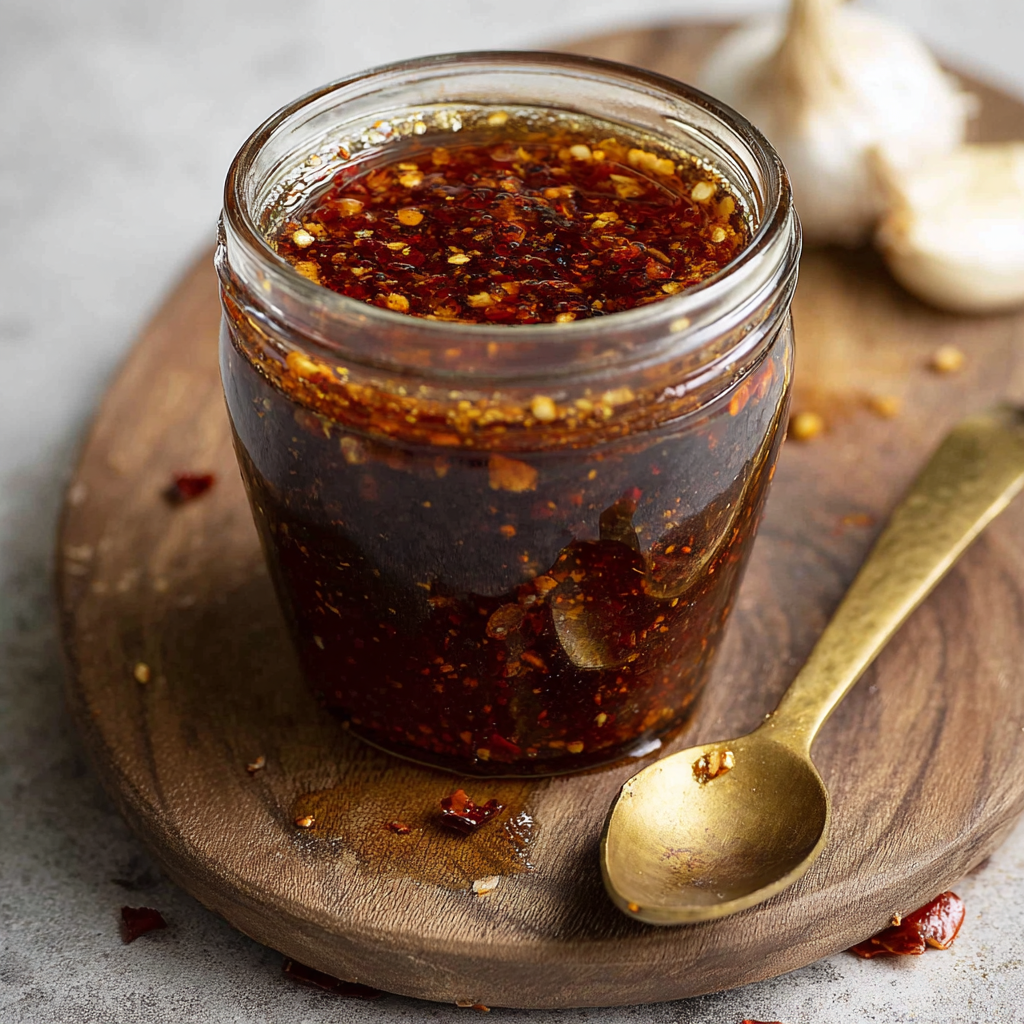
The Gastronomic Architecture: The “Lipid-Capsaicin” Extraction
In the hierarchy of condiments, Garlic Chili Oil represents a sophisticated study in Thermal Infusion and Aromatic Volatilization. The technical challenge of chili oil is the “Burn-Point”: both garlic and chili flakes are highly susceptible to carbonization, which produces a bitter, acrid profile. By utilizing a Two-Stage Thermal Gradient, you extract the fat-soluble capsaicin and allicin at temperatures below the smoke point of the oil, creating a deep mahogany hue and a complex savory depth.
The “irresistibility” factor is driven by the Allicin-Capsicum Synergy: the sharp, sulfurous notes of garlic are mellowed by the hot oil, while the capsaicin provides a sustained “thermal bloom” that lingers on the palate.
Essential Mise en Place: Technical Specs
To achieve a restaurant-grade “shatter-crisp” texture and a vibrant color, the moisture content of the garlic and the variety of the chili are the most critical factors.
The Foundation (The Lipid Base)
- Neutral Oil (250ml): Technical Requirement: Use a high-smoke-point oil like Grapeseed, Canola, or Peanut oil. Olive oil’s flavor profile is too dominant and its smoke point too low for this infusion.
- Garlic (1 full head): Finely minced or sliced into “chips.” Expert Tip: Ensure the garlic is patted dry; any residual moisture will cause the oil to foam aggressively.
The “Heat” Matrix (The Aromatics)
- Sichuan Chili Flakes (50g): Technical Requirement: These provide the classic bright red color. If unavailable, use a mix of red pepper flakes and Korean Gochugaru for a similar depth.
- Star Anise (2) & Cinnamon Stick (1): To provide the “low-frequency” earthy aromatics characteristic of authentic street-style oils.
- Toasted Sesame Seeds (1 tbsp): For textural “pop” and nutty finish.
The Masterclass: Step-by-Step Culinary Execution
Phase 1: The “Low-Temp” Aromatic Bloom
In a small saucepan, combine the oil, star anise, and cinnamon. Heat over medium-low until tiny bubbles form around the spices. Infuse for 10 minutes. This slow “draw” extracts the woody oils without scorching them.
Phase 2: The “Garlic-Crisp” Dehydration
Add the minced garlic to the warm oil. Continue to cook on low. Technical Requirement: You are essentially “frying” the water out of the garlic. Once the garlic turns a pale golden straw color, immediately remove the star anise and cinnamon with a slotted spoon.
Phase 3: The “Thermal Shock” Extraction
Place the chili flakes and sesame seeds in a heat-proof glass or ceramic bowl. Wait 2 minutes for the oil to drop to approximately 180°C. Pour the hot garlic-infused oil over the chili flakes. The oil should sizzle and foam slightly; this is the “bloom” where the red color is released.
Phase 4: The “Maturation” Phase
Allow the oil to cool completely at room temperature. Expert Tip: The flavor profile actually “peaks” 24 hours after infusion, as the flavors continue to equilibrate within the lipid matrix.
Common Technical Pitfalls to Avoid
- The “Bitter” Oil: This occurs if the oil is too hot when poured over the chili flakes. If the flakes turn black instantly, the oil was above 200°C and the chili has burned.
- The “Soggy” Garlic: If the garlic is added to cold oil and the temperature never rises high enough to dehydrate the cloves, they will be chewy rather than crispy.
- Botulism Risk: Because garlic is a low-acid vegetable, do not store this oil at room temperature for more than 4 days. For long-term storage (up to 3 months), keep it in a sealed jar in the refrigerator.
Frequently Asked Questions (Q&A)
| Question | Expert Answer |
|---|---|
| Why use Sichuan flakes? | They have a higher “oil-to-seed” ratio and a vibrant red pigment that common pizza-style red pepper flakes lack. |
| Can I add MSG? | Yes. A 1/2 tsp of MSG (or mushroom powder) provides a massive umami “boost” that mimics restaurant-grade condiments. |
| Is it too spicy? | You can control the heat by using a higher ratio of oil to chili, or by using “mild” chili flakes while maintaining the garlic volume. |