Follow Me On Social Media!
The Seasonal Architect: Slow Cooker Tomato Basil Soup

The Gastronomic Architecture: The “Slow-Infusion” Matrix
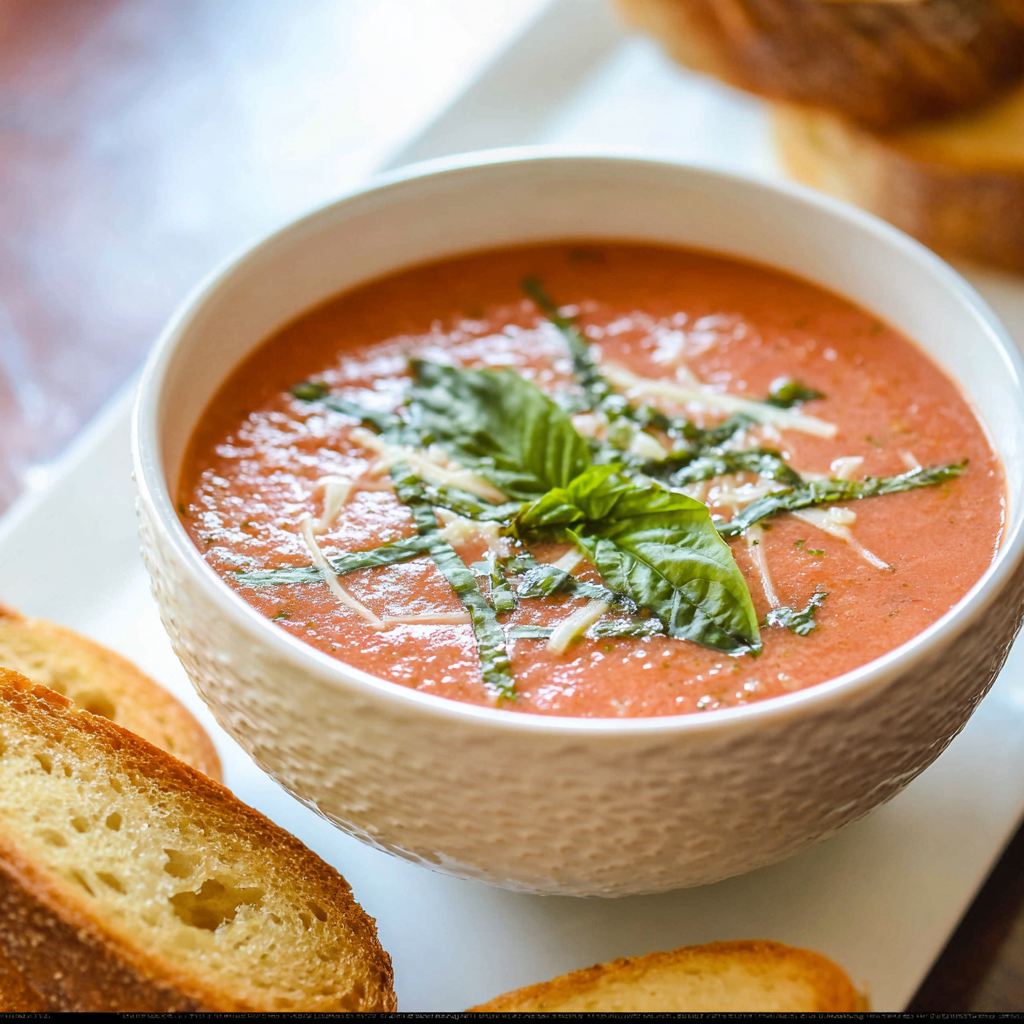
In the hierarchy of comfort cuisine, Slow Cooker Tomato Basil Soup represents a sophisticated study in Lycopene Concentration and Essential Oil Preservation. The technical challenge of tomato soup is the “Acidity-to-Sweetness” equilibrium: canned tomatoes are high in citric acid, which can become sharp when heated rapidly. By utilizing the slow cooker’s low-intensity radiant heat (75°C to 95°C), you allow for a Long-Duration Maillard-lite Transition, where the natural sugars in the tomatoes and aromatics caramelize slowly, mellowing the acid without the need for excessive refined sugar.
Data from flavor science suggests the “irresistibility” factor is the Lipid-Linalool Bond: the volatile oils in fresh basil (linalool) are fat-soluble. By emulsifying heavy cream or olive oil into the tomato base, you “trap” these aromatic molecules, ensuring the herbal brightness persists from the first scent to the final swallow.
Essential Mise en Place: Technical Specs
To achieve a restaurant-grade “velvet” finish and a vibrant hue, the variety of the tomato and the timing of the dairy are the most critical factors.
The Foundation (The Tomatoes)
- Whole Peeled San Marzano Tomatoes (800g / 28 oz): Technical Requirement: San Marzanos have fewer seeds and a thicker flesh, providing a superior “Specific Gravity” (density) for the soup base.
- Vegetable or Chicken Stock (500ml / 2 cups): To provide the aqueous base for the slow-simmer.
The Aromatic & Lipid Matrix
- Yellow Onion, Carrots, & Celery: The “Mirepoix” base. Expert Tip: Carrots provide natural glucose, which balances the tomato acidity more elegantly than white sugar.
- Fresh Basil (1 large bunch): Technical Requirement: Do not use dried basil. The “high-frequency” herbal notes of tomato soup rely on the fresh volatile oils found only in live leaves.
- Heavy Cream (125ml / 1/2 cup): To provide the “Short” texture and lipid-mouthfeel.
The Masterclass: Step-by-Step Culinary Execution
Phase 1: The “Cold-Start” Integration
Place the tomatoes (with their juice), diced mirepoix, garlic, and stock into the slow cooker. Technical Requirement: If using whole canned tomatoes, crush them by hand or with a spoon before starting. This increases the surface area for heat penetration and aromatic exchange.
Phase 2: The “Hydrolysis” Simmer
Cover and cook on LOW for 6–8 hours (or HIGH for 3–4 hours). Expert Tip: The longer, lower cook time allows the pectin in the vegetables to break down completely, which results in a much smoother emulsion during the blending phase.
Phase 3: The “High-Shear” Emulsion
Once the vegetables are soft, add the fresh basil leaves. Use an immersion blender (or transfer to a high-speed stand blender) and process until perfectly homogenous. Technical Requirement: Blend for at least 2 minutes to incorporate air and create a “micro-foam” that lightens the texture.
Phase 4: The “Dairy Stabilization” Finish
Stir in the heavy cream and a knob of butter. Expert Tip: Do not boil the soup after adding the cream. High heat can cause the dairy proteins to “grain” or separate. The residual heat of the slow cooker is sufficient to integrate the fats.
Common Technical Pitfalls to Avoid
- The “Metallic” Aftertaste: Often caused by the acidity reacting with low-quality cookware or simply the nature of canned tomatoes. To fix, add 1/4 tsp of baking soda; it will foam slightly as it neutralizes the excess acid, instantly rounding out the flavor.
- Watery Consistency: If the soup is too thin, blend in a small piece of toasted sourdough or a handful of Parmesan cheese. The starches/proteins will act as a “thickening bridge.”
- The “Grey” Soup: If you blend the soup for too long at a low speed, you can incorporate too much oxygen, which dulls the vibrant red. Use high speed for short bursts.
Frequently Asked Questions (Q&A)
| Question | Expert Answer |
|---|---|
| Can I make it vegan? | Substitute the heavy cream with Full-Fat Coconut Milk or a Cashew Cream (soaked and blended cashews). |
| Why add carrots? | Carrots act as a “biological sweetener.” Their sugars release slowly during the 6-hour cook, providing a more complex depth than table sugar. |
| How do I store it? | Tomato soup freezes exceptionally well. However, if freezing, omit the cream and add it fresh when reheating to maintain the best texture. |