Follow Me On Social Media!
The Structural Architect: Mediterranean Rice-Stuffed Bell Peppers

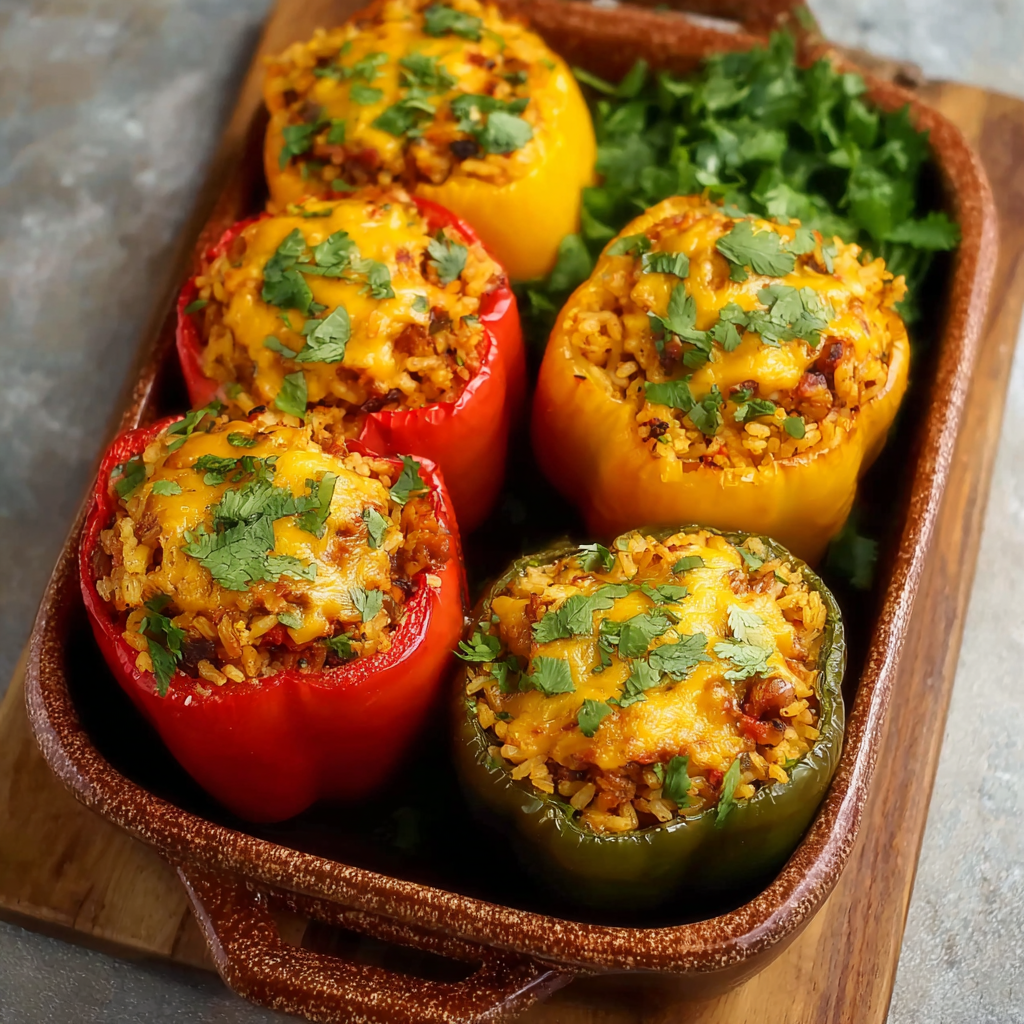
The Gastronomic Architecture: The “Thermal Shield” & Starch Hydration
In the hierarchy of stuffed vegetables, the Rice-Stuffed Bell Pepper represents a sophisticated study in Convection Barriers and Internal Steam Management. The technical challenge lies in the “Hydration Lag”: the rice inside the pepper must absorb liquid to soften, but the pepper wall acts as a thermal shield, slowing down heat transfer. If the rice is added raw without sufficient “Aqueous Volume,” you end up with crunchy grains and collapsed, overcooked pepper skins.
The objective is to achieve Starch Gelatinization within the pepper cavity while maintaining the “Al Dente” structural integrity of the vegetable vessel.
Essential Mise en Place: Technical Specs
To achieve a restaurant-grade “upright” presentation and savory crumb, the variety of pepper and the par-cooking of the grain are the most critical factors.
The Vessel (The Pepper)
- Bell Peppers (4 large): Technical Requirement: Choose “four-lobed” peppers (look at the bottom). These have a wider, flatter base, allowing them to stand upright in the baking dish without tipping.
- The “Ventilation” Cut: Slice the tops off and remove the ribs. Small incisions at the very bottom of the pepper can allow excess steam to escape, preventing a “soggy” base.
The Internal Matrix (The Filling)
- Long-Grain or Basmati Rice (200g / 1 cup): Expert Tip: Par-boil the rice for 7 minutes before stuffing. This “Pre-Hydration” ensures the rice finishes cooking at the exact moment the pepper reaches peak tenderness.
- Ground Beef or Lamb (optional, 250g): To provide the umami “anchor” and essential lipids.
- Tomato Coulis (400ml): Acts as the hydration medium and provides the acidic top notes.
The Masterclass: Step-by-Step Culinary Execution
Phase 1: The “Aromatic Sweat”
Sauté diced onions, garlic, and your choice of protein in a skillet. Once browned, stir in the par-boiled rice, tomato coulis, and Mediterranean herbs (dried oregano, mint, and parsley). Technical Requirement: The filling should be “wet” but not “soupy.” The rice will absorb the remaining liquid during the bake.
Phase 2: The “Structural Stuffing”
Pack the filling into the prepared peppers. Expert Tip: Do not pack the rice too tightly. Rice expands as it finishes hydrating; if packed too densely, it will become a gummy block rather than fluffy grains.
Phase 3: The “Steam-Chamber” Bake
Place the peppers in a baking dish. Pour 125ml (1/2 cup) of water or broth into the bottom of the dish. Cover tightly with foil. This creates a “Steam-Injection” environment that softens the pepper skins from the outside in while the internal juices cook the rice.
Phase 4: The Maillard Finish
Remove the foil for the last 15 minutes of baking. Top each pepper with a slice of Provolone or a sprinkle of Feta. The dry heat will caramelize the cheese and the exposed rice edges, creating a “crispy” textural contrast.
Common Technical Pitfalls to Avoid
- The “Crunchy Rice” Syndrome: Caused by using raw rice without adding enough liquid to the filling. Always par-cook your rice or increase the tomato sauce volume by 30%.
- The “Collapsing Vessel”: If you overcook the peppers, the pectin in the walls breaks down completely, and the pepper will slump. Aim for a “tender-crisp” skin that holds its shape when lifted.
- Under-Seasoning: The pepper skin is a flavor barrier. You must aggressively season the filling (salt, pepper, and acid) to compensate for the neutral vegetable exterior.
Frequently Asked Questions (Q&A)
| Question | Expert Answer |
|---|---|
| Can I make it vegetarian? | Easily. Replace the meat with cooked lentils or finely chopped sautéed mushrooms for a high-umami alternative. |
| Why use Bell Peppers? | Their hollow interior and thick walls make them the ideal “culinary cup” for holding moist starches. |
| How do I prevent tipping? | If your peppers are unstable, slice a tiny sliver off the bottom lobes to create a flat surface, or “nest” them tightly in a small baking dish. |