Follow Me On Social Media!
The Viscosity Architect: Cheesy Loaded Potato Soup

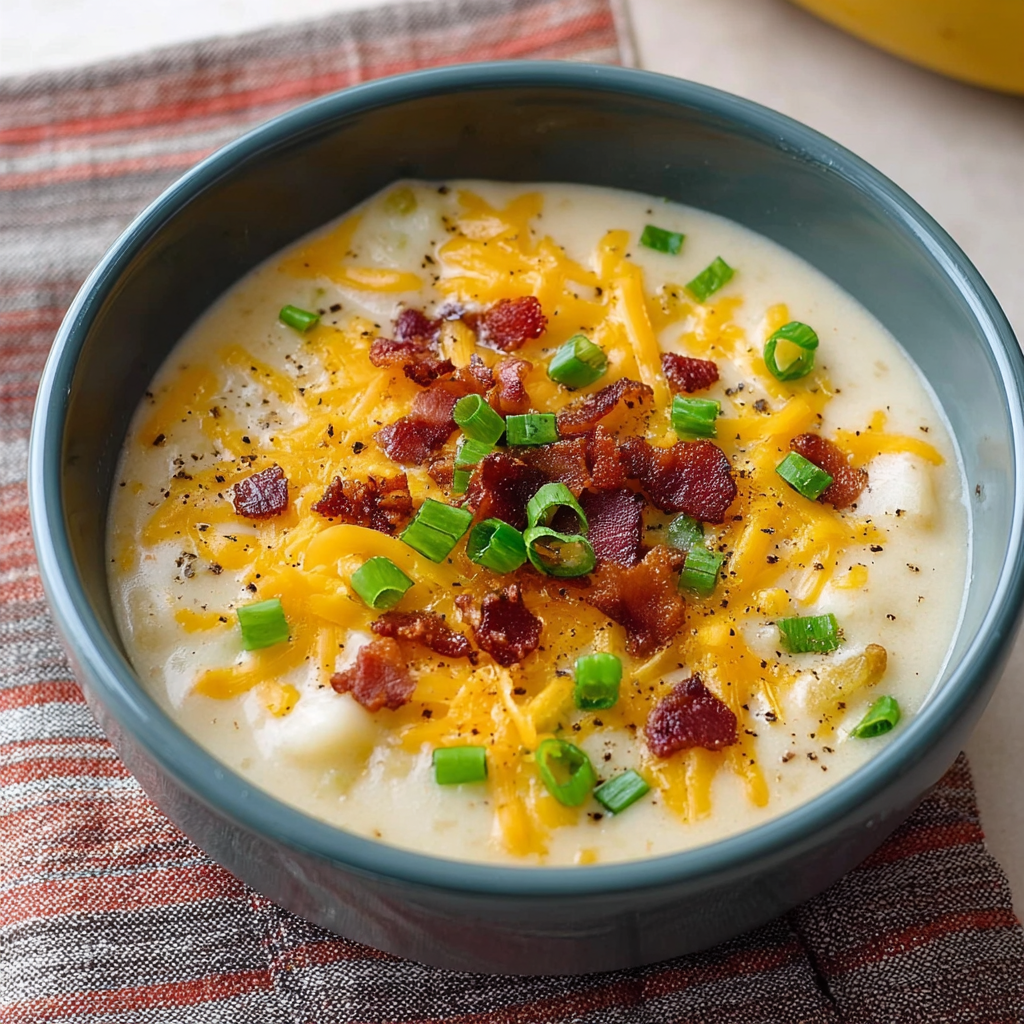
The Gastronomic Architecture: The “Starch-Lipid” Suspension
In the hierarchy of winter comfort foods, Cheesy Loaded Potato Soup represents a sophisticated study in Amylopectin Gelatinization and Dairy Stabilization. The technical challenge lies in the “Grit-to-Silk” ratio: potatoes are essentially cellular starches that, if over-blended, can become a “glue-like” (mucilaginous) mess. By utilizing a “Partial-Mash” technique, you create a thick, creamy suspension that supports the weight of heavy inclusions like bacon and cheddar without breaking the emulsion.
Data from food science suggests that the “irresistibility” factor is the Sulfur-Fat Bond: the sulfurous compounds in the potatoes and garlic are amplified by the sharp lactic acids in the cheddar, while the bacon fat acts as a “flavor carrier” across the palate.
Essential Mise en Place: Technical Specs
To achieve a restaurant-grade “velvet” finish, the starch content of the potato and the age of the cheese are the most critical factors.
The Foundation (The Starch)
- Russet Potatoes (1.5 kg): Technical Requirement: Use high-starch (floury) potatoes. Their cell walls rupture easily during simmering, providing a natural thickener that bypasses the need for excessive flour.
- Chicken or Vegetable Stock (1 L): Provides the mineral-rich aqueous base.
- Heavy Cream or Whole Milk (250ml): To provide the essential lipids for a glossy mouthfeel.
The Aromatic & Inclusion Matrix
- Sharp Cheddar Cheese (300g): Expert Tip: Grate it yourself from a block. Pre-shredded cheeses are coated in potato starch or cellulose to prevent clumping, which can result in a “grainy” soup.
- Smoked Bacon (6-8 strips): Provides the foundational fat (lard) for sautéing the aromatics.
- Sour Cream (120ml): To provide a “tangy” lactic finish and increase the viscosity.
The Masterclass: Step-by-Step Culinary Execution
Phase 1: The Lipid Extraction (The Bacon)
In a large Dutch oven, cook the diced bacon over medium heat until “shatter-crisp.” Remove the bacon, leaving the rendered fat in the pot. This fat is the “Aromatic Vehicle” that will carry the flavor of the onions and garlic through the entire soup.
Phase 2: The “Sweat and Deglaze”
Add diced onions and celery to the bacon fat. Sauté until translucent. Add the cubed potatoes and stir for 2 minutes to coat them in the fat. This “Thermal Coating” helps the potatoes hold their shape slightly longer during the boil.
Phase 3: The “Soft-Boil” Extraction
Pour in the stock. Simmer for 15–20 minutes until the potatoes are fork-tender. Technical Requirement: Use a potato masher to crush approximately 50% of the potatoes directly in the pot. This releases the internal starches to thicken the broth while maintaining structural “chunks” for textural contrast.
Phase 4: The “Low-Shear” Dairy Integration
Reduce the heat to low. Stir in the cream and sour cream. Gradually add the shredded cheddar, one handful at a time. Technical Requirement: Do not boil the soup once the cheese is added. High heat can cause the cheese proteins to contract and “clump,” leading to an oily, separated soup.
Common Technical Pitfalls to Avoid
- The “Glue” Effect: Never use a food processor or high-speed blender on the potatoes. The mechanical shear is too high and will turn the starch into a sticky paste. Stick to a hand masher or a wooden spoon.
- Grainy Texture: Usually caused by using pre-shredded cheese or adding the cheese while the soup is at a rolling boil. Keep the temperature below 70°C (160°F) when adding dairy.
- Under-Seasoning: Potatoes are “flavor sponges.” This soup requires a significant amount of black pepper and salt to cut through the heavy fats of the cream and cheese.
Frequently Asked Questions (Q&A)
| Question | Expert Answer |
|---|---|
| Can I make it in a Slow Cooker? | Yes. Cook the potatoes and stock on “Low” for 6 hours, then stir in the dairy and cheese at the very end. |
| How do I lighten it up? | Substitute the heavy cream with evaporated milk and use a “sharp” cheese (you’ll need less of it for the same flavor impact). |
| What is the best topping? | The “Trinity”: Reserved crispy bacon, fresh chives, and an extra pinch of cold cheddar for a temperature contrast. |
Export to Sheets