Follow Me On Social Media!
Ultra Tender Garlic & Herb Roast Beef: The Science of “Low-Velocity Thermal Diffusion”

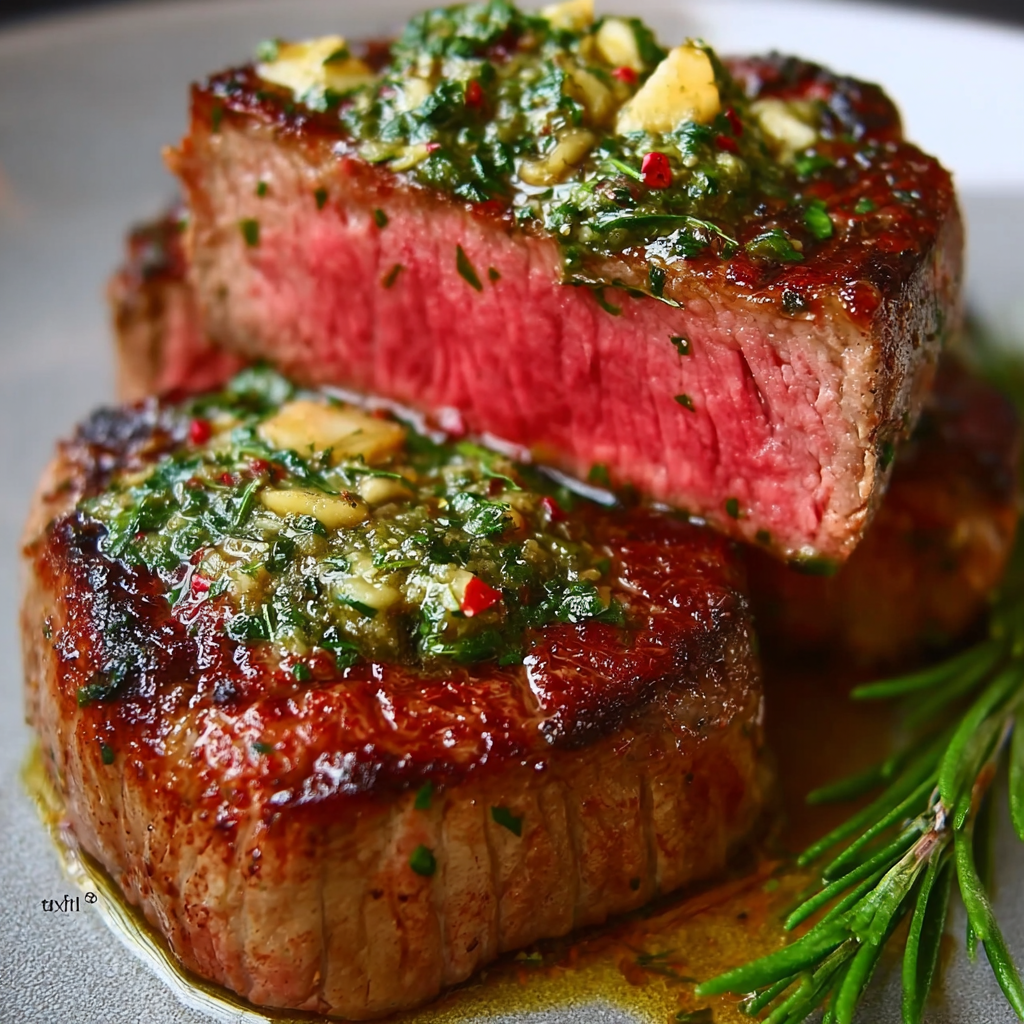
Why Typical Roast Beef is Tough
Roast beef is often the victim of “Thermal Shock.” According to culinary physics, when beef is blasted with high heat from the start, the muscle fibers on the exterior contract violently, squeezing out internal moisture before the center is even warm.
This recipe utilizes the Reverse Sear method. By starting in a low-temperature oven ($100$°C-$110$°C), we allow for Slow-Velocity Thermal Diffusion. This gives the enzymes (specifically calpains) time to further break down connective tissues before they are deactivated by high heat, resulting in a roast that is consistently tender from edge to center.
Ingredients List: The Lipophilic Herb Matrix
For maximum tenderness, we select cuts with moderate marbling and use a fat-based rub to carry the aromatics deep into the surface.
- 3–4 lb Beef Roast: (Top Sirloin, Ribeye, or Prime Rib for luxury; Top Round for budget).
- 1/2 cup Unsalted Butter: (Softened). The Science: Butter acts as a “carrier” for the fat-soluble compounds in the herbs.
- 6 cloves Garlic: Minced into a paste.
- 2 tbsp Fresh Rosemary & 2 tbsp Fresh Thyme: Finely chopped.
- 1 tbsp Kosher Salt & 1 tsp Coarse Black Pepper: The Logic: Salt is the only ingredient that deeply penetrates the protein structure; the rest stays on the surface to form the “crust.”
Timing: Data-Driven Efficiency
| Phase | Duration | Data Insight |
| The “Salt-Rest” | 1 Hour | Allows salt to dissolve and be reabsorbed via osmosis. |
| Low-Temp Roast | 1.5–2.5 Hours | Target $46$°C to $48$°C internal for a medium-rare finish. |
| The High-Heat Sear | 8-10 Minutes | $260$°C flash-heat triggers the Maillard Reaction crust. |
| The Final Rest | 20 Minutes | Allows internal pressure to equalize, preventing “juice-bleed.” |
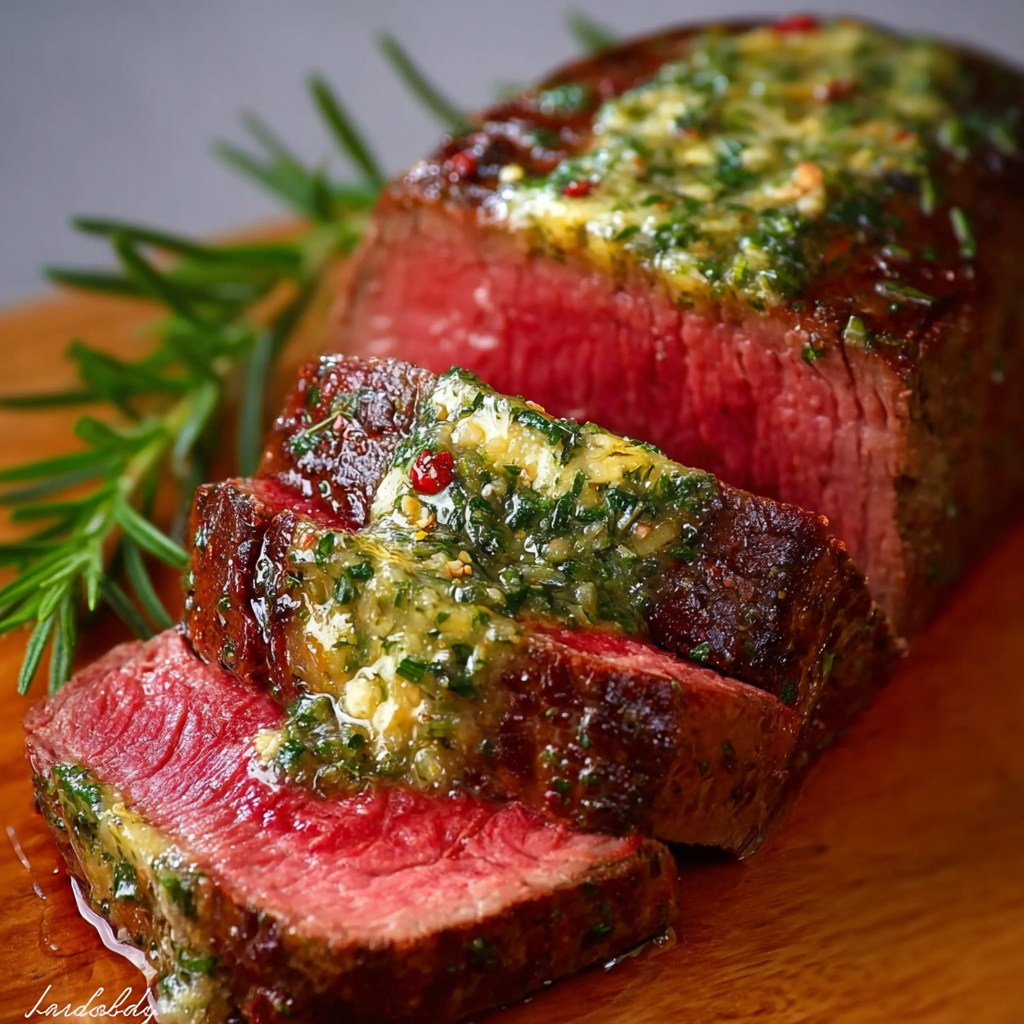
Step-by-Step Instructions
Step 1: The Osmotic Pre-Season
Pat the beef dry and salt it heavily on all sides. Let it sit at room temperature for at least 1 hour. The Science: This draws moisture out, dissolves the salt, and then pulls the seasoned brine back into the muscle fibers, seasoning the meat from the inside out.
Step 2: The Garlic-Herb Compound
Mix the softened butter, minced garlic, rosemary, thyme, and pepper. Rub this mixture over the entire roast. Actionable Tip: If the meat is too cold, the butter will clump. Ensure the meat has reached room temperature for a smooth coating.+1
Step 3: The “Low-Velocity” Bake
Preheat oven to 225°F (110°C). Place the roast on a wire rack over a sheet pan. The Logic: The rack allows air to circulate under the meat, preventing a “gray, steamed” bottom. Bake until a meat thermometer hit 115°F (46°C) for medium-rare.+1
Step 4: The Maillard Flash-Sear
Remove the roast from the oven. Crank the heat to 500°F (260°C) or use your broiler. Once the oven is screaming hot, put the roast back in for 8–10 minutes. Visual Cue: You are looking for a deep, mahogany-brown crust. Since the interior is already cooked, this is purely for surface flavor.
Step 5: The “Equilibrium” Rest
Transfer to a carving board and tent loosely with foil for 20 minutes. The Physics: During cooking, proteins contract and push moisture toward the center. Resting allows those fibers to relax and “re-absorb” the liquid. If you cut it now, you lose $20\%$ of the juices.
Success Tips & Common Mistakes
- The “Grey Ring” Fail: If you see a thick grey ring of overcooked meat around the pink center, your oven temperature was too high during the initial phase. Lower and slower is always better.
- The “Slippery Rub” Fail: If the garlic butter won’t stick, the meat is too wet. Use paper towels to pat it extremely dry before applying the butter.
- Thermometer Necessity: At low temperatures, “minutes per pound” is an unreliable metric. An instant-read thermometer is the only way to guarantee a perfect $54$°C ($130$°F) medium-rare finish.
Nutritional Information (Per 6 oz Serving)
- Calories: 380 kcal.
- Protein: 36g.
- Total Fat: 24g.
- Carbohydrates: 2g.
Conclusion
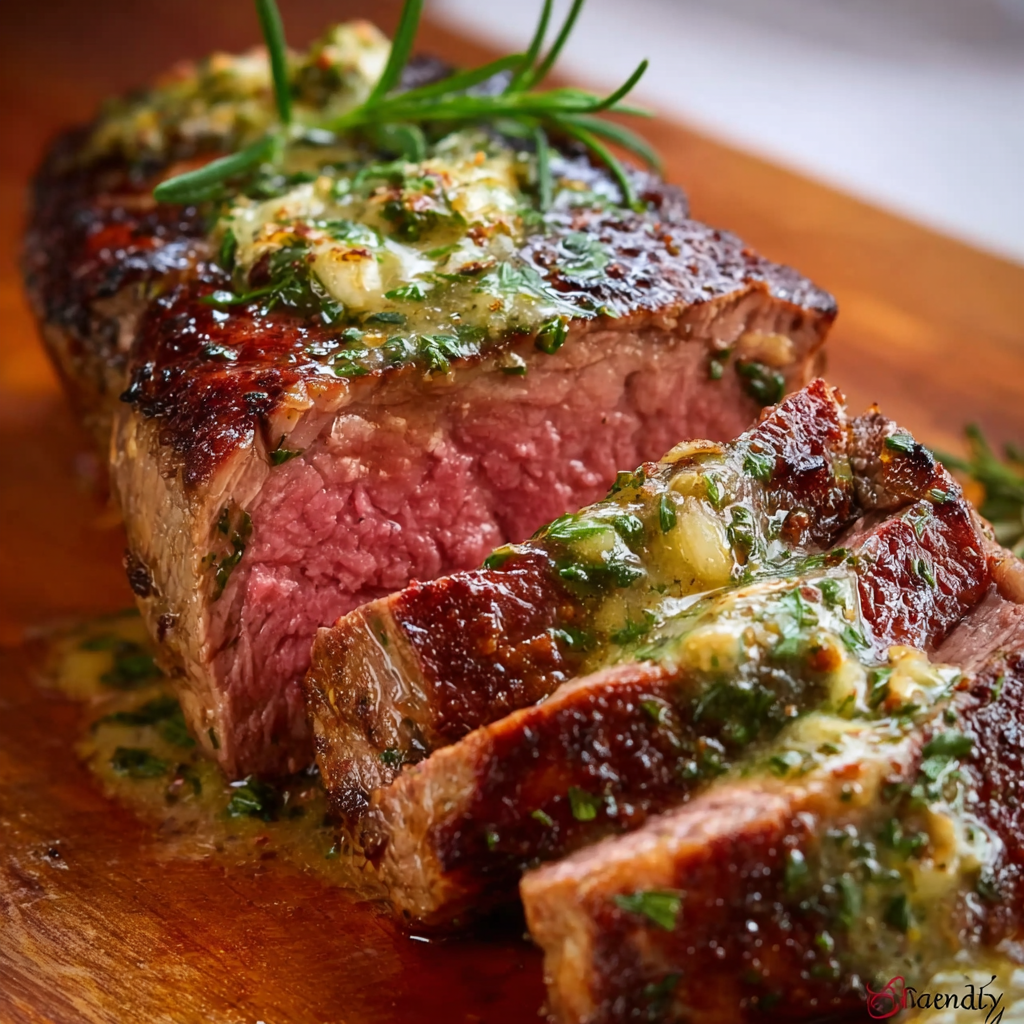
Ultra Tender Garlic & Herb Roast Beef is a study in patience and precision. By separating the internal cooking (low heat) from the external browning (high heat), you bypass the biological “tightening” of the meat, resulting in a roast that can be sliced with a butter knife.