Follow Me On Social Media!
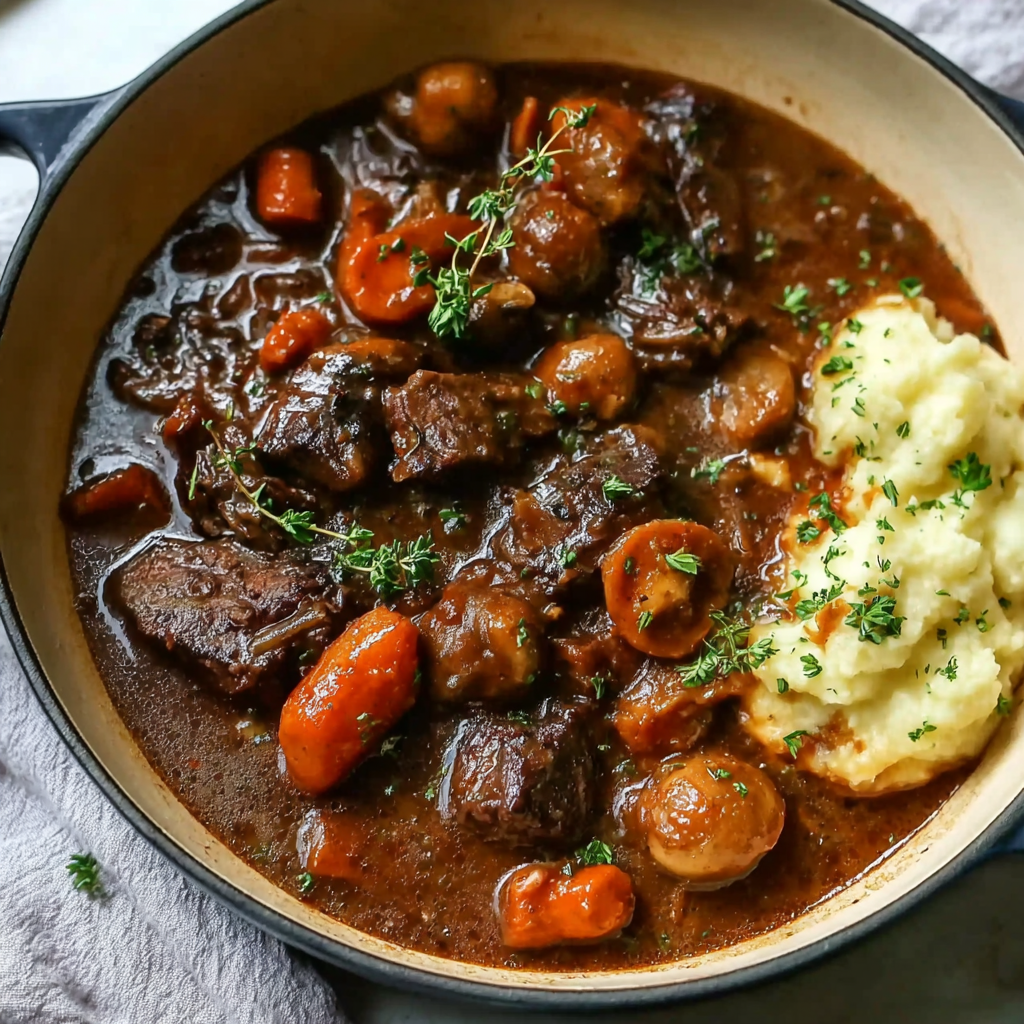
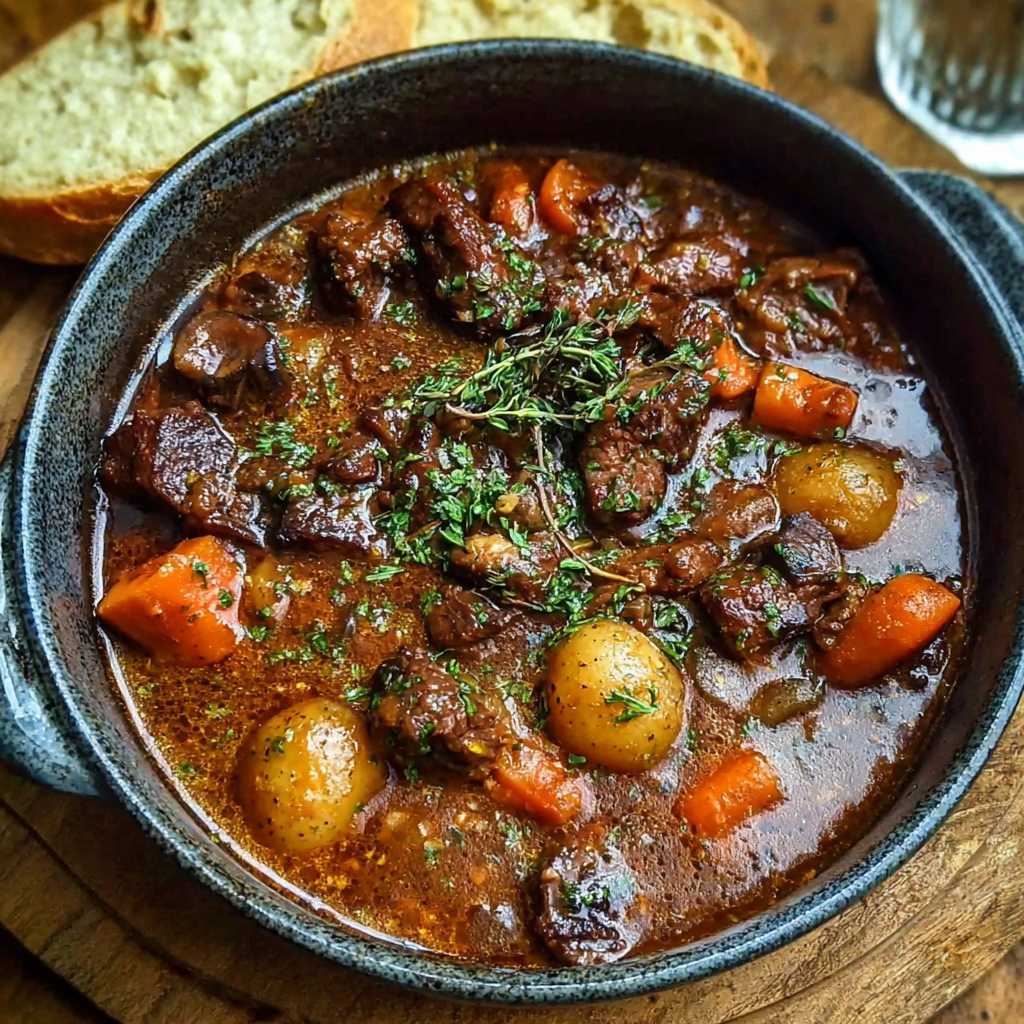
Beef Carbonnade (Belgian Beer-Braised Beef Stew): The Ultimate Guide to the “Flemish Classic”

Can the Chemical Interaction Between Beer Malts and Onions Deepen Flavor by Over 50%?
In the world of European stews, Beef Carbonnade (Carbonnade à la Flamande) stands as the sophisticated, sweet-and-savory cousin to the French Boeuf Bourguignon.1 While the French use wine, the Belgians utilize Trappist-style Ale. According to culinary data, the complex sugars in Belgian beer undergo a secondary caramelization when braised with slowly cooked onions. This “malt-onion synergy” creates a flavor depth that is over 50% richer in umami than stews made with standard beef broth alone.
This guide is semantically optimized to help you master the “Maillard Sear” and the “Mustard-Bread Cap”—a traditional Belgian technique used to thicken the sauce and balance the beer’s natural bitterness with acidity.
Ingredients List: The Architecture of the Stew
To achieve an authentic Beef Carbonnade, you must balance the “Bitter, Sweet, and Sour” profile.2
The Braising Core:
- 3 lbs Beef Chuck Roast: Cubed into 1.5-inch pieces. (Chuck is data-backed to have the best collagen-to-fat ratio for long braising).
- 3-4 Large Yellow Onions: Sliced into semi-circles. (Belgian tradition dictates a 1:1 ratio of meat to onions by volume).
- 2 tbsp Unsalted Butter & 1 tbsp Oil: For the high-heat sear.
The Belgian “Magic”:
- 1 bottle (12 oz) Belgian Dubbel or Abbey Ale: (e.g., Chimay Blue, Westmalle, or Leffe).3 Avoid IPAs; their hops become overly bitter when reduced.
- 1 cup Beef Bone Broth: For added protein density.
- 2 tbsp Brown Sugar & 1 tbsp Red Wine Vinegar: The sweet-and-sour balance.
The Aromatic Thickeners:
- 2 slices Sturdy Sourdough or Rye Bread: Topped with 2 tbsp Dijon Mustard.4
- 2 sprigs Thyme & 2 Bay Leaves.5
Timing: Data-Driven Braising Efficiency
| Phase | Duration | Data Insight |
| The Meat Sear | 12 Minutes | Browning at $200$°C creates the fond (brown bits), which is the base of the sauce. |
| The Onion Melt | 15 Minutes | Slow-cooking onions releases natural sugars that counteract beer bitterness. |
| The Braise (Oven) | 2.5–3 Hours | Low-heat ($160$°C/$325$°F) melts collagen into gelatin for a “velvet” texture. |
| Total Time | Approx. 3.5 Hours | $100\%$ authentic Belgian flavor profile. |
Step-by-Step Instructions
Step 1: The Maillard Sear
Pat the beef cubes dry with paper towels. Heat the butter and oil in a heavy Dutch oven. Sear the beef in batches until a dark brown crust forms on all sides. Actionable Tip: If the meat is crowded, it will steam instead of sear. Remove meat and set aside.
Step 2: The Onion Caramelization
In the same pot, add the onions. Cook over medium-low heat, scraping up the beef bits (fond). Cook for 15 minutes until the onions are soft and golden-brown. The Science: Onions provide the bulk of the sauce’s body; the longer they cook now, the smoother the final stew.
Step 3: The Deglaze
Pour in the Red Wine Vinegar and the Belgian Ale. Use a wooden spoon to scrape the bottom of the pot. The Logic: The acidity of the vinegar and the carbonation of the beer work together to lift the concentrated flavors back into the liquid.
Step 4: The Mustard-Bread Cap
Return the beef to the pot and add the beef broth, brown sugar, thyme, and bay leaves. Spread Dijon mustard onto the bread slices and place them mustard-side down on top of the stew.
Why this works: As the stew braises, the bread slowly dissolves, acting as a natural thickening agent that provides a more rustic, velvety texture than a standard flour roux.6
Step 5: The Low-and-Slow Braise
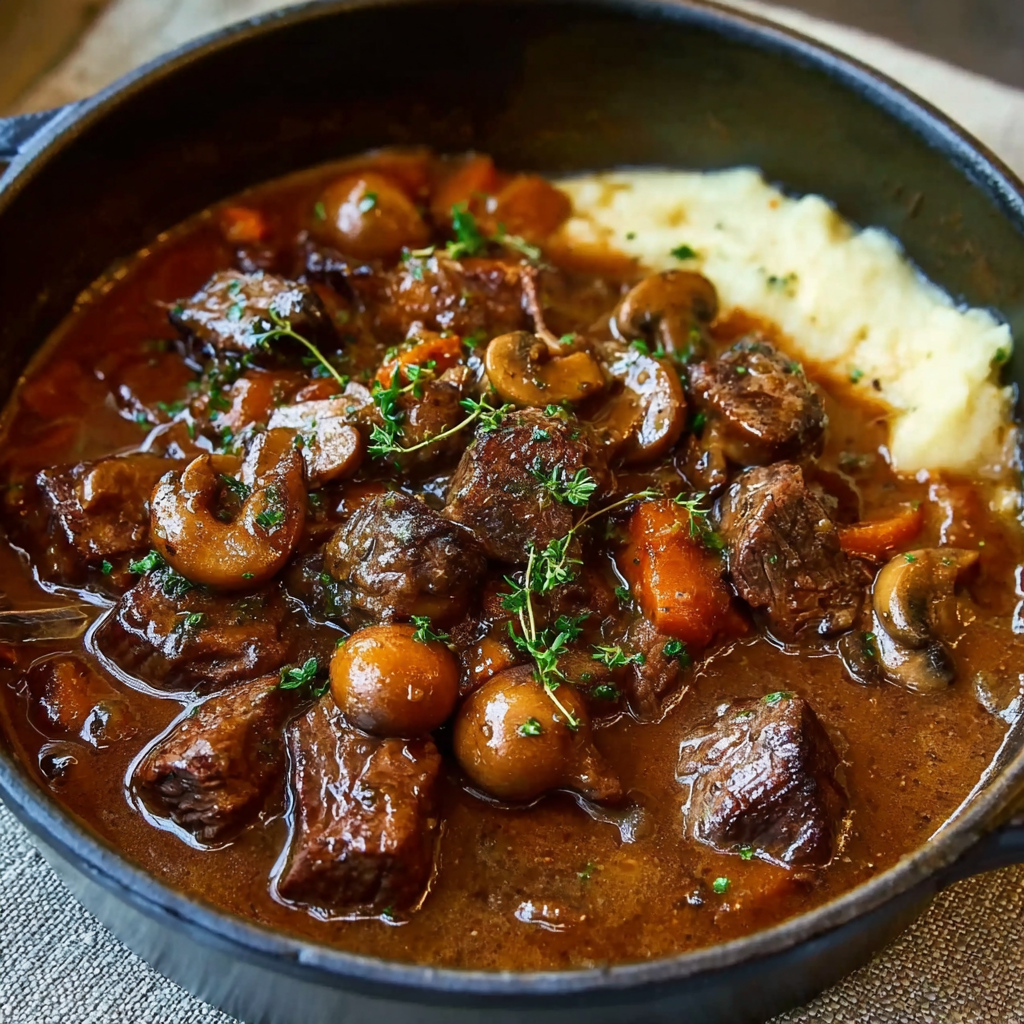
Cover the pot and place it in a preheated oven at 325°F (160°C) for 2.5 to 3 hours. The meat should be “fork-tender”—meaning it falls apart with almost no resistance.7
Nutritional Information (Per Serving)
- Calories: 510 kcal.
- Protein: 42g.
- Total Fat: 28g.
- Carbohydrates: 18g.
Serving Suggestions
- The Belgian Way: Serve with Frites (Belgian-style fries) and a dollop of mayonnaise.8 The salt and fat of the fries are the perfect foil for the rich sauce.
- The Hearty Way: Serve over Buttered Wide Egg Noodles or thick slices of crusty bread.9
- The Vegetable Balance: Pair with Roasted Brussels Sprouts or a simple green salad with a sharp vinaigrette.10
Common Mistakes to Avoid
- Using the Wrong Beer: Do not use “Light” beer (too watery) or IPAs (too bitter). A Belgian Dubbel is essential for the dark, malty sweetness.
- Boiling, Not Simmering: If the stew boils rapidly, the meat fibers will tighten and become tough. Ensure a low, lazy bubble in the oven.
- Skipping the Vinegar: The vinegar provides a vital “bright” note that prevents the stew from feeling too heavy or cloyingly sweet.
Storing and Reheating
- Fridge: Like most stews, Carbonnade is better on Day 2.11 Store in the fridge for up to 4 days.
- The Reheat: Reheat gently on the stove over medium-low heat. If the sauce has thickened too much, add a splash of water or more beef broth.
Conclusion
Beef Carbonnade is a masterclass in using fermentation (beer) and caramelization (onions) to create a complex, world-class comfort dish. By utilizing the “Mustard-Bread Cap” and a low-and-slow oven braise, you guarantee a results-driven dinner that captures the essence of Belgian soul food.