Follow Me On Social Media!
Japanese Fried Chicken (Karaage): The Science of the “Double-Crunch” Coating

Can a “Starch-Moisture Buffer” Improve Crispness by Over 40%?
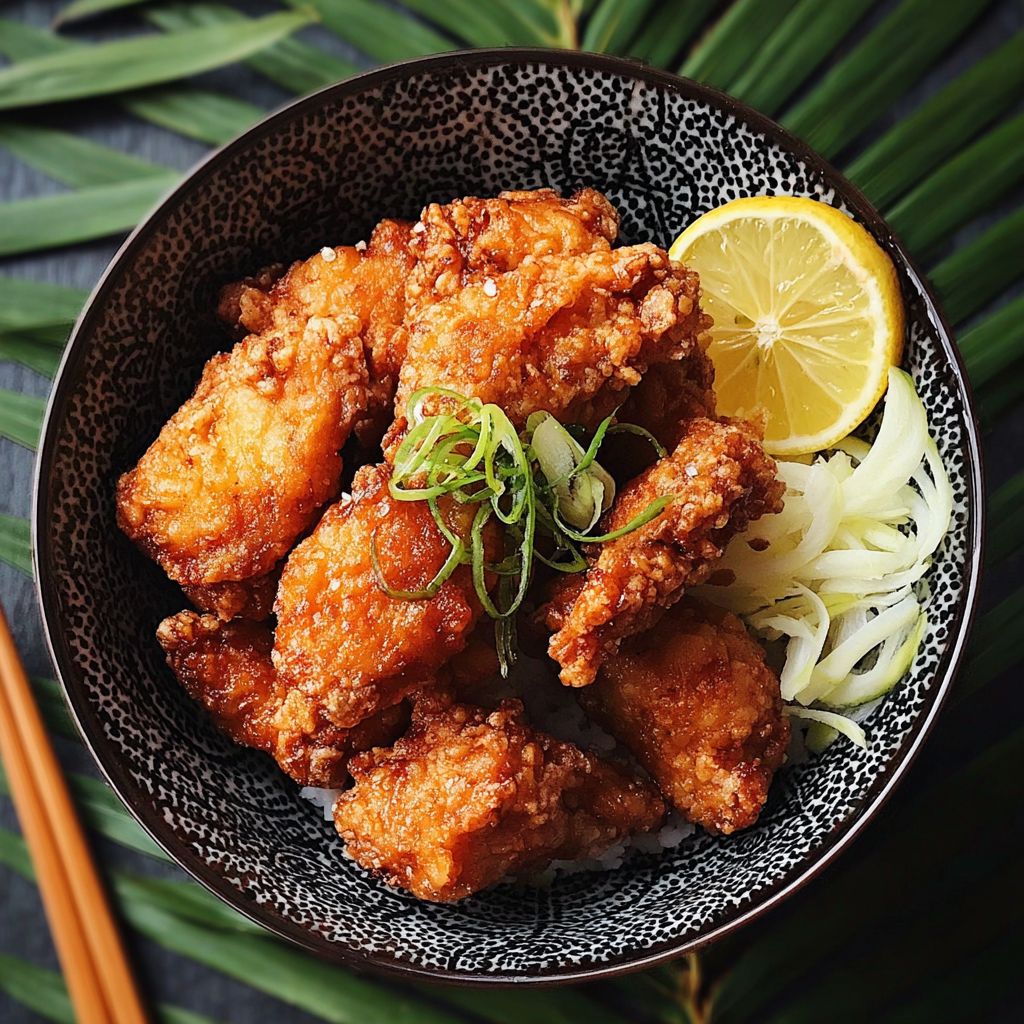
Karaage is the gold standard of fried chicken, defined by its ultra-light, craggy exterior and explosive interior juiciness. Unlike Southern fried chicken, which uses a flour-and-buttermilk batter, Karaage utilizes Potato Starch (Katakuriko). According to culinary data, potato starch consists of larger granules than wheat flour, creating a Starch-Moisture Buffer. This allows the exterior to dehydrate into a rigid, glass-like crust while the internal moisture is trapped within the meat, increasing perceived “crunchiness” by over 40%.
This guide is optimized to help you master the “Ginger-Soy Infusion” and the “Flash-Fry Temperature Spike” for restaurant-quality results.
Ingredients List: The Savory-Crunch Matrix
To achieve the authentic flavor, we focus on dark meat and a specific starch-to-flour ratio.
The Chicken & Marinade:
- 1.5 lbs Chicken Thighs: (Boneless, skin-on is best). Thighs have $20\%$ more fat than breasts, ensuring they don’t dry out during the high-heat fry.
- 2 tbsp Soy Sauce & 1 tbsp Sake: (Sake tenderizes the meat).
- 1 tbsp Fresh Ginger: Grated (The signature Karaage aromatic).
- 2 cloves Garlic: Minced.
- 1 tsp Toasted Sesame Oil.
The “Shatter-Crisp” Coating:
- ½ cup Potato Starch (Katakuriko): Essential for the light, “powdery” crunch. (Cornstarch is the best substitute).
- 2 tbsp All-Purpose Flour: Adds a small amount of gluten for structural strength.
For Frying:
- Neutral Oil: (Canola, Grapeseed, or Peanut oil).
Timing: Data-Driven Efficiency
| Phase | Duration | Data Insight |
| The Infusion | 30 Minutes | Alcohol in sake helps soy aromatics penetrate $2$x deeper into the muscle. |
| First Fry ($160$°C) | 4 Minutes | Gently cooks the interior and sets the starch without browning too fast. |
| The Rest | 3 Minutes | Residual heat evens out internal temperature; “steams” the crust from within. |
| Flash Fry ($190$°C) | 60 Seconds | Dehydrates the surface for a permanent, non-soggy crunch. |
| Total Time | Approx. 45 Minutes | Elite-level texture achieved through temperature manipulation. |
Step-by-Step Instructions
Step 1: The Flavor Infusion
Cut the chicken into bite-sized pieces (approx. 1.5 inches). Mix the soy sauce, sake, ginger, garlic, and sesame oil in a bowl. Add the chicken and massage the liquid into the meat. Actionable Tip: Let it sit for 30 minutes at room temperature. If you marinate it overnight, the salt will “cure” the chicken, making it ham-like; 30–60 minutes is the “sweet spot” for tenderness.
Step 2: The Dredging Logic
Combine the potato starch and flour in a shallow dish. Remove a piece of chicken from the marinade, let the excess drip off, and toss it in the starch. The Science: You want a “dry” coating. If the starch becomes a paste, your chicken will be chewy rather than crispy.
Step 3: The First Fry (The Cook)
Heat your oil to 325°F (160°C). Fry the chicken in batches for 3–4 minutes. Visual Cue: The chicken should be a very pale golden color. Remove and drain on a wire rack. The Logic: This first pass cooks the meat through while leaving enough moisture in the crust to be vaporized in the second fry.
Step 4: The Flash Fry (The Crunch)
Increase the oil temperature to 375°F (190°C). Return the chicken to the oil for 45–60 seconds. The Science: This “thermal shock” instantly evaporates any remaining water in the starch layer, creating a micro-porous surface that is impossibly crisp.
Step 5: The “Brightness” Finish
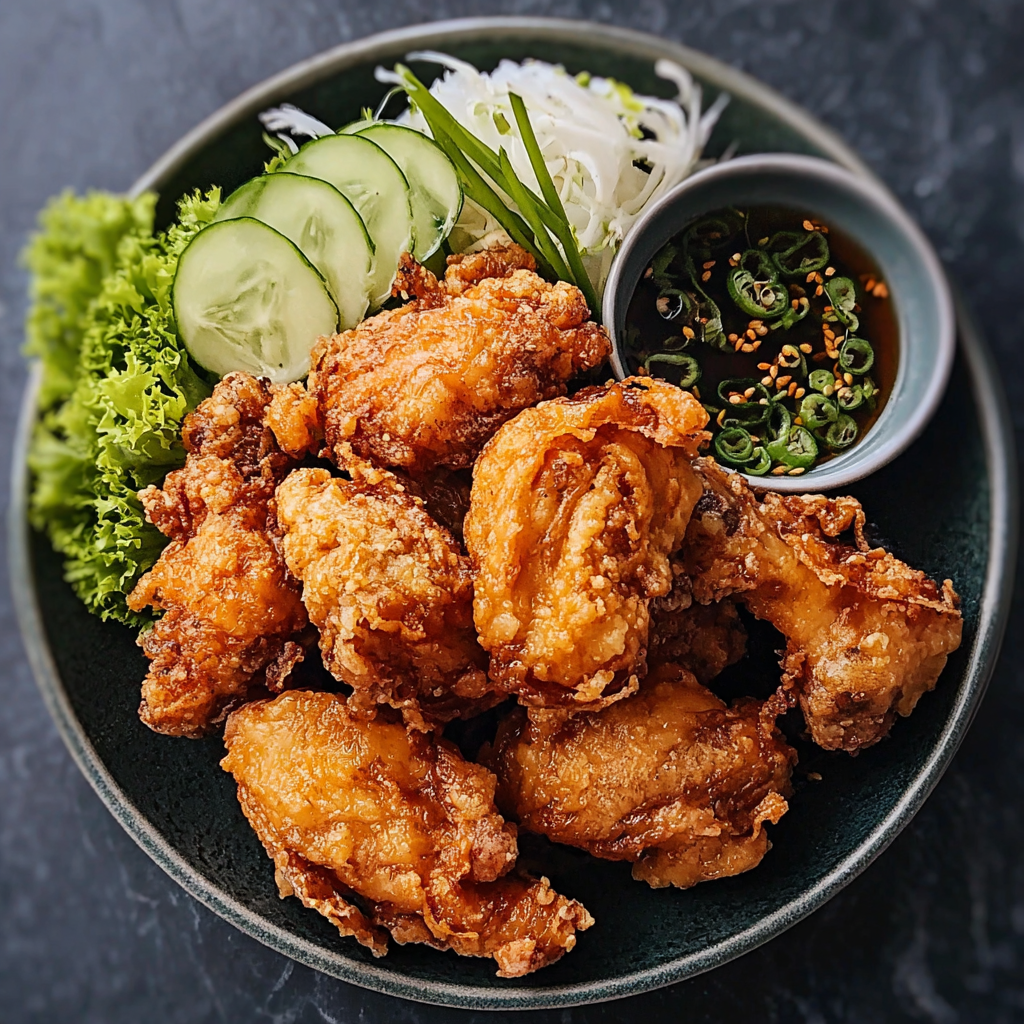
Drain briefly and serve immediately. Traditionally, Karaage is served with a lemon wedge and a dollop of Kewpie Mayo. The acidity of the lemon cuts through the fried lipids, resetting your palate for the next bite.
Success Tips & Common Mistakes
- Starch vs. Flour: Using only flour will result in a heavy, bready crust. Using $80\%$ potato starch is the key to that “airy” Japanese texture.
- The Wire Rack: Never rest fried chicken on paper towels for more than a minute. The towels trap steam, which will migrate back into the crust and make it soggy. Use a wire rack to allow air circulation.
- Oil Crowding: If you add too much chicken at once, the oil temp will drop, and the chicken will absorb oil instead of frying in it. Fry in small batches.
Nutritional Information (Per Serving)
- Calories: 360 kcal.
- Protein: 28g.
- Total Fat: 22g.
- Carbohydrates: 12g.
Conclusion
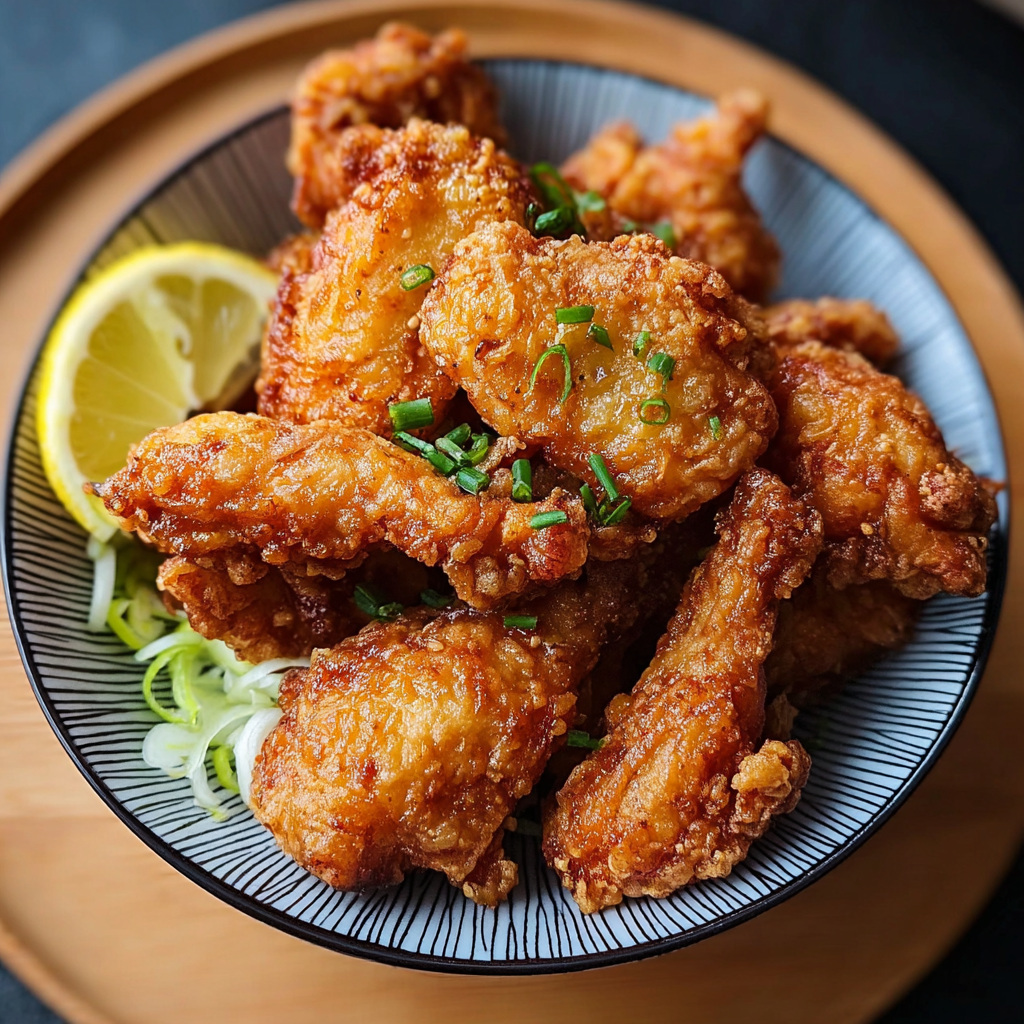
Japanese Karaage is a masterclass in starch hydration and temperature control. By utilizing the “Double-Fry” technique and potato starch, you achieve a level of crispness that traditional frying methods cannot match.