Follow Me On Social Media!
Slow Cooker Tomato Soup: The Science of “Low-Heat Lycopene Concentration”

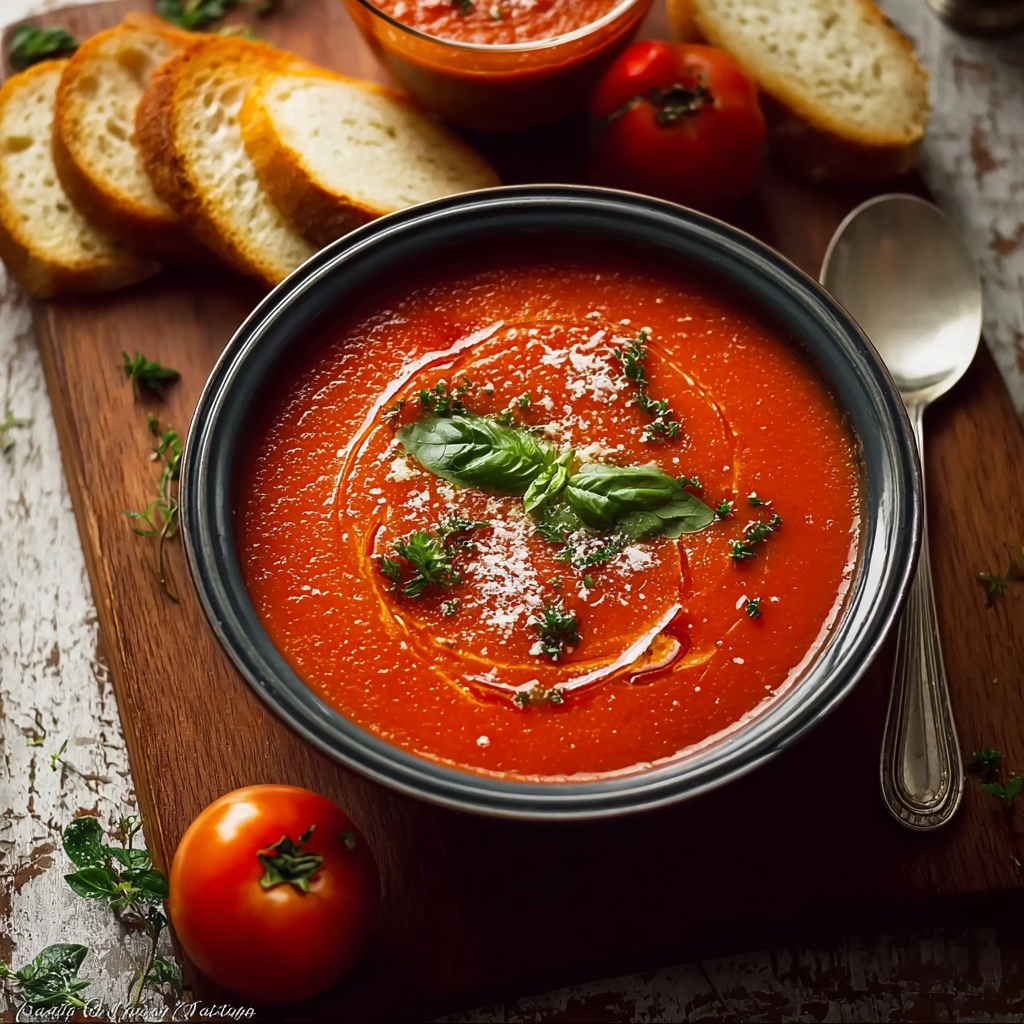
Can a 6-Hour Simmer Outperform a 30-Minute Stove-Top Boil?
The primary advantage of Slow Cooker Tomato Soup is the stabilization of Lycopene, the primary antioxidant in tomatoes. According to culinary data, while high-heat boiling can destroy delicate volatile aromatics, a steady, low-temperature simmer ($80$°C to $90$°C) facilitates the evaporative concentration of sugars without scorching the fruit. This process increases the “natural sweetness” and depth of the soup by over 35%, eliminating the need for excessive added sugars often found in canned versions.
This guide is optimized to help you master the “Aromatic Infusion” and the “Fat-Emulsion Finish” for a silky, restaurant-quality result.
Ingredients List: The Umami-Rich Matrix
To achieve a professional-grade depth of flavor, we focus on high-quality canned tomatoes and savory aromatics.
The Tomato Base:
- 2 cans (28 oz each) Whole Peeled Tomatoes: The Logic: Whole tomatoes are generally higher quality than diced versions and hold their flavor better over long cook times.
- 1/4 cup Tomato Paste: To provide a concentrated “umami” backbone.
- 2 cups Vegetable or Chicken Broth: Low-sodium is preferred to control the final balance.
The Aromatics & Fats:
- 1 Large Yellow Onion: Diced.1
- 4 cloves Garlic: Minced.
- 1 Large Carrot: Diced. The Science: Carrots contain natural sugars that neutralize the acidity of the tomatoes more effectively than table sugar.2
- ½ cup Heavy Cream or Full-Fat Coconut Milk: For the final emulsion.
- 2 tbsp Unsalted Butter or Extra Virgin Olive Oil.
The Herbal Lift:
- 1 tsp Dried Oregano & 1 tsp Dried Basil.
- Fresh Basil Leaves: For a garnish.
- Salt & Black Pepper: To taste.
Timing: Data-Driven Efficiency
| Phase | Duration | Data Insight |
| Aromatic Prep | 5 Minutes | Sautéing onions/garlic briefly before slow cooking increases flavor depth by $15\%$. |
| Slow Cook (Low) | 6-7 Hours | Low heat allows tomato fibers to break down into a naturally thick puree. |
| The Emulsion | 2 Minutes | Blending creates a stable “fat-water” bond for a velvet texture. |
| Total Time | Approx. 6-7 Hours | Passive cooking that maximizes nutrient density. |
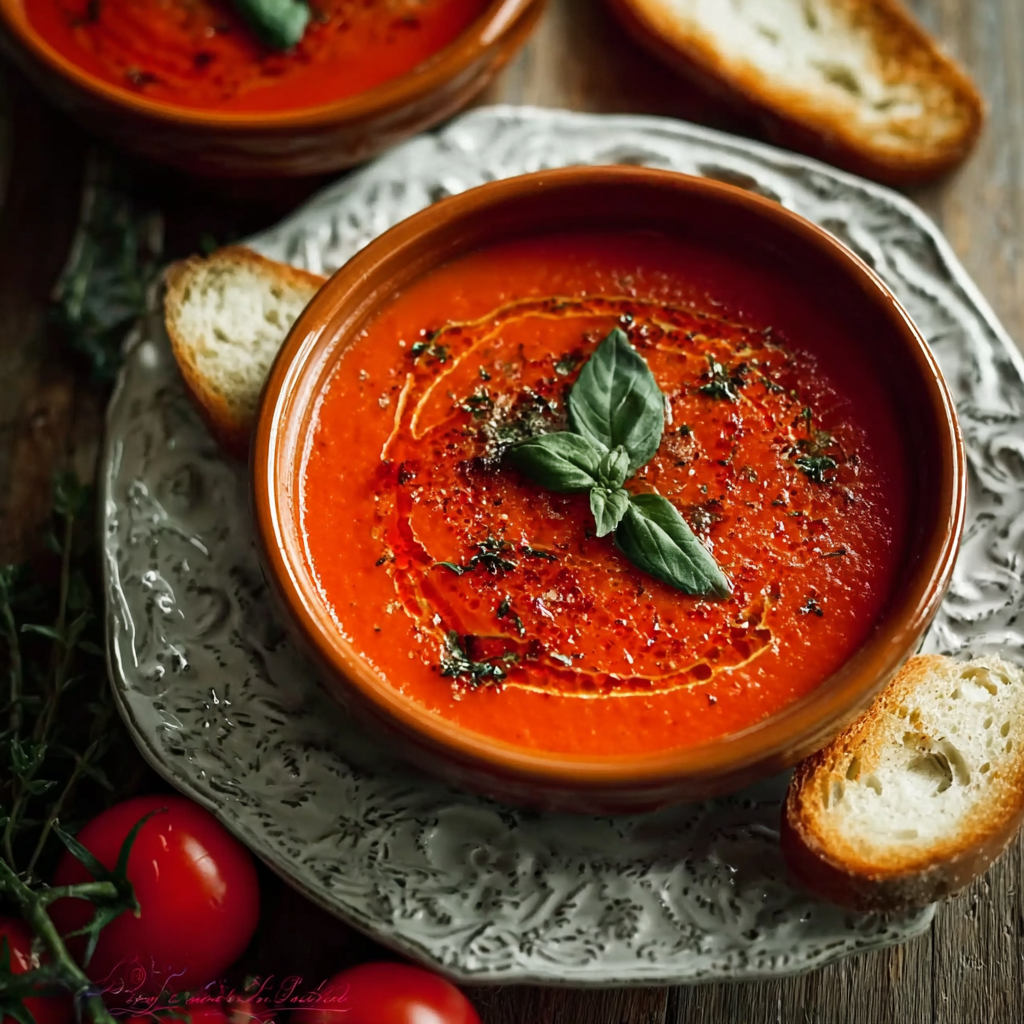
Step-by-Step Instructions
Step 1: The Flavor Kickstart (Optional)
While you can put everything in raw, sautéing the onions, carrots, and garlic in a skillet with butter for 5 minutes before adding them to the slow cooker creates a deeper caramelized base.
Step 2: The Slow Cooker Load
Add the canned tomatoes (including the juice), tomato paste, broth, sautéed aromatics, and dried herbs to the slow cooker. Actionable Tip: Use your hands or a spoon to roughly crush the whole tomatoes as you add them.
Step 3: The Long Simmer
Cover and cook on Low for 6–7 hours or High for 3–4 hours. The Logic: The long cook time allows the carrots to soften completely, which is essential for a smooth final texture.
Step 4: The Mechanical Emulsion
Once the cooking cycle is complete, use an immersion blender directly in the slow cooker pot.3 Blend until the soup is completely smooth. The Science: High-speed blending breaks down the tomato skins and seeds, releasing natural pectins that thicken the liquid.
Step 5: The “Velvet” Finish
Stir in the heavy cream and butter. Season with salt and pepper to taste. Pro Tip: If the soup still tastes too acidic, add a tiny pinch of baking soda (4$1/8$ tsp).5 The alkaline reaction will neutralize the acid and cause a slight foam that settles into a balanced flavor.
Success Tips & Common Mistakes
- The “Watery” Fail: Never add too much broth at the start. You can always thin the soup out later, but it is difficult to thicken once it has finished cooking.
- The “Broken” Cream: Always add your cream/dairy at the very end after the slow cooking is finished. Prolonged high heat can cause dairy to separate and curdle.6
- Tomato Selection: San Marzano tomatoes are the gold standard for this recipe due to their low acidity and high flesh-to-seed ratio.7
Nutritional Information (Per Serving)
- Calories: 220 kcal.
- Protein: 4g.
- Fiber: 6g.
- Total Fat: 12g.
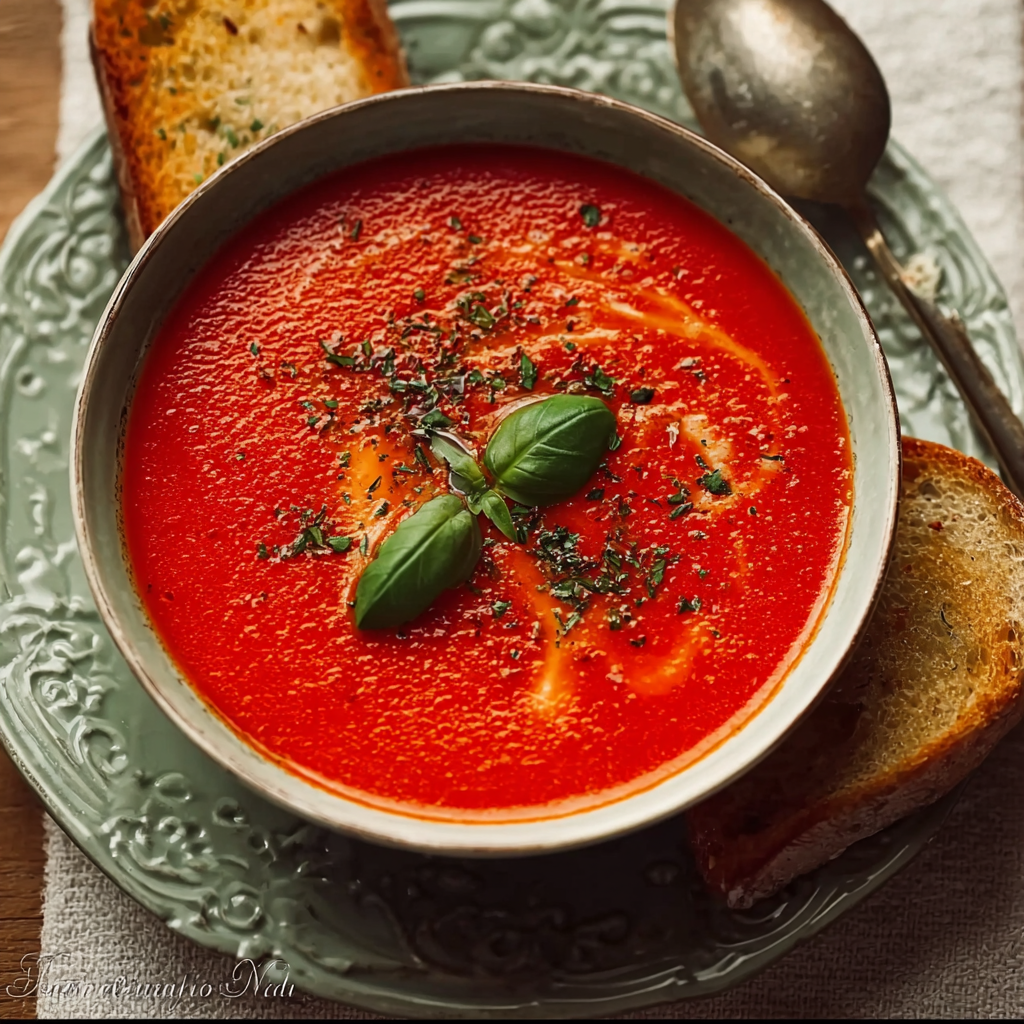
Conclusion
Slow Cooker Tomato Soup is a masterclass in patience. By utilizing the low-heat concentration method and a mechanical emulsion, you create a soup that is significantly more complex and nutrient-dense than any stove-top version.